
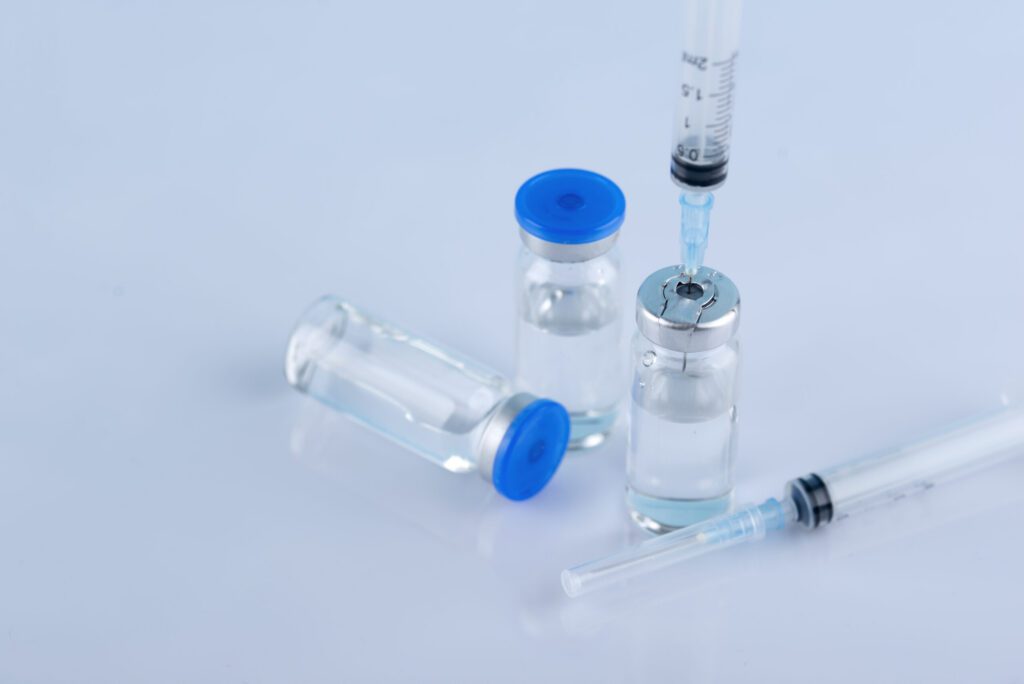
Yes, tirzepatide needs to be refrigerated. Store it at 36°F to 46°F, which is 2°C to 8°C, until the expiration date printed on the pen or vial. Unopened Zepbound and Mounjaro can sit at room temperature below 86°F for up to 21 days, and after that they get discarded even if unused. One important exception runs through this entire article: that 21-day allowance comes from the FDA labels for the brand-name products, and it does not automatically apply to compounded tirzepatide. Below we cover the exact storage rules, what to do if your medication was left out, how compounded preparations differ, how semaglutide compares, and how to fly with an injectable prescription.
Does Tirzepatide Need to Be Refrigerated?
Tirzepatide needs to be refrigerated at 36°F to 46°F (2°C to 8°C), where it stays stable until the expiration date on the label. That range is identical for Zepbound and Mounjaro, and identical whether you have a single-dose pen or a single-dose vial.
Temperature sensitivity comes from what the drug is. Tirzepatide is a peptide, meaning a chain of amino acids with a specific three-dimensional structure, and that structure is what lets it bind to receptors. Heat, light, and freezing all degrade peptide structures, and a degraded molecule cannot do its job even when the liquid still looks perfectly fine.
The basic storage rules from the FDA prescribing information are short:
- Refrigerate at 36°F to 46°F until you use it or until the expiration date, whichever comes first.
- Keep it in the original carton to shield it from light.
- Never freeze it, and never use it if it has been frozen, even after thawing.
- Store it away from the freezer compartment and the fridge door, where temperatures swing the most.
- Check the solution before every dose. It should be clear and colorless to slightly yellow.
- Discard after one injection. Brand pens and vials are single-dose and do not go back in the fridge.
Patients starting GLP-1 weight loss treatment get walked through this at their first visit, because storage is the part of the routine most likely to go wrong at home.
How Long Can Tirzepatide Stay Out of the Fridge?
Unopened Zepbound and Mounjaro can stay out of the refrigerator at temperatures up to 86°F (30°C) for a maximum of 21 days. After 21 days at room temperature, the medication gets discarded even if it was never used.
One detail catches people out. Once tirzepatide has been stored at room temperature, it does not go back in the refrigerator. The 21-day clock starts when it leaves the fridge and it does not reset.
Ninety-day supplies deserve specific attention because of that rule. If you receive three months of medication at once, refrigerate every carton immediately and pull out only the single dose you are about to use. Leaving the whole shipment on the counter starts the 21-day clock on all of it, and most of a 90-day supply will expire long before you get to it.
Does the 21-Day Rule Apply to Compounded Tirzepatide?
No, the 21-day room temperature allowance does not apply to compounded tirzepatide, because that figure comes from stability testing Eli Lilly performed on Zepbound and Mounjaro specifically. This is the single most important thing on this page, and almost no storage guide says it.
Stability data belongs to a product, not to a molecule. Eli Lilly ran testing on its own formulation, in its own packaging, with its own inactive ingredients, and the FDA reviewed that data before approving the label. A compounded preparation made by a different pharmacy, at a different concentration, with different excipients, in a different vial, was not part of any of that. The 21-day figure was never tested for it.
Compounded tirzepatide carries a beyond-use date assigned by the preparing pharmacy instead. That date is typically much shorter than a manufactured expiration date, and the storage instructions come from the pharmacy label rather than from anything you can look up online. If you are holding a vial and you are not certain which type you have, read the label and call the pharmacy that dispensed it. Anyone weighing compounded against branded options will find the Zepbound and tirzepatide relationship worth sorting out first.
How to Store Compounded Tirzepatide
Store compounded tirzepatide according to the label on your vial and the instructions from your dispensing pharmacy, which override any general guidance including ours. Refrigeration is standard, but the beyond-use date and any room temperature allowance are pharmacy-specific.
Multi-dose vials introduce a question the brand products never raise. Zepbound and Mounjaro are single-dose and get discarded immediately after injection. A compounded vial holds several doses and goes back in the refrigerator between injections, which means the date on the label governs how long it stays usable after the first puncture. Ask the pharmacy for that number in writing, along with the concentration, which also matters for drawing your dose correctly. The starting dose article covers why concentration deserves that much attention.
Does Zepbound Lose Potency if Not Refrigerated?
Zepbound can lose potency if it is not refrigerated properly, and the loss is not something you can see. Peptide medications degrade through molecular changes that leave a clear, colorless solution looking exactly the same as it did before.
Invisibility is what makes this worth taking seriously. A 2021 review in the International Journal of Toxicology examining peptide therapeutics notes the development and regulatory challenges these molecules present precisely because of their structural fragility. Nothing about a warm pen announces itself.
Reduced potency shows up later as a result that stalls. If a dose that was working suddenly seems to do nothing, and your storage has been inconsistent, degradation is worth raising with your provider before assuming the dose needs to increase. Expected tirzepatide results assume the medication reaching you at full strength.
How Do You Know if Tirzepatide Has Gone Bad?
You can only confirm tirzepatide has gone bad through visible signs, and the absence of those signs does not confirm it is fine. Discard the medication if the solution is cloudy, discolored beyond a slight yellow tint, or contains any particles, regardless of how it was stored.
Visual inspection catches the obvious failures and misses the subtle ones. That is exactly why the temperature and time limits exist as separate rules: you cannot inspect your way to confidence, so you track conditions instead.
I Left My Tirzepatide Out Overnight, Is It Safe to Use?
Tirzepatide left out overnight is generally still usable if the room stayed below 86°F, the total time out of the fridge is under 21 days, and the solution looks normal. Outside those conditions, it gets discarded.
Most overnight incidents fall inside the limits. A pen forgotten on a kitchen counter in an air-conditioned house for ten hours has used ten hours of a 504-hour allowance. The situations that cause real problems involve heat rather than time.
| Scenario | Temperature | Time | What to Do |
|---|---|---|---|
| Normal refrigerated storage | 36°F to 46°F | Until expiration | Use as planned. Keep in the original carton, away from the freezer and the door. |
| Left out overnight, cool room | At or below 86°F | Cumulative time under 21 days | Generally fine to use if the solution is clear. Do not return it to the fridge. |
| Left in a hot car or direct sun | Above 86°F | Any duration | Discard. Contact your pharmacy or prescriber. |
| Out longer than three weeks | At or below 86°F | More than 21 days | Discard even if unused and unopened. |
| Frozen at any point | Below 32°F | Any duration | Discard. Freezing damages the peptide permanently, and thawing does not reverse it. |
| Cloudy, discolored, or particles present | Any | Any | Discard regardless of storage history. |
| Storage history unknown | Unknown | Unknown | Do not inject. Call the dispensing pharmacy first. |
Sources: FDA prescribing information for Zepbound and Mounjaro; Eli Lilly storage guidance.
What Happens if Tirzepatide Gets Too Warm?
If tirzepatide gets too warm, the active ingredient begins to break down and the medication may not work as intended. Above 86°F the label’s stability assurance no longer applies, and the degree of damage depends on how hot it got and for how long.
Cars are the most common culprit by a wide margin. A vehicle interior on a summer afternoon can pass 86°F within minutes, and a glove compartment or a bag left on a seat is not a safe place for this medication even briefly.
What Happens if Tirzepatide Freezes?
Frozen tirzepatide must be discarded, and this is the one rule with no judgment call attached to it. Freezing disrupts the peptide’s structure permanently, and letting it thaw does not repair the damage.
Accidental freezing usually happens in one of two places: the back wall of a refrigerator where cold air enters, or against a gel pack in a travel case. Keep the medication toward the middle of a shelf at home, and put a cloth barrier between the pen and any ice pack when traveling.
What to Do When You Don’t Know How Long It Was Out
When you don’t know how long your tirzepatide was out of the refrigerator or how warm it got, do not inject it, and call your dispensing pharmacy before making any decision. Uncertainty is its own answer.
Pharmacists handle this question constantly and can usually resolve it in a short phone call. They know the product, they know what the manufacturer advises for storage incidents, and they can tell you whether a replacement is worth pursuing.
Replacement is sometimes available. Manufacturer patient support programs offer guidance on storage incidents, and some insurance plans will authorize an early refill when a prescriber documents that a dose was compromised. That is a much better outcome than injecting a dose you are unsure about, and it is one of the conversations our patients in Lee’s Summit have with us rather than working through alone. This kind of practical support is part of what a supervised medical weight loss program provides.
What if Your Delivery Arrives Warm?
Contact your pharmacy immediately if a shipment arrives warm, and do not use it in the meantime. Mail-order deliveries should arrive cold, usually with insulation and a cold pack, and a warm box means the cold chain broke somewhere in transit.
Pharmacies expect these calls and generally replace compromised shipments. Note when the package arrived and what condition it was in, since that helps them process it quickly.
What if the Power Goes Out?
During a power outage, keep the refrigerator door closed and your medication stays cold for several hours on its own. An unopened refrigerator holds temperature for roughly four hours.
Beyond that window, move the medication to a cooler with ice packs, keeping a barrier between the pen and the ice so it does not freeze. If the outage runs long, remember that tirzepatide has a 21-day room temperature allowance below 86°F, which covers most outages comfortably as long as the house does not overheat.
Should You Inject Tirzepatide Cold?
You do not have to inject tirzepatide cold, and letting it reach room temperature first usually makes the injection more comfortable. Cold liquid entering tissue stings more than room-temperature liquid.
Sitting the pen out for 15 to 30 minutes before injecting is enough. That time counts toward the 21-day room temperature allowance, though 30 minutes a week is a negligible amount of it.
Never warm it artificially. Hot water, a microwave, a heating pad, or a sunny windowsill can all push the medication past 86°F and damage it. Room air is the only acceptable method. If discomfort is your main concern, our notes on whether injections hurt cover techniques that apply across injectables.
Does Semaglutide Need to Be Refrigerated?
Yes, semaglutide needs to be refrigerated, though its room temperature allowances differ from tirzepatide’s in ways worth knowing. Ozempic and Wegovy both start in the refrigerator at 36°F to 46°F, but the windows after that are not the same.
Assuming the rules transfer between medications is a common and avoidable error. Here is how the three situations compare.
| Medication | Refrigerated Storage | Room Temperature Allowance | Governing Source |
|---|---|---|---|
| Tirzepatide (Zepbound, Mounjaro) | 36°F to 46°F until expiration | Up to 86°F for a maximum of 21 days, no return to the fridge | FDA label |
| Semaglutide (Ozempic) | 36°F to 46°F before first use | After first use, up to 56 days at 59°F to 86°F or refrigerated | FDA label |
| Semaglutide (Wegovy) | 36°F to 46°F | Up to 28 days at 46°F to 86°F | FDA label |
| Compounded tirzepatide or semaglutide | Per pharmacy label | Not established. No published stability data. | Dispensing pharmacy beyond-use date |
Sources: FDA prescribing information for Zepbound, Mounjaro, Ozempic, and Wegovy.
Read the bottom row carefully if it applies to you. The blank in that column is not an oversight, it is the actual state of the evidence, and it is why the pharmacy label is the only authority for a compounded product.
That same compounded-versus-approved distinction shapes other questions in this drug class, and microdosing GLP-1 covers it from another angle.
Patients on GLP-1 therapy with us always know which category their prescription falls into, because we tell them at the visit rather than leaving it to the label.
Storage and nutrition tend to come up in the same conversation, and knowing what to eat on either medication matters as much as knowing where to keep it.
Can You Take a Zepbound or Mounjaro Pen on a Plane?
You can take a Zepbound or Mounjaro pen on a plane, in either carry-on or checked baggage, though carry-on is strongly preferred. The Transportation Security Administration allows medically necessary liquids and medications in carry-on bags, and recommends keeping medication with you in case you need immediate access.
Checked baggage carries two problems beyond the risk of losing it. Cargo holds can reach temperatures well outside the safe range in either direction, and a delayed bag means a missed dose. Keep the medication on your person.
Syringes and needles are permitted when they accompany injectable medication, so a compounded vial with syringes travels the same way a pen does.
How to Bring Injectable Medication Through TSA
Bringing an injectable medication through security is straightforward once you know the sequence:
- Tell the officer at the start of screening that you have medically necessary liquids. TSA requires this declaration before screening begins.
- Remove the medication from your carry-on and place it in a separate bin or bowl, apart from your other belongings.
- Put the accessories in the same bin. TSA specifically includes freezer packs, syringes, pumps, and similar items in that instruction.
- Skip the quart bag. Medically necessary liquids are exempt from the 3-4-1 rule and do not need to go in a zip-top bag.
- Expect additional screening. Officers may test liquids, and you may be asked to open a container.
- Speak up if you prefer not to have it X-rayed. You can decline X-ray screening for liquid medication, and alternative procedures will be used instead, which include additional screening of you and your other property.
- Allow extra time. The process usually adds only a few minutes, but the margin is worth having.
Does TSA Look at Prescriptions?
TSA does not require you to present a prescription or to carry medication in labeled prescription bottles. The agency states plainly that medicine does not need to be in prescription packaging for domestic screening.
Documentation is still worth carrying for reasons that have nothing to do with TSA. Original packaging protects tirzepatide from light, which is a storage requirement regardless. A prescriber’s letter is genuinely useful for international travel, where customs rules vary by country and are set by that country rather than by TSA. And if a question ever arises outside the airport, a labeled carton answers it.
Does Medication Have to Be in Original Boxes When Flying?
Original boxes are not required by TSA, but keep tirzepatide in its carton anyway. The carton is the light barrier the storage instructions call for, and removing it to save space in a bag defeats a rule that applies whether you are home or not.
International trips are where original packaging earns its keep a second time. Customs officials in other countries may ask about injectable medications, and a labeled carton alongside a prescriber’s letter answers the question in seconds.
How to Keep Tirzepatide Cold While Traveling
For trips under three weeks, tirzepatide does not need to stay cold at all, as long as it stays below 86°F and out of direct sun. The 21-day allowance covers most travel without any cooling equipment.
Cooling matters for longer trips, hot destinations, and anyone carrying compounded product whose pharmacy has not granted a room temperature window. For those situations:
- Use an insulated medication case with gel packs rather than loose ice, which melts and leaks.
- Put a cloth barrier between the pen and the gel pack. Direct contact can freeze the medication, which ruins it.
- Never leave it in a parked car, even for a few minutes on a warm day.
- Keep it out of direct sunlight, including on a windowsill or a beach bag.
- Ask the hotel about a room refrigerator when booking, rather than hoping for one.
- Bring the original carton for light protection and identification.
- Pack a spare dose if your trip runs close to an injection day and the schedule might slip.
Any insulated case with a reliable gel pack works. There is no need for a specialized product, and a basic insulated pouch handles a normal trip perfectly well.
How to Travel With Compounded Tirzepatide
Traveling with compounded tirzepatide means planning around a shorter and less certain window than the brand products allow. Since no established room temperature allowance exists, treat cold storage as the requirement rather than the backup.
Call the pharmacy before you go and ask two questions: whether the preparation tolerates any time at room temperature, and how long. Get the answer before you pack rather than while standing in an airport. Bring an insulated case regardless.
Where Should You Store Tirzepatide in Your Fridge?
Store tirzepatide toward the middle of a refrigerator shelf, away from the door and away from the back wall near the freezer vents. Both of those spots swing outside the safe range in opposite directions.
Door storage exposes the medication to warm air every time the fridge opens, and temperatures there run consistently higher than the rest of the compartment. The back wall carries the opposite risk, since cold air enters there and can drop below freezing.
A few habits make the middle-shelf rule stick. Designate one small bin so pens do not migrate, keep them in their cartons inside it, and refrigerate a new supply the moment it arrives rather than after unpacking everything else. A refrigerator thermometer is worth having if yours runs cold or fluctuates. Patients on weekly GLP-1 injections who set this up once rarely think about it again.
Setting it up assumes the medication is right for you to begin with, which is a separate assessment covered in what makes someone a good candidate.
Frequently Asked Questions
Does Tirzepatide Expire?
Tirzepatide expires, and the date printed on the pen or vial is the manufacturer’s guarantee of stability under correct storage. Using it past that date is not advised, because potency declines over time and the effects beyond the tested window are unknown. Discard expired medication and contact your pharmacy for a replacement.
Can You Store Tirzepatide in a Mini Fridge?
You can store tirzepatide in a mini fridge as long as it holds a steady 36°F to 46°F and does not freeze. Small refrigerators fluctuate more than full-size units, so a thermometer inside is worth the few dollars. Keep the medication away from the cooling element.
Can You Put a Pen Back in the Fridge After Taking It Out?
Do not put tirzepatide back in the refrigerator once it has been stored at room temperature. The FDA labeling for Zepbound and Mounjaro is specific on this point. Taking a pen out for 20 minutes to warm before injecting is different from storing it out, and it does not trigger the rule.
What if You Already Injected a Dose That Was Stored Wrong?
An improperly stored dose is unlikely to cause harm, though it may have been less effective than intended. Do not take a second dose to compensate. Tell your provider what happened, watch for a weaker response than usual, and store the next dose correctly.
Does Botox Need to Be Refrigerated?
Botox does need refrigeration, but patients never handle that step. It arrives at the practice as a powder, is stored under refrigeration, and is reconstituted and injected in the office during your appointment. Nothing goes home with you. Storage for Botox and neurotoxins is entirely the provider’s responsibility.
What Is the Best Travel Case for a Pen?
Any insulated medication case that holds a gel pack and fits your pen or vial will do the job. Look for one that keeps the medication separated from the cold pack, since direct contact risks freezing. For trips under three weeks in mild conditions, an insulated pouch without cooling is usually enough.
Keeping It Simple
Tirzepatide belongs in the refrigerator at 36°F to 46°F, in its original carton, in the middle of a shelf, until you are ready to use it. Unopened Zepbound and Mounjaro tolerate up to 21 days at room temperature below 86°F, and once out, they stay out. Never freeze it, never heat it, never inject it if it looks cloudy or has particles, and never guess when you do not know how long it sat out. And if what you have is compounded rather than brand-name, the 21-day figure is not yours to use. Your pharmacy’s label sets the rules for that vial.
Storage questions come up more than almost anything else in the first months of treatment, and they are easier to answer when someone knows exactly what you were prescribed. At Slimming Solutions Med Spa in Lee’s Summit, weight management runs as a supervised program where handling and storage get covered before you leave with anything.
Questions before starting are always welcome, and a consultation is a good place to begin.
This article is for general education and is not medical advice. Compounded medications are not FDA-approved and are not reviewed by the FDA for safety, effectiveness, or quality. Always follow the storage instructions on your own prescription label. Talk with a licensed provider or your dispensing pharmacy about your specific situation.
![[thumb]](https://slimmingsolutionsspa.com/wp-content/uploads/2023/12/botox1-150x150.png)
![[thumb]](https://slimmingsolutionsspa.com/wp-content/uploads/2023/12/Before2-150x150.png)
![[thumb]](https://slimmingsolutionsspa.com/wp-content/uploads/2023/12/Before3-150x150.png)




![[thumb]](https://slimmingsolutionsspa.com/wp-content/uploads/2023/12/revanesse-versa-1-150x150.png)
![[thumb]](https://slimmingsolutionsspa.com/wp-content/uploads/2023/12/revanesse-versa-2-150x150.png)
![[thumb]](https://slimmingsolutionsspa.com/wp-content/uploads/2023/12/revanesse-versa-3-150x150.png)
![[thumb]](https://slimmingsolutionsspa.com/wp-content/uploads/2023/12/revanesse-versa-4-150x150.png)
![[thumb]](https://slimmingsolutionsspa.com/wp-content/uploads/2023/12/revanesse-versa-5-150x150.png)
![[thumb]](https://slimmingsolutionsspa.com/wp-content/uploads/2024/01/Eyebrow-treatment-1-1-150x150.png)
![[thumb]](https://slimmingsolutionsspa.com/wp-content/uploads/2023/12/Skin-Rejuvenation-1-150x150.png)
![[thumb]](https://slimmingsolutionsspa.com/wp-content/uploads/2023/12/Skin-Rejuvenation-2-150x150.png)


![[thumb]](https://slimmingsolutionsspa.com/wp-content/uploads/2024/01/Lip-Filler-1-150x150.png)
![[thumb]](https://slimmingsolutionsspa.com/wp-content/uploads/2024/01/Lip-Filler-2-150x150.png)
![[thumb]](https://slimmingsolutionsspa.com/wp-content/uploads/2025/02/Lip-Filler-1-150x150.png)
![[thumb]](https://slimmingsolutionsspa.com/wp-content/uploads/2024/01/Lip-Filler-150x150.jpg)
![[thumb]](https://slimmingsolutionsspa.com/wp-content/uploads/2024/01/Before-1-150x150.jpg)

![[thumb]](https://slimmingsolutionsspa.com/wp-content/uploads/2024/01/RHA-Treatmetn-3-150x150.png)
![[thumb]](https://slimmingsolutionsspa.com/wp-content/uploads/2024/01/RHA-Treatmetn-2-150x150.png)
![[thumb]](https://slimmingsolutionsspa.com/wp-content/uploads/2024/01/RHA-Treatmetn-1-150x150.png)
![[thumb]](https://slimmingsolutionsspa.com/wp-content/uploads/2024/01/Thread-Lifts-1-150x150.png)
![[thumb]](https://slimmingsolutionsspa.com/wp-content/uploads/2024/01/Thread-Lifts-2-150x150.png)
![[thumb]](https://slimmingsolutionsspa.com/wp-content/uploads/2025/02/Lip-Filler-2-150x150.png)

![[thumb]](https://slimmingsolutionsspa.com/wp-content/uploads/2023/12/skin-reuvulation1-150x150.png)
![[thumb]](https://slimmingsolutionsspa.com/wp-content/uploads/2023/12/skin-rejuvulation-2-150x150.png)
![[thumb]](https://slimmingsolutionsspa.com/wp-content/uploads/2023/12/Skin-Tighting-150x150.png)
![[thumb]](https://slimmingsolutionsspa.com/wp-content/uploads/2023/12/Before-150x150.jpg)
![[thumb]](https://slimmingsolutionsspa.com/wp-content/uploads/2023/12/weightloss-1-150x150.png)
![[thumb]](https://slimmingsolutionsspa.com/wp-content/uploads/2023/12/weightloss-2-150x150.png)
![[thumb]](https://slimmingsolutionsspa.com/wp-content/uploads/2023/12/2Weight-Loss-2-150x150.png)
![[thumb]](https://slimmingsolutionsspa.com/wp-content/uploads/2025/02/Weight-Loss-1-new-150x150.png)
![[thumb]](https://slimmingsolutionsspa.com/wp-content/uploads/2023/12/Weight-Loss-3-150x150.png)
![[thumb]](https://slimmingsolutionsspa.com/wp-content/uploads/2025/03/Slimming-Solutions-BA-Template-150x150.png)


![[thumb]](https://slimmingsolutionsspa.com/wp-content/uploads/2023/12/dat3-150x150.png)
![[thumb]](https://slimmingsolutionsspa.com/wp-content/uploads/2023/12/dat-0-150x150.png)
![[thumb]](https://slimmingsolutionsspa.com/wp-content/uploads/2023/12/dat-1-150x150.png)
![[thumb]](https://slimmingsolutionsspa.com/wp-content/uploads/2023/12/Before-1-150x150.png)

![[thumb]](https://slimmingsolutionsspa.com/wp-content/uploads/2024/01/EMS-Treatment-2-150x150.png)
![[thumb]](https://slimmingsolutionsspa.com/wp-content/uploads/2024/01/EMS-Treatment-1-150x150.png)
![[thumb]](https://slimmingsolutionsspa.com/wp-content/uploads/2025/02/ems-BNA-front-150x150.png)
![[thumb]](https://slimmingsolutionsspa.com/wp-content/uploads/2025/02/EMS-bna-SIDE-150x150.png)
![[thumb]](https://slimmingsolutionsspa.com/wp-content/uploads/2024/01/EMS-Treatment-6-150x150.png)