Yes, tirzepatide can lower blood pressure. In a substudy of the SURMOUNT-1 trial published in the journal Hypertension, adults taking tirzepatide for 36 weeks saw their 24-hour systolic readings fall by 7.4 to 10.6 mm Hg depending on the dose, with smaller reductions in diastolic pressure. The effect held during both daytime and nighttime measurements.
Tirzepatide is not a blood pressure medication, it is not approved to treat hypertension, and nothing here is a reason to change a prescription. Below we cover the exact numbers, why most of the effect traces back to weight loss, what happened to heart rate in the same study, and what any of it means if you already take medication for blood pressure.
Does Tirzepatide Lower Blood Pressure?
Tirzepatide lowered blood pressure significantly in the most rigorous study available on the question. Researchers led by Dr. James de Lemos at UT Southwestern Medical Center enrolled 600 participants from the SURMOUNT-1 weight loss trial and fitted them with ambulatory blood pressure monitors, which record readings every 30 minutes during the day and every hour at night for a full 24-hour period.
A full 24-hour picture matters because office readings capture a single moment, often an atypical one. Of the 600 participants, 494 produced valid monitoring data at both the start of the study and at week 36, and those are the people the published figures describe.
Describing the origin of the study is worth a sentence, because it explains the design. The substudy was required by the U.S. Food and Drug Administration, and its primary purpose was confirming the medication did not raise heart rate excessively. The blood pressure findings came out of a safety check rather than an attempt to prove a benefit, which is part of why they drew attention. Patients starting GLP-1 weight loss treatment often ask about this specific study.
How Much Does Tirzepatide Lower Blood Pressure?
Tirzepatide lowered 24-hour systolic blood pressure by 7.4 mm Hg at the 5 mg dose, 10.6 mm Hg at 10 mg, and 8.0 mm Hg at 15 mg compared with placebo at week 36. Diastolic reductions were much smaller, and heart rate moved in the opposite direction. The figures below come from the SURMOUNT-1 ambulatory monitoring substudy published in Hypertension, a journal of the American Heart Association, and the study was funded by Eli Lilly, the manufacturer of tirzepatide.
| Weekly Dose | 24-Hour Systolic Change | 24-Hour Diastolic Change | Heart Rate Change |
|---|---|---|---|
| 5 mg | Down 7.4 mm Hg | Down 2.0 mm Hg | Up 2.1 beats per minute |
| 10 mg | Down 10.6 mm Hg | Down 2.9 mm Hg | Up 2.3 beats per minute |
| 15 mg | Down 8.0 mm Hg | Down 0.5 mm Hg | Up 5.4 beats per minute |
Reading across those rows, the pattern is not a straight line. The 10 mg group showed a larger systolic reduction than the 15 mg group, which runs against the expectation that more medication produces more effect. With fewer than 150 people in each arm, that kind of variation is what a modest sample size produces rather than evidence that a higher dose works less well.
For context on what these numbers mean, the ACC/AHA guideline defines hypertension as a reading of 130/80 mm Hg or higher, and the American Heart Association reports that more than 122 million US adults, roughly 47 percent, meet that definition. A drop of 8 to 10 mm Hg in systolic pressure is the kind of change often seen with a prescribed blood pressure medication, which is why the finding was notable.
Does Tirzepatide Lower Blood Pressure at Night Too?
Tirzepatide lowered blood pressure during nighttime readings as well as daytime readings, and that detail carries real weight. The American Heart Association notes that nighttime systolic pressure is a stronger predictor of cardiovascular death and all-cause death than daytime readings are.
Daytime readings are what most people capture at home or in an office, so a medication that works around the clock looks different from one that only shows an effect while you are awake and moving. Continuous monitoring is the only way to see that distinction, which is why the study used it.
Why Does Tirzepatide Lower Blood Pressure?
Tirzepatide lowers blood pressure mostly because of the weight people lose while taking it. A mediation analysis in the substudy estimated that roughly 70 percent of the systolic reduction was explained by change in body weight. That single figure answers the question nearly every headline on this topic leaves open.
Leaving the remaining 30 percent unexplained is honest rather than evasive. Researchers also measured a direct correlation between how much weight a participant lost and how much their 24-hour systolic pressure fell. Other contributors likely include eating smaller portions and taking in less sodium as a result, along with broader metabolic changes, but the study did not measure food intake or sodium excretion and could not separate those effects.
Separating them matters because it changes how you read the result. Tirzepatide appears to lower blood pressure largely by doing what it is prescribed to do, which is reduce body weight. Any treatment producing comparable weight loss would be expected to move blood pressure in a similar direction, a point worth keeping in mind alongside how weight loss injections work generally.
How Much Will Losing 20 Pounds Lower Your Blood Pressure?
Losing 20 pounds typically lowers systolic blood pressure by a meaningful amount, though the exact figure varies with starting weight, starting pressure, and individual physiology. In the SURMOUNT-1 substudy, participants had an average body mass index of 37.4 and an average age of 45.5, and the groups that lost the most weight generally showed the largest blood pressure reductions.
Reductions tracked with weight loss closely enough that the two moved together across the whole study population. Participants in the main SURMOUNT-1 trial lost an average of 15.0, 19.5, and 20.9 percent of body weight at the 5, 10, and 15 mg doses over 72 weeks, which is the broader context behind the tirzepatide results most patients ask about.
What Does Tirzepatide Do to Your Heart Rate?
Tirzepatide raised resting heart rate by 2.1 to 5.4 beats per minute in the same study that showed blood pressure falling. The increase was largest in the 15 mg group. Researchers described the change as falling within the expected range for this class of medication, and an increase in heart rate has been observed in other GLP-1 receptor agonist studies as well.
Observing it consistently is precisely why the FDA required this substudy in the first place. The agency wanted confirmation that the medication did not push heart rate up excessively, and the result satisfied that question. Data collected out to week 72 in the main trial also suggested the heart rate increase may lessen over time with continued treatment.
Continued treatment is a prescriber-monitored process for exactly this reason. Anyone with an existing arrhythmia or heart condition needs that history on the table before starting, which applies equally to newer agents in development such as retatrutide.
Is It Normal to Have Heart Palpitations on Tirzepatide?
Some patients notice a faster or more noticeable heartbeat on tirzepatide, which is consistent with the measured heart rate increase of a few beats per minute. A sensation of palpitations is not something to self-diagnose or wait out, though.
Waiting is the wrong response because palpitations have many possible causes, several unrelated to the medication. Contact your prescribing provider if you experience them, particularly alongside chest discomfort, dizziness, shortness of breath, or fainting. Those symptoms warrant prompt medical attention regardless of what you are taking.
Can Tirzepatide Raise Your Blood Pressure?
Tirzepatide has not been shown to raise blood pressure. The confusion behind this question comes from heart rate, which does rise, and the two are different measurements that a home monitor displays side by side.
Side by side on the same screen, they are easy to mix up. Blood pressure is the force your blood exerts against artery walls, shown as two numbers such as 128 over 78. Heart rate is simply how many times your heart beats per minute, usually shown as a single smaller number. A pulse that reads 76 instead of 72 after starting a medication is a heart rate change, not a blood pressure change.
A blood pressure change would appear in the top or bottom number, and in this study those numbers went down rather than up. If your own readings move in an unexpected direction, that is information for your provider rather than cause for alarm or for stopping anything on your own.
Can You Take Tirzepatide With Blood Pressure Medication?
Many people take tirzepatide alongside blood pressure medication, and the substudy reflects that directly: 30 percent of participants reported hypertension at the start and 29 percent were taking at least one antihypertensive medication. The decision belongs to your prescribing provider, and no one should adjust their own blood pressure medication because of weight loss treatment.
Weight loss treatment can lower blood pressure enough that an existing prescription eventually becomes stronger than a person needs, which is a good problem and a monitored one. Participants in the study were required to have been on stable blood pressure medication for at least three months before enrolling, specifically so researchers could tell what the tirzepatide was doing.
Telling the difference at home follows a similar logic:
- Tell your prescriber everything you take. Include blood pressure medication, supplements, and anything over the counter, before your first dose.
- Record a baseline. Take home readings at the same time of day for a week before starting, so there is something to compare against.
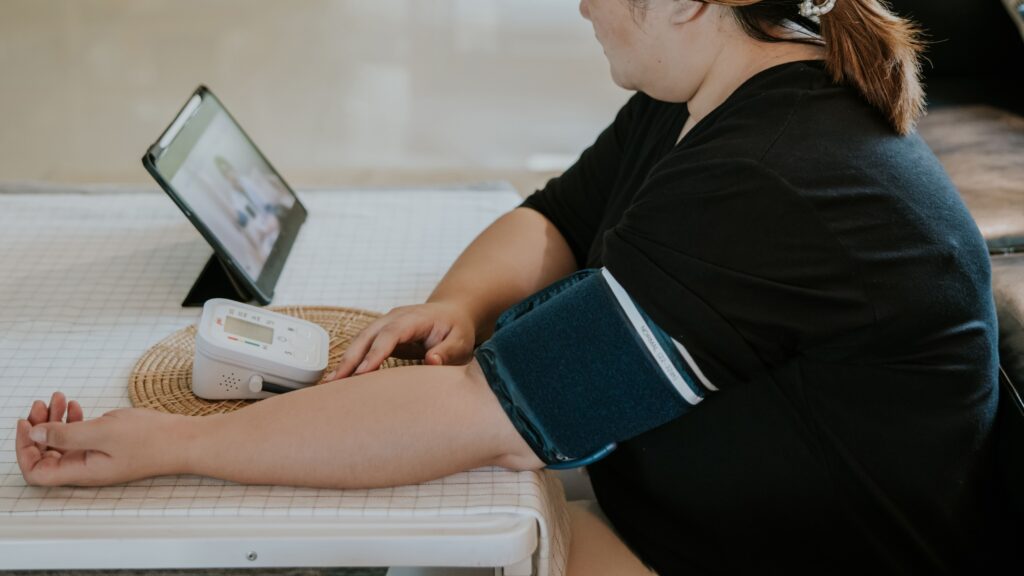
- Keep measuring on a schedule. Same time, same arm, seated and rested, rather than only when something feels off.
- Log heart rate separately from blood pressure. Write down all three numbers so a pulse change is not mistaken for a pressure change.
- Bring the log to every follow-up. Patterns across weeks are far more useful to a provider than any single reading.
- Never reduce or stop a blood pressure medication on your own. Changes to that prescription come from the provider who wrote it.
- Report dizziness or lightheadedness promptly. Those can signal that pressure has dropped further than intended.
Dropping further than intended is uncommon and manageable when someone is watching for it, which is why lab work and a full history review come before any program starts at our Lee’s Summit office. Our medical weight loss process is built around that monitoring rather than around the prescription alone.
Whether someone is a good candidate at all is settled during that same review, and an existing cardiovascular history is one of the factors that shapes the answer.
Is Tirzepatide Better Than Semaglutide for Blood Pressure?
Tirzepatide produced larger blood pressure reductions than semaglutide in their respective trials, though comparing across separate studies has real limits. The SELECT trial of semaglutide reported a systolic reduction of 3.31 mm Hg compared with placebo, while the tirzepatide substudy reported 7.4 to 10.6 mm Hg.
Limits on that comparison are worth stating plainly. The two trials enrolled different populations, used different measurement methods, and ran for different lengths of time. SELECT enrolled people aged 45 and older with existing cardiovascular disease and measured office readings, while the tirzepatide substudy enrolled a younger group without diabetes and used 24-hour ambulatory monitoring, which tends to capture larger differences.
Capturing larger differences by method is not the same as the drug working better, so the honest summary is that both lower systolic pressure and tirzepatide’s reduction appears larger. Which medication suits a given patient depends on history, tolerance, and goals rather than on a single measurement, and that assessment happens before any GLP-1 therapy begins.
Does Semaglutide Affect Blood Pressure?
Semaglutide lowers systolic blood pressure modestly. The SELECT trial published in the New England Journal of Medicine recorded a 3.31 mm Hg reduction versus placebo, with a smaller diastolic reduction of about 0.55 mm Hg. Pooled analyses of weight management trials have reported systolic reductions closer to 5 mm Hg.
Reductions in that range are smaller than tirzepatide’s but still clinically relevant, and the same weight-loss mechanism appears to be doing much of the work. Patients comparing semaglutide results against tirzepatide are looking at two medications that move blood pressure the same direction by different magnitudes.
Can Semaglutide Raise Your Blood Pressure?
Semaglutide has not been shown to raise blood pressure. As with tirzepatide, it does raise resting heart rate, by about 3.1 beats per minute versus placebo in the SELECT trial, and that is the source of most reports suggesting otherwise.
Suggesting otherwise usually comes from someone reading a higher pulse on a home monitor and interpreting it as a pressure change. The distinction between the two numbers applies to both medications identically.
What Are the Benefits of Tirzepatide Besides Weight Loss?
Tirzepatide has shown measurable effects beyond weight loss across its clinical trial program, most of them connected to the metabolic improvements that accompany losing weight. The list below covers what trials actually measured rather than what the medication might theoretically do.
- Lower 24-hour systolic blood pressure, by 7.4 to 10.6 mm Hg in the ambulatory monitoring substudy
- Lower diastolic blood pressure, by smaller amounts of roughly 0.5 to 2.9 mm Hg
- Improved blood sugar control, which is the basis of its original approval for type 2 diabetes
- Improved cholesterol and lipid measures, reported across the SURMOUNT program
- Reduced waist circumference, reflecting loss of visceral fat rather than scale weight alone
- Treatment of obstructive sleep apnea, an approved indication in adults with obesity
Approved indications and measured trial outcomes are different things, and only a prescriber can say which apply to you. Tirzepatide sits within the broader category of peptide therapy alongside compounds with entirely unrelated purposes.
Unrelated purposes aside, the common thread through nearly every benefit above is weight reduction, which is why nutrition and activity remain part of the plan rather than optional extras. Guidance on what to eat during treatment supports the same outcomes the trials measured.
Should You Take Tirzepatide for High Blood Pressure?
You should not take tirzepatide for high blood pressure. It is approved for chronic weight management and for type 2 diabetes, not for hypertension, and prescribing it specifically to lower blood pressure is outside what the evidence supports. The reductions measured in SURMOUNT-1 were a side benefit observed in people being treated for weight.
Weight is the indication, and that distinction is not a technicality. SURMOUNT-1 excluded people with diabetes and people with uncontrolled hypertension, so the published figures describe a specific population: adults with obesity whose blood pressure was already below 140/90 at the start. How the medication behaves in someone with poorly controlled hypertension was not studied here.
Studying it properly is still underway, and larger trials examining cardiovascular outcomes are in progress. If high blood pressure is your main concern, that belongs with a primary care provider or cardiologist. If weight is your concern and blood pressure improves along the way, that is a welcome outcome your provider tracks as part of a GLP-1 program rather than the goal of it.
The goal of our program is sustainable weight change supported by habits that hold, which is what our posts on program results describe in more detail.
Frequently Asked Questions
Is Tirzepatide Approved to Treat High Blood Pressure?
Tirzepatide is not approved to treat high blood pressure. The FDA has approved it for type 2 diabetes, for chronic weight management in adults with obesity or overweight with a weight-related condition, and for obstructive sleep apnea in adults with obesity. Blood pressure reduction is a measured effect, not an approved indication.
Can Tirzepatide Cause Low Blood Pressure?
Tirzepatide can lower blood pressure enough that someone already taking antihypertensive medication ends up more medicated than they need, which may produce lightheadedness or dizziness. This is why providers monitor readings during treatment and adjust prescriptions when appropriate. Report those symptoms to your prescriber rather than changing a dose yourself.
How Long Does Tirzepatide Take to Affect Blood Pressure?
The substudy measured blood pressure at the start of treatment and again at week 36, so the published figures reflect roughly eight months of treatment. Measurements were not taken in between, which means the study cannot say how early the change begins. Blood pressure generally tracks with weight loss, which builds over months.
Does Blood Pressure Go Back Up If You Stop Tirzepatide?
Nobody knows yet. Dr. Michael Hall of the University of Mississippi Medical Center identified this specific question as one requiring further study, noting it is unclear whether blood pressure rebounds after medications like tirzepatide are discontinued or whether the reduction holds. Weight regain after stopping is well documented, which suggests pressure may follow.
Can You Take Tirzepatide if Your Blood Pressure Is Not Controlled?
SURMOUNT-1 excluded people with uncontrolled hypertension, so the trial data does not describe that group. Whether tirzepatide is appropriate for someone whose blood pressure is not yet controlled is a clinical decision made by a prescriber with your full history, often in coordination with the physician managing your blood pressure.
Does Tirzepatide Help Cholesterol Too?
Tirzepatide improved lipid measures across the SURMOUNT trial program, alongside improvements in blood pressure and blood sugar. As with blood pressure, much of the improvement appears tied to weight loss rather than to a direct effect on cholesterol production.
Can You Take Semaglutide With Blood Pressure Medication?
Many people do, and the same monitoring applies as with tirzepatide. Semaglutide lowers systolic pressure modestly, so an existing blood pressure prescription may need review as weight comes down. That review belongs to your prescribing provider.
The Bottom Line
Tirzepatide does lower blood pressure. The best evidence available, a 494-participant ambulatory monitoring substudy of SURMOUNT-1 published in Hypertension, found 24-hour systolic reductions of 7.4 to 10.6 mm Hg over 36 weeks, holding through both day and night, with roughly 70 percent of that effect explained by weight loss. Heart rate rose slightly in the same study, which is where most of the confusion about this medication raising blood pressure comes from. None of that makes tirzepatide a blood pressure treatment, and none of it is a reason to change a prescription someone else wrote for you.
If you are considering medical weight loss and already manage your blood pressure, that is a conversation worth having before you start rather than after. Our team in Lee’s Summit reviews labs, medications, and history at every consultation, and we coordinate with your other providers when it makes sense. Reach Slimming Solutions Med Spa at (816) 524-3438 whenever you would like to talk it through.
![[thumb]](https://slimmingsolutionsspa.com/wp-content/uploads/2023/12/botox1-150x150.png)
![[thumb]](https://slimmingsolutionsspa.com/wp-content/uploads/2023/12/Before2-150x150.png)
![[thumb]](https://slimmingsolutionsspa.com/wp-content/uploads/2023/12/Before3-150x150.png)



![[thumb]](https://slimmingsolutionsspa.com/wp-content/uploads/2023/12/revanesse-versa-1-150x150.png)
![[thumb]](https://slimmingsolutionsspa.com/wp-content/uploads/2023/12/revanesse-versa-2-150x150.png)
![[thumb]](https://slimmingsolutionsspa.com/wp-content/uploads/2023/12/revanesse-versa-3-150x150.png)
![[thumb]](https://slimmingsolutionsspa.com/wp-content/uploads/2023/12/revanesse-versa-4-150x150.png)
![[thumb]](https://slimmingsolutionsspa.com/wp-content/uploads/2023/12/revanesse-versa-5-150x150.png)
![[thumb]](https://slimmingsolutionsspa.com/wp-content/uploads/2024/01/Eyebrow-treatment-1-1-150x150.png)
![[thumb]](https://slimmingsolutionsspa.com/wp-content/uploads/2023/12/Skin-Rejuvenation-1-150x150.png)
![[thumb]](https://slimmingsolutionsspa.com/wp-content/uploads/2023/12/Skin-Rejuvenation-2-150x150.png)


![[thumb]](https://slimmingsolutionsspa.com/wp-content/uploads/2024/01/Lip-Filler-1-150x150.png)
![[thumb]](https://slimmingsolutionsspa.com/wp-content/uploads/2024/01/Lip-Filler-2-150x150.png)
![[thumb]](https://slimmingsolutionsspa.com/wp-content/uploads/2025/02/Lip-Filler-1-150x150.png)
![[thumb]](https://slimmingsolutionsspa.com/wp-content/uploads/2024/01/Lip-Filler-150x150.jpg)
![[thumb]](https://slimmingsolutionsspa.com/wp-content/uploads/2024/01/Before-1-150x150.jpg)

![[thumb]](https://slimmingsolutionsspa.com/wp-content/uploads/2024/01/RHA-Treatmetn-3-150x150.png)
![[thumb]](https://slimmingsolutionsspa.com/wp-content/uploads/2024/01/RHA-Treatmetn-2-150x150.png)
![[thumb]](https://slimmingsolutionsspa.com/wp-content/uploads/2024/01/RHA-Treatmetn-1-150x150.png)
![[thumb]](https://slimmingsolutionsspa.com/wp-content/uploads/2024/01/Thread-Lifts-1-150x150.png)
![[thumb]](https://slimmingsolutionsspa.com/wp-content/uploads/2024/01/Thread-Lifts-2-150x150.png)
![[thumb]](https://slimmingsolutionsspa.com/wp-content/uploads/2025/02/Lip-Filler-2-150x150.png)

![[thumb]](https://slimmingsolutionsspa.com/wp-content/uploads/2023/12/skin-reuvulation1-150x150.png)
![[thumb]](https://slimmingsolutionsspa.com/wp-content/uploads/2023/12/skin-rejuvulation-2-150x150.png)
![[thumb]](https://slimmingsolutionsspa.com/wp-content/uploads/2023/12/Skin-Tighting-150x150.png)
![[thumb]](https://slimmingsolutionsspa.com/wp-content/uploads/2023/12/Before-150x150.jpg)
![[thumb]](https://slimmingsolutionsspa.com/wp-content/uploads/2023/12/weightloss-1-150x150.png)
![[thumb]](https://slimmingsolutionsspa.com/wp-content/uploads/2023/12/weightloss-2-150x150.png)
![[thumb]](https://slimmingsolutionsspa.com/wp-content/uploads/2023/12/2Weight-Loss-2-150x150.png)
![[thumb]](https://slimmingsolutionsspa.com/wp-content/uploads/2025/02/Weight-Loss-1-new-150x150.png)
![[thumb]](https://slimmingsolutionsspa.com/wp-content/uploads/2023/12/Weight-Loss-3-150x150.png)
![[thumb]](https://slimmingsolutionsspa.com/wp-content/uploads/2025/03/Slimming-Solutions-BA-Template-150x150.png)


![[thumb]](https://slimmingsolutionsspa.com/wp-content/uploads/2023/12/dat3-150x150.png)
![[thumb]](https://slimmingsolutionsspa.com/wp-content/uploads/2023/12/dat-0-150x150.png)
![[thumb]](https://slimmingsolutionsspa.com/wp-content/uploads/2023/12/dat-1-150x150.png)
![[thumb]](https://slimmingsolutionsspa.com/wp-content/uploads/2023/12/Before-1-150x150.png)

![[thumb]](https://slimmingsolutionsspa.com/wp-content/uploads/2024/01/EMS-Treatment-2-150x150.png)
![[thumb]](https://slimmingsolutionsspa.com/wp-content/uploads/2024/01/EMS-Treatment-1-150x150.png)
![[thumb]](https://slimmingsolutionsspa.com/wp-content/uploads/2025/02/ems-BNA-front-150x150.png)
![[thumb]](https://slimmingsolutionsspa.com/wp-content/uploads/2025/02/EMS-bna-SIDE-150x150.png)
![[thumb]](https://slimmingsolutionsspa.com/wp-content/uploads/2024/01/EMS-Treatment-6-150x150.png)