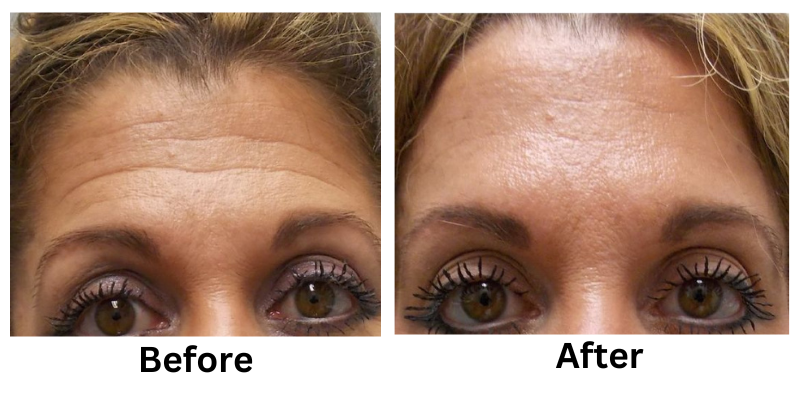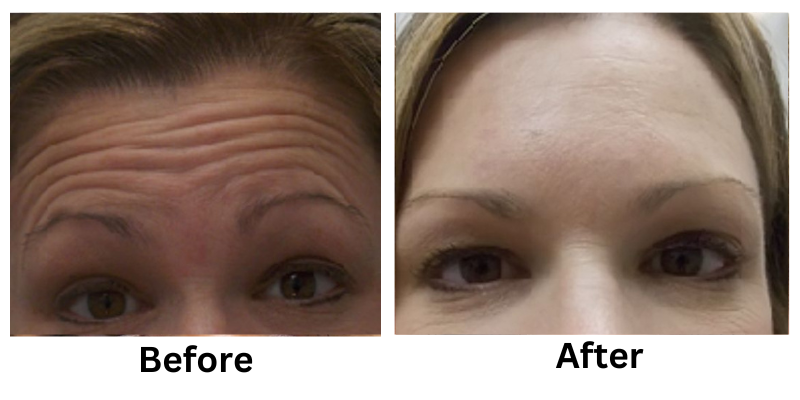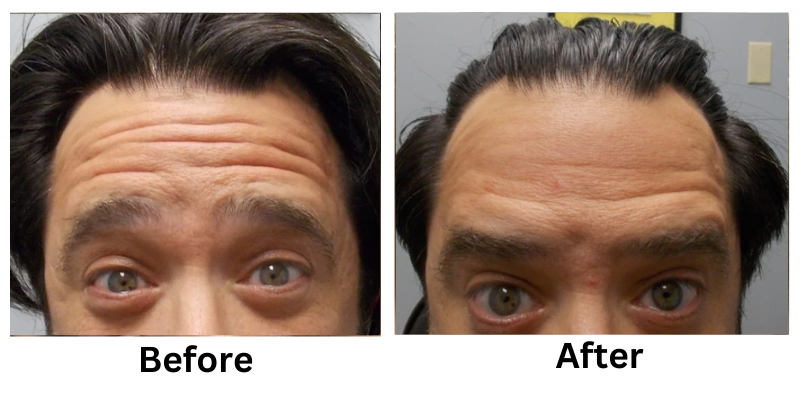
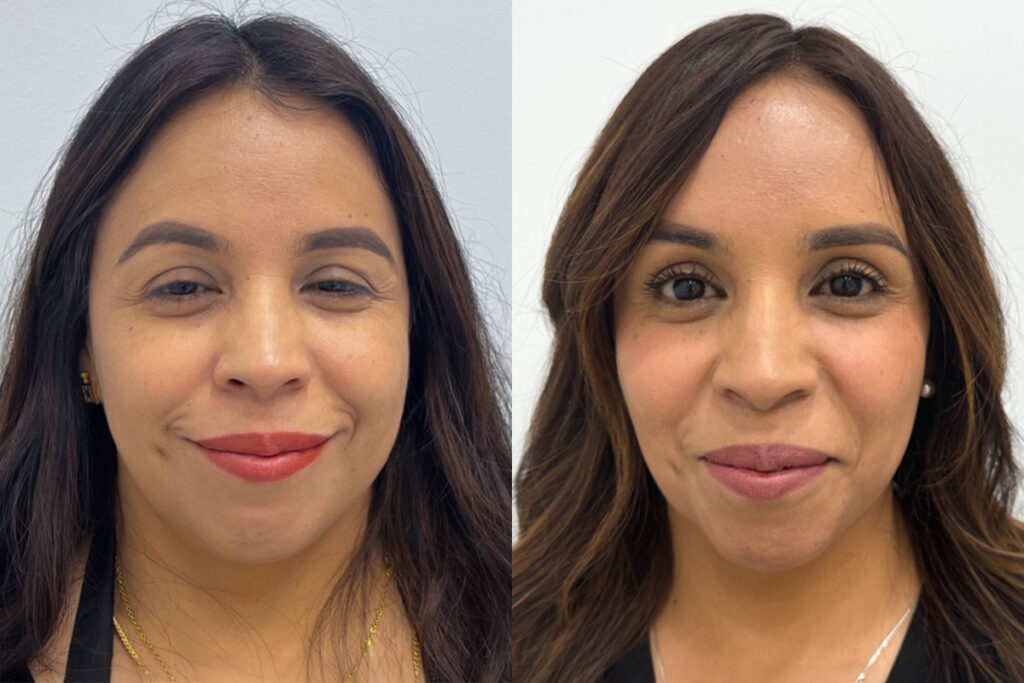
You cannot make Botox wear off faster. There is no reversal agent, antidote, or dissolving injection for Botox the way hyaluronidase exists for dermal filler. Once the product has reached the nerve ending, nothing you do at home removes it. Results fade on their own over 3 to 4 months as your body rebuilds the nerve connections that were temporarily switched off.
That is the short answer, and the rest of this page covers what is actually useful: why no antidote exists, exactly how long each treated area takes to fade, which factors genuinely shorten duration, why massage and heat make things worse rather than better, and what can be done right now if you are unhappy with a result.
Can You Make Botox Wear Off Faster?
You cannot make Botox wear off faster, because there is no product that reverses it. Dermal filler is different. Hyaluronic acid fillers such as Juvederm and Restylane can be dissolved with an enzyme called hyaluronidase, and the gel often disappears within about 24 hours. Many people assume a similar option exists for wrinkle relaxers, and it does not.
No similar option exists because the two products do nothing alike. Filler is a gel that sits in your tissue, so an enzyme can break it down. Botox treatments work on nerve signaling instead, and by the time you notice the effect, the product has already finished its job and moved inside the nerve ending.
Finishing its job that quickly is precisely what makes reversal impossible, and it is also the reason the effect is reliably temporary. Nothing permanent happened. Your body simply has repair work to do.
Why Is There No Way to Dissolve Botox?
There is no way to dissolve Botox because there is nothing left in your tissue to dissolve. Within hours of injection, the toxin binds to a protein called SV2 on the surface of the nerve ending, gets pulled inside, and cuts a protein called SNAP-25. SNAP-25 is the protein the nerve needs in order to release acetylcholine, the chemical messenger that tells a muscle to contract.
Contracting becomes impossible once SNAP-25 is cut, which is what produces the smoothing you see. Research published in the Journal of Physiology describes this sequence in detail, and it explains why an injection given on Monday is beyond reach by Tuesday. There is no reservoir of product waiting in the muscle. The change happened inside the nerve terminal.
Inside that nerve terminal, the cut protein persists far longer than most people expect. A study in Toxicon found cleaved SNAP-25 in nerve terminals within 24 hours of injection and still present more than two months later, with other research suggesting the toxin’s active portion can keep working for over 11 weeks. Those timelines line up almost exactly with how long results last, which is more detail on how Botox works than most patients ever hear.
Does Botox Ever Fully Leave Your Body?
Botox does fully leave your body, and it does so without any help from you. The toxin itself is broken down by normal cellular processes, and once the nerve ending has rebuilt its signaling machinery, nothing remains. It does not accumulate in your system from one treatment to the next.
Accumulation is a common worry and an unfounded one. Each treatment is handled and cleared independently. What does change over time is the muscle itself, which gradually weakens from reduced use, and that is a separate effect from the product lingering.
How Does Botox Wear Off?
Botox wears off gradually, through a rebuilding process rather than a flush-out. The nerve ending grows new branches, called axonal sprouts, which research in the Journal of Physiology observed extending within a week of injection. Those sprouts form fresh connections to the muscle, and the first signs of returning function appeared around 2 to 3 weeks in laboratory models.
Laboratory models move faster than human faces, but the principle holds: return of movement is new construction, not drainage. Over the following weeks the original nerve ending repairs itself, the temporary sprouts retract, and normal signaling resumes.
Resuming normal signaling happens in small increments, which is why nobody wakes up one morning with full movement restored. You notice slightly more expression each week, usually starting somewhere around week eight to ten.
How Long Does Botox Take to Wear Off?
Botox takes 3 to 4 months to wear off in most areas, with published clinical duration for neuromodulators falling between 12 and 16 weeks. The exact timing depends heavily on which area was treated, because dose size, muscle size, and how much that muscle moves all shift the timeline. The figures below reflect clinical observation across aesthetic practices alongside the manufacturer’s onset data.
| Treated Area | Full Effect | Typical Duration | Why It Differs |
|---|---|---|---|
| Glabella (the 11s) | Day 14 | 12 to 16 weeks | Higher concentrated dose in a muscle that moves less often |
| Forehead | Day 14 | 8 to 12 weeks | Thin, flat muscle in near-constant motion |
| Crow’s feet | Day 14 | About 8 to 12 weeks | Thin muscle that contracts with every blink and smile |
| Lip flip | Day 7 to 14 | About 8 weeks | Very small dose in a muscle used for speech and eating |
| Masseter (jaw) | Week 4 to 6 | 4 to 6 months | Large, deep muscle treated with substantially higher doses |
Reading across that table shows why two people can have wildly different experiences with the same appointment. Someone treated only in the lip flip may feel movement returning by week eight while a jaw treatment from the same visit is still going strong at month five. Our post on how long Botox lasts breaks the general timeline down further.
When Does Botox Start to Wear Off?
Botox starts to wear off around week eight to ten for most facial areas, though the process begins quietly much earlier. Your body starts repairing nerve endings almost immediately after injection, so the decline is underway long before you can see it.
Seeing it takes time because the smoothing effect holds steady while enough nerve endings remain blocked. Once a threshold is crossed, expression returns noticeably over a few weeks rather than overnight, which varies across the different areas Botox treats.
Is It Normal for Botox to Wear Off After 2 Months?
It is normal for Botox to wear off after 2 months in high-movement areas and for first-time patients, though it is on the shorter end of the expected range. Forehead and crow’s feet treatments commonly run 8 to 12 weeks, so fading at the eight-week mark falls within normal.
Falling below eight weeks consistently is worth a conversation rather than acceptance. The usual cause is underdosing rather than any problem with your biology, since true resistance to botulinum toxin affects under 1 percent of patients according to published clinical observation. Adjusting the units of Botox at your next visit usually resolves it.
When Does Masseter Botox Wear Off?
Masseter Botox typically wears off over 4 to 6 months, noticeably longer than facial treatments. The masseter is one of the strongest muscles in the body relative to its size, and treating it requires considerably higher doses than forehead or crow’s feet work.
Higher doses in a large, deep muscle mean more nerve endings affected and more rebuilding required before full strength returns. Patients treating jaw tension or jawline slimming should plan around that longer horizon rather than a three-month cycle.
What Causes Botox to Wear Off Faster?
Several factors cause Botox to wear off faster, and most of them are about your biology rather than anything you did. The strongest influences are dose, muscle strength, and metabolic rate. Knowing which ones apply to you is how you and your injector adjust the plan next time.
Adjusting the plan starts with recognizing the common contributors:
- Underdosing. Too few units for your muscle mass is the single most frequent reason results fade early
- Strong or highly active muscles. Expressive faces and naturally thick facial muscles push back against the product sooner
- A fast metabolic rate. Athletes and people with naturally high metabolism often process the product more quickly
- First-time treatment. Untrained muscles are at full strength and tend to recover faster
- Placement that is too shallow or too deep. Product that does not reach the target muscle properly produces shorter results
- High-movement treatment areas. The forehead and crow’s feet simply work harder than the glabella
- Chronic stress. Elevated stress hormones are associated with faster breakdown of proteins generally
- Low zinc levels. A study in the Journal of Drugs in Dermatology found that zinc paired with phytase extended duration, since botulinum toxin is a zinc-dependent enzyme
Zinc-dependent chemistry is one of the few items on that list you can actually influence, and your provider can advise whether supplementation suits you. The rest are handled through dosing and placement rather than lifestyle changes.
Does Exercise Make Botox Wear Off Faster?
Intense exercise may make Botox wear off faster, though the evidence is observational rather than from controlled trials. High-intensity training raises blood flow and metabolic rate, and many practices report that dedicated athletes and frequent high-intensity exercisers see shorter duration than average patients.
Average patients doing moderate activity see no meaningful difference, so there is no reason to change a normal routine. The one firm rule concerns the first 24 hours after injection, when heavy workouts are avoided for a different reason entirely, covered in the massage section below.
Does Heat or Sun Make Botox Wear Off Faster?
Heat and sun exposure can shorten how long your results look their best, through two separate mechanisms. Saunas, steam rooms, and hot yoga increase circulation to the treated area, which practices commonly associate with faster fading. Sun exposure works differently, breaking down collagen so returning lines look more pronounced than they otherwise would.
Pronounced lines from collagen loss are not the same as the product wearing off, though they feel identical to the patient. Daily broad-spectrum sunscreen protects the skin quality that makes any injectable result look good.
Does Microneedling Make Botox Wear Off Faster?
Microneedling does not make Botox wear off faster when the two treatments are properly spaced. The concern is timing rather than interaction. Pressure and manipulation of the face in the first two weeks after injection can displace product before it has fully settled, which is why facials, peels, and needling are scheduled apart from injectable appointments.
Scheduling them apart lets both treatments do their separate jobs. RF microneedling builds collagen in the skin while a wrinkle relaxer quiets muscle movement beneath it, and patients who combine the two often feel their injectable results look better for longer because the skin itself has improved.
Can Botox Be Massaged Out?
Botox cannot be massaged out, and attempting it in the first two weeks creates problems rather than solving them. Massage does not remove product from the nerve ending. What it can do is push product that has not yet settled into neighboring muscles you never intended to treat.
Treating muscles you never intended is exactly how new complications appear. Product that migrates from the forehead toward the brow can create heaviness. Product that drifts near the eyelid can cause a temporary droop. Published analysis in the Journal of Cosmetic Dermatology puts eyelid droop at roughly 2.5 percent of botulinum toxin patients overall, and migration is one of the mechanisms behind it.
Behind nearly every one of those cases is either placement or post-treatment handling, which is why we give every patient the same short list of things to avoid for the first day or two after neurotoxin treatment. Someone hoping to speed up fading by rubbing the area is far more likely to end up with a second thing they dislike than with an earlier return of movement.
What Happens If You Bend Over After Botox?
Bending over once shortly after Botox is very unlikely to cause a problem, though staying upright for about four hours is standard guidance. The reasoning is the same as the massage rule: gravity and pressure can shift product that has not yet bound to nerve endings.
Binding happens within a few hours, after which normal movement and positions are fine. If you forgot and bent down to pick something up, there is no cause for alarm and no action to take.
Does Botox Wear Off Faster the First Time?
Botox does wear off faster the first time for many patients, often lasting only 8 to 10 weeks instead of the usual 3 to 4 months. Your muscles are at full strength during a first treatment, having never experienced a period of reduced movement.
Reduced movement over repeated treatments gradually weakens those muscles through mild disuse atrophy. Weaker muscles need less product to stay relaxed and take longer to regain full contraction strength, which is why longtime patients commonly stretch the gap between appointments.
Stretching that gap too far works against you, though, since muscles that fully recover their strength put you back at the starting point. Our post on treatment schedule timing covers how to find the right interval.
What Can You Do If You Do Not Like Your Botox Results?
If you do not like your Botox results, the most useful step is returning to your injector rather than waiting it out, because most unwanted outcomes are correctable. A small, well-placed adjustment often fixes in one visit what waiting would take three months to resolve.
Resolving it follows a straightforward sequence:
- Wait until day 14 before judging. Botox reaches full effect around two weeks, and asymmetry at day five frequently evens out on its own.
- Photograph what bothers you. Capture the area at rest and in motion so your injector can see the pattern rather than work from description.
- Call your injector first. The person who treated you knows exactly what was placed where, which makes correction far more precise.
- Ask about a corrective dose. Many unwanted results come from an untreated opposing muscle, and adding a few units to that muscle rebalances the face.
- Ask about a referral for true eyelid droop. In the rare instance of genuine lid ptosis, prescription eye drops containing apraclonidine 0.5 percent can temporarily lift the lid by 1 to 3 millimeters.
- Note what to change next time. Record the dose and placement so your next appointment starts from better information.
Better information is what turns a disappointing first experience into a good second one, and we are glad to assess a result we did not place. Patients come to us in Lee’s Summit regularly for exactly this, and a conversation about Botox Cosmetic dosing costs nothing.
How Do You Fix Spock Eyebrows After Botox?
Spock eyebrows are fixed with a few additional units placed in the outer forehead, not by waiting for the treatment to fade. The arched look appears when the central forehead is relaxed while the outer edges of the muscle stay active, pulling the tail of the brow upward.
Pulling upward stops once those outer fibers are treated as well, and the correction usually takes only a minute or two in the chair. This is one of the most common and most easily solved complaints in aesthetics, and it is closely related to the deliberate eyebrow lift effect injectors create on purpose.
How Long Does a Heavy Forehead Last After Botox?
A heavy forehead after Botox typically eases within a few weeks, well before the treatment fully fades. Heaviness happens when the forehead muscle that lifts the brows is relaxed more than the glabellar muscles that pull them down, leaving the downward pull unopposed.
Unopposed downward pull is often correctable in the same visit by treating the glabella more completely, which releases the brows upward. When the glabella has already been fully treated, the heaviness resolves on its own as the forehead regains partial movement, usually faster than the full duration of the treatment.
How Do You Get a Result You Will Not Want to Undo?
You get a result you will not want to undo by choosing an experienced injector, starting conservatively, and reviewing at two weeks. Injector experience carries more weight here than any other variable. A multicenter study reported in the Journal of Cosmetic Dermatology found eyelid droop in 5.4 percent of cases handled by inexperienced injectors compared with under 1 percent among experienced ones.
Experienced hands reduce that risk more than fivefold, which is the strongest argument available for being selective about where you go. Nurse Joi has been a certified Master Injector since 2014 and injects five days a week, and that volume of practice is what makes conservative, precise dosing routine rather than cautious guesswork.
Guesswork is also avoidable by asking for less at a first appointment. Starting with fewer units and adding at the two-week review produces a natural result far more reliably than starting high, and it means nobody spends three months waiting out something they disliked. Patients worried about overcorrection often find our post on the frozen look reassuring.
Reassurance also comes from knowing there are options. We carry four neurotoxins, so patients whose results consistently fade early can try Xeomin or another formulation rather than assuming the category does not suit them.
Frequently Asked Questions
Is There an Antidote for Botox?
There is no antidote for Botox. No medication, injection, or supplement reverses botulinum toxin once it has reached the nerve ending. Dermal filler is the exception among injectables, since hyaluronic acid products can be dissolved with hyaluronidase. For wrinkle relaxers, time is the only mechanism.
Does Botox Make You Age Faster?
Botox does not make you age faster. The opposite pattern is more common, since relaxing the muscles that fold the skin reduces how deeply expression lines etch over the years. When treatment stops, your face returns to the aging trajectory it was already on rather than jumping ahead of it.
Will Wrinkles Come Back Worse After Botox Wears Off?
Wrinkles do not come back worse after Botox wears off. They return to roughly where they were, and often look slightly better than they would have, because the treated muscles spent months folding the skin less. The impression of worsening comes from the contrast with how smooth the area looked, not from any actual change.
Does Sweating or Drinking Water Flush Out Botox?
Sweating and drinking water do not flush out Botox. The product is not circulating in your bloodstream waiting to be excreted; it has already acted inside the nerve ending. Hydration supports skin quality and overall health, which is worthwhile for other reasons, but it has no effect on how long results last.
Can You Stop Getting Botox Once You Start?
You can stop getting Botox at any point with no consequence. There is no rule that starting commits you to continuing, and nothing about stopping damages your face. Movement returns gradually and your appearance settles back to its untreated baseline over the following months.
Can Supplements Make Botox Wear Off Faster?
No supplement makes Botox wear off faster. Research on zinc points in the opposite direction, with a study in the Journal of Drugs in Dermatology finding that zinc paired with phytase extended duration rather than shortening it. Nothing available over the counter accelerates nerve recovery.
How Soon Can You Get Botox Again After It Wears Off?
Most patients return every 3 to 4 months, and treating slightly before results fully fade tends to produce better long-term outcomes than waiting for complete return of movement. Treating sooner than 3 months is generally avoided. Your injector sets the interval based on your area treated and how your results have held.
The Bottom Line
There is no way to make Botox wear off faster, and the reason is worth knowing rather than just accepting. The product is not sitting in your face waiting to be dissolved. It cut a protein inside your nerve endings within hours of the injection, and your body is already rebuilding those connections, growing new nerve branches within the first week and restoring normal signaling over the months that follow. Massage, heat, and hard workouts do not speed that up, and in the first two weeks they can push product somewhere you did not want it.
If you are reading this because you dislike a result, the better news is that most unwanted outcomes are correctable in a single short visit rather than a three-month wait. Our team in Lee’s Summit is happy to look at the area and tell you honestly whether an adjustment helps or whether time is the right answer. Reach Slimming Solutions Med Spa at (816) 524-3438 whenever you would like a second opinion.