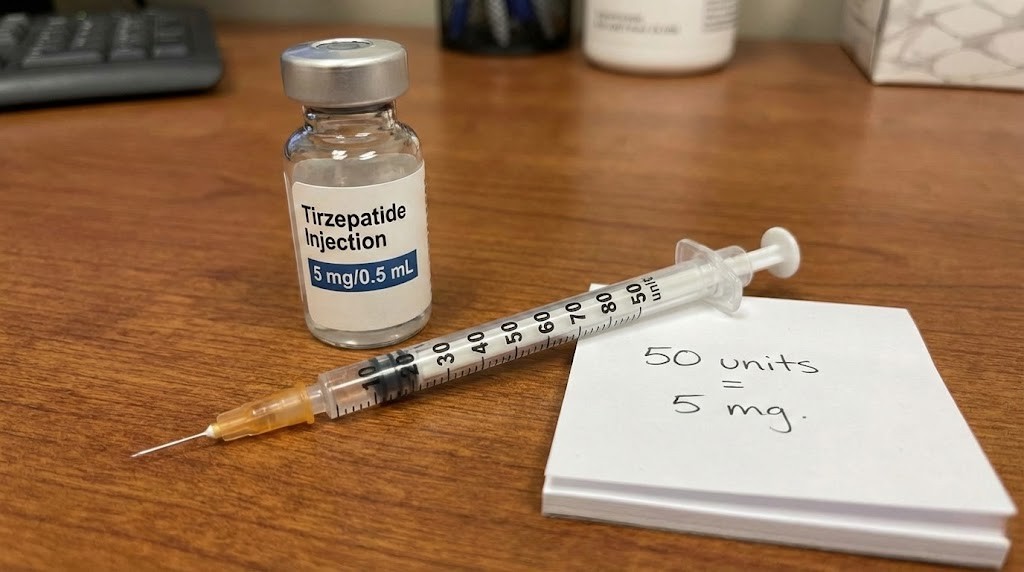
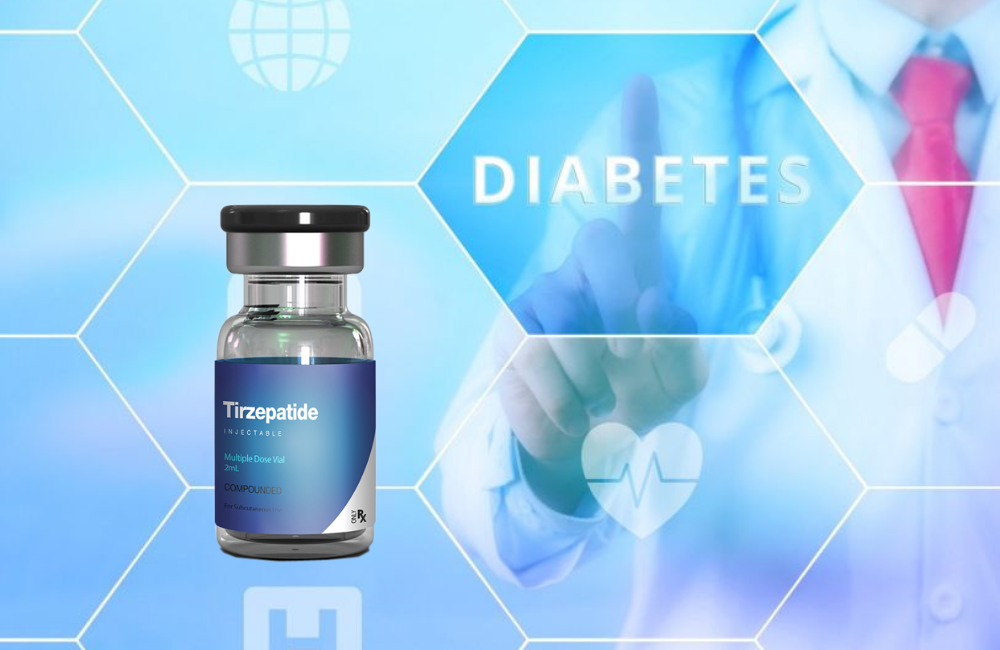
Yes, tirzepatide is a peptide. It is a synthetic chain of 39 amino acids built on the structure of a natural gut hormone, carrying a fatty acid chain that keeps it active in your body for about a week. It works as a dual agonist, meaning it switches on two receptors at once: GIP and GLP-1. You know it by the brand names Mounjaro and Zepbound, and both contain the same peptide.
Below we cover what makes a molecule a peptide, exactly what tirzepatide is built from, why that structure forces it to be injected rather than swallowed, how it compares with semaglutide and with the natural hormones it imitates, and what else counts as a peptide in medical use.
Is Tirzepatide a Peptide?
Tirzepatide is a peptide, specifically a synthetic 39-amino-acid chain engineered in a laboratory rather than produced by your body. Eli Lilly’s clinical trial documentation describes it as a 39-amino-acid synthetic peptide whose structure is based on the GIP hormone sequence, which is the detail that separates it from every other weight loss injection on the market.
Separating it from the others is the dual-receptor design that structure makes possible. Tirzepatide activates both the glucose-dependent insulinotropic polypeptide (GIP) receptor and the glucagon-like peptide-1 (GLP-1) receptor, where most comparable medications activate only one. The U.S. Food and Drug Administration approved it as Mounjaro in May 2022 for type 2 diabetes and later as Zepbound for chronic weight management, two brand names covering one identical molecule.
One molecule under two labels is why people searching for its classification often find conflicting descriptions. Calling it a GLP-1 medication describes its behavior. Calling it a peptide describes its chemistry, and both are correct at the same time.
What Is a Peptide?
A peptide is a short chain of amino acids, generally between 2 and 50 of them, linked together in a specific sequence. Amino acids are the building blocks your body uses to assemble everything from muscle tissue to hormones, and the order they sit in determines what the finished chain does. The National Center for Biotechnology Information places the usual peptide range at roughly 2 to 50 residues.
Residue count is the whole reason the number 39 matters. At 39 amino acids, tirzepatide sits comfortably inside the peptide range, long enough to carry a precise biological message and short enough that chemists classify it as a peptide rather than a protein. Chains much longer than about 50 amino acids are generally called proteins instead, which is why insulin at 51 residues sits right on the boundary.
Sitting inside that range gives peptides their defining job: they act as signaling molecules. Peptides tell cells what to do by binding to receptors on the cell surface, triggering a cascade inside. That signaling role is the foundation of peptide therapy, where specific chains are used to prompt specific responses rather than to override your biology.
Is Tirzepatide a Peptide Hormone?
Tirzepatide is a peptide hormone analog rather than a peptide hormone itself. A peptide hormone is something your body produces, such as insulin or the natural incretin hormones released by your gut after you eat. Tirzepatide is manufactured, modeled on one of those hormones, and designed to behave like two of them at once.
Behaving like a natural hormone while lasting far longer is the entire point of the engineering. Your own incretins are released and destroyed within minutes. Tirzepatide carries deliberate modifications that let it do the same job for days, which is covered in more detail in our post on the benefits of peptides.
What Is the Difference Between a Peptide and Tirzepatide?
The difference between a peptide and tirzepatide is the difference between a category and one member of it. Peptide is the broad class covering every short amino acid chain, from collagen fragments to insulin to signaling molecules your body makes on its own. Tirzepatide is one specific, patented peptide inside that class.
Inside that class sit thousands of distinct molecules with completely unrelated jobs. Asking whether tirzepatide is a peptide is like asking whether a sedan is a vehicle. The answer is yes, and it tells you almost nothing about what that particular one does, which is why the next question is always what it is built from.
What Is Tirzepatide Made Of?
Tirzepatide is made of 39 amino acids arranged in a sequence modeled on the GIP hormone, plus three deliberate chemical modifications that natural hormones do not have. The finished molecule weighs approximately 4,813 daltons and carries the chemical formula C225H348N48O68, according to the RCSB Protein Data Bank.
Three modifications turn a fragile natural sequence into a once-weekly medication. The first two replace the ordinary alanine at positions 2 and 13 with alpha-aminoisobutyric acid, an unusual amino acid often abbreviated Aib. That substitution makes the chain a poor target for dipeptidyl peptidase-4 (DPP-4), the enzyme that chews through natural incretins within minutes of their release.
Minutes of survival become days because of the third modification. A C20 fatty diacid is attached to the lysine at position 20 through a gamma-glutamate linker, which is the chemical anchor that changes everything about how long the peptide lasts.
Why Does Tirzepatide Have a Fatty Acid Attached?
Tirzepatide has a fatty acid attached because that chain lets it bind to albumin, the most abundant protein in your bloodstream. Albumin binding exceeds 99 percent, which creates a circulating reservoir that shields the peptide from kidney filtration and from the enzymes that would otherwise break it apart.
Breaking apart is exactly what happens to the natural version. Native GIP survives roughly 5 to 7 minutes in circulation. Tirzepatide has a terminal half-life of approximately 5 days, or about 120 hours, according to the FDA prescribing information. That is the difference between a hormone measured in minutes and a medication measured in days, achieved by a single fatty acid chain.
A single chain extending survival by a factor of roughly a thousand is what makes one injection a week realistic. Without it, the same peptide would need dosing several times an hour.
Why Must Tirzepatide Be Injected?
Tirzepatide must be injected because your digestive system treats peptides as food. Stomach acid and digestive enzymes exist specifically to break amino acid chains apart so your body can absorb the individual pieces, and they cannot tell the difference between a protein in your lunch and a 39-amino-acid medication.
Telling the difference is impossible for an enzyme, so a swallowed dose of tirzepatide would be dismantled before any of it reached your bloodstream. Subcutaneous injection bypasses the digestive tract entirely, delivering the intact chain into tissue just under the skin where it binds albumin and begins circulating.
Circulating intact is the requirement that governs almost every peptide medication, which is why insulin has always been injected and why GLP-1 weight loss treatment follows the same route. The injection is not a preference. It is a consequence of the molecule’s chemistry.
Do All Peptides Have to Be Injected?
Not all peptides have to be injected, though most therapeutic peptides do. Some are formulated as oral troches that dissolve against the cheek and absorb through the lining of the mouth, skipping the stomach. Others are delivered transdermally through the skin. We use all three routes depending on which peptide a protocol calls for.
Calling for a specific route depends on the size and stability of the chain. Shorter, sturdier peptides tolerate alternative delivery. Larger engineered peptides such as tirzepatide generally do not, which keeps them in the injectable category.
Is Tirzepatide a Peptide or a GLP-1?
Tirzepatide is both, and the question presents a false choice. Peptide describes what the molecule is made of. GLP-1 agonist describes what the molecule does when it reaches a receptor. A single substance can be accurately described both ways at the same time, because the two words answer different questions.
Answering both questions properly requires one more correction: tirzepatide is more than a GLP-1 agonist. It activates the GIP receptor as well, which is why its manufacturer and the research literature describe it as a dual agonist. Medications that act on GLP-1 alone belong to a narrower category.
What Peptide Is Similar to Tirzepatide?
Semaglutide is the peptide most similar to tirzepatide in both structure and purpose. Both are engineered incretin peptides, both carry a fatty acid chain for albumin binding, and both are injected weekly. The structural differences are easiest to see against the natural hormones they were designed to imitate, with the figures below drawn from the FDA prescribing information and published pharmacokinetic literature.
| Molecule | Amino Acids | Receptors Activated | Fatty Acid Chain | Half-Life |
|---|---|---|---|---|
| Tirzepatide | 39 | GIP and GLP-1 | C20 diacid at lysine 20 | About 5 days |
| Semaglutide | 31 | GLP-1 only | C18 diacid | About 7 days |
| Native GIP | 42 | GIP only | None | 5 to 7 minutes |
| Native GLP-1 | 30 | GLP-1 only | None | About 2 minutes |
Reading down the last column shows the engineering in a single glance. Both natural hormones vanish almost immediately. Both engineered peptides last the better part of a week, and the fatty acid column is the reason why. Patients comparing semaglutide results against tirzepatide are really comparing a single-receptor peptide against a dual-receptor one.
Is Tirzepatide Stronger Than Semaglutide?
Tirzepatide produces greater average weight loss than semaglutide in head-to-head research, though stronger is not quite the right word for what the extra receptor does. In the SURMOUNT-1 trial published in the New England Journal of Medicine, participants on 15 mg of tirzepatide lost a mean 20.9 percent of body weight over 72 weeks, and later head-to-head work found tirzepatide ahead of semaglutide on average.
Averages hide a wide spread, and plenty of people respond better to the single-receptor peptide. Which one suits a given patient depends on medical history, tolerance, and lab work rather than on trial averages, which is why we assess before prescribing rather than defaulting to whichever molecule performed best on paper. Our post on tirzepatide results covers the timeline in more depth.
How Does Tirzepatide Work in the Body?
Tirzepatide works in the body by binding to GIP and GLP-1 receptors and switching on the signals your gut normally sends after a meal. Those receptors sit on pancreatic cells, in the stomach wall, and in the appetite centers of the brain, so one peptide reaches several systems at once.
Reaching several systems produces four effects that build on each other. Insulin release improves when blood sugar is elevated. Glucagon release drops when it is not needed. The stomach empties more slowly, so a smaller meal feels satisfying for longer. Appetite signals in the brain quiet down, which is the change most patients describe first.
Describing that change as reduced food noise is common among patients starting weight loss injections, and it reflects real receptor activity rather than willpower. The GIP receptor adds effects on fat tissue metabolism and insulin sensitivity that GLP-1 activation alone does not produce.
When Is Tirzepatide at Its Peak?
Tirzepatide reaches its peak concentration 24 to 72 hours after an injection, according to Eli Lilly’s clinical trial protocols. Peak concentration is not the same as peak effect, because a weekly peptide accumulates across several doses before reaching a stable level in your bloodstream.
A stable level arrives at roughly four weeks of consistent weekly dosing, which is the point the research calls steady state. That timing explains a pattern patients often notice and misread:
- Hours 0 to 24. The peptide absorbs from the injection site and binds to albumin. Most people feel nothing yet.
- Hours 24 to 72. Blood concentration peaks. Appetite changes and any digestive side effects are usually most noticeable here.
- Days 4 to 7. Concentration tapers gradually. The 5-day half-life keeps meaningful levels present right up to the next dose.
- Weeks 2 to 4. Each dose lands before the previous one has cleared, so the baseline level rises week over week.
- Week 4 onward. Steady state. Levels now rise and fall around a consistent average rather than climbing.
- After a dose increase. The accumulation pattern repeats at the new level, which is why the four-week gap between titration steps exists.
The gap between steps is set by the FDA-approved schedule, which starts at 2.5 mg weekly and raises the dose by 2.5 mg no sooner than every four weeks to a maximum of 15 mg. Patients on our peptide treatments are monitored at those intervals for exactly this reason.
What Other Peptides Are Used in Therapy?
Other peptides used in therapy target repair, growth hormone signaling, gut function, skin renewal, and sexual wellness, and none of them work anything like tirzepatide. Sharing the peptide classification says only that these molecules are short amino acid chains, not that they do related things.
Here in Lee’s Summit we work with several distinct peptide categories:
- Sermorelin, a growth hormone-releasing hormone analog that prompts your pituitary gland to produce more growth hormone on its own
- GHK-Cu, a copper-carrying peptide used for tissue repair, collagen stimulation, and skin firmness
- Larazotide, which targets the tight junctions in the intestinal lining to support gut barrier function
- PT-141, which acts on melanocortin receptors in the central nervous system for sexual wellness
- Semaglutide, the single-receptor incretin peptide that sits closest to tirzepatide
- Collagen peptides, short fragments taken by mouth as a protein source rather than as a signaling medication
Signaling medications and nutritional supplements both carry the peptide label, which is the single biggest source of confusion around this subject. An experimental triple agonist such as retatrutide belongs to the first group and a scoop of collagen powder belongs to the second, even though a search engine files both under peptides.
Filing them together is why we build peptide protocols around a specific goal and specific lab work rather than around the category itself. The classification tells you the chemistry. The sequence tells you the job.
How Long Can You Take Tirzepatide?
How long you can take tirzepatide depends on your goals, your response, and your prescriber’s judgment rather than on a fixed endpoint. The FDA labeling describes it as a long-term treatment for chronic weight management, which means many patients stay on it well past the point where they reach their target weight, often at a lower maintenance dose.
Maintenance doses exist because the peptide clears completely once injections stop. Your body breaks tirzepatide down through proteolytic cleavage of the amino acid chain, beta-oxidation of the fatty diacid, and amide hydrolysis, leaving nothing behind within weeks. Appetite signaling returns to its untreated baseline when it does.
Returning to baseline is why we treat medical weight loss as a program rather than a prescription, pairing the peptide with habit work that holds after it stops. Gallup reports that 11 percent of U.S. adults now use a GLP-1 medication for weight loss, up from 3 percent two years earlier, and the question of duration is becoming the central one for that group.
That question gets answered individually at every follow-up, and whether someone is a good candidate for continued treatment is reassessed as results and tolerance change.
Does Being a Peptide Change How Tirzepatide Is Stored?
Being a peptide changes how tirzepatide is stored considerably, because peptides behave like small proteins and proteins are fragile. Heat, light, and freezing all damage amino acid chains, and a damaged chain cannot bind its receptor properly even when the vial looks perfectly normal.
Looking normal is the risk, since there is no visible signal when a peptide has degraded. Refrigeration between roughly 36 and 46 degrees Fahrenheit protects the chain, freezing destroys it permanently, and manufacturers specify limited windows for room-temperature storage. Your pharmacy label gives the exact terms for your product.
The exact terms matter more for peptides than for ordinary tablets, which is the practical consequence of everything above. Handling guidance, along with what to eat during treatment, is part of what we walk patients through before a vial or pen leaves the office.
Frequently Asked Questions
Is Tirzepatide a Protein?
Tirzepatide is not a protein, it is a peptide. The distinction is chain length. Peptides generally run 2 to 50 amino acids, while proteins are longer and usually fold into complex three-dimensional shapes. At 39 amino acids, tirzepatide falls clearly inside the peptide range.
Is Semaglutide a Peptide Too?
Semaglutide is also a peptide, built from 31 amino acids with a C18 fatty diacid chain attached for albumin binding. It differs from tirzepatide by activating the GLP-1 receptor alone rather than both GLP-1 and GIP, and it carries a slightly longer half-life of about 7 days.
Is Tirzepatide Natural or Synthetic?
Tirzepatide is synthetic. It is manufactured in a laboratory and does not occur anywhere in nature, though its sequence is modeled on the natural GIP hormone your gut produces. The deliberate modifications that make it last for days are what place it firmly in the synthetic category.
Are Collagen Peptides the Same as Tirzepatide?
Collagen peptides are not the same as tirzepatide, despite sharing the peptide name. Collagen peptides are short protein fragments taken by mouth as a dietary protein source for skin, joint, and hair support. Tirzepatide is a prescription signaling molecule that binds specific hormone receptors, and it has no nutritional role.
Is Tirzepatide FDA Approved?
Tirzepatide is FDA approved, under the brand name Mounjaro for type 2 diabetes since May 2022 and under the brand name Zepbound for chronic weight management. Compounded versions prepared by licensed pharmacies are a separate regulatory category and are not FDA approved.
When Is the Best Time of Day to Inject Tirzepatide?
There is no best time of day to inject tirzepatide, because the 5-day half-life makes the hour irrelevant. The FDA labeling allows it to be taken at any time of day, with or without food. Keeping the same day each week matters far more than the clock, and many patients pick a day that lets peak concentration at 24 to 72 hours fall over a quieter stretch of their week.
What Is the Molecular Weight of Tirzepatide?
Tirzepatide has a molecular weight of approximately 4,813 daltons, with the chemical formula C225H348N48O68. That figure places it between a small-molecule drug, which typically weighs under 500 daltons, and a biologic protein therapy, which often runs well over 100,000.
The Bottom Line
Tirzepatide is a peptide: a synthetic 39-amino-acid chain modeled on the GIP hormone, carrying an unusual amino acid at two positions to resist enzyme breakdown and a fatty acid at a third to bind albumin and stretch its half-life from minutes to about five days. Those three modifications explain nearly everything patients notice about it, from why it has to be injected to why it needs refrigeration to why the fourth week feels different from the first. The peptide label tells you the chemistry; the sequence tells you the job.
If you are weighing peptide options and want to know which sequence fits your goals rather than which one is trending, our team in Lee’s Summit is glad to walk through it with you. Reach Slimming Solutions Med Spa at (816) 524-3438 whenever you are ready to talk.

![[thumb]](https://slimmingsolutionsspa.com/wp-content/uploads/2023/12/botox1-150x150.png)
![[thumb]](https://slimmingsolutionsspa.com/wp-content/uploads/2023/12/Before2-150x150.png)
![[thumb]](https://slimmingsolutionsspa.com/wp-content/uploads/2023/12/Before3-150x150.png)






![[thumb]](https://slimmingsolutionsspa.com/wp-content/uploads/2023/12/revanesse-versa-1-150x150.png)
![[thumb]](https://slimmingsolutionsspa.com/wp-content/uploads/2023/12/revanesse-versa-2-150x150.png)
![[thumb]](https://slimmingsolutionsspa.com/wp-content/uploads/2023/12/revanesse-versa-3-150x150.png)
![[thumb]](https://slimmingsolutionsspa.com/wp-content/uploads/2023/12/revanesse-versa-4-150x150.png)
![[thumb]](https://slimmingsolutionsspa.com/wp-content/uploads/2023/12/revanesse-versa-5-150x150.png)
![[thumb]](https://slimmingsolutionsspa.com/wp-content/uploads/2024/01/Eyebrow-treatment-1-1-150x150.png)
![[thumb]](https://slimmingsolutionsspa.com/wp-content/uploads/2023/12/Skin-Rejuvenation-1-150x150.png)
![[thumb]](https://slimmingsolutionsspa.com/wp-content/uploads/2023/12/Skin-Rejuvenation-2-150x150.png)


![[thumb]](https://slimmingsolutionsspa.com/wp-content/uploads/2024/01/Lip-Filler-1-150x150.png)
![[thumb]](https://slimmingsolutionsspa.com/wp-content/uploads/2024/01/Lip-Filler-2-150x150.png)
![[thumb]](https://slimmingsolutionsspa.com/wp-content/uploads/2025/02/Lip-Filler-1-150x150.png)
![[thumb]](https://slimmingsolutionsspa.com/wp-content/uploads/2024/01/Lip-Filler-150x150.jpg)
![[thumb]](https://slimmingsolutionsspa.com/wp-content/uploads/2024/01/Before-1-150x150.jpg)



![[thumb]](https://slimmingsolutionsspa.com/wp-content/uploads/2024/01/RHA-Treatmetn-3-150x150.png)
![[thumb]](https://slimmingsolutionsspa.com/wp-content/uploads/2024/01/RHA-Treatmetn-2-150x150.png)
![[thumb]](https://slimmingsolutionsspa.com/wp-content/uploads/2024/01/RHA-Treatmetn-1-150x150.png)
![[thumb]](https://slimmingsolutionsspa.com/wp-content/uploads/2024/01/Thread-Lifts-1-150x150.png)
![[thumb]](https://slimmingsolutionsspa.com/wp-content/uploads/2024/01/Thread-Lifts-2-150x150.png)
![[thumb]](https://slimmingsolutionsspa.com/wp-content/uploads/2025/02/Lip-Filler-2-150x150.png)

![[thumb]](https://slimmingsolutionsspa.com/wp-content/uploads/2023/12/skin-reuvulation1-150x150.png)
![[thumb]](https://slimmingsolutionsspa.com/wp-content/uploads/2023/12/skin-rejuvulation-2-150x150.png)
![[thumb]](https://slimmingsolutionsspa.com/wp-content/uploads/2023/12/Skin-Tighting-150x150.png)
![[thumb]](https://slimmingsolutionsspa.com/wp-content/uploads/2023/12/Before-150x150.jpg)
![[thumb]](https://slimmingsolutionsspa.com/wp-content/uploads/2023/12/weightloss-1-150x150.png)
![[thumb]](https://slimmingsolutionsspa.com/wp-content/uploads/2023/12/weightloss-2-150x150.png)
![[thumb]](https://slimmingsolutionsspa.com/wp-content/uploads/2023/12/2Weight-Loss-2-150x150.png)
![[thumb]](https://slimmingsolutionsspa.com/wp-content/uploads/2025/02/Weight-Loss-1-new-150x150.png)
![[thumb]](https://slimmingsolutionsspa.com/wp-content/uploads/2023/12/Weight-Loss-3-150x150.png)
![[thumb]](https://slimmingsolutionsspa.com/wp-content/uploads/2025/03/Slimming-Solutions-BA-Template-150x150.png)


![[thumb]](https://slimmingsolutionsspa.com/wp-content/uploads/2023/12/dat3-150x150.png)
![[thumb]](https://slimmingsolutionsspa.com/wp-content/uploads/2023/12/dat-0-150x150.png)
![[thumb]](https://slimmingsolutionsspa.com/wp-content/uploads/2023/12/dat-1-150x150.png)
![[thumb]](https://slimmingsolutionsspa.com/wp-content/uploads/2023/12/Before-1-150x150.png)

![[thumb]](https://slimmingsolutionsspa.com/wp-content/uploads/2024/01/EMS-Treatment-2-150x150.png)
![[thumb]](https://slimmingsolutionsspa.com/wp-content/uploads/2024/01/EMS-Treatment-1-150x150.png)
![[thumb]](https://slimmingsolutionsspa.com/wp-content/uploads/2025/02/ems-BNA-front-150x150.png)
![[thumb]](https://slimmingsolutionsspa.com/wp-content/uploads/2025/02/EMS-bna-SIDE-150x150.png)
![[thumb]](https://slimmingsolutionsspa.com/wp-content/uploads/2024/01/EMS-Treatment-6-150x150.png)