Microdosing GLP-1 means taking a dose of a medication like semaglutide or tirzepatide that falls below the lowest dose the FDA approved. It is an off-label practice, it is not a recognized standard of care, and no clinical trial has tested whether it works. That said, the question behind most microdosing searches is a reasonable one: can a smaller amount of medication still help, with fewer side effects and lower cost? Below we separate microdosing from the approved starting dose, which are two very different things that get confused constantly, explain what the evidence actually shows, and describe the supervised approach that answers the same concern without the guesswork.
What Is Microdosing GLP-1?
Microdosing GLP-1 refers to taking a GLP-1 receptor agonist at a dose smaller than the lowest FDA-approved starting dose, usually on an ongoing basis rather than as a step toward a full therapeutic dose. The term borrowed its name from psychedelics, where microdosing described taking a fraction of a recreational amount, and social media carried it over to weight loss medication.
Weight loss medication does not work the way that borrowed name implies. GLP-1 receptor agonists mimic glucagon-like peptide-1 (GLP-1), a hormone the small intestine releases after eating. That hormone regulates blood sugar, prompts insulin release, slows how quickly food leaves the stomach, and signals fullness to the brain. The medications reproduce those four effects, and their strength scales with dose.
Dose is where the entire microdosing conversation lives. Roughly 12% of US adults are currently taking a GLP-1 medication, according to Novant Health, and the FDA-approved products come in fixed, standard strengths. Microdosing sits outside those strengths, which is what makes it off-label. Patients starting GLP-1 weight loss treatment with us follow the approved schedule instead, and the reason why becomes clear once you see what the approved doses actually are.
What Are the Approved Starting Doses for GLP-1 Medications?
The approved starting doses are 0.25 mg weekly for semaglutide, 2.5 mg weekly for tirzepatide, and 0.6 mg daily for liraglutide. Every one of those figures already represents the lowest amount the manufacturer tested and the FDA cleared, which is a detail that matters enormously to the microdosing question.
Manufacturers set those starting doses deliberately low on purpose. Each is designed as an entry point that the body tolerates while treatment begins, and each sits below the maintenance range where most of the weight loss happens.
| Medication | Brand Names | Approved Starting Dose | Standard Doses Available |
|---|---|---|---|
| Semaglutide, injectable | Ozempic, Wegovy | 0.25 mg weekly | Four for Ozempic, five for injectable Wegovy |
| Semaglutide, oral | Rybelsus | Set by prescriber per labeling | Three |
| Tirzepatide | Mounjaro, Zepbound | 2.5 mg weekly | Six |
| Liraglutide | Saxenda, Victoza | 0.6 mg daily | Five for Saxenda |
Sources: FDA prescribing information; Mayo Clinic drug information; Novant Health.
Notice how few options exist. A pen delivers the strength it was built to deliver, which becomes important later when we get to how people actually obtain a microdose.
Which Medications Are Actually GLP-1s?
The GLP-1 medications are semaglutide, tirzepatide, liraglutide, dulaglutide, and exenatide, sold under brand names including Ozempic, Wegovy, Rybelsus, Mounjaro, Zepbound, Saxenda, Victoza, and Trulicity. Several popular diabetes medications get grouped with them incorrectly, and the distinction matters because the dosing conversation does not transfer between drug classes.
Drug class determines everything about how a medication is dosed and titrated. Here is where the commonly confused products actually sit.
| Medication | Is It a GLP-1? | What It Actually Is |
|---|---|---|
| Rybelsus | Yes | Oral semaglutide, the tablet form |
| Saxenda | Yes | Liraglutide, a daily injectable GLP-1 |
| Ozempic and Wegovy | Yes | Injectable semaglutide |
| Mounjaro and Zepbound | Dual agonist | Tirzepatide, acting on GLP-1 and GIP receptors |
| Jardiance | No | Empagliflozin, an SGLT2 inhibitor |
| Farxiga | No | Dapagliflozin, an SGLT2 inhibitor |
| Tresiba | No | Insulin degludec, a long-acting insulin |
Sources: FDA prescribing information; Cleveland Clinic; Novant Health.
Tirzepatide occupies its own row because it engages two receptors rather than one, which is why it often produces stronger results. Newer compounds in this space work differently again, and retatrutide is one worth knowing about.
Mechanism holds steady across the class despite those differences. The way weight loss injections act on appetite and gastric emptying applies to every drug in the table above.
Is Microdosing the Same as a Starting Dose?
No, microdosing is not the same as a starting dose, and confusing the two is the single most common mix-up on this topic. A starting dose is an approved, tested amount that begins a planned climb. A microdose falls below that floor entirely.
The floor is the whole distinction. Someone taking 0.25 mg of semaglutide in their first month is on the FDA-approved starting dose, following the label exactly, using a product tested in clinical trials. They are not microdosing, no matter what anyone online tells them. Someone taking half that amount indefinitely, drawn from a vial, is doing something no trial has evaluated.
Direction matters as much as amount. Standard dosing uses titration, meaning the dose steps up on a defined schedule until it reaches a level that produces results. Microdosing typically starts below the approved floor and stays there, or climbs on a pace nobody has studied. One approach has a destination and evidence behind it. The other has neither.
Can I Stay on 0.25 Ozempic for Weight Loss?
You can stay on 0.25 mg of semaglutide if your provider agrees it is meeting your goals, and doing so is not microdosing, because 0.25 mg is an approved dose. This is the reassuring answer that a lot of people searching for microdosing information are actually looking for.
Approved doses come with real data attached. Clinical trials measured outcomes across the full dose range, and the lower doses in those trials produced measurable appetite suppression and blood sugar improvement, even though the largest weight reductions occurred higher up. Staying at a lower approved dose means accepting a more modest result in exchange for fewer side effects, which is a legitimate trade a patient and provider can make together.
Provider agreement is the operative condition. The 0.25 mg step was designed as an initiation dose rather than a maintenance dose, so holding there long term is a deliberate clinical decision rather than a default. Whether it suits you depends on your starting weight, your goals, and how your body responds, which is part of what we assess when determining if someone is a good candidate for medically supervised weight loss.
Why Do People Microdose GLP-1s?
People microdose GLP-1s for three main reasons: to spend less money, to avoid side effects, and out of a general belief that less medication is safer. Novant Health’s obesity medicine physician reports hearing these same three motivations from patients repeatedly.
Each motivation is understandable, and each has a better answer available:
- Cost. Stretching a prescription across more weeks lowers monthly spend. Manufacturer savings programs have narrowed the gap considerably, and brand-name products are often no more expensive than compounded alternatives once those programs are applied.
- Side effects. Nausea, vomiting, diarrhea, and constipation are the common complaints, and they genuinely scale with dose. They also improve over time on a standard schedule, and a provider can slow titration, hold a dose, or manage symptoms directly.
- Caution about medication. Some people simply prefer taking less of anything. A clearly labeled, tested dose is more predictable than an untested amount from an unregulated source, even when the untested amount is smaller.
- Supply concerns. Stretching a prescription was a common motivation during past shortages. Supply has since stabilized for the major products.
- Menopause and midlife metabolic changes. Interest has grown among women managing the metabolic shifts of perimenopause, where the goal is often metabolic support rather than large weight reduction.
Notice that four of those five concerns have a supervised solution that does not require leaving the label. The fifth deserves its own honest answer, which comes later in this article.
Does Microdosing GLP-1 Work?
No clinical trial has shown that microdosing GLP-1 works, and the evidence supporting it is entirely anecdotal. Dr. John Cleek, an obesity medicine physician at Novant Health, states plainly that there are no studies or data demonstrating that microdosing produces results, and that he does not recommend the approach.
Recommendation from professional bodies runs the same direction. HealthyWomen reports that organizations including the American Diabetes Association do not endorse microdosing. Dr. Judy Korner, an endocrinologist at NewYork-Presbyterian and Columbia University Irving Medical Center, describes microdosing as not an officially recognized standard of care and notes it is unsupported by clinical research.
Research support is exactly what the approved doses do have. Brand-name GLP-1 medications went through trials involving 10,000 or more patients before approval, which established what the side effects are, what happens across the dose range, and what occurs when people stop. Millions of patients have used them since, adding years of real-world data. Microdosing has none of that behind it, which does not prove it fails, but does mean nobody can tell you what to expect.
Will You Lose Weight Microdosing Tirzepatide?
You may lose some weight microdosing tirzepatide, though it is unlikely to reach the results seen in clinical trials, because those results came from maintenance doses well above any microdose. Appetite effects do begin at low doses, so mild changes are plausible.
Plausible is not the same as predictable. The published figures for tirzepatide results come from patients on approved maintenance doses under trial conditions.
Trial conditions produced the semaglutide results as well. Extrapolating those numbers down to an untested amount is guesswork, and a dose too low to produce meaningful change can create a false sense that a condition is being managed when it is not.
How Much Is a Microdose of GLP-1?
There is no established microdose of any GLP-1 medication, because no standard protocol exists. That is the accurate answer, and it is worth sitting with rather than skipping past.
Skipping past it is what most online sources do. Charts and schedules circulate widely, presented as though they carry the same authority as prescribing information, and they do not. Carrot, one of the more favorable sources on this topic, concedes the point directly: microdosing is not an FDA-approved or clinically standardized term or protocol, and no clinical guidelines or best practices exist for it.
We do not publish microdose amounts for the same reason. Any figure we printed would be a number somebody invented, applied to a vial whose concentration we cannot know, injected by a patient we have not examined. Your dose belongs in a conversation with a prescriber who has your labs and your history, and any provider offering a specific microdose should be able to explain what evidence supports that exact number.
Do You Need Compounded Medication to Microdose?
Yes, microdosing almost always requires compounded medication, because brand-name GLP-1 pens deliver fixed doses that cannot be subdivided reliably. This is a mechanical constraint rather than a preference, and it drives most of the safety concern.
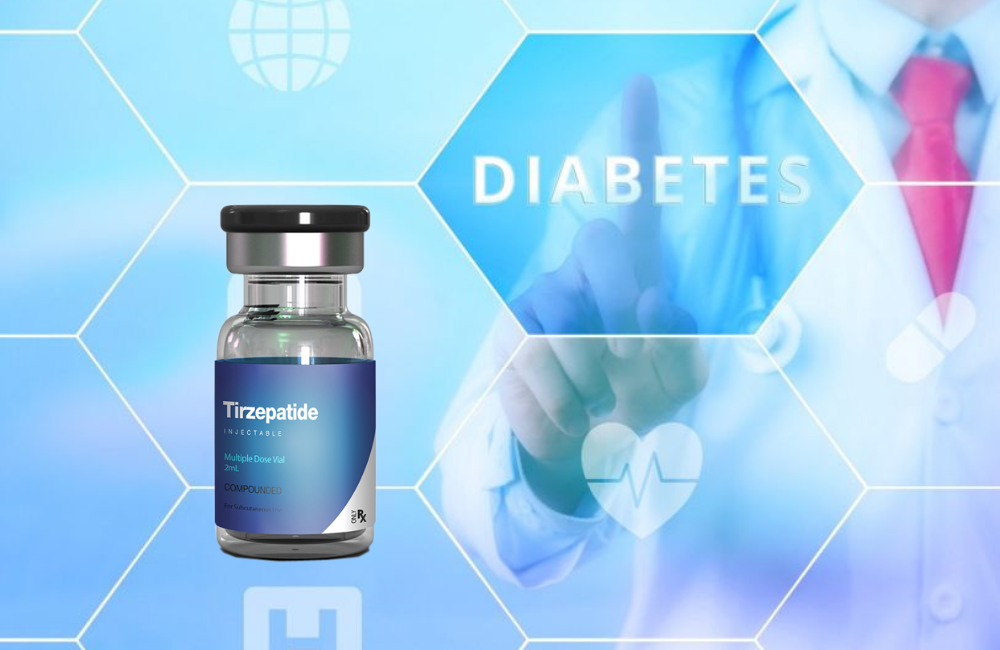
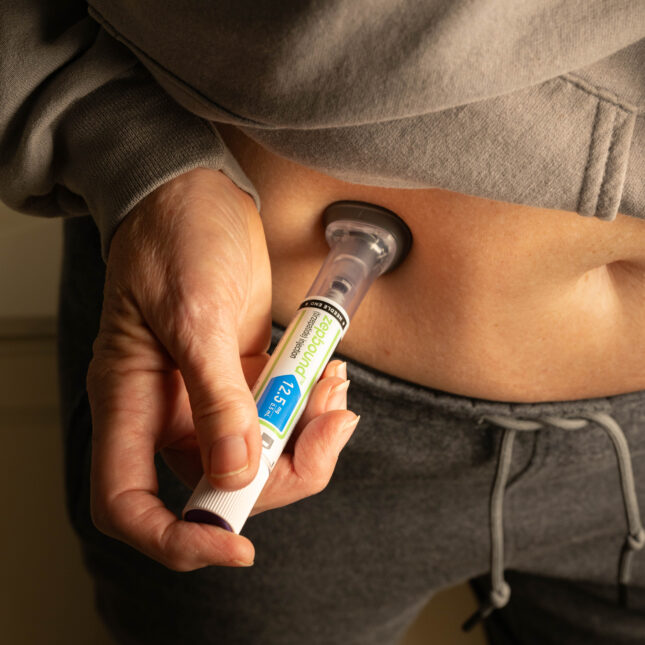
Pens are built as sealed, calibrated devices. They dispense the strength printed on the label, which means a patient wanting a fraction of an approved dose cannot get there with a standard pen. Compounded products arrive instead as multi-dose vials, and the patient draws each dose with a syringe.
Syringe drawing is where the risk concentrates. Compounded medications are not FDA-approved and are not reviewed for safety, effectiveness, or quality, and concentrations vary between pharmacies. The FDA issued a safety alert in July 2024 documenting adverse events from dosing errors with compounded injectable products in this class, and in most reported cases patients had withdrawn more than the prescribed amount, in some instances five to twenty times the intended dose. Reported outcomes included severe nausea and vomiting, dehydration, gallstones, acute pancreatitis, and hospitalization.
Regulatory footing has also shifted. Tirzepatide came off the FDA drug shortage list in December 2024, and on April 30, 2026, the FDA proposed excluding semaglutide, tirzepatide, and liraglutide from the 503B Bulk Drug Substances List, finding no clinical need for outsourcing facilities to compound them while approved products are available. Compounded GLP-1s are now generally limited to documented patient-specific medical need.
Is Microdosing GLP-1 Safe?
Microdosing GLP-1 carries the same underlying drug risks as standard dosing, plus the added uncertainty of an unstudied amount delivered through an unregulated product. A smaller dose does not remove the medication’s risk profile.
Risk profile stays with the drug regardless of amount. GLP-1 medications carry a boxed warning for thyroid C-cell tumors observed in rodent studies and are contraindicated for anyone with a personal or family history of medullary thyroid carcinoma or Multiple Endocrine Neoplasia syndrome type 2, and for anyone pregnant. Pancreatitis and gallbladder problems remain possible at any dose. Those contraindications do not soften because the dose is small.
Small doses add their own uncertainty on top. NewYork-Presbyterian lists three specific concerns with unregulated compounded product: unknown ingredients that may interact with other medications, lack of sterility that can lead to infection, and product that contains no active medication at all. A patient cannot distinguish between those possibilities from the outside.
Distinguishing between them is what medical supervision provides. A provider who prescribed the product, ordered your labs, and monitors your response can tell you whether a symptom is expected or concerning, and can adjust or stop treatment. That oversight is the actual difference between a managed low dose and a risky one.
What Is the Lowest Effective Dose Approach?
The lowest effective dose approach means finding the smallest approved dose that produces results for you, then staying there rather than climbing further. It answers the same concerns that drive people toward microdosing, while staying inside the tested range.
Staying inside the tested range is the entire advantage. You still get a labeled product with a known concentration, a defined titration schedule, and outcome data behind every step, while still avoiding the higher doses where side effects concentrate. Nobody needs to reach the maximum dose to succeed.
Here is how the process runs in practice:
- Screening and labs first. Medical history review and blood work establish whether the medication suits you and rule out contraindications.
- Start at the approved starting dose. 0.25 mg semaglutide or 2.5 mg tirzepatide, held for the full initiation period.
- Review at four weeks. Two questions get asked: are side effects interfering with daily life, and is weight moving at a reasonable pace.
- Hold or step up based on those answers. Holding longer at a tolerated dose is a normal decision, not a setback.
- Stop climbing once results arrive. The dose that is working is the dose to stay on.
- Monitor with periodic labs. Blood sugar and metabolic markers get rechecked on a schedule.
- Build the habits alongside it. Adequate protein, resistance training, and sustainable eating patterns determine how much of the loss is fat rather than muscle.
That last step carries more weight than most people expect. Our medical weight loss program in Lee’s Summit is built around behavior change and mindful eating rather than the prescription alone.
Eating well while appetite has gone quiet takes more planning than eating well while hungry, which is why knowing what to eat matters so much during treatment.
Anyone considering GLP-1 therapy with us gets that framing from the first visit rather than as an afterthought once the scale stalls.
Is It Good to Take a Break From a GLP-1?
Taking an unplanned break from a GLP-1 generally is not helpful, because appetite returns and progress tends to reverse during the gap. Intermittent dosing, meaning weeks on and weeks off, is another pattern that falls outside approved protocols.
Approved protocols call for consistent weekly dosing precisely because steady blood levels produce steady appetite control. Alternating on and off weeks lets levels drop between doses, which tends to produce a cycle of appetite returning and then being suppressed again, rather than the stable pattern the medication was designed to deliver.
Deliberate pauses are a different matter from drifting off schedule. A planned break decided with your provider, for a medical reason or a life circumstance, is a legitimate clinical decision with a plan attached. Stopping because a vial ran out is not.
Is It Safe to Skip a GLP-1 for Vacation?
Skipping a GLP-1 for vacation is safe in the sense that no harm comes from a missed dose, though appetite suppression will fade and restarting may bring back the initial side effects. Most labels allow a missed dose to be taken within a few days, with the schedule resuming normally after that.
Travel is usually easier to plan around than to skip. Most patients travel with their medication in a cooler pack and keep the schedule intact. Patients travelling from Lee’s Summit ask us about this often, and the answer is nearly always to bring it rather than pause it.
Will I Gain Weight Back if I Stop Using a GLP-1?
Most people regain a substantial share of lost weight after stopping a GLP-1. The SURMOUNT-4 trial, published in JAMA in 2024, followed participants who switched from tirzepatide to placebo after 36 weeks, and they regained approximately two-thirds of the weight they had lost over the following 52 weeks.
Regain happens because the mechanism stops. The medication suppresses appetite while it is present, and appetite returns once it clears. Research published in Diabetes, Obesity and Metabolism found the same pattern across GLP-1 medications generally.
Patterns like that are why these medications are framed as ongoing therapy for a chronic condition rather than a course of treatment with an endpoint. Rapid loss followed by regain also affects body composition, since regained weight tends to return as fat while lost muscle does not come back on its own, and loose skin can persist through the cycle.
How Long Does It Take for Your Body to Go Back to Normal After Stopping?
Your body typically returns to its baseline appetite within several weeks of stopping a GLP-1, as the medication clears and hunger signaling resumes. Semaglutide and tirzepatide both have long half-lives, so the fade is gradual rather than sudden.
Metabolic markers follow a similar path. Improvements in blood sugar, blood pressure, and cholesterol that accompanied the weight loss tend to drift back alongside the weight, which is why stopping is a decision worth planning with a provider rather than making abruptly.
Is 2 Years Too Long to Be on a GLP-1?
Two years is not too long to be on a GLP-1, and long-term use is the expected pattern rather than an exception. Obesity behaves like other chronic conditions in this respect, and removing the treatment generally removes the effect.
Chronic framing changes the question being asked. At the two-year mark the useful question is whether the medication is still delivering benefit at a dose you tolerate, not whether you have served enough time. Patients continue on weekly GLP-1 injections for years with ongoing monitoring and consistent safety data.
Monitoring is what makes long-term use appropriate rather than passive. Periodic labs, regular check-ins, and adjustments when circumstances change keep the treatment matched to the person.
Has Anyone Gone Off a GLP-1 and Kept the Weight Off?
Some people have gone off a GLP-1 and kept the weight off, though trial data show they are the minority. What separates them is usually the depth of the habits built during treatment rather than anything about the medication itself.
Habits built while appetite is suppressed are the ones that carry over. Patients who used the treatment window to establish consistent protein intake, resistance training, and sustainable eating patterns retain more of the result than patients who relied on the medication alone. That is the argument for pairing the prescription with behavioral work from day one rather than adding it later.
Frequently Asked Questions
Is Microdosing the Same as Tapering?
Microdosing is not the same as tapering. Tapering means gradually reducing a dose with the intention of stopping, usually planned with a provider. Microdosing means staying at a very low dose indefinitely as the treatment itself. The two get confused because both involve small amounts, but the purpose and the plan are entirely different.
Can You Microdose With an Ozempic Pen?
You cannot reliably microdose with an Ozempic pen, because the pen is calibrated to deliver fixed approved doses. Attempting to dial or estimate a partial dose produces an amount nobody can verify. This mechanical limit is the reason microdosing generally depends on compounded vials.
Is There a Natural Way to Raise Your Own GLP-1?
There is no supplement that reliably raises your own GLP-1, though certain eating patterns do stimulate the body’s natural release. Protein and fiber-rich foods prompt more GLP-1 secretion after meals than refined carbohydrates do. The effect is real but far smaller than prescription medication, and it works best as a foundation rather than a replacement.
Do You Still Need Lab Work on a Low Dose?
You still need lab work on a low dose, because monitoring tracks how your body is responding rather than how much medication you are taking. Baseline and follow-up testing typically covers blood sugar, kidney and liver function, and lipids. A lower dose does not reduce the value of knowing those numbers.
Can Microdosing Help Perimenopause Weight Gain?
Interest in low-dose GLP-1 use for perimenopause weight gain has grown, though no clinical trial has tested microdosing for that purpose specifically. The metabolic shifts of perimenopause are real, including reduced energy expenditure and a shift toward abdominal fat storage. Those changes are worth addressing with a provider who can evaluate whether GLP-1 therapy, hormone therapy, or a combination fits your situation.
What Should You Ask a Provider Before Starting?
Ask whether the medication is FDA-approved or compounded, what the exact dose and concentration are, what the titration schedule looks like, which labs will be checked and how often, what side effects to expect, and what the plan is if you eventually stop. A provider who answers all six clearly is a provider worth working with. Some patients also ask about pairing treatment with slimming shots or other supportive options.
The Takeaway
Microdosing GLP-1 means taking less than the approved starting dose, and the honest summary is that it is off-label, unstudied, unendorsed by professional bodies, and usually dependent on compounded product whose concentration nobody can verify. The concerns driving people toward it are legitimate. The method is not the best answer to them. If side effects are the worry, a provider can slow titration or hold a dose. If cost is the worry, savings programs have narrowed the gap considerably. And if you are already doing well on 0.25 mg of semaglutide, you are not microdosing at all, you are on an approved dose, and staying there with your provider’s agreement is a perfectly reasonable plan.
What makes any of this work is having someone who ordered your labs, knows your history, and reviews your response every few weeks. At Slimming Solutions Med Spa, weight management runs as a supervised program with screening up front, a defined review cadence, and the same team throughout, built around finding the lowest dose that actually works for you.
Questions before starting are always welcome, and a consultation is a good place to begin.
This article is for general education and is not medical advice. Compounded medications are not FDA-approved and are not reviewed by the FDA for safety, effectiveness, or quality. Individual results vary. Talk with a licensed provider about your specific situation.
![[thumb]](https://slimmingsolutionsspa.com/wp-content/uploads/2023/12/botox1-150x150.png)
![[thumb]](https://slimmingsolutionsspa.com/wp-content/uploads/2023/12/Before2-150x150.png)
![[thumb]](https://slimmingsolutionsspa.com/wp-content/uploads/2023/12/Before3-150x150.png)


![[thumb]](https://slimmingsolutionsspa.com/wp-content/uploads/2023/12/revanesse-versa-1-150x150.png)
![[thumb]](https://slimmingsolutionsspa.com/wp-content/uploads/2023/12/revanesse-versa-2-150x150.png)
![[thumb]](https://slimmingsolutionsspa.com/wp-content/uploads/2023/12/revanesse-versa-3-150x150.png)
![[thumb]](https://slimmingsolutionsspa.com/wp-content/uploads/2023/12/revanesse-versa-4-150x150.png)
![[thumb]](https://slimmingsolutionsspa.com/wp-content/uploads/2023/12/revanesse-versa-5-150x150.png)
![[thumb]](https://slimmingsolutionsspa.com/wp-content/uploads/2024/01/Eyebrow-treatment-1-1-150x150.png)
![[thumb]](https://slimmingsolutionsspa.com/wp-content/uploads/2023/12/Skin-Rejuvenation-1-150x150.png)
![[thumb]](https://slimmingsolutionsspa.com/wp-content/uploads/2023/12/Skin-Rejuvenation-2-150x150.png)


![[thumb]](https://slimmingsolutionsspa.com/wp-content/uploads/2024/01/Lip-Filler-1-150x150.png)
![[thumb]](https://slimmingsolutionsspa.com/wp-content/uploads/2024/01/Lip-Filler-2-150x150.png)
![[thumb]](https://slimmingsolutionsspa.com/wp-content/uploads/2025/02/Lip-Filler-1-150x150.png)
![[thumb]](https://slimmingsolutionsspa.com/wp-content/uploads/2024/01/Lip-Filler-150x150.jpg)
![[thumb]](https://slimmingsolutionsspa.com/wp-content/uploads/2024/01/Before-1-150x150.jpg)

![[thumb]](https://slimmingsolutionsspa.com/wp-content/uploads/2024/01/RHA-Treatmetn-3-150x150.png)
![[thumb]](https://slimmingsolutionsspa.com/wp-content/uploads/2024/01/RHA-Treatmetn-2-150x150.png)
![[thumb]](https://slimmingsolutionsspa.com/wp-content/uploads/2024/01/RHA-Treatmetn-1-150x150.png)
![[thumb]](https://slimmingsolutionsspa.com/wp-content/uploads/2024/01/Thread-Lifts-1-150x150.png)
![[thumb]](https://slimmingsolutionsspa.com/wp-content/uploads/2024/01/Thread-Lifts-2-150x150.png)
![[thumb]](https://slimmingsolutionsspa.com/wp-content/uploads/2025/02/Lip-Filler-2-150x150.png)

![[thumb]](https://slimmingsolutionsspa.com/wp-content/uploads/2023/12/skin-reuvulation1-150x150.png)
![[thumb]](https://slimmingsolutionsspa.com/wp-content/uploads/2023/12/skin-rejuvulation-2-150x150.png)
![[thumb]](https://slimmingsolutionsspa.com/wp-content/uploads/2023/12/Skin-Tighting-150x150.png)
![[thumb]](https://slimmingsolutionsspa.com/wp-content/uploads/2023/12/Before-150x150.jpg)
![[thumb]](https://slimmingsolutionsspa.com/wp-content/uploads/2023/12/weightloss-1-150x150.png)
![[thumb]](https://slimmingsolutionsspa.com/wp-content/uploads/2023/12/weightloss-2-150x150.png)
![[thumb]](https://slimmingsolutionsspa.com/wp-content/uploads/2023/12/2Weight-Loss-2-150x150.png)
![[thumb]](https://slimmingsolutionsspa.com/wp-content/uploads/2025/02/Weight-Loss-1-new-150x150.png)
![[thumb]](https://slimmingsolutionsspa.com/wp-content/uploads/2023/12/Weight-Loss-3-150x150.png)
![[thumb]](https://slimmingsolutionsspa.com/wp-content/uploads/2025/03/Slimming-Solutions-BA-Template-150x150.png)


![[thumb]](https://slimmingsolutionsspa.com/wp-content/uploads/2023/12/dat3-150x150.png)
![[thumb]](https://slimmingsolutionsspa.com/wp-content/uploads/2023/12/dat-0-150x150.png)
![[thumb]](https://slimmingsolutionsspa.com/wp-content/uploads/2023/12/dat-1-150x150.png)
![[thumb]](https://slimmingsolutionsspa.com/wp-content/uploads/2023/12/Before-1-150x150.png)

![[thumb]](https://slimmingsolutionsspa.com/wp-content/uploads/2024/01/EMS-Treatment-2-150x150.png)
![[thumb]](https://slimmingsolutionsspa.com/wp-content/uploads/2024/01/EMS-Treatment-1-150x150.png)
![[thumb]](https://slimmingsolutionsspa.com/wp-content/uploads/2025/02/ems-BNA-front-150x150.png)
![[thumb]](https://slimmingsolutionsspa.com/wp-content/uploads/2025/02/EMS-bna-SIDE-150x150.png)
![[thumb]](https://slimmingsolutionsspa.com/wp-content/uploads/2024/01/EMS-Treatment-6-150x150.png)