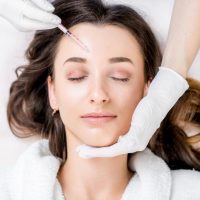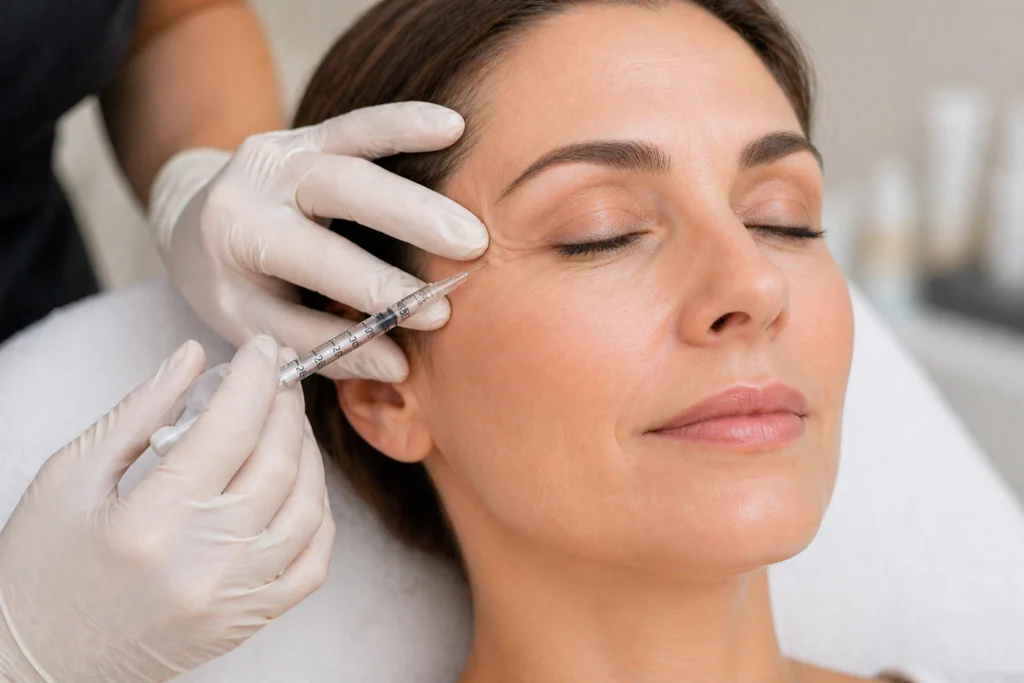
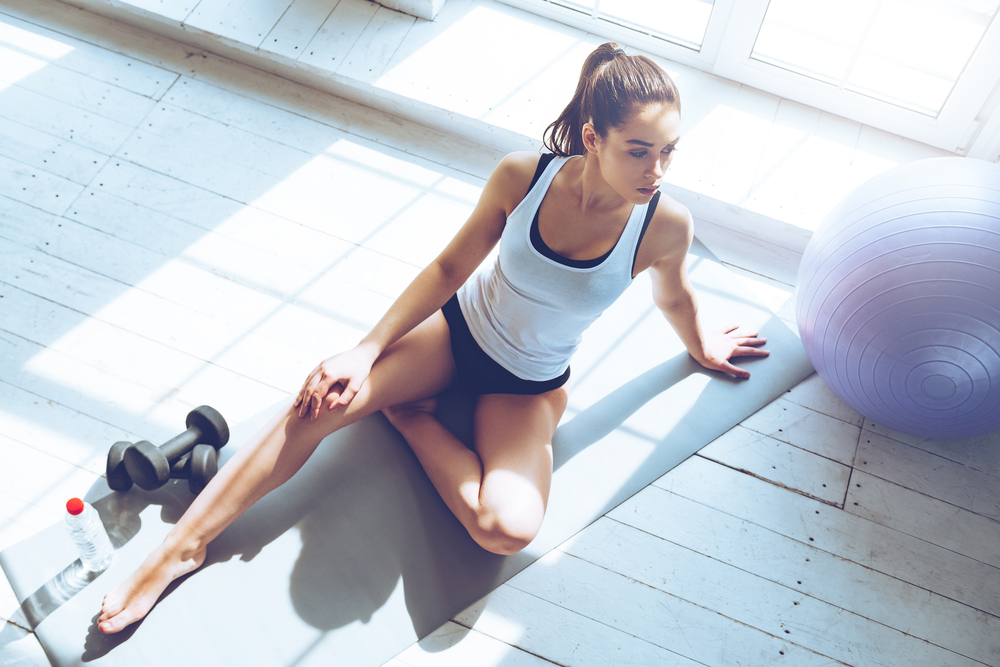
You can work out after Botox, but strenuous exercise should wait 24 hours. Gentle walking is fine right away, and the first four hours are the strictest window, when you stay upright and avoid bending over or lying down. The reason is not the exercise itself. It is that raised blood flow and pressure on your face can move the product before it binds to the muscle you had treated. Below we go activity by activity, cover the reverse question of working out before your appointment, address what happens with masseter and sweat treatments specifically, and look at what the research says about whether being active shortens how long your results last.
Can You Work Out After Botox?
You can work out after Botox once 24 hours have passed, which is the timeline most clinics use, and gentle movement like walking is acceptable well before that. The first four hours carry the tightest restrictions, and after a full day almost everything is back on the table.
Sources do vary on the exact number, and it is worth knowing why. The American Academy of Dermatology advises waiting two hours, while most cosmetic clinics recommend 24, and some clinicians suggest up to a week for genuinely vigorous training. Medical News Today notes that little scientific evidence pins down the right figure. We use 24 hours because the cost of waiting one day is nothing and the cost of being wrong is a result you paid for and did not get.
One day is also easier to plan around than most people expect. Book your Botox injections on a rest day and the restriction costs you nothing at all.
Why Can’t You Work Out After Botox?
You are asked to avoid working out after Botox because exercise raises your heart rate and blood flow, and because physical activity puts pressure on your face, and either one can move the product out of the muscle it was placed in. Two mechanisms, one shared consequence.
Blood flow is the larger of the two. Botox contains onabotulinumtoxinA, which works by blocking the nerve signal that tells a specific muscle to contract. That binding happens locally and takes time. Increased circulation through the treated area during that window can carry the product to a neighboring muscle that was never meant to be relaxed, and the American Society of Plastic Surgeons notes that migration can produce temporary drooping or weakness in the face.
Pressure is the quieter mechanism and the one people forget. A cycling helmet, a swim cap, goggles, or simply wiping sweat off your forehead all press on treated skin. Cleveland Clinic notes that the product can spread roughly half an inch when an area is massaged, and repeated sweat-wiping is a mild version of exactly that motion. The mechanics behind why placement is so precise are covered in how Botox works.
What Happens if You Work Out Too Soon After Botox?
Working out too soon after Botox can cause the product to migrate, which may lead to asymmetry, temporary drooping, or weakness in muscles you did not want treated. It can also increase bruising and swelling at the injection sites.
Migration is the outcome that matters most, because it is the one that changes how you look. If forehead product drifts downward toward the brow, the brow can sit lower than intended. If frown line product spreads sideways, one side may relax more than the other. These effects are temporary, resolving as the product wears off, but temporary in this context means weeks.
Signs worth paying attention to in the days after treatment:
- Unusual swelling or bruising beyond the small marks you would expect.
- Asymmetry between the two sides of your face.
- Effects showing up somewhere you were not treated.
- Unexpected muscle weakness, including a heavy-feeling brow or eyelid.
- Discomfort that persists rather than fading over a day or two.
Call your injector if any of those appear. Mild tenderness is normal; the items above are worth a phone call. A few simple steps can also reduce swelling in the first hours if it shows up.
What Exercise Can You Do After Botox?
Gentle walking, light household activity, and normal facial expressions are all fine within the first 24 hours after Botox. What gets restricted is intensity, inversion, and pressure, not movement in general.
Here is how the common activities sort out.
| Activity | How Long to Wait | Why |
|---|---|---|
| Gentle walking | No wait | Minimal effect on heart rate or facial pressure |
| Light housework | No wait, avoid bending low | Position matters more than effort |
| Facial expressions | No wait, and may help | Moving your face does not shift the product |
| Moderate cardio, brisk walking | 4 hours minimum | Raises circulation modestly |
| Running and cycling | 24 hours | Sustained elevated heart rate and blood flow |
| Weight training | 24 hours | Straining raises blood pressure and facial pressure |
| Yoga with inversions | 24 hours | Head-below-heart positions increase facial blood flow |
| Swimming | 24 hours | Goggles and caps press directly on treated areas |
| Sauna, hot tub, hot yoga | 24 to 48 hours | Heat raises circulation across the whole body |
| Contact sports | 24 hours or longer | Impact and protective headgear both apply pressure |
Sources: Medical News Today, medically reviewed by Alex Nguyen, PharmD; Mount Nittany Health, Emily Peterson, MD; American Academy of Dermatology; Cleveland Clinic.
Read the four-hour entries as the floor and the 24-hour entries as the practical answer. Waiting longer than any figure listed costs nothing.
Can You Lift Weights After Botox?
Wait 24 hours before lifting weights after Botox, because straining under load raises blood pressure sharply and also tenses the face. Weight training is arguably the highest-risk category on the list, and the circulation issue is only part of it.
Straining changes your face. Anyone who has finished a heavy set knows the expression that comes with it: jaw clenched, brow furrowed, breath held. That combination puts sustained tension through exactly the muscles most likely to have been treated.
Position adds to it. Bench pressing, and any lift performed lying down or with the head below the heart, combines the upright-posture problem with the blood pressure problem. Save those for day two. Light mobility work with no straining is a reasonable compromise if you cannot skip the gym entirely, and it applies across all four of our neurotoxin treatments.
What About Masseter or TMJ Botox and Lifting?
If you had masseter or TMJ Botox, jaw clenching during heavy lifting deserves specific attention, and almost no aftercare guide mentions it. The masseter is the muscle you clench with, and clenching hard under load in the hours after treatment works directly against a placement designed to relax it.
Clenching is also the habit the treatment is often meant to interrupt. Patients treated for bruxism or jaw tension are usually clenching more than they realize, and lifting is one of the situations where it happens hardest. We tell masseter patients in Lee’s Summit to give it a full day and then return to lifting with a deliberate effort to breathe out through hard sets rather than holding and gritting. Which areas of the face you had treated genuinely changes the guidance you need.
Can You Run After Botox?
Wait 24 hours before running after Botox, since running is a strenuous activity that raises circulation enough to risk moving the product. A brisk walk is a reasonable substitute on treatment day.
Duration matters alongside intensity. A five-minute jog to catch something is not what the guidance addresses. Forty-five minutes with an elevated heart rate is, because sustained circulation through the face is the actual variable.
Outdoor heat compounds it. A run in warm weather adds heat exposure and heavy sweating to raised circulation, which stacks three factors rather than one. If treatment day falls in July, an air-conditioned walk beats an outdoor run by a wide margin.
Can You Do Yoga After Botox?
You can do yoga after Botox as long as you skip inversions and any pose that puts your head below your heart for 24 hours. Yoga itself is not the problem. Position is.
Downward dog, forward folds, headstands, shoulder stands, and legs-up-the-wall all send blood toward the face, which is the same concern as bending over. Seated poses, standing poses, gentle stretching, and breathwork are all fine.
Hot yoga is a separate matter and gets the longer window. Heat plus inversions plus heavy sweating is the combination most likely to cause trouble, so give that 24 to 48 hours.
Can You Swim After Botox?
Wait 24 hours to swim after Botox, mainly because goggles and swim caps press directly on treated areas rather than because of the water. Water itself does nothing to the product.
Gear is the issue. Goggles seal against the skin around the eyes, which is exactly where crow’s feet treatment goes. A silicone cap pulled over the forehead applies steady compression across the frontalis, the most commonly treated muscle on the face.
Swimming also involves sustained cardio and, in most pools, some face-wiping between laps. Waiting one day removes all three concerns at once.
Can You Use a Sauna or Hot Tub After Botox?
Avoid saunas, hot tubs, and steam rooms for 24 to 48 hours after Botox, because sustained heat raises circulation throughout the body including the face. This is the one category where the recommended window runs longer than a single day.
Heat works differently from exercise. Exercise raises circulation while you are moving and then it settles. Sitting in a sauna holds your body temperature elevated for the whole session, and there is no muscle activity involved that would signal you to stop.
Hot showers are fine, for the record. A normal warm shower does not raise core temperature the way a sauna does, and washing your face gently on treatment day is entirely acceptable.
Can I Sweat 2 Days After Botox?
You can sweat freely two days after Botox with no concern at all. By 48 hours the product has bound to the muscle receptors, and sweating has no bearing on where it sits or how well it works.
Even on treatment day, sweating itself is not the mechanism. The concern is that sweat prompts you to wipe your face, and wiping applies pressure. If you sweat lightly and leave your face alone, you have not done anything harmful.
What if You Had Botox for Excessive Sweating?
Patients treated for hyperhidrosis are asking a different question, since the treatment area is usually the underarms, palms, or feet rather than the face. Facial migration is not the concern when nothing was injected in your face.
The 24-hour guidance on strenuous exercise still applies, because the same binding window and the same pressure principle hold wherever the product was placed. Avoid tight compression over the treated area, skip the gym for a day, and expect it to take about two weeks for the reduction in sweating to fully develop.
Can You Work Out Before Botox?
You can work out before Botox, and exercising beforehand causes no problem for the treatment itself. Almost no aftercare guide addresses this direction, and the honest answer is that it matters far less than what happens afterward.
Two small considerations are worth knowing. Exercising immediately before your appointment leaves you flushed and with elevated circulation at the moment the needle goes in, which can very slightly increase the chance of a bruise. And arriving sweaty means the treatment area needs more thorough cleansing, which is a minor time cost rather than a risk.
Scheduling around it is simple. A morning workout and an afternoon appointment is a perfectly normal combination. If you want to be thorough, leave an hour or two between finishing and arriving, and drink water. More detail on getting ready is in our notes on the injectable appointment itself.
Can You Work Out After Botox and Filler?
If you had Botox and dermal filler in the same session, follow the stricter filler guidance rather than the Botox timeline. Filler aftercare is more conservative, and combining treatments means the tighter restriction governs.
Filler behaves differently from a neurotoxin. It is a gel placed to add volume in a specific location, and it needs time to settle without pressure or heat displacing it. Many injectors ask for 24 to 48 hours off exercise after filler, longer than the Botox standard, and they may extend that for larger volumes or for areas prone to swelling.
Ask your injector for one combined timeline rather than assuming the shorter one applies. Whether the two treatments can be used together in one visit is a separate question, and often the answer is yes.
Does Exercise Make Botox Wear Off Faster?
Exercise may shorten how long Botox lasts, though the evidence is limited and the effect is not established. This is the question every athletic patient asks, and it deserves a careful answer rather than a confident one.
A 2023 study published in Toxins, involving 60 female participants, found that Botox effects wore off more quickly in people with high levels of physical activity than in those with low or moderate activity. The proposed mechanism is interesting: exercise raises insulin-like growth factor 1, and higher IGF-1 may encourage nerve regrowth in muscle tissue, which would work against the nerve-blocking effect the treatment relies on.
The limitations are real and worth stating. Sixty participants is a small sample. The study authors note that doses were not matched to each participant’s specific forehead wrinkles or frown lines, which may have influenced the findings. Medical News Today, reviewing the evidence, describes the supporting research as thin.
Practically, this is no reason to train less. If you are very active and find that how long Botox lasts for you runs shorter than the typical three to four months, mention it at your next visit.
Mentioning it opens real options. Placement, dosing, and treatment interval can all be adjusted, and some patients respond better to a different neurotoxin such as Xeomin.
What Makes Botox Kick In Faster?
Moving your facial muscles after treatment may help Botox take effect slightly sooner. A study published in the Journal of the American Academy of Dermatology found that 68% of participants felt facial exercises sped up how quickly they noticed results.
Facial movement is the one form of exercise nobody restricts. Smiling, frowning, raising your eyebrows, and squinting deliberately in the hours after treatment are all safe, because moving a muscle does not displace product the way external pressure does. Some injectors actively suggest it during the first four hours.
Set expectations reasonably though. The difference is a matter of a day or two at most, and nothing accelerates the full effect meaningfully. The 2026 review in American Family Physician places full development at roughly two weeks, and that timeline holds regardless of what you do.
What Does Botox Feel Like When It Kicks In?
Botox feels like a gradual heaviness or tightness in the treated muscle as it begins working, usually starting around day three or four. Most people describe it as the muscle simply not responding when they try to make a familiar expression, rather than as any distinct sensation.
Some patients notice a mild pressure or a slightly odd feeling in the forehead during the first week. That settles as the effect evens out, and by two weeks the result reads as fine lines softening rather than as anything you can feel.
How Should You Sleep the First Night After Botox?
Sleep on your back the first night after Botox, with your head slightly elevated on an extra pillow. Face-down sleeping presses treated areas into a pillow for hours, which is the same pressure concern that governs the exercise guidance.
One night covers it. By the following evening the product has bound and you can sleep however you normally do. Waking up to find you rolled onto your side is not worth worrying about.
Timing your appointment helps here too. A morning or midday slot means the four-hour upright window closes well before bedtime, rather than leaving you sitting up late waiting it out.
How to Schedule Botox Around a Training Week
Schedule Botox on a rest day or immediately after your hardest session, so the 24-hour restriction lands where you were not training anyway. A little planning removes the conflict entirely.
Work through it in this order:
- Pick a rest day. If your week has one, that is your appointment day.
- Book morning or midday. The four-hour upright window closes before evening, and the 24-hour clock finishes early the next day.
- Train before, not after. A morning session followed by an afternoon appointment works well.
- Keep treatment day light. A walk, mobility work, or nothing at all.
- Resume the next day. Start at normal intensity rather than making up for the missed session.
- Plan around events. For a race or competition, allow two weeks so results are fully developed and any bruising has cleared.
- Tell your injector your routine. Someone who knows you lift heavy four days a week can plan placement and timing accordingly.
That last step is the one people skip. Nurse Joi injects five days a week and has heard every training schedule, and matching a Botox appointment to your week is a normal part of the conversation rather than a special request.
Frequently Asked Questions
What Is Forbidden After Botox?
In terms of activity, avoid strenuous exercise, heavy lifting, inversions, saunas and hot tubs, contact sports, and anything requiring tight headgear for 24 hours. Also avoid lying flat and bending low for the first four hours. Walking, light activity, and facial expressions are all fine.
Can You Work Out 12 Hours After Botox?
At 12 hours you are past the strictest window but short of the standard 24-hour mark, so moderate activity is reasonable while strenuous training is better held until the full day has passed. A moderate walk or easy cycling at 12 hours is unlikely to cause a problem. A heavy lifting session is worth postponing.
Can You Do Pilates After Botox?
You can do Pilates after Botox once 24 hours have passed, and gentle mat work is often fine sooner if you stay upright. Skip anything performed lying flat or with your head below your heart on treatment day, which rules out a fair portion of a typical mat class.
What Should You Watch for When Returning to Exercise?
Watch for asymmetry between the two sides of your face, unexpected muscle weakness, effects appearing in areas you did not have treated, and pain that worsens rather than fades. Mild tenderness during the first days is normal. Anything on that list warrants a call to your injector.
Can You Play Contact Sports After Botox?
Wait at least 24 hours before contact sports, and longer if your sport requires a helmet or protective headgear that presses on treated areas. Impact to the face carries the same migration concern as pressure, and a chin strap or padded helmet holds compression across the forehead for the duration of play.
How Often Can You Get Botox if You Train Regularly?
Training regularly does not change how often you can be treated, which is typically every three to four months. How often you personally need it depends on muscle strength and metabolism, and very active patients occasionally find their interval runs slightly shorter.
The Short Version
Strenuous exercise waits 24 hours after Botox, gentle walking does not have to wait at all, and the first four hours are the window where staying upright genuinely matters. Everything specific follows from two mechanisms: raised blood flow can move the product, and pressure on your face can move it too. That is why goggles, swim caps, helmets, inversions, saunas, and sweat-wiping all show up on the same list as running and lifting. Work out before your appointment freely, follow the stricter filler timeline if you had both, and if you train hard and find your results running short, that is a conversation with your injector rather than a reason to train less.
Aftercare works best when it fits your actual life instead of a generic handout. At Slimming Solutions Med Spa in Lee’s Summit, Nurse Joi has been a Level 5 certified Master Injector since 2014, and matching treatment timing to your training week is a normal part of the conversation.
Questions before booking are always welcome, and a consultation is a good place to start.
Can You Work Out After Botox?
SEO Title: Can You Work Out After Botox?
Meta Description: You can work out after Botox once 24 hours have passed. Gentle walking is fine sooner, but strenuous exercise raises blood flow and can shift the product before it binds to the muscle.
Blog Category: Botox
You can work out after Botox, but strenuous exercise should wait 24 hours. Gentle walking is fine right away, and the first four hours are the strictest window, when you stay upright and avoid bending over or lying down. The reason is not the exercise itself. It is that raised blood flow and pressure on your face can move the product before it binds to the muscle you had treated. Below we go activity by activity, cover the reverse question of working out before your appointment, address what happens with masseter and sweat treatments specifically, and look at what the research says about whether being active shortens how long your results last.
Can You Work Out After Botox?
You can work out after Botox once 24 hours have passed, which is the timeline most clinics use, and gentle movement like walking is acceptable well before that. The first four hours carry the tightest restrictions, and after a full day almost everything is back on the table.
Sources do vary on the exact number, and it is worth knowing why. The American Academy of Dermatology advises waiting two hours, while most cosmetic clinics recommend 24, and some clinicians suggest up to a week for genuinely vigorous training. Medical News Today notes that little scientific evidence pins down the right figure. We use 24 hours because the cost of waiting one day is nothing and the cost of being wrong is a result you paid for and did not get.
One day is also easier to plan around than most people expect. Book your Botox injections on a rest day and the restriction costs you nothing at all.
Why Can’t You Work Out After Botox?
You are asked to avoid working out after Botox because exercise raises your heart rate and blood flow, and because physical activity puts pressure on your face, and either one can move the product out of the muscle it was placed in. Two mechanisms, one shared consequence.
Blood flow is the larger of the two. Botox contains onabotulinumtoxinA, which works by blocking the nerve signal that tells a specific muscle to contract. That binding happens locally and takes time. Increased circulation through the treated area during that window can carry the product to a neighboring muscle that was never meant to be relaxed, and the American Society of Plastic Surgeons notes that migration can produce temporary drooping or weakness in the face.
Pressure is the quieter mechanism and the one people forget. A cycling helmet, a swim cap, goggles, or simply wiping sweat off your forehead all press on treated skin. Cleveland Clinic notes that the product can spread roughly half an inch when an area is massaged, and repeated sweat-wiping is a mild version of exactly that motion. The mechanics behind why placement is so precise are covered in how Botox works.
What Happens if You Work Out Too Soon After Botox?
Working out too soon after Botox can cause the product to migrate, which may lead to asymmetry, temporary drooping, or weakness in muscles you did not want treated. It can also increase bruising and swelling at the injection sites.
Migration is the outcome that matters most, because it is the one that changes how you look. If forehead product drifts downward toward the brow, the brow can sit lower than intended. If frown line product spreads sideways, one side may relax more than the other. These effects are temporary, resolving as the product wears off, but temporary in this context means weeks.
Signs worth paying attention to in the days after treatment:
- Unusual swelling or bruising beyond the small marks you would expect.
- Asymmetry between the two sides of your face.
- Effects showing up somewhere you were not treated.
- Unexpected muscle weakness, including a heavy-feeling brow or eyelid.
- Discomfort that persists rather than fading over a day or two.
Call your injector if any of those appear. Mild tenderness is normal; the items above are worth a phone call. A few simple steps can also reduce swelling in the first hours if it shows up.
What Exercise Can You Do After Botox?
Gentle walking, light household activity, and normal facial expressions are all fine within the first 24 hours after Botox. What gets restricted is intensity, inversion, and pressure, not movement in general.
Here is how the common activities sort out.
| Activity | How Long to Wait | Why |
|---|---|---|
| Gentle walking | No wait | Minimal effect on heart rate or facial pressure |
| Light housework | No wait, avoid bending low | Position matters more than effort |
| Facial expressions | No wait, and may help | Moving your face does not shift the product |
| Moderate cardio, brisk walking | 4 hours minimum | Raises circulation modestly |
| Running and cycling | 24 hours | Sustained elevated heart rate and blood flow |
| Weight training | 24 hours | Straining raises blood pressure and facial pressure |
| Yoga with inversions | 24 hours | Head-below-heart positions increase facial blood flow |
| Swimming | 24 hours | Goggles and caps press directly on treated areas |
| Sauna, hot tub, hot yoga | 24 to 48 hours | Heat raises circulation across the whole body |
| Contact sports | 24 hours or longer | Impact and protective headgear both apply pressure |
Sources: Medical News Today, medically reviewed by Alex Nguyen, PharmD; Mount Nittany Health, Emily Peterson, MD; American Academy of Dermatology; Cleveland Clinic.
Read the four-hour entries as the floor and the 24-hour entries as the practical answer. Waiting longer than any figure listed costs nothing.
Can You Lift Weights After Botox?
Wait 24 hours before lifting weights after Botox, because straining under load raises blood pressure sharply and also tenses the face. Weight training is arguably the highest-risk category on the list, and the circulation issue is only part of it.
Straining changes your face. Anyone who has finished a heavy set knows the expression that comes with it: jaw clenched, brow furrowed, breath held. That combination puts sustained tension through exactly the muscles most likely to have been treated.
Position adds to it. Bench pressing, and any lift performed lying down or with the head below the heart, combines the upright-posture problem with the blood pressure problem. Save those for day two. Light mobility work with no straining is a reasonable compromise if you cannot skip the gym entirely, and it applies across all four of our neurotoxin treatments.
What About Masseter or TMJ Botox and Lifting?
If you had masseter or TMJ Botox, jaw clenching during heavy lifting deserves specific attention, and almost no aftercare guide mentions it. The masseter is the muscle you clench with, and clenching hard under load in the hours after treatment works directly against a placement designed to relax it.
Clenching is also the habit the treatment is often meant to interrupt. Patients treated for bruxism or jaw tension are usually clenching more than they realize, and lifting is one of the situations where it happens hardest. We tell masseter patients in Lee’s Summit to give it a full day and then return to lifting with a deliberate effort to breathe out through hard sets rather than holding and gritting. Which areas of the face you had treated genuinely changes the guidance you need.
Can You Run After Botox?
Wait 24 hours before running after Botox, since running is a strenuous activity that raises circulation enough to risk moving the product. A brisk walk is a reasonable substitute on treatment day.
Duration matters alongside intensity. A five-minute jog to catch something is not what the guidance addresses. Forty-five minutes with an elevated heart rate is, because sustained circulation through the face is the actual variable.
Outdoor heat compounds it. A run in warm weather adds heat exposure and heavy sweating to raised circulation, which stacks three factors rather than one. If treatment day falls in July, an air-conditioned walk beats an outdoor run by a wide margin.
Can You Do Yoga After Botox?
You can do yoga after Botox as long as you skip inversions and any pose that puts your head below your heart for 24 hours. Yoga itself is not the problem. Position is.
Downward dog, forward folds, headstands, shoulder stands, and legs-up-the-wall all send blood toward the face, which is the same concern as bending over. Seated poses, standing poses, gentle stretching, and breathwork are all fine.
Hot yoga is a separate matter and gets the longer window. Heat plus inversions plus heavy sweating is the combination most likely to cause trouble, so give that 24 to 48 hours.
Can You Swim After Botox?
Wait 24 hours to swim after Botox, mainly because goggles and swim caps press directly on treated areas rather than because of the water. Water itself does nothing to the product.
Gear is the issue. Goggles seal against the skin around the eyes, which is exactly where crow’s feet treatment goes. A silicone cap pulled over the forehead applies steady compression across the frontalis, the most commonly treated muscle on the face.
Swimming also involves sustained cardio and, in most pools, some face-wiping between laps. Waiting one day removes all three concerns at once.
Can You Use a Sauna or Hot Tub After Botox?
Avoid saunas, hot tubs, and steam rooms for 24 to 48 hours after Botox, because sustained heat raises circulation throughout the body including the face. This is the one category where the recommended window runs longer than a single day.
Heat works differently from exercise. Exercise raises circulation while you are moving and then it settles. Sitting in a sauna holds your body temperature elevated for the whole session, and there is no muscle activity involved that would signal you to stop.
Hot showers are fine, for the record. A normal warm shower does not raise core temperature the way a sauna does, and washing your face gently on treatment day is entirely acceptable.
Can I Sweat 2 Days After Botox?
You can sweat freely two days after Botox with no concern at all. By 48 hours the product has bound to the muscle receptors, and sweating has no bearing on where it sits or how well it works.
Even on treatment day, sweating itself is not the mechanism. The concern is that sweat prompts you to wipe your face, and wiping applies pressure. If you sweat lightly and leave your face alone, you have not done anything harmful.
What if You Had Botox for Excessive Sweating?
Patients treated for hyperhidrosis are asking a different question, since the treatment area is usually the underarms, palms, or feet rather than the face. Facial migration is not the concern when nothing was injected in your face.
The 24-hour guidance on strenuous exercise still applies, because the same binding window and the same pressure principle hold wherever the product was placed. Avoid tight compression over the treated area, skip the gym for a day, and expect it to take about two weeks for the reduction in sweating to fully develop.
Can You Work Out Before Botox?
You can work out before Botox, and exercising beforehand causes no problem for the treatment itself. Almost no aftercare guide addresses this direction, and the honest answer is that it matters far less than what happens afterward.
Two small considerations are worth knowing. Exercising immediately before your appointment leaves you flushed and with elevated circulation at the moment the needle goes in, which can very slightly increase the chance of a bruise. And arriving sweaty means the treatment area needs more thorough cleansing, which is a minor time cost rather than a risk.
Scheduling around it is simple. A morning workout and an afternoon appointment is a perfectly normal combination. If you want to be thorough, leave an hour or two between finishing and arriving, and drink water. More detail on getting ready is in our notes on the injectable appointment itself.
Can You Work Out After Botox and Filler?
If you had Botox and dermal filler in the same session, follow the stricter filler guidance rather than the Botox timeline. Filler aftercare is more conservative, and combining treatments means the tighter restriction governs.
Filler behaves differently from a neurotoxin. It is a gel placed to add volume in a specific location, and it needs time to settle without pressure or heat displacing it. Many injectors ask for 24 to 48 hours off exercise after filler, longer than the Botox standard, and they may extend that for larger volumes or for areas prone to swelling.
Ask your injector for one combined timeline rather than assuming the shorter one applies. Whether the two treatments can be used together in one visit is a separate question, and often the answer is yes.
Does Exercise Make Botox Wear Off Faster?
Exercise may shorten how long Botox lasts, though the evidence is limited and the effect is not established. This is the question every athletic patient asks, and it deserves a careful answer rather than a confident one.
A 2023 study published in Toxins, involving 60 female participants, found that Botox effects wore off more quickly in people with high levels of physical activity than in those with low or moderate activity. The proposed mechanism is interesting: exercise raises insulin-like growth factor 1, and higher IGF-1 may encourage nerve regrowth in muscle tissue, which would work against the nerve-blocking effect the treatment relies on.
The limitations are real and worth stating. Sixty participants is a small sample. The study authors note that doses were not matched to each participant’s specific forehead wrinkles or frown lines, which may have influenced the findings. Medical News Today, reviewing the evidence, describes the supporting research as thin.
Practically, this is no reason to train less. If you are very active and find that how long Botox lasts for you runs shorter than the typical three to four months, mention it at your next visit.
Mentioning it opens real options. Placement, dosing, and treatment interval can all be adjusted, and some patients respond better to a different neurotoxin such as Xeomin.
What Makes Botox Kick In Faster?
Moving your facial muscles after treatment may help Botox take effect slightly sooner. A study published in the Journal of the American Academy of Dermatology found that 68% of participants felt facial exercises sped up how quickly they noticed results.
Facial movement is the one form of exercise nobody restricts. Smiling, frowning, raising your eyebrows, and squinting deliberately in the hours after treatment are all safe, because moving a muscle does not displace product the way external pressure does. Some injectors actively suggest it during the first four hours.
Set expectations reasonably though. The difference is a matter of a day or two at most, and nothing accelerates the full effect meaningfully. The 2026 review in American Family Physician places full development at roughly two weeks, and that timeline holds regardless of what you do.
What Does Botox Feel Like When It Kicks In?
Botox feels like a gradual heaviness or tightness in the treated muscle as it begins working, usually starting around day three or four. Most people describe it as the muscle simply not responding when they try to make a familiar expression, rather than as any distinct sensation.
Some patients notice a mild pressure or a slightly odd feeling in the forehead during the first week. That settles as the effect evens out, and by two weeks the result reads as fine lines softening rather than as anything you can feel.
How Should You Sleep the First Night After Botox?
Sleep on your back the first night after Botox, with your head slightly elevated on an extra pillow. Face-down sleeping presses treated areas into a pillow for hours, which is the same pressure concern that governs the exercise guidance.
One night covers it. By the following evening the product has bound and you can sleep however you normally do. Waking up to find you rolled onto your side is not worth worrying about.
Timing your appointment helps here too. A morning or midday slot means the four-hour upright window closes well before bedtime, rather than leaving you sitting up late waiting it out.
How to Schedule Botox Around a Training Week
Schedule Botox on a rest day or immediately after your hardest session, so the 24-hour restriction lands where you were not training anyway. A little planning removes the conflict entirely.
Work through it in this order:
- Pick a rest day. If your week has one, that is your appointment day.
- Book morning or midday. The four-hour upright window closes before evening, and the 24-hour clock finishes early the next day.
- Train before, not after. A morning session followed by an afternoon appointment works well.
- Keep treatment day light. A walk, mobility work, or nothing at all.
- Resume the next day. Start at normal intensity rather than making up for the missed session.
- Plan around events. For a race or competition, allow two weeks so results are fully developed and any bruising has cleared.
- Tell your injector your routine. Someone who knows you lift heavy four days a week can plan placement and timing accordingly.
That last step is the one people skip. Nurse Joi injects five days a week and has heard every training schedule, and matching a Botox appointment to your week is a normal part of the conversation rather than a special request.
Frequently Asked Questions
What Is Forbidden After Botox?
In terms of activity, avoid strenuous exercise, heavy lifting, inversions, saunas and hot tubs, contact sports, and anything requiring tight headgear for 24 hours. Also avoid lying flat and bending low for the first four hours. Walking, light activity, and facial expressions are all fine.
Can You Work Out 12 Hours After Botox?
At 12 hours you are past the strictest window but short of the standard 24-hour mark, so moderate activity is reasonable while strenuous training is better held until the full day has passed. A moderate walk or easy cycling at 12 hours is unlikely to cause a problem. A heavy lifting session is worth postponing.
Can You Do Pilates After Botox?
You can do Pilates after Botox once 24 hours have passed, and gentle mat work is often fine sooner if you stay upright. Skip anything performed lying flat or with your head below your heart on treatment day, which rules out a fair portion of a typical mat class.
What Should You Watch for When Returning to Exercise?
Watch for asymmetry between the two sides of your face, unexpected muscle weakness, effects appearing in areas you did not have treated, and pain that worsens rather than fades. Mild tenderness during the first days is normal. Anything on that list warrants a call to your injector.
Can You Play Contact Sports After Botox?
Wait at least 24 hours before contact sports, and longer if your sport requires a helmet or protective headgear that presses on treated areas. Impact to the face carries the same migration concern as pressure, and a chin strap or padded helmet holds compression across the forehead for the duration of play.
How Often Can You Get Botox if You Train Regularly?
Training regularly does not change how often you can be treated, which is typically every three to four months. How often you personally need it depends on muscle strength and metabolism, and very active patients occasionally find their interval runs slightly shorter.
The Short Version
Strenuous exercise waits 24 hours after Botox, gentle walking does not have to wait at all, and the first four hours are the window where staying upright genuinely matters. Everything specific follows from two mechanisms: raised blood flow can move the product, and pressure on your face can move it too. That is why goggles, swim caps, helmets, inversions, saunas, and sweat-wiping all show up on the same list as running and lifting. Work out before your appointment freely, follow the stricter filler timeline if you had both, and if you train hard and find your results running short, that is a conversation with your injector rather than a reason to train less.
Aftercare works best when it fits your actual life instead of a generic handout. At Slimming Solutions Med Spa in Lee’s Summit, Nurse Joi has been a Level 5 certified Master Injector since 2014, and matching treatment timing to your training week is a normal part of the conversation.
Questions before booking are always welcome, and a consultation is a good place to start.
![[thumb]](https://slimmingsolutionsspa.com/wp-content/uploads/2023/12/botox1-150x150.png)
![[thumb]](https://slimmingsolutionsspa.com/wp-content/uploads/2023/12/Before2-150x150.png)
![[thumb]](https://slimmingsolutionsspa.com/wp-content/uploads/2023/12/Before3-150x150.png)


![[thumb]](https://slimmingsolutionsspa.com/wp-content/uploads/2023/12/revanesse-versa-1-150x150.png)
![[thumb]](https://slimmingsolutionsspa.com/wp-content/uploads/2023/12/revanesse-versa-2-150x150.png)
![[thumb]](https://slimmingsolutionsspa.com/wp-content/uploads/2023/12/revanesse-versa-3-150x150.png)
![[thumb]](https://slimmingsolutionsspa.com/wp-content/uploads/2023/12/revanesse-versa-4-150x150.png)
![[thumb]](https://slimmingsolutionsspa.com/wp-content/uploads/2023/12/revanesse-versa-5-150x150.png)
![[thumb]](https://slimmingsolutionsspa.com/wp-content/uploads/2024/01/Eyebrow-treatment-1-1-150x150.png)
![[thumb]](https://slimmingsolutionsspa.com/wp-content/uploads/2023/12/Skin-Rejuvenation-1-150x150.png)
![[thumb]](https://slimmingsolutionsspa.com/wp-content/uploads/2023/12/Skin-Rejuvenation-2-150x150.png)


![[thumb]](https://slimmingsolutionsspa.com/wp-content/uploads/2024/01/Lip-Filler-1-150x150.png)
![[thumb]](https://slimmingsolutionsspa.com/wp-content/uploads/2024/01/Lip-Filler-2-150x150.png)
![[thumb]](https://slimmingsolutionsspa.com/wp-content/uploads/2025/02/Lip-Filler-1-150x150.png)
![[thumb]](https://slimmingsolutionsspa.com/wp-content/uploads/2024/01/Lip-Filler-150x150.jpg)
![[thumb]](https://slimmingsolutionsspa.com/wp-content/uploads/2024/01/Before-1-150x150.jpg)

![[thumb]](https://slimmingsolutionsspa.com/wp-content/uploads/2024/01/RHA-Treatmetn-3-150x150.png)
![[thumb]](https://slimmingsolutionsspa.com/wp-content/uploads/2024/01/RHA-Treatmetn-2-150x150.png)
![[thumb]](https://slimmingsolutionsspa.com/wp-content/uploads/2024/01/RHA-Treatmetn-1-150x150.png)
![[thumb]](https://slimmingsolutionsspa.com/wp-content/uploads/2024/01/Thread-Lifts-1-150x150.png)
![[thumb]](https://slimmingsolutionsspa.com/wp-content/uploads/2024/01/Thread-Lifts-2-150x150.png)
![[thumb]](https://slimmingsolutionsspa.com/wp-content/uploads/2025/02/Lip-Filler-2-150x150.png)

![[thumb]](https://slimmingsolutionsspa.com/wp-content/uploads/2023/12/skin-reuvulation1-150x150.png)
![[thumb]](https://slimmingsolutionsspa.com/wp-content/uploads/2023/12/skin-rejuvulation-2-150x150.png)
![[thumb]](https://slimmingsolutionsspa.com/wp-content/uploads/2023/12/Skin-Tighting-150x150.png)
![[thumb]](https://slimmingsolutionsspa.com/wp-content/uploads/2023/12/Before-150x150.jpg)
![[thumb]](https://slimmingsolutionsspa.com/wp-content/uploads/2023/12/weightloss-1-150x150.png)
![[thumb]](https://slimmingsolutionsspa.com/wp-content/uploads/2023/12/weightloss-2-150x150.png)
![[thumb]](https://slimmingsolutionsspa.com/wp-content/uploads/2023/12/2Weight-Loss-2-150x150.png)
![[thumb]](https://slimmingsolutionsspa.com/wp-content/uploads/2025/02/Weight-Loss-1-new-150x150.png)
![[thumb]](https://slimmingsolutionsspa.com/wp-content/uploads/2023/12/Weight-Loss-3-150x150.png)
![[thumb]](https://slimmingsolutionsspa.com/wp-content/uploads/2025/03/Slimming-Solutions-BA-Template-150x150.png)


![[thumb]](https://slimmingsolutionsspa.com/wp-content/uploads/2023/12/dat3-150x150.png)
![[thumb]](https://slimmingsolutionsspa.com/wp-content/uploads/2023/12/dat-0-150x150.png)
![[thumb]](https://slimmingsolutionsspa.com/wp-content/uploads/2023/12/dat-1-150x150.png)
![[thumb]](https://slimmingsolutionsspa.com/wp-content/uploads/2023/12/Before-1-150x150.png)

![[thumb]](https://slimmingsolutionsspa.com/wp-content/uploads/2024/01/EMS-Treatment-2-150x150.png)
![[thumb]](https://slimmingsolutionsspa.com/wp-content/uploads/2024/01/EMS-Treatment-1-150x150.png)
![[thumb]](https://slimmingsolutionsspa.com/wp-content/uploads/2025/02/ems-BNA-front-150x150.png)
![[thumb]](https://slimmingsolutionsspa.com/wp-content/uploads/2025/02/EMS-bna-SIDE-150x150.png)
![[thumb]](https://slimmingsolutionsspa.com/wp-content/uploads/2024/01/EMS-Treatment-6-150x150.png)