
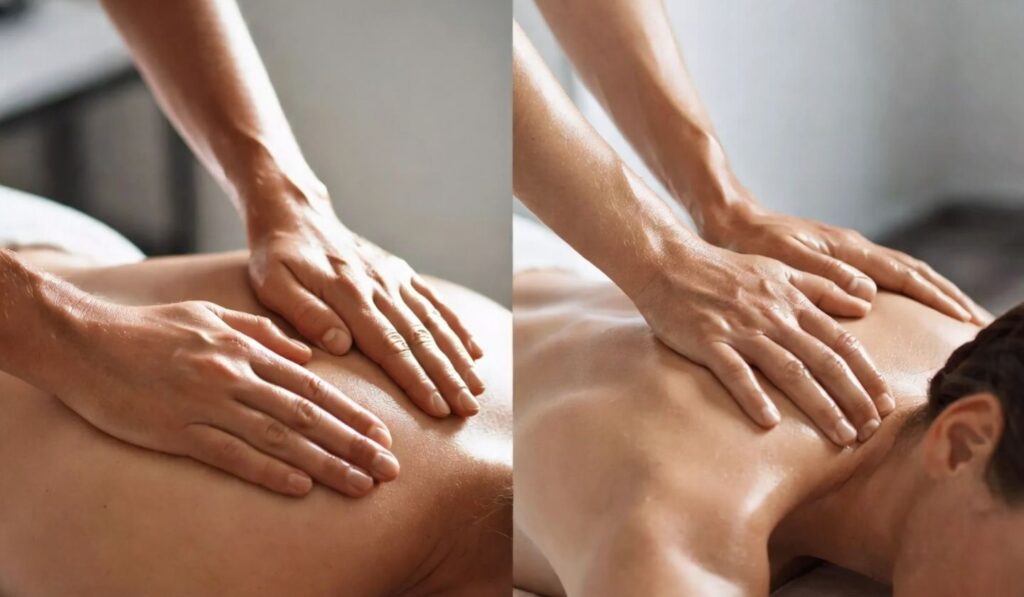
You’ve decided to book a massage, but when you look at the spa menu, you see multiple options. Swedish massage. Deep tissue. Hot stone. Therapeutic. You’re not sure which one will actually address your needs. Do you want relaxation or do you want to fix your muscle problems? Will deep tissue hurt?
Is Swedish massage too gentle if you have real tension? Understanding the differences between these popular massage styles helps you choose the treatment that matches your goals and tolerance level.
What Swedish Massage Is
Swedish massage is the foundation of modern massage therapy. It’s the most commonly offered massage style and has been practiced for centuries. Swedish massage uses long, gliding strokes, kneading, circular movements, and gentle percussion.
The therapist applies varying pressure, typically lighter than deep tissue. The focus is on relaxation, improving circulation, and easing tension through gentle manipulation. Swedish massage feels soothing and comfortable throughout the session.
The strokes flow along your body’s muscles, moving toward your heart. This directional approach improves circulation and lymphatic drainage. Your therapist uses oil or lotion to allow hands to glide smoothly across your skin.
Swedish massage typically lasts 60 to 90 minutes. Your entire body is usually addressed unless you request focus on specific areas. Sessions leave you feeling deeply relaxed and peaceful.
Recovery is minimal. You can return to normal activities immediately. Your body might feel slightly tender if you had significant tension, but this resolves within hours.
What Deep Tissue Massage Is
Deep tissue massage targets the deeper muscle layers and connective tissue. Rather than gliding strokes, the therapist uses sustained pressure, slow strokes, and focused work on specific areas of tension.
Deep tissue massage addresses chronic muscle tension, knots, and adhesions that topical treatments can’t reach. It’s particularly effective for people with tight muscles from poor posture, repetitive strain, or athletic activity.
The pressure is significantly more intense than Swedish massage. You might feel discomfort during deep tissue work, particularly when the therapist addresses very tight areas. However, good deep tissue shouldn’t cause pain. If something hurts too much, tell your therapist to adjust pressure.
Deep tissue massage typically focuses on problem areas rather than your entire body. A 60-minute deep tissue session might address your shoulders, neck, and upper back. A 90-minute session allows more thorough work.
Recovery is slightly longer than Swedish massage. Your muscles might feel sore after deep tissue work, similar to soreness after exercise. This resolves within 24 hours. Your muscles feel loose and relaxed after the soreness passes.
Key Differences Between the Two
The most obvious difference is pressure intensity. Swedish massage uses gentle to moderate pressure. Deep tissue uses moderate to intense pressure.
Goal is different too. Swedish massage primarily aims for relaxation and stress relief. Deep tissue primarily aims for releasing chronic muscle tension and addressing specific problem areas.
Speed of strokes differs. Swedish uses slower, flowing strokes. Deep tissue uses slower, more deliberate strokes focused on specific points.
Recovery differs. Swedish massage leaves you immediately relaxed with no soreness. Deep tissue might leave you slightly sore for a day.
Comfort level differs. Swedish feels pleasant and soothing throughout. Deep tissue can feel uncomfortably intense during the session, though many people find this intensity satisfying.
When to Choose Swedish Massage
Swedish massage is ideal if you’re seeking relaxation and stress relief. If your primary goal is to feel peaceful and calm, Swedish delivers this beautifully.
Choose Swedish if you’re new to massage. It’s comfortable and accessible. You’ll enjoy the experience and understand why people love massage.
Choose Swedish if you have a busy, stressful life and your body shows stress through general tension rather than specific knots. Swedish addresses stress-related tension effectively.
Choose Swedish if you have sensitive skin or low pain tolerance. The gentle pressure is comfortable for everyone.
Choose Swedish if you want a full-body massage experience. Swedish works well for comprehensive treatment of your entire body.
Choose Swedish if your goal is better sleep and mental health. Swedish’s nervous system regulation effects are particularly effective for these concerns.
If you’re in Kansas City seeking Swedish massage spa services, look for experienced therapists who understand how to customize pressure and focus to your preferences.
When to Choose Deep Tissue Massage
Choose deep tissue if you have chronic muscle tension that you want to address actively. If you have specific areas like shoulders or lower back that are persistently tight, deep tissue targets these effectively.
Choose deep tissue if you have knots or adhesions in your muscles. Swedish won’t break these up. Deep tissue specifically addresses these problem areas.
Choose deep tissue if you have poor posture or repetitive strain. Athletes often choose deep tissue for recovery and injury prevention.
Choose deep tissue if you like feeling pressure and intensity during massage. Some people find Swedish too light. Deep tissue provides the intensity they prefer.
Choose deep tissue if you want to address muscle problems aggressively. Deep tissue accomplishes more muscle release than Swedish in the same timeframe.
Choose deep tissue if you have high pain tolerance and like intense physical sensation. The intensity is part of what makes deep tissue satisfying for many people.
Pain During Deep Tissue: What’s Normal
During deep tissue massage, you might feel discomfort when the therapist addresses tight areas. This is normal and expected. However, there’s a difference between productive discomfort and pain.
Productive discomfort feels intense but not sharp. It feels like pressure working on tight muscles. It might be mildly uncomfortable but also satisfying. Many people describe it as a good hurt.
Pain that’s sharp, shooting, or makes you want to pull away is too intense. Tell your therapist to reduce pressure. Good deep tissue work respects your boundaries.
Communication is crucial during deep tissue massage. Tell your therapist immediately if pressure is too intense. They’ll adjust. The goal is releasing tension, not causing pain.
Combining Swedish and Deep Tissue
Some people benefit from combination approaches. You might have 30 minutes of deep tissue work on problem areas, then 30 minutes of Swedish massage on the rest of your body.
This combination addresses specific tension while providing overall relaxation. It’s often more satisfying than either massage type alone.
Your therapist can customize a combination approach based on your specific needs. Talk to them about what you’re seeking and they can create the perfect balance.
Frequency and Maintenance
Swedish massage often feels so good that people want it regularly. Weekly or bi-weekly Swedish massage provides cumulative benefits for stress, sleep, and overall wellbeing.
Deep tissue works best with spacing between sessions. Weekly deep tissue can be too intense for some people. Many people do deep tissue every two to three weeks, with gentler massage in between if desired.
Some people alternate between Swedish and deep tissue. They do Swedish massage weekly for relaxation and mental health, then deep tissue monthly for muscle maintenance.
Finding your ideal frequency depends on your goals, budget, and how your body responds. Your therapist can recommend appropriate frequency based on your specific situation.
Cost Considerations
Swedish and deep tissue massage typically cost the same. A 60-minute session costs around 80 to 150 dollars depending on location and therapist experience.
Some spas offer package pricing for multiple sessions. Committing to regular massage often reduces per-session cost, making consistent self-care more affordable.
The investment in regular massage pays dividends through better sleep, improved mental health, and reduced muscle tension. Most people find the benefits far exceed the cost.
Choosing Your Massage Therapist
Beyond choosing between Swedish and deep tissue, the quality of your therapist matters enormously. A skilled therapist understands your body, listens to your needs, and customizes treatment appropriately.
Ask your therapist about their training and experience. How many years have they been practicing? What certifications do they hold? Can they explain their approach to Swedish or deep tissue work?
Your therapist should ask you detailed questions about your concerns and goals. They should discuss what to expect during and after your massage. They should welcome questions and communication.
At best med spa in Lee’s Summit, experienced massage therapists understand both Swedish and deep tissue approaches. They’ll recommend which style serves your specific needs and create customized treatment that addresses your goals.
Your Personal Preference Matters
Beyond objective guidelines, your personal preference matters. Some people love the intensity of deep tissue. Others find it uncomfortable and prefer Swedish’s gentleness.
The best massage for you is the one you’ll actually get regularly. If deep tissue feels too intense and you dread appointments, you won’t maintain a massage practice. If Swedish feels too light and leaves you unsatisfied, you might give up too quickly.
Give your chosen massage type at least three sessions before deciding. It takes time to understand what works for your body and what you prefer.
Start With What Calls to You
If you’re drawn to relaxation and stress relief, start with Swedish. If you have specific muscle problems you want to address, start with deep tissue. Your intuition often knows what your body needs.
You can always try the other style later. Many people who start with Swedish eventually add deep tissue for specific issues. People who start with deep tissue sometimes add Swedish for overall relaxation.
There’s no one right answer. The right massage is the one that addresses your current needs and that you’ll commit to receiving regularly.
Schedule Your Massage Today
Ready to experience the benefits of Swedish or deep tissue massage? Contact Slimming Solutions Spa today to book your appointment.
Our experienced therapists offer both Swedish and deep tissue massage tailored to your specific needs and goals. During your consultation, we’ll discuss what you’re seeking and recommend the approach that will serve you best.
Visit Slimming Solutions Spa now to schedule your massage. Whether you choose Swedish for relaxation or deep tissue for muscle release, you’re investing in your wellbeing. Let us help you discover which massage style is perfect for you.
![[thumb]](https://slimmingsolutionsspa.com/wp-content/uploads/2023/12/botox1-150x150.png)
![[thumb]](https://slimmingsolutionsspa.com/wp-content/uploads/2023/12/Before2-150x150.png)
![[thumb]](https://slimmingsolutionsspa.com/wp-content/uploads/2023/12/Before3-150x150.png)


![[thumb]](https://slimmingsolutionsspa.com/wp-content/uploads/2023/12/revanesse-versa-1-150x150.png)
![[thumb]](https://slimmingsolutionsspa.com/wp-content/uploads/2023/12/revanesse-versa-2-150x150.png)
![[thumb]](https://slimmingsolutionsspa.com/wp-content/uploads/2023/12/revanesse-versa-3-150x150.png)
![[thumb]](https://slimmingsolutionsspa.com/wp-content/uploads/2023/12/revanesse-versa-4-150x150.png)
![[thumb]](https://slimmingsolutionsspa.com/wp-content/uploads/2023/12/revanesse-versa-5-150x150.png)
![[thumb]](https://slimmingsolutionsspa.com/wp-content/uploads/2024/01/Eyebrow-treatment-1-1-150x150.png)
![[thumb]](https://slimmingsolutionsspa.com/wp-content/uploads/2023/12/Skin-Rejuvenation-1-150x150.png)
![[thumb]](https://slimmingsolutionsspa.com/wp-content/uploads/2023/12/Skin-Rejuvenation-2-150x150.png)


![[thumb]](https://slimmingsolutionsspa.com/wp-content/uploads/2024/01/Lip-Filler-1-150x150.png)
![[thumb]](https://slimmingsolutionsspa.com/wp-content/uploads/2024/01/Lip-Filler-2-150x150.png)
![[thumb]](https://slimmingsolutionsspa.com/wp-content/uploads/2025/02/Lip-Filler-1-150x150.png)
![[thumb]](https://slimmingsolutionsspa.com/wp-content/uploads/2024/01/Lip-Filler-150x150.jpg)
![[thumb]](https://slimmingsolutionsspa.com/wp-content/uploads/2024/01/Before-1-150x150.jpg)

![[thumb]](https://slimmingsolutionsspa.com/wp-content/uploads/2024/01/RHA-Treatmetn-3-150x150.png)
![[thumb]](https://slimmingsolutionsspa.com/wp-content/uploads/2024/01/RHA-Treatmetn-2-150x150.png)
![[thumb]](https://slimmingsolutionsspa.com/wp-content/uploads/2024/01/RHA-Treatmetn-1-150x150.png)
![[thumb]](https://slimmingsolutionsspa.com/wp-content/uploads/2024/01/Thread-Lifts-1-150x150.png)
![[thumb]](https://slimmingsolutionsspa.com/wp-content/uploads/2024/01/Thread-Lifts-2-150x150.png)
![[thumb]](https://slimmingsolutionsspa.com/wp-content/uploads/2025/02/Lip-Filler-2-150x150.png)

![[thumb]](https://slimmingsolutionsspa.com/wp-content/uploads/2023/12/skin-reuvulation1-150x150.png)
![[thumb]](https://slimmingsolutionsspa.com/wp-content/uploads/2023/12/skin-rejuvulation-2-150x150.png)
![[thumb]](https://slimmingsolutionsspa.com/wp-content/uploads/2023/12/Skin-Tighting-150x150.png)
![[thumb]](https://slimmingsolutionsspa.com/wp-content/uploads/2023/12/Before-150x150.jpg)
![[thumb]](https://slimmingsolutionsspa.com/wp-content/uploads/2023/12/weightloss-1-150x150.png)
![[thumb]](https://slimmingsolutionsspa.com/wp-content/uploads/2023/12/weightloss-2-150x150.png)
![[thumb]](https://slimmingsolutionsspa.com/wp-content/uploads/2023/12/2Weight-Loss-2-150x150.png)
![[thumb]](https://slimmingsolutionsspa.com/wp-content/uploads/2025/02/Weight-Loss-1-new-150x150.png)
![[thumb]](https://slimmingsolutionsspa.com/wp-content/uploads/2023/12/Weight-Loss-3-150x150.png)
![[thumb]](https://slimmingsolutionsspa.com/wp-content/uploads/2025/03/Slimming-Solutions-BA-Template-150x150.png)


![[thumb]](https://slimmingsolutionsspa.com/wp-content/uploads/2023/12/dat3-150x150.png)
![[thumb]](https://slimmingsolutionsspa.com/wp-content/uploads/2023/12/dat-0-150x150.png)
![[thumb]](https://slimmingsolutionsspa.com/wp-content/uploads/2023/12/dat-1-150x150.png)
![[thumb]](https://slimmingsolutionsspa.com/wp-content/uploads/2023/12/Before-1-150x150.png)

![[thumb]](https://slimmingsolutionsspa.com/wp-content/uploads/2024/01/EMS-Treatment-2-150x150.png)
![[thumb]](https://slimmingsolutionsspa.com/wp-content/uploads/2024/01/EMS-Treatment-1-150x150.png)
![[thumb]](https://slimmingsolutionsspa.com/wp-content/uploads/2025/02/ems-BNA-front-150x150.png)
![[thumb]](https://slimmingsolutionsspa.com/wp-content/uploads/2025/02/EMS-bna-SIDE-150x150.png)
![[thumb]](https://slimmingsolutionsspa.com/wp-content/uploads/2024/01/EMS-Treatment-6-150x150.png)