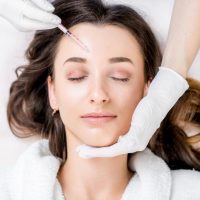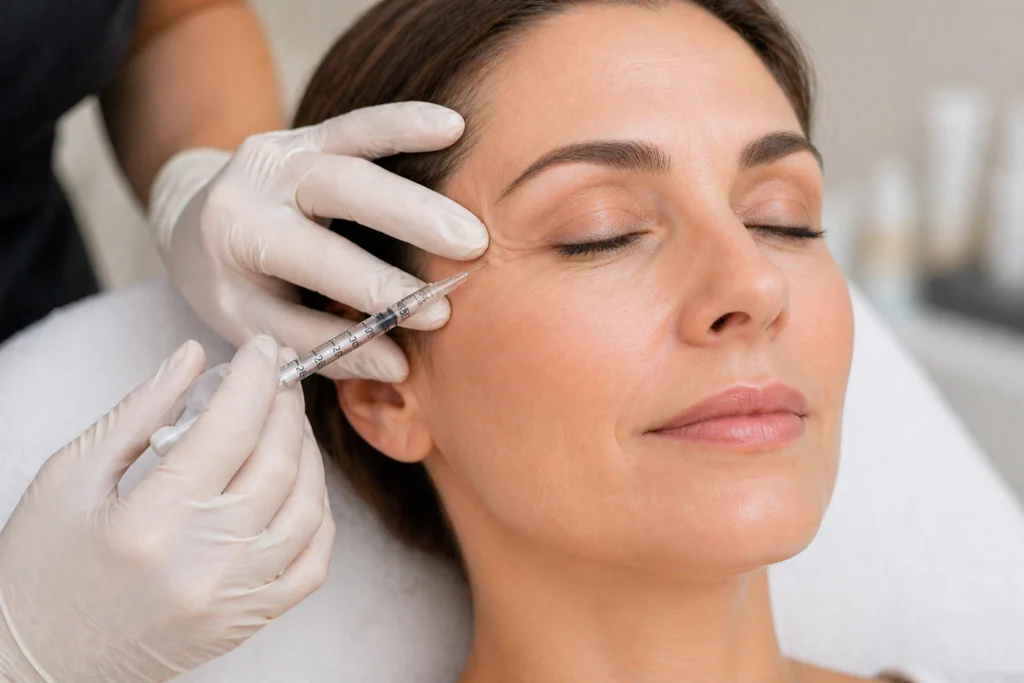
Yes, you can drink after Botox, and most people are clear to have a drink about 24 hours after their appointment. The reason for waiting has nothing to do with the product itself. Alcohol widens blood vessels and thins the blood slightly, and both of those raise your chances of bruising at the tiny injection points. Below we cover the exact timeline, why some providers say 48 hours instead, whether alcohol affects your results at all, where coffee and tea fit in, and what to do if you already had a glass before reading any of this.
Can You Drink After Botox?
You can drink after Botox once roughly 24 hours have passed, and for most people a single drink at that point causes no problem at all. Nothing about alcohol makes Botox unsafe. The waiting period exists to protect how your skin looks during the first day, not to protect the treatment.
Appearance during that first day is genuinely the whole issue. Small bruises are the most common side effect of injections, according to Cleveland Clinic, and they show up most often in areas where blood vessels sit close to the surface. Anything that increases blood flow or slows clotting in those first hours nudges the odds toward a visible bruise.
Odds are the right way to think about this rather than rules. Botulinum toxin injection is the most commonly performed minimally invasive cosmetic procedure in the United States according to a 2026 review in American Family Physician, and the American Society of Plastic Surgeons recorded 4.7 million treatments in 2023. A great many of those patients had a glass of wine that evening and were completely fine. Waiting simply improves your chances of walking away unmarked from your Botox injections.
Why Can’t You Drink Alcohol After Botox?
You are asked not to drink alcohol after Botox because alcohol dilates blood vessels, thins the blood, and dehydrates the skin, and all three make bruising and swelling more likely at the injection sites. Three separate mechanisms, one shared outcome.
Vasodilation is the largest of the three. Alcohol relaxes and widens blood vessels, which increases blood flow to the face. Botox is delivered through a very fine needle that creates small entry points beneath the skin, and more circulation through vessels near those points means a higher chance that a small vessel leaks and produces a visible mark.
Blood thinning compounds it. Alcohol has a mild anticoagulant effect, meaning it slows the clotting that would normally seal a nicked capillary quickly. A vessel that would have closed in seconds may instead leak a little longer, and a bruise that would have been invisible becomes one you can see in the mirror.
Dehydration is the quietest of the three and the easiest to fix. Alcohol pulls fluid from tissue, and dehydrated skin is more reactive and slower to settle after any minor trauma. Drinking water alongside anything else you drink offsets most of this. A few other simple steps can also reduce swelling in the first day.
Does Alcohol Break Down Botox Faster?
No, alcohol does not break down Botox faster, and it does not reduce how well the treatment works. This is the most common piece of misinformation on the topic, and it is worth stating plainly because a lot of patients worry about it unnecessarily.
Botulinum toxin type A works by binding to receptors at the junction between nerve and muscle, which blocks the signal that tells the muscle to contract. That binding happens locally, in the muscle tissue where the product was placed, and it is complete within roughly 24 to 48 hours. Alcohol circulates in your bloodstream and is processed by your liver. The two processes do not intersect.
No intersection means no effect on your outcome. Board-certified physicians writing on this subject are consistent on the point: there is no direct interaction between Botox and alcohol that poses a medical risk, and a drink will not stop the product working or shorten how long it lasts. What alcohol influences is the bruising and swelling around the injection, which is a cosmetic and comfort issue during the first day or two. If you want the mechanics behind the muscle binding, how Botox works covers the nerve-muscle relationship in more depth.
How Long After Botox Can You Drink Alcohol?
You can drink alcohol 24 hours after Botox, and waiting 48 hours is the better choice if you bruise easily or had several areas treated. That 24-hour mark is where most providers land, and it lines up with the window in which the product finishes binding.
Binding is why the number is what it is. Once the toxin has attached to its receptors, roughly a day to two days out, the injection sites have also closed and settled, and alcohol has nothing left to interfere with. Here is how the full picture looks across the drinks people actually ask about.
| Drink | Before Treatment | After Treatment | Why |
|---|---|---|---|
| Alcohol, general | Avoid 24 hours prior | Wait 24 hours, 48 if bruise-prone | Vasodilation and mild blood thinning raise bruising risk |
| Wine | Avoid 24 hours prior | Wait 24 hours | Red wine in particular can flush the skin and add redness |
| Beer | Avoid 24 hours prior | Wait 24 hours | Can add bloating that makes minor swelling look worse |
| Cocktails and spirits | Avoid 24 hours prior | Wait 24 hours | Typically the most dehydrating of the three |
| Coffee | Fine, keep it moderate | Fine, keep it moderate | Mild diuretic effect only |
| Tea | Fine | Fine | Herbal tea is an excellent choice the same day |
| Water | Encouraged | Encouraged | Hydration supports skin recovery |
Sources: Cleveland Clinic; American Family Physician, 2026; Ear Nose and Throat Associates of Lubbock, physician-authored guidance.
Read the alcohol rows as a strong suggestion rather than a prohibition. Nobody will need to reschedule your treatment because you had a beer the night before.
Why Providers Give Different Alcohol Timelines
Providers give different alcohol timelines because they weigh a small, well-understood cosmetic risk differently, not because the underlying facts are in dispute. Some clinics say 24 hours. Some say 48. Some physicians decline to give a number at all and simply advise moderation, on the reasoning that the actual risk is a bruise rather than a complication.
All of those positions are defensible because the stakes are low and personal. A patient with an event the following weekend and a history of easy bruising should take the conservative end. A patient with resilient skin and no plans has room to be relaxed about it.
Individual circumstance is why we give patients in Lee’s Summit a number matched to their own history rather than a laminated rule. Someone who has never bruised in ten rounds of treatment gets different guidance than someone who marks up every time.
Who Is More Likely to Bruise After Botox?
You are more likely to bruise after Botox if you have thin or fair skin, take blood-thinning medications or supplements, or have a history of bruising easily from minor bumps. Knowing which group you fall into is what turns a generic 24-hour rule into a number that actually applies to you.
The factors that raise bruising risk:
- Naturally thin, fair, or sensitive skin, where surface vessels sit closer to the top and show more readily.
- Blood-thinning medications such as aspirin, ibuprofen, or naproxen, which Cleveland Clinic notes can promote bruising.
- Supplements with anticoagulant effects, including fish oil, high-dose vitamin E, and turmeric.
- Prescription anticoagulants, which should always be discussed with your prescribing doctor rather than stopped on your own.
- A history of broken capillaries or visible marks from small knocks.
- Treatment in vessel-dense areas, since Cleveland Clinic notes bruising is most common where blood vessels cluster.
- Several areas treated in one session, simply because more injection points means more opportunities.
- Regular alcohol intake, which keeps vessels dilated more of the time.
Two or more of these together is the signal to take the 48-hour end of the range. None of them is a reason to skip treatment, and none of them produces anything worse than a mark that fades within a week.
Can I Have a Glass of Wine After Botox?
You can have a glass of wine after Botox once 24 hours have passed, and a single glass at that point is unlikely to cause any visible change. One drink is a very different proposition from an evening out, and the guidance scales accordingly.
Scale is the thing most aftercare advice leaves out. The concern with alcohol is dose-dependent, so a glass of wine with dinner the following night sits at the low end of an already low risk. Several drinks on the same evening as your appointment sits at the other end.
If your appointment was in the morning and you have dinner plans that evening, you are inside the window rather than clear of it. Ordering sparkling water that night and having the wine tomorrow costs you one evening and removes the question entirely.
Does the Type of Alcohol Matter After Botox?
The type of alcohol matters slightly after Botox, though the 24-hour guidance is the same across all of them. Each category tends to produce a somewhat different visible effect.
Red wine is the one patients notice most, because it causes flushing in many people and that redness sits right on top of areas that may already be pink from injections. Beer tends to contribute bloating and fluid retention, which can make mild swelling look more pronounced than it is. Cocktails and straight spirits are usually the most dehydrating, particularly when mixed with sugary or caffeinated mixers.
Can You Drink Alcohol Before Botox?
You should avoid alcohol for about 24 hours before Botox, for the same reason you wait afterward. Alcohol consumed beforehand leaves your blood vessels dilated and your clotting slightly slowed at the exact moment the needle goes in, which is when it matters most.
Timing beforehand arguably matters more than timing afterward. A bruise forms at the moment a vessel is nicked, so the state of your circulation during the appointment itself carries more weight than what you do six hours later. Arriving well hydrated and alcohol-free gives your injector the best conditions to work in.
Conditions on the day are part of why we ask about the previous evening at check-in. Nurse Joi uses a technique specifically designed to minimize bruising, and the results of that technique improve when the patient arrives without dilated vessels. More detail on getting ready is covered in our notes on the injectable appointment itself.
Can You Drink the Night Before Botox?
You can drink the night before Botox without any danger, though skipping it is the better call if bruising concerns you. An appointment at 2pm following a drink at 8pm the previous evening falls just inside the 24-hour window, which is close enough that most people will see no difference either way.
Heavier drinking the night before is worth rescheduling around. Several drinks leave you dehydrated and vasodilated well into the next day, which stacks two risk factors on top of each other at the exact wrong time.
What Else to Skip Before Your Appointment
Alcohol is one item on a short list of things worth pausing before injections. Aspirin, ibuprofen, naproxen, fish oil, and high-dose vitamin E all thin the blood to some degree, and ideally they come out of your routine several days ahead rather than the night before. Prescription blood thinners are a separate matter and stay in place unless your prescribing physician says otherwise.
Arriving hydrated and well rested rounds out the list. These small preparations apply equally across all four of our neurotoxin treatments.
Nerves about the needle itself are common and separate from any of this. Anyone weighing whether does Botox hurt will find that the discomfort is brief and that most patients describe it as a quick pinch.
Can You Drink Coffee After Botox?
You can drink coffee after Botox, and there is no need to skip your morning cup, though keeping the amount moderate is sensible on treatment day. Caffeine sits in a completely different category from alcohol.
The difference comes down to mechanism. Alcohol dilates vessels and thins blood. Caffeine does neither in any meaningful way. Its main relevance is that it acts as a mild diuretic, so a very high intake contributes to dehydration, and well-hydrated skin recovers a little more comfortably from minor needle punctures.
Moderation rather than avoidance is the practical position. One or two cups is a non-event. Three energy drinks and a triple espresso on the afternoon of your appointment is worth reconsidering, mostly because of the fluid loss.
Why Can’t I Have Coffee After Botox?
There is no medical reason you cannot have coffee after Botox, and the belief that coffee is forbidden appears to have spread by association with the alcohol guidance rather than from any evidence. Coffee and alcohol get lumped together as things to avoid, when only one of them affects your blood vessels in a way that matters here.
Some clinics suggest limiting caffeine for a few hours purely as a hydration measure, and a small number mention that caffeine can mildly raise circulation in sensitive people. Neither of those rises to a prohibition. If you are already prone to bruising and want to be thorough, swap one coffee for water on treatment day and consider the matter handled.
Can You Drink Coffee Before Botox?
You can drink coffee before Botox, and most patients do without any issue. A few clinics suggest skipping caffeine on the morning of treatment for patients who find it makes them jittery, since sitting still is easier without it.
Comfort rather than safety drives that suggestion. If caffeine makes you fidgety and the idea of injections already has you tense, a decaf morning is a reasonable choice. If your coffee is what keeps you calm, keep it.
Can You Drink Tea After Botox?
You can drink tea after Botox with no restriction, and herbal tea in particular is one of the better choices for treatment day. Caffeinated black and green teas contain far less caffeine than coffee, and herbal varieties contain none.
Warm liquids are worth one small note. Very hot drinks are fine, but sitting in a sauna or hot tub is not, because sustained heat exposure raises circulation across the whole body. A hot cup of tea does not do that.
What Should You Drink After Botox?
You should drink water after Botox, along with herbal tea or an electrolyte beverage if you want variety. Hydration is the one dietary factor that genuinely helps the skin settle after injections.
Water works because dehydrated tissue is more reactive and slower to recover from small punctures. Electrolyte drinks add sodium and potassium that support fluid balance, which makes them a reasonable option if plain water bores you. Herbal tea gives you something warm without caffeine.
Keeping a glass nearby for the rest of treatment day is a small habit with a real payoff, and it also helps with the mild headache some patients get in the hours after injections. We mention it to every patient before they leave a Botox appointment, because it is the easiest step on the entire list.
What Happens if You Accidentally Drank After Botox?
If you accidentally drank after Botox, nothing has gone wrong and your results are not affected. A drink you did not plan is not an emergency and does not require any intervention.
Work through it in this order:
- Stop there for the night. One drink is one drink. Skip any more until the 24-hour mark has passed.
- Drink a glass of water. Offsetting the dehydration is the single most useful thing available to you.
- Stay upright and avoid touching your face. The standard first-day guidance still applies and matters more than the drink did.
- Check the mirror in the morning. Mild redness at the injection points is normal and resolves on its own.
- Apply a cool compress if there is swelling. Ten minutes at a time, wrapped in a cloth, never ice directly on skin.
- Skip alcohol for another 48 hours if a bruise appeared. Adding more alcohol to an existing bruise slows how quickly it fades.
- Call your provider for anything unexpected. Marked swelling, spreading redness, or pain that gets worse rather than better all warrant a phone call.
Patients call our Lee’s Summit office about this more often than you might expect, and the answer is almost always the same. Drink some water and check again tomorrow.
Why Can’t You Lay Down After Botox?
You are asked not to lay down for the first 3 to 4 hours after Botox so the product stays where it was placed while it begins binding to the muscle. Cleveland Clinic puts the upright window at 3 to 4 hours.
Position matters during that window because the product is still a liquid that has not yet attached to its receptors. Lying flat, and especially lying face-down, combines gravity with pressure against a pillow or mattress, which is the same category of concern as rubbing the treated area.
Pressure rather than posture alone is the real variable. Sitting, standing, walking, and desk work are all fine immediately. Reclining on a sofa with your head supported is generally acceptable. Face-down on a massage table is the version to avoid.
What Happens if You Fall Asleep 3 Hours After Botox?
If you fall asleep 3 hours after Botox, almost certainly nothing happens, because you have reached the outer edge of the recommended upright window. The 3-to-4 hour guidance is deliberately conservative.
Sleeping on your back is the ideal position for that first night, with an extra pillow to keep your head slightly elevated, which also helps with any swelling. Waking up to find you rolled onto your side is not a problem worth worrying about.
What Happens if You Accidentally Bend Over After Botox?
If you accidentally bend over after Botox, the result is almost always nothing at all. Picking something up off the floor once is not the scenario the guidance is written for.
Repetition and duration are what the rule addresses. An hour of gardening with your head below your heart, or a yoga class full of forward folds, sustains the position long enough to matter. A momentary bend does not. The areas of the face you had treated also affect how much any of this applies, since forehead placement is more position-sensitive than a masseter treatment.
Can You Sleep on Your Side 24 Hours After Botox?
You can sleep on your side 24 hours after Botox without any concern, because the product has bound to the muscle by that point. Side sleeping on the first night is the only version worth avoiding, and even then the risk is small.
Back sleeping for one night covers the entire cautious period. After that, sleep however you normally do.
Can You Shower After Getting Botox?
You can shower after getting Botox on the same day, including washing your face and hair. Water has no effect on the product whatsoever.
Temperature and pressure are the only two things to moderate. A very hot shower or a long steam raises circulation across the body, which is the same reason saunas and hot tubs are off the list for the first day. Warm rather than scalding, and reasonably brief, keeps you well clear of any concern.
Technique in the shower matters as much as temperature. Wash your face gently with fingertips rather than a cloth or cleansing brush, avoid scrubbing the treated areas, and pat dry instead of rubbing. That same light touch protects the placement that keeps fine lines smooth over the following weeks.
Frequently Asked Questions
How Often Can I Get Botox Injections?
You can get Botox injections roughly every three to four months, which matches how long the effect typically lasts according to a 2026 American Family Physician review. Treating more often than that is generally unnecessary and offers no added benefit. How often you personally need treatment depends on your muscle strength and how quickly you metabolize the product.
How Long Does Botox Take to Work?
Botox takes about three to four days to show initial results and roughly two weeks to reach full effect. The 2026 American Family Physician review places full clinical development at approximately two weeks. Judging your results before day fourteen tends to cause unnecessary concern, since the difference between day four and day fourteen is substantial. How long Botox lasts from there is typically three to four months.
Can You Drink Water After Botox?
You can drink water immediately after Botox, and staying hydrated is actively encouraged. Water supports skin recovery, helps with the mild headache some patients experience, and offsets any dehydration from caffeine or alcohol later on.
Does Drinking Affect How Long Botox Lasts?
Drinking does not affect how long Botox lasts. Duration is determined by your dose, the strength of the treated muscle, your metabolism, and how frequently you have been treated. Alcohol influences bruising and swelling in the first day or two, not the lifespan of the result.
Does Alcohol Interact With Botox Medically?
Alcohol does not interact with Botox medically. There is no pharmacological interaction between botulinum toxin type A and alcohol, and physicians writing on this subject are consistent that no medical risk arises from combining them. The guidance to wait is about bruising and swelling at the injection sites. The same holds for the other neurotoxins we use, including Xeomin, Jeuveau, and Dysport.
Can You Drink Alcohol if You Had Botox for Migraines?
You can drink alcohol after Botox for migraines following the same 24-hour guidance, though anyone treated for chronic migraine should keep in mind that alcohol is itself a common migraine trigger for many people. That consideration is separate from the injections and worth discussing with the physician managing your migraine care.
What Shouldn’t You Do After Botox?
After Botox you should not rub or massage the treated area, lie flat for the first few hours, exercise strenuously, or use saunas and hot tubs for the first 24 hours. Facials and massages wait at least a day. Everything else in a normal routine, including washing your face, going to work, and being fully expressive, is fine right away.
What It All Comes Down To
Alcohol after Botox is a bruising question rather than a safety question. Wait about 24 hours, stretch it to 48 if you bruise easily or had several areas treated, and skip drinking for roughly a day beforehand as well, since the state of your circulation during the appointment matters more than what happens afterward. Your results are not at stake either way. Coffee and tea sit in an entirely different category and need no real restriction beyond keeping your water intake up. And if you already had a drink before finding any of this out, the answer is a glass of water and a look in the mirror tomorrow.
Guidance like this works best when it comes from the person who placed the product and knows your history with bruising. At Slimming Solutions Med Spa, Nurse Joi has been a Level 5 certified Master Injector since 2014 and uses a technique built around minimizing bruising in the first place, so every patient leaves with aftercare matched to their own skin rather than a generic sheet.
Questions before booking are always welcome, and a consultation is a good place to start.
![[thumb]](https://slimmingsolutionsspa.com/wp-content/uploads/2023/12/botox1-150x150.png)
![[thumb]](https://slimmingsolutionsspa.com/wp-content/uploads/2023/12/Before2-150x150.png)
![[thumb]](https://slimmingsolutionsspa.com/wp-content/uploads/2023/12/Before3-150x150.png)


![[thumb]](https://slimmingsolutionsspa.com/wp-content/uploads/2023/12/revanesse-versa-1-150x150.png)
![[thumb]](https://slimmingsolutionsspa.com/wp-content/uploads/2023/12/revanesse-versa-2-150x150.png)
![[thumb]](https://slimmingsolutionsspa.com/wp-content/uploads/2023/12/revanesse-versa-3-150x150.png)
![[thumb]](https://slimmingsolutionsspa.com/wp-content/uploads/2023/12/revanesse-versa-4-150x150.png)
![[thumb]](https://slimmingsolutionsspa.com/wp-content/uploads/2023/12/revanesse-versa-5-150x150.png)
![[thumb]](https://slimmingsolutionsspa.com/wp-content/uploads/2024/01/Eyebrow-treatment-1-1-150x150.png)
![[thumb]](https://slimmingsolutionsspa.com/wp-content/uploads/2023/12/Skin-Rejuvenation-1-150x150.png)
![[thumb]](https://slimmingsolutionsspa.com/wp-content/uploads/2023/12/Skin-Rejuvenation-2-150x150.png)


![[thumb]](https://slimmingsolutionsspa.com/wp-content/uploads/2024/01/Lip-Filler-1-150x150.png)
![[thumb]](https://slimmingsolutionsspa.com/wp-content/uploads/2024/01/Lip-Filler-2-150x150.png)
![[thumb]](https://slimmingsolutionsspa.com/wp-content/uploads/2025/02/Lip-Filler-1-150x150.png)
![[thumb]](https://slimmingsolutionsspa.com/wp-content/uploads/2024/01/Lip-Filler-150x150.jpg)
![[thumb]](https://slimmingsolutionsspa.com/wp-content/uploads/2024/01/Before-1-150x150.jpg)

![[thumb]](https://slimmingsolutionsspa.com/wp-content/uploads/2024/01/RHA-Treatmetn-3-150x150.png)
![[thumb]](https://slimmingsolutionsspa.com/wp-content/uploads/2024/01/RHA-Treatmetn-2-150x150.png)
![[thumb]](https://slimmingsolutionsspa.com/wp-content/uploads/2024/01/RHA-Treatmetn-1-150x150.png)
![[thumb]](https://slimmingsolutionsspa.com/wp-content/uploads/2024/01/Thread-Lifts-1-150x150.png)
![[thumb]](https://slimmingsolutionsspa.com/wp-content/uploads/2024/01/Thread-Lifts-2-150x150.png)
![[thumb]](https://slimmingsolutionsspa.com/wp-content/uploads/2025/02/Lip-Filler-2-150x150.png)

![[thumb]](https://slimmingsolutionsspa.com/wp-content/uploads/2023/12/skin-reuvulation1-150x150.png)
![[thumb]](https://slimmingsolutionsspa.com/wp-content/uploads/2023/12/skin-rejuvulation-2-150x150.png)
![[thumb]](https://slimmingsolutionsspa.com/wp-content/uploads/2023/12/Skin-Tighting-150x150.png)
![[thumb]](https://slimmingsolutionsspa.com/wp-content/uploads/2023/12/Before-150x150.jpg)
![[thumb]](https://slimmingsolutionsspa.com/wp-content/uploads/2023/12/weightloss-1-150x150.png)
![[thumb]](https://slimmingsolutionsspa.com/wp-content/uploads/2023/12/weightloss-2-150x150.png)
![[thumb]](https://slimmingsolutionsspa.com/wp-content/uploads/2023/12/2Weight-Loss-2-150x150.png)
![[thumb]](https://slimmingsolutionsspa.com/wp-content/uploads/2025/02/Weight-Loss-1-new-150x150.png)
![[thumb]](https://slimmingsolutionsspa.com/wp-content/uploads/2023/12/Weight-Loss-3-150x150.png)
![[thumb]](https://slimmingsolutionsspa.com/wp-content/uploads/2025/03/Slimming-Solutions-BA-Template-150x150.png)


![[thumb]](https://slimmingsolutionsspa.com/wp-content/uploads/2023/12/dat3-150x150.png)
![[thumb]](https://slimmingsolutionsspa.com/wp-content/uploads/2023/12/dat-0-150x150.png)
![[thumb]](https://slimmingsolutionsspa.com/wp-content/uploads/2023/12/dat-1-150x150.png)
![[thumb]](https://slimmingsolutionsspa.com/wp-content/uploads/2023/12/Before-1-150x150.png)

![[thumb]](https://slimmingsolutionsspa.com/wp-content/uploads/2024/01/EMS-Treatment-2-150x150.png)
![[thumb]](https://slimmingsolutionsspa.com/wp-content/uploads/2024/01/EMS-Treatment-1-150x150.png)
![[thumb]](https://slimmingsolutionsspa.com/wp-content/uploads/2025/02/ems-BNA-front-150x150.png)
![[thumb]](https://slimmingsolutionsspa.com/wp-content/uploads/2025/02/EMS-bna-SIDE-150x150.png)
![[thumb]](https://slimmingsolutionsspa.com/wp-content/uploads/2024/01/EMS-Treatment-6-150x150.png)