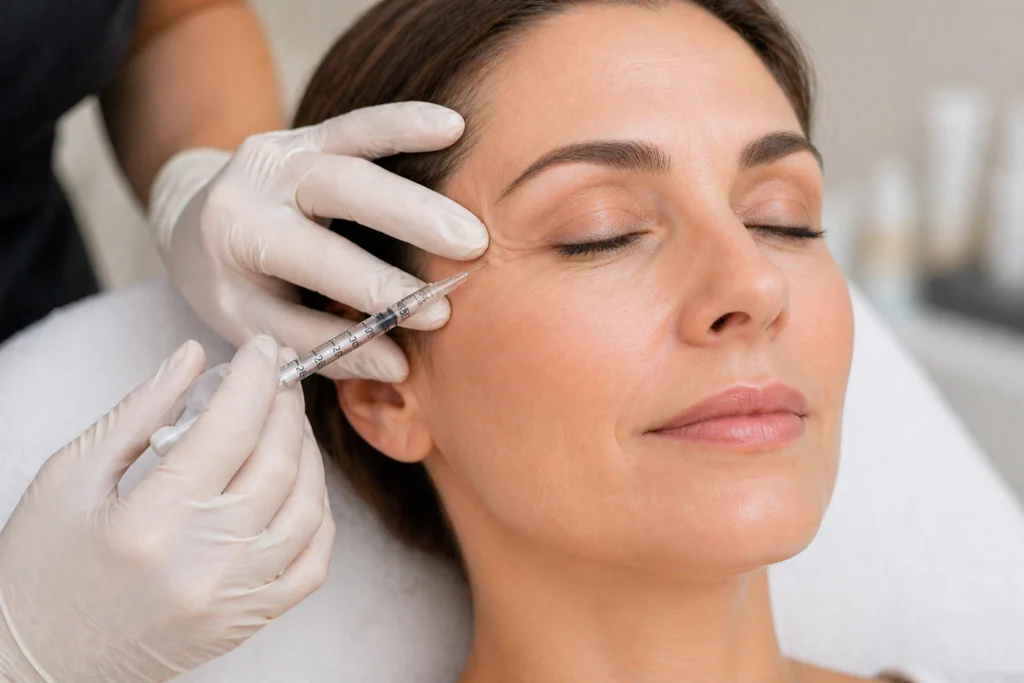

After Botox, do not lie down for at least 4 hours, do not rub or massage the treated area for 24 hours, avoid strenuous exercise for 24 hours, skip alcohol for the rest of the day, avoid blood-thinning medications like aspirin and ibuprofen, and stay away from saunas, hot tubs, and intense heat exposure for 24 to 48 hours. These aftercare rules exist because Botox is a liquid that needs time to bind to the targeted nerve endings in the muscle, and anything that increases blood flow to the face or physically moves the product before it settles can cause the toxin to spread beyond the intended treatment area. Over 9 million Botox and neurotoxin procedures were performed globally in 2024 according to ISAPS data, making it the most popular minimally invasive cosmetic treatment in the world. This guide covers everything to avoid after Botox injections, what to avoid before your appointment, why Botox sometimes does not work as expected, and how to get the best possible results from your treatment.
What Not to Do after Botox?
After Botox, you should avoid lying down, rubbing the treated area, exercising, drinking alcohol, taking blood-thinning medications, exposing your face to heat, and getting other facial treatments for specific time windows depending on the activity. The table below organizes every aftercare restriction by timeline so you know exactly when each limitation begins and ends.
| Time Window | What to Avoid | What Is OK |
|---|---|---|
| First 4 hours | Lying down or bending forward; rubbing, pressing, or massaging the face; wearing tight headbands, hats, or goggles that press on treated areas | Sitting upright; gentle facial expressions (smiling, frowning); drinking water; eating normally |
| First 24 hours | Strenuous exercise (cardio, heavy lifting, hot yoga); alcohol; aspirin, ibuprofen, naproxen, and other NSAIDs; saunas, steam rooms, hot tubs, and hot showers directly on the face; facials, chemical peels, microdermabrasion, and laser treatments | Light walking; gentle face washing with cool or lukewarm water; applying makeup (after injection sites close, typically 15 minutes); sleeping on your back with head slightly elevated |
| First 48 hours | Facial massages; extended sun exposure without SPF; flying (some providers recommend waiting 48 hours due to cabin pressure changes); aggressive skincare (retinoids, glycolic acid, exfoliating scrubs) | Normal daily activities; gentle skincare routine; light moisturizer; SPF application |
| First week | Dental procedures that require prolonged mouth opening (can stress forehead and jaw muscles); excessive alcohol consumption | Full return to exercise (after 24-48 hours); normal skincare routine; sleeping in any position; all normal activities |
Sources: Cleveland Clinic (Dr. James Zins); American Society of Plastic Surgeons aftercare guidelines; board-certified dermatologist and plastic surgeon consensus recommendations.
The majority of these restrictions are precautionary rather than mandatory. According to Cleveland Clinic plastic surgeon Dr. James Zins, most untoward effects after Botox are caused by poor injection technique rather than patient behavior. Following aftercare guidelines minimizes the small risk of bruising, swelling, and migration, but missing one step does not mean your treatment has failed.
What Is the 4 Hour Rule for Botox?
The 4 hour rule for Botox means you should stay upright and avoid lying down, bending forward at the waist, or putting your face down for at least 4 hours after your injections. This rule exists because Botox is injected as a liquid that takes time to bind to the acetylcholine receptors on the targeted nerve endings. Lying down too soon after injection allows gravity to shift the liquid before it has fully settled, which can theoretically cause it to spread into muscles that were not intended to be treated.
In practice, the 4-hour rule is conservative. Some providers recommend as little as 2 hours of upright positioning, while others advise the full 4 hours. The risk of significant migration from lying down diminishes rapidly as the Botox begins binding to nerve receptors, which starts within minutes of injection. Staying upright for 4 hours is the safest approach, and most patients find it easy to schedule their appointment early enough in the day to stay active and upright through the afternoon.
If you accidentally lie down within the 4-hour window, the likelihood of a noticeable problem is very small. A brief moment of bending over to pick something up or leaning back in a recliner is not the same as sleeping face-down for hours. Botox safety information covers the medication’s mechanisms in more detail for patients who want to understand how the toxin interacts with the body.
What Can Mess Up Your Botox?
The factors most likely to mess up your Botox results are rubbing or massaging the treated area too soon, exercising vigorously within 24 hours, excessive heat exposure, taking blood-thinning medications, and choosing an inexperienced injector.
- Rubbing or massaging the face pushes the Botox away from the injection site. According to Dr. Zins at Cleveland Clinic, Botox liquid can spread approximately half an inch when the area is massaged, which is enough to affect adjacent muscles and produce uneven results or unwanted effects like eyelid heaviness.
- Vigorous exercise raises blood pressure and increases blood flow to the face, which can accelerate the dispersion of Botox before it binds fully and increase bruising at injection sites.
- Heat exposure from saunas, steam rooms, hot tubs, hot yoga, or prolonged hot showers dilates blood vessels and increases circulation to the face, producing the same dispersal and bruising risk as exercise.
- Blood-thinning medications (aspirin, ibuprofen, naproxen, fish oil, vitamin E) increase the likelihood of bruising at injection sites. The bruising is cosmetic, not dangerous, but it can last 7 to 10 days and is more common in patients who take these medications within 24 hours before or after treatment.
- Injector skill is the single largest factor in Botox outcomes. Precise placement, correct dosing, and knowledge of facial anatomy determine whether the results look natural and last the expected 3 to 4 months. Patient aftercare matters, but it cannot compensate for poor injection technique.
Botox treatments performed by experienced providers who understand the specific anatomy of each treatment area produce the most consistent and natural-looking results.
Can Botox Migrate After 48 Hours?
Botox migration after 48 hours is extremely unlikely because the toxin has already bound to the acetylcholine receptors at the neuromuscular junction within the first few hours after injection. Once Botox binds to the nerve endings, it is no longer a free-floating liquid that can be physically moved by pressure, gravity, or activity. The binding process begins within minutes and is essentially complete within 24 to 48 hours.
The migration risk is highest during the first 4 hours, when a significant portion of the Botox is still in liquid form and has not yet attached to nerve receptors. This is why the 4-hour upright rule and the 24-hour no-massage/no-exercise restrictions exist. After 48 hours, you can touch your face, sleep in any position, exercise at full intensity, get a facial massage, and resume all normal activities without concern about migration.
If you experience unexpected effects like eyelid drooping or asymmetry that appears days after treatment, this is almost always the result of the injection placement itself rather than post-treatment migration. These effects, while uncommon, are caused by the Botox diffusing slightly beyond the intended muscle during the injection process. They are temporary and resolve as the Botox wears off over the following weeks. Skin tightening treatments are a complementary option for patients who want to address laxity that Botox alone does not correct.
What Not to Do Before Botox?
Before Botox, avoid blood-thinning medications and supplements for 7 to 10 days (if medically safe to do so), limit alcohol for 24 hours, skip retinoid creams on the treatment area for 2 to 3 days, and arrive with a clean face free of heavy makeup.
- Stop aspirin, ibuprofen (Advil/Motrin), naproxen (Aleve), fish oil, vitamin E, and other blood-thinning supplements 7 to 10 days before your appointment if your physician approves. These increase bruising risk. Do not stop any prescription blood thinners (warfarin, Eliquis, Plavix) without your prescribing doctor’s explicit approval.
- Avoid alcohol for at least 24 hours before your appointment. Alcohol dilates blood vessels and increases bruising.
- Discontinue retinoid creams (tretinoin, retinol, adapalene) on the treatment area for 2 to 3 days before treatment. Retinoids thin the skin and increase sensitivity, which can amplify discomfort and bruising.
- Arrive with a clean face. Remove all makeup, sunscreen, and heavy skincare products before your appointment, or plan to cleanse at the office. Clean skin reduces the risk of introducing bacteria into injection sites.
- Eat a normal meal before your appointment. Arriving on an empty stomach increases the chance of lightheadedness during the injection, especially for patients who are anxious or needle-sensitive.
- Communicate openly with your injector about the specific results you want. Bring reference photos if helpful. Clear communication about your goals, your concerns, and any previous Botox experiences helps the injector customize the placement and dosing for your anatomy.
Dermal filler appointments follow similar pre-treatment preparation, so patients scheduling both treatments can apply the same guidelines.
What Medications Should Not Be Taken Before Botox?
Medications that should not be taken before Botox (if medically safe to discontinue) include aspirin, ibuprofen, naproxen, fish oil, vitamin E, ginkgo biloba, and other supplements or medications that thin the blood or reduce clotting. These do not interfere with Botox’s mechanism of action, but they significantly increase the risk of bruising at injection sites.
Prescription blood thinners such as warfarin (Coumadin), apixaban (Eliquis), rivaroxaban (Xarelto), and clopidogrel (Plavix) should never be stopped without the explicit approval of the prescribing physician. Patients who cannot safely discontinue blood thinners can still receive Botox, but they should expect a higher likelihood of bruising and may benefit from arnica supplements or cold compresses after treatment to minimize discoloration.
Aminoglycoside antibiotics (gentamicin, tobramycin) and certain muscle relaxants can theoretically enhance the effects of Botox, though this interaction is rare at cosmetic doses. Always inform your injector of every medication and supplement you take so they can account for potential interactions in your treatment plan.
Can I Workout 24 Hours After Botox?
Most providers recommend waiting at least 24 hours after Botox before returning to strenuous exercise, though some allow light activity like walking or gentle stretching on the same day. The restriction applies specifically to activities that significantly raise heart rate, blood pressure, and blood flow to the face: running, cycling, heavy weightlifting, hot yoga, HIIT, and similar high-intensity workouts.
The concern with exercising too soon is twofold. First, increased blood flow to the face can spread the Botox beyond the targeted muscles before it has fully bound. Second, elevated blood pressure increases the likelihood and severity of bruising at injection sites. Light walking, gentle stretching, and normal daily movement are fine on the day of treatment because they do not produce the same hemodynamic effects as vigorous exercise.
After 24 hours, most patients can safely return to their full exercise routine. Some providers extend the exercise restriction to 48 hours for patients who received large volumes of Botox or treatment across multiple facial areas. Here in the Kansas City area, we provide personalized aftercare instructions for every patient based on the specific areas treated and the volume of product used. Botox aftercare is reviewed at each appointment so patients leave with clear expectations.
Why No Coffee After Botox?
Some providers recommend avoiding coffee after Botox because caffeine is a mild vasoconstrictor that can temporarily raise blood pressure, and it also has mild blood-thinning properties that may theoretically increase bruising risk. This is one of the more debated aftercare recommendations, and many experienced injectors do not restrict coffee at all.
The practical impact of a single cup of coffee on Botox results is minimal. The caffeine-related blood pressure increase is modest and short-lived, and it is unlikely to produce meaningful Botox migration or excessive bruising in most patients. Patients who drink coffee daily and skip it on treatment day may actually experience caffeine withdrawal headaches, which can be more disruptive than the theoretical risks of drinking coffee. If your provider does not specifically restrict coffee, a single cup on treatment day is generally fine. Avoid consuming multiple high-caffeine drinks in the hours immediately following your injection.
Why Is My Botox Not Lasting?
Botox may not last the expected 3 to 4 months because of a faster individual metabolism, insufficient dosing, antibody development after repeated treatments, high physical activity levels, or a genetic variation in how your body processes the botulinum toxin.
Metabolism is the most common factor. Patients with higher metabolic rates break down the toxin faster, which means the muscle-relaxing effect wears off sooner. Athletes and highly active individuals frequently report shorter Botox duration because their bodies process the protein more quickly. Dosing also matters: a lower dose produces a shorter duration of effect. Some patients benefit from slightly higher doses at each treatment to extend the interval between appointments.
Antibody development is a real but uncommon phenomenon. Over time, some patients’ immune systems develop neutralizing antibodies against the botulinum toxin, which reduces the medication’s effectiveness. Patients who notice diminishing results over multiple treatment cycles may benefit from switching to a different neurotoxin formulation, such as Xeomin (incobotulinumtoxinA), which has a lower risk of antibody formation because it does not contain complexing proteins. RF microneedling provides complementary skin rejuvenation benefits that do not rely on neurotoxin activity, making it a valuable addition for patients whose Botox duration has shortened.
What Makes Botox Kick In Faster?
Some patients report that gentle facial exercises (smiling, frowning, raising eyebrows) in the hours after injection help Botox kick in faster, and limited research supports this observation. A small study found that 68% of participants who performed facial exercises after Botox noticed faster onset of the muscle-relaxing effect compared to the non-exercise group. The theory is that activating the targeted muscles increases their uptake of the toxin at the neuromuscular junction.
Botox typically begins showing visible effects within 3 to 7 days, with full results appearing at approximately 14 days. There is no proven method to dramatically accelerate this timeline. Patients who expect immediate results on the day of treatment will be disappointed, and it is important to wait the full 14 days before evaluating whether the treatment achieved the desired outcome. Requesting a touch-up before the 14-day mark is premature because the full effect has not yet developed.
Chemical peels can be scheduled 2 weeks after Botox to address skin texture and tone concerns, creating a comprehensive facial rejuvenation result when combined with the muscle-relaxing effects of the neurotoxin.
What Not to Do After Masseter Botox?
After masseter Botox (jawline Botox for teeth grinding, jaw slimming, or TMJ relief), follow the same general aftercare rules with two additional considerations: avoid chewing gum or very chewy foods for 24 hours, and avoid clenching your jaw deliberately.
The masseter is one of the strongest muscles in the body, and it requires higher Botox doses than the forehead or crow’s feet areas. The larger volume of product means the binding period is especially important. Chewing gum or very tough, chewy foods forces the masseter to contract repeatedly, which can theoretically disperse the Botox before it fully binds. Normal eating is fine, but avoid foods that require prolonged heavy chewing (gum, taffy, beef jerky, very hard bread) for the first 24 hours.
Masseter Botox results take slightly longer to appear than forehead Botox because the muscle is larger and thicker. Patients may notice reduced teeth grinding within 1 to 2 weeks, but the full slimming and contouring effect on the jawline can take 4 to 8 weeks as the muscle gradually relaxes and decreases in size. How long Botox lasts varies by treatment area, with masseter treatments typically lasting 4 to 6 months compared to 3 to 4 months for the forehead.
What Shouldn’t You Do After Botox and Fillers?
The aftercare rules for Botox and dermal fillers overlap significantly, but fillers have additional restrictions because the product is physically placed in a specific location and can be displaced by pressure more easily than Botox.
After fillers, avoid all pressure on the treated area (no sleeping on the treated side, no tight eyewear, no firm massage) for at least 48 to 72 hours. Fillers are gel-based substances that are sculpted into specific positions during injection, and physical pressure can shift the product before it integrates with the surrounding tissue. This is different from Botox, which binds chemically to nerve receptors and becomes fixed within hours.
Both Botox and fillers require avoiding strenuous exercise, alcohol, blood thinners, and heat exposure for 24 hours. Both benefit from sleeping on the back with the head slightly elevated on the first night. Fillers tend to produce more visible swelling than Botox, so cold compresses (applied gently, not pressed firmly) are more commonly recommended after filler treatments. Patients who receive both Botox and fillers in the same visit should follow the more conservative filler aftercare guidelines for the entire face.
Frequently Asked Questions
Can I Wash My Face 2 Days After Botox?
Yes, you can wash your face 2 days after Botox and even on the same day as your treatment. Use lukewarm (not hot) water and a gentle cleanser. Avoid scrubbing, rubbing firmly, or using exfoliating products on the treated areas for the first 48 hours. Pat your face dry gently rather than rubbing with a towel. Normal face washing does not produce enough pressure or heat to affect Botox results.
Can I Sleep on My Side 12 Hours After Botox?
Sleeping on your side 12 hours after Botox is generally acceptable because the toxin has already begun binding to nerve receptors by that point. The 4-hour upright rule is the critical window. For the first night, sleeping on your back with your head slightly elevated is ideal, but sleeping on your side is unlikely to cause significant problems. Avoid sleeping face-down (prone) on the first night, as prolonged pressure on the treated area within the first 12 hours carries more risk than side-sleeping.
Can I Touch My Face 4 Hours After Botox?
Light touching (briefly adjusting glasses, gently applying moisturizer) is fine 4 hours after Botox. What you should avoid is firm pressure, rubbing, and massage on the injection sites for the full 24 hours. There is a difference between lightly touching your face during normal activities and deliberately pressing or massaging the treated area. The restriction targets the kind of sustained pressure that could physically displace the Botox, not incidental contact.
What If I Accidentally Rubbed My Forehead After Botox?
A single accidental rub or touch of your forehead after Botox is very unlikely to cause a problem. The risk of migration from brief contact is extremely low. If you rubbed the area vigorously or for an extended period within the first few hours, monitor for any asymmetry or unexpected effects over the next 2 weeks. In the vast majority of cases, a brief accidental touch produces no noticeable impact on results.
Why Did My Botox Not Work?
Botox may not work for several reasons: insufficient dosing for the muscle size and strength, improper injection placement that missed the targeted muscle, expired or improperly stored product, or (rarely) the development of neutralizing antibodies. If this is your first treatment and you see no effect after 14 days, contact your provider. A touch-up or dose adjustment at a follow-up appointment is the standard approach. If Botox has stopped working after previously successful treatments, switching to a different neurotoxin formulation (Xeomin, Dysport, Jeuveau) may restore effectiveness.
Is It OK to Put Moisturizer on After Botox?
Yes, you can apply a gentle moisturizer after Botox once the injection sites have closed, which typically takes about 15 minutes. Apply moisturizer with light, patting motions rather than rubbing or massaging into the skin. Avoid active skincare ingredients (retinoids, glycolic acid, vitamin C serums at high concentrations) on the treated area for 24 to 48 hours, as these can cause irritation at the injection sites. A basic, fragrance-free moisturizer is the safest choice on the day of treatment.
Putting It All Together
Botox aftercare is straightforward: stay upright for 4 hours, avoid rubbing the treated area for 24 hours, skip strenuous exercise, alcohol, blood thinners, and heat exposure for 24 hours, and wait 48 hours before facials, massages, or aggressive skincare. These guidelines protect your results by giving the Botox time to bind to the nerve receptors in the targeted muscles before anything can shift it. The restrictions are temporary and mostly precautionary. After 48 hours, you can return to all normal activities. Before your next appointment, stop blood-thinning supplements 7 to 10 days in advance, avoid alcohol for 24 hours, and arrive with a clean face and clear communication about your goals.
At Slimming Solutions Med Spa, we provide detailed aftercare instructions at every Botox appointment and are available to answer questions throughout your recovery. Call us at (816) 524-3438 to schedule your appointment.
![[thumb]](https://slimmingsolutionsspa.com/wp-content/uploads/2023/12/botox1-150x150.png)
![[thumb]](https://slimmingsolutionsspa.com/wp-content/uploads/2023/12/Before2-150x150.png)
![[thumb]](https://slimmingsolutionsspa.com/wp-content/uploads/2023/12/Before3-150x150.png)


![[thumb]](https://slimmingsolutionsspa.com/wp-content/uploads/2023/12/revanesse-versa-1-150x150.png)
![[thumb]](https://slimmingsolutionsspa.com/wp-content/uploads/2023/12/revanesse-versa-2-150x150.png)
![[thumb]](https://slimmingsolutionsspa.com/wp-content/uploads/2023/12/revanesse-versa-3-150x150.png)
![[thumb]](https://slimmingsolutionsspa.com/wp-content/uploads/2023/12/revanesse-versa-4-150x150.png)
![[thumb]](https://slimmingsolutionsspa.com/wp-content/uploads/2023/12/revanesse-versa-5-150x150.png)
![[thumb]](https://slimmingsolutionsspa.com/wp-content/uploads/2024/01/Eyebrow-treatment-1-1-150x150.png)
![[thumb]](https://slimmingsolutionsspa.com/wp-content/uploads/2023/12/Skin-Rejuvenation-1-150x150.png)
![[thumb]](https://slimmingsolutionsspa.com/wp-content/uploads/2023/12/Skin-Rejuvenation-2-150x150.png)


![[thumb]](https://slimmingsolutionsspa.com/wp-content/uploads/2024/01/Lip-Filler-1-150x150.png)
![[thumb]](https://slimmingsolutionsspa.com/wp-content/uploads/2024/01/Lip-Filler-2-150x150.png)
![[thumb]](https://slimmingsolutionsspa.com/wp-content/uploads/2025/02/Lip-Filler-1-150x150.png)
![[thumb]](https://slimmingsolutionsspa.com/wp-content/uploads/2024/01/Lip-Filler-150x150.jpg)
![[thumb]](https://slimmingsolutionsspa.com/wp-content/uploads/2024/01/Before-1-150x150.jpg)

![[thumb]](https://slimmingsolutionsspa.com/wp-content/uploads/2024/01/RHA-Treatmetn-3-150x150.png)
![[thumb]](https://slimmingsolutionsspa.com/wp-content/uploads/2024/01/RHA-Treatmetn-2-150x150.png)
![[thumb]](https://slimmingsolutionsspa.com/wp-content/uploads/2024/01/RHA-Treatmetn-1-150x150.png)
![[thumb]](https://slimmingsolutionsspa.com/wp-content/uploads/2024/01/Thread-Lifts-1-150x150.png)
![[thumb]](https://slimmingsolutionsspa.com/wp-content/uploads/2024/01/Thread-Lifts-2-150x150.png)
![[thumb]](https://slimmingsolutionsspa.com/wp-content/uploads/2025/02/Lip-Filler-2-150x150.png)

![[thumb]](https://slimmingsolutionsspa.com/wp-content/uploads/2023/12/skin-reuvulation1-150x150.png)
![[thumb]](https://slimmingsolutionsspa.com/wp-content/uploads/2023/12/skin-rejuvulation-2-150x150.png)
![[thumb]](https://slimmingsolutionsspa.com/wp-content/uploads/2023/12/Skin-Tighting-150x150.png)
![[thumb]](https://slimmingsolutionsspa.com/wp-content/uploads/2023/12/Before-150x150.jpg)
![[thumb]](https://slimmingsolutionsspa.com/wp-content/uploads/2023/12/weightloss-1-150x150.png)
![[thumb]](https://slimmingsolutionsspa.com/wp-content/uploads/2023/12/weightloss-2-150x150.png)
![[thumb]](https://slimmingsolutionsspa.com/wp-content/uploads/2023/12/2Weight-Loss-2-150x150.png)
![[thumb]](https://slimmingsolutionsspa.com/wp-content/uploads/2025/02/Weight-Loss-1-new-150x150.png)
![[thumb]](https://slimmingsolutionsspa.com/wp-content/uploads/2023/12/Weight-Loss-3-150x150.png)
![[thumb]](https://slimmingsolutionsspa.com/wp-content/uploads/2025/03/Slimming-Solutions-BA-Template-150x150.png)


![[thumb]](https://slimmingsolutionsspa.com/wp-content/uploads/2023/12/dat3-150x150.png)
![[thumb]](https://slimmingsolutionsspa.com/wp-content/uploads/2023/12/dat-0-150x150.png)
![[thumb]](https://slimmingsolutionsspa.com/wp-content/uploads/2023/12/dat-1-150x150.png)
![[thumb]](https://slimmingsolutionsspa.com/wp-content/uploads/2023/12/Before-1-150x150.png)

![[thumb]](https://slimmingsolutionsspa.com/wp-content/uploads/2024/01/EMS-Treatment-2-150x150.png)
![[thumb]](https://slimmingsolutionsspa.com/wp-content/uploads/2024/01/EMS-Treatment-1-150x150.png)
![[thumb]](https://slimmingsolutionsspa.com/wp-content/uploads/2025/02/ems-BNA-front-150x150.png)
![[thumb]](https://slimmingsolutionsspa.com/wp-content/uploads/2025/02/EMS-bna-SIDE-150x150.png)
![[thumb]](https://slimmingsolutionsspa.com/wp-content/uploads/2024/01/EMS-Treatment-6-150x150.png)