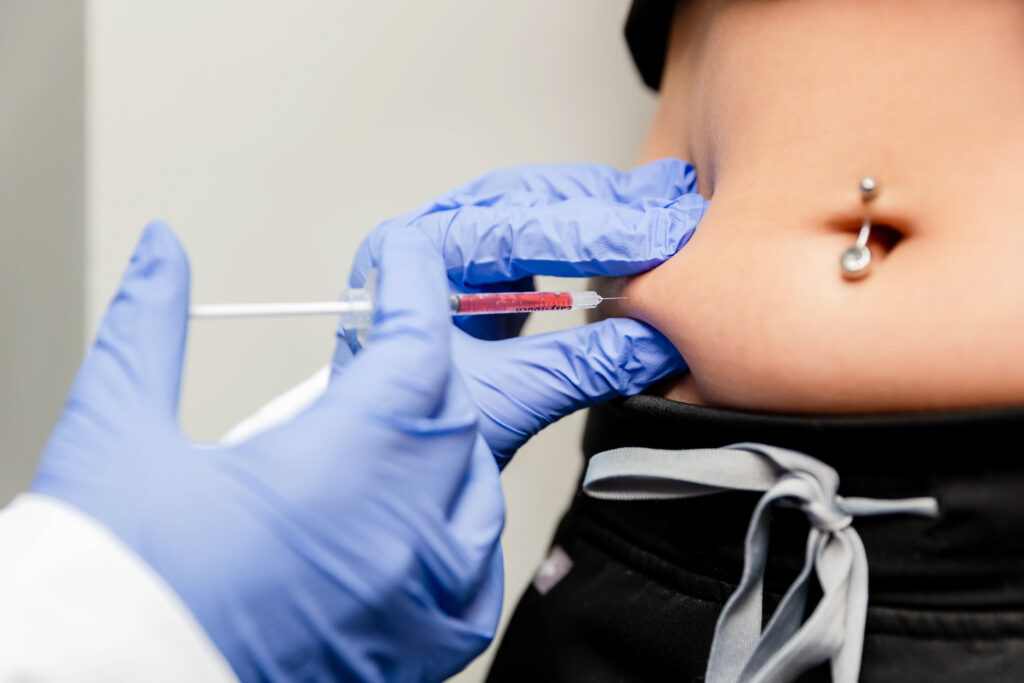
Semaglutide is injected subcutaneously, meaning the needle goes into the layer of fatty tissue just beneath the skin, at a 90-degree angle into the abdomen, the front or outer thigh, or the back of the upper arm. The injection is given once per week, on the same day each week, and the injection site should be rotated with each dose to prevent lipohypertrophy, a hardening of the tissue beneath the skin that reduces medication absorption over time. Whether you are using a prefilled pen like Ozempic or Wegovy or drawing from a compounded vial with a syringe, the injection technique follows the same fundamental principles. Approximately 40% of U.S. adults have obesity according to the CDC, and GLP-1 weight loss medications like semaglutide have become the most widely prescribed treatments for this condition. This guide walks through the complete injection process step by step, covers each injection site in detail, explains how to use a syringe with compounded semaglutide, and answers the practical questions that come up most often during treatment.
How to Inject Semaglutide Step by Step
To inject semaglutide, wash your hands, allow the medication to reach room temperature, clean the injection site, pinch the skin if needed, insert the needle at a 90-degree angle, deliver the full dose, and dispose of the needle in a sharps container. The following steps apply to both prefilled pen devices and manual syringes.
- Wash your hands thoroughly with soap and water before handling the medication or touching the injection area.
- Remove the semaglutide pen or vial from the refrigerator 15 to 30 minutes before your injection. Room-temperature medication produces less stinging than cold medication injected directly from the fridge.
- Inspect the medication visually. The solution should be clear and colorless. Do not inject if it appears cloudy, discolored, or contains particles. Contact your pharmacy if the medication looks unusual.
- Select your injection site: abdomen (at least 2 inches from the belly button), front or outer thigh, or back of the upper arm. Choose a different area from the one you used last week.
- Clean the injection site with an alcohol swab and let the area dry completely for 10 to 15 seconds. Injecting through wet alcohol increases the sting and can cause skin irritation.
- Pinch a fold of skin at the injection site with your thumb and index finger. This step is especially important for leaner patients to lift the subcutaneous fat layer away from the underlying muscle.
- Insert the needle straight into the skin at a 90-degree angle with a quick, firm motion. Do not insert at a shallow angle, which places the needle in the wrong tissue layer.
- Press the pen button or push the syringe plunger slowly and steadily. For pen devices, hold the needle in place for 5 to 10 seconds after the dose counter reaches zero to allow the full dose to be delivered. For syringes, push the plunger all the way down and hold for 5 seconds before withdrawing.
- Remove the needle and apply gentle pressure with a clean cotton ball or gauze. Do not rub the injection site, as rubbing can cause bruising and may affect how the medication absorbs into the tissue.
- Dispose of the used needle immediately in a sharps container. Never recap used needles or leave them exposed.
The entire process takes less than two minutes once you are familiar with the steps. Most patients report that the injection itself is nearly painless. The needle in modern GLP-1 pen devices is very fine, typically 4 to 6 millimeters in length, and the injection takes only a few seconds. Weight loss injections deliver medication into the subcutaneous fat layer where it absorbs gradually into the bloodstream, which is why correct technique matters for consistent results.
Where Is the Best Place to Inject Semaglutide?
The best place to inject semaglutide is the abdomen, at least 2 inches away from the belly button, because the abdomen offers the largest surface area for rotation, is the easiest site to self-administer, and provides consistent subcutaneous absorption. The front or outer thigh and the back of the upper arm are equally effective alternatives. All three sites deliver medication into the subcutaneous fat layer beneath the skin.
| Injection Site | Advantages | Considerations | Best For |
|---|---|---|---|
| Abdomen | Largest surface area; easiest self-injection; consistent absorption; most rotation options | Stay 2+ inches from belly button; may be more sensitive for some patients | Most patients, especially those self-injecting |
| Front/outer thigh | Easy to see and reach; reliable fat layer; generally less sensitive than abdomen | Avoid inner thigh; slightly slower absorption in some patients | Patients who find the abdomen uncomfortable |
| Back of upper arm | Discreet; good fat layer in triceps area | Difficult to self-inject; usually requires assistance from another person | Patients with a partner or caregiver to assist |
Sources: FDA-approved prescribing information for Wegovy and Ozempic (Novo Nordisk); semaglutide pharmacokinetic data; general subcutaneous injection guidelines.
Published pharmacokinetic data shows that absorption from all three subcutaneous sites is broadly similar. The abdomen may produce marginally faster absorption in some patients, but the clinical significance of this difference is small and does not consistently translate to different weight loss outcomes. What consistently matters is proper technique and rotating sites to prevent the tissue hardening that disrupts reliable absorption over time.
How to Inject Semaglutide in the Thigh
To inject semaglutide in the thigh, use the front or outer surface of the upper leg, approximately midway between the knee and the hip, and avoid the inner thigh entirely. The front and outer thigh surface has a reliable layer of subcutaneous fat in most adults and is easy to see and reach for self-injection.
Place your hand flat on the front of your thigh. The area directly beneath your palm and extending to the outer side of the leg is the correct injection zone. The inner thigh has less fatty tissue, more nerve endings, and more blood vessels, which makes injections in that area more painful and more likely to produce bruising. When rotating between the left and right thigh, alternate legs each week and move the injection spot at least 1 to 2 inches from the previous location within the same leg.
Lean patients with less subcutaneous fat on the thighs should pinch the skin firmly before injecting to create a fold of tissue that separates the fat layer from the underlying quadriceps muscle. Injecting into muscle rather than fat changes the absorption rate and can increase discomfort. Medical weight loss programs include hands-on injection training at the start of treatment to help patients identify the correct tissue layer at each site.
How to Inject Semaglutide in the Stomach
To inject semaglutide in the stomach (abdomen), target the soft fatty tissue to the side of or below the belly button, staying at least 2 inches away from the navel in every direction. The tissue immediately surrounding the belly button is denser, less vascular, and more likely to cause bruising and inconsistent absorption.
A practical approach to abdominal injection is to divide the area into four quadrants: upper left, upper right, lower left, and lower right relative to the belly button. Rotate through these quadrants in sequence, moving to a new quadrant each week. Within each quadrant, shift the exact injection spot by at least 1 to 2 inches from the previous week’s location. This pattern gives each area approximately 3 to 4 weeks of rest before being used again, which is sufficient to prevent lipohypertrophy when rotation is consistent.
The abdomen is generally the most comfortable injection site because the skin is looser and the fat layer is thicker than in other areas, which means the needle passes through less sensitive tissue. Patients who are new to self-injection often find the abdomen the easiest site to start with because the injection area is directly visible and accessible without contorting the body.
How to Inject Semaglutide in the Arm
To inject semaglutide in the arm, target the back of the upper arm in the triceps region, midway between the shoulder and elbow, where there is a reliable layer of subcutaneous fat. Avoid the bony areas near the shoulder joint and elbow, and avoid the front or side of the arm where the fat layer is typically thinner.
The upper arm is the most difficult injection site to self-administer because the angle and depth are harder to control without a direct line of sight. Most patients who use the arm site have a partner, family member, or caregiver who can perform the injection for them. If you do attempt to self-inject in the arm, use your dominant hand to hold the pen or syringe and inject into the non-dominant arm. Press the pen firmly against the skin and hold still for the full dose delivery period, since arm tissue shifts more with movement than the abdomen or thigh.
How to Inject Semaglutide With a Syringe From a Vial
To inject compounded semaglutide from a vial using a syringe, you must draw the correct number of units based on your prescribed dose and your vial’s concentration, remove air bubbles, and then inject subcutaneously using the same technique as a prefilled pen. Compounded semaglutide comes in multi-dose vials rather than prefilled pens, which means the patient is responsible for measuring each dose accurately.
- Confirm your prescribed dose in milligrams and your vial concentration in mg/mL. Use the formula: Units = (Dose in mg / Concentration in mg/mL) x 100. For example, a 0.25 mg dose from a 2.5 mg/mL vial equals 10 units on a U-100 insulin syringe.
- Wash your hands and clean the top of the vial with an alcohol swab.
- Draw air into the syringe equal to the number of units you plan to withdraw. Insert the needle through the rubber stopper and push the air into the vial. This equalizes pressure and makes drawing the medication easier.
- Turn the vial upside down with the needle still inserted. Pull the plunger back slowly to draw the correct number of units into the syringe.
- Check for air bubbles. If bubbles are visible, tap the syringe barrel gently to move them to the top, then push the plunger slightly to expel the air back into the vial. Redraw if needed to reach the correct unit count.
- Remove the syringe from the vial. Proceed with the standard injection technique: clean the site, pinch skin, insert at 90 degrees, push plunger slowly, hold 5 seconds, withdraw, apply gentle pressure, dispose in sharps container.
The FDA documented multiple cases in 2024 where patients were hospitalized after receiving incorrect doses of compounded GLP-1 medications due to confusion between milligrams, milliliters, and units. Always verify your vial concentration before drawing your dose. How many units is 2.5 mg of tirzepatide and similar conversion questions apply the same formula for both semaglutide and tirzepatide.
How Deep Should You Inject Semaglutide?
Semaglutide should be injected into the subcutaneous fat layer, which sits directly beneath the skin and above the muscle, typically at a depth of 4 to 6 millimeters depending on the needle length and the patient’s body composition. The goal is for the needle tip to rest in fatty tissue, not in the skin’s dermis (too shallow) and not in the underlying muscle (too deep).
Modern GLP-1 pen devices use needles that are 4 to 6 mm long, which are designed to reach the subcutaneous layer reliably in most adults when inserted at a 90-degree angle. Patients with very little subcutaneous fat may need to pinch the skin to create a fold that lifts the fat layer away from the muscle beneath. Patients with more subcutaneous fat can typically insert the needle straight in without pinching. Injecting into muscle rather than fat changes the absorption rate, can increase discomfort, and may produce less predictable drug levels throughout the week.
Can You Inject Semaglutide Wrong?
Yes, you can inject semaglutide incorrectly, and the most common mistakes are injecting into the wrong tissue layer, failing to rotate sites, removing the needle too quickly, and drawing the wrong dose from a compounded vial.
- Injecting too shallow (into the dermis) produces a visible bump under the skin, causes more pain, and results in poor absorption. The medication may leak back out of the injection site.
- Injecting too deep (into muscle) changes the absorption rate, increases soreness, and can cause more pronounced bruising.
- Failing to rotate injection sites leads to lipohypertrophy, the hardened tissue that reduces medication absorption and makes the treatment feel less effective over time. Lipohypertrophy is the most common skin complication of repeated subcutaneous injections.
- Removing the pen before the full dose is delivered results in a partial dose. Pen devices require 5 to 10 seconds of hold time after the dose counter reaches zero. Pulling away too early means some medication remains in the needle and was never injected.
- Drawing the wrong number of units from a compounded vial delivers either too much or too little medication. Always double-check the unit count against your prescribed dose and vial concentration before injecting.
- Injecting cold medication straight from the refrigerator increases the stinging sensation. Allowing 15 to 30 minutes at room temperature before injection reduces discomfort significantly.
If you suspect you have made an injection error, do not attempt a second injection to compensate. Contact your provider for guidance on whether any action is needed. GLP-1 treatment programs that include ongoing provider support help patients correct technique issues before they affect results.
What Time of Day Should I Inject My Semaglutide?
You can inject semaglutide at any time of day, and there is no clinical evidence that injecting in the morning versus evening produces different weight loss or blood sugar outcomes. The most important factor is consistency: choose a time that works reliably with your weekly schedule and inject on the same day each week.
Some patients prefer morning injections because they can build the routine into their existing morning habits, and any mild nausea from the injection has time to resolve during the day. Other patients prefer evening injections because they can sleep through the initial nausea window. Patients who experience significant nausea after injection may want to experiment with timing to find the window that minimizes disruption to their daily activities.
If you forget to inject on your scheduled day, the general guidance is to inject as soon as you remember, as long as it is at least two days (48 hours) before your next scheduled dose. If fewer than 48 hours remain before your next dose, skip the missed dose and resume your regular schedule. Never inject two doses to make up for a missed one. Weight loss nutrition and meal timing can also influence how well you tolerate the medication, so coordinating your injection timing with your eating schedule may help manage GI side effects.
Can You Inject Semaglutide Cold?
You can technically inject semaglutide cold, directly from the refrigerator, and it will still be effective, but cold medication stings more upon injection and may cause more discomfort at the injection site. Allowing the pen or vial to sit at room temperature for 15 to 30 minutes before injecting is a simple step that makes the experience more comfortable.
Semaglutide should be stored in the refrigerator at 36 to 46 degrees Fahrenheit (2 to 8 degrees Celsius) before first use. Once in use, Ozempic pens can be stored at room temperature (below 86 degrees Fahrenheit / 30 degrees Celsius) or refrigerated for up to 56 days. Compounded semaglutide vials should follow the storage instructions provided by the compounding pharmacy, as shelf life and temperature requirements can vary between formulations. Never freeze semaglutide. If the medication has been frozen, do not use it.
How to Inject Tirzepatide Compared to Semaglutide
The injection technique for tirzepatide is identical to semaglutide: subcutaneous injection into the abdomen, thigh, or upper arm at a 90-degree angle, with weekly site rotation. Both medications use the same three approved injection sites, the same needle insertion angle, and the same principles for site rotation and technique. The devices differ between manufacturers, with Novo Nordisk producing the Wegovy and Ozempic pens and Eli Lilly producing the Zepbound and Mounjaro pens, but the patient-facing injection process is functionally the same.
Compounded tirzepatide follows the same syringe-and-vial preparation steps as compounded semaglutide, though tirzepatide is typically compounded at higher concentrations (10 mg/mL, 15 mg/mL, 20 mg/mL) because the dose range is higher (2.5 mg to 15 mg compared to semaglutide’s 0.25 mg to 2.4 mg). The SURMOUNT-5 trial published in the New England Journal of Medicine in 2025 found tirzepatide superior to semaglutide in weight reduction, with GI adverse events causing treatment discontinuation in 2.7% of tirzepatide patients versus 5.6% of semaglutide patients. Here in the Kansas City area, we offer both medications as part of our GLP-1 weight loss program and help patients select the option that fits their health profile and goals.
Tirzepatide weight loss results and semaglutide results both depend on proper injection technique, consistent dosing, and ongoing lifestyle support that addresses nutrition, activity, and behavioral habits alongside the medication itself.
How Quickly Does Semaglutide Start Working?
Semaglutide begins affecting appetite and blood sugar within the first few days after injection, though visible weight loss typically takes 4 to 8 weeks to become noticeable on the scale. The starting dose of 0.25 mg per week is an adjustment dose designed to minimize gastrointestinal side effects, not a therapeutic weight loss dose. Most patients begin seeing measurable weight loss after advancing to the 0.5 mg dose at week five or the 1.0 mg dose at week nine.
Clinical trials using semaglutide 2.4 mg (Wegovy) for weight management showed an average weight loss of approximately 15% of body weight over 68 weeks, according to the STEP trials published in the New England Journal of Medicine. Weight loss follows a predictable curve: faster during the first 6 months of treatment, then gradually slowing as the body approaches a new equilibrium. Individual results vary based on starting weight, dose, dietary adherence, physical activity, and metabolic factors. Semaglutide weight loss outcomes are strongest when the medication is combined with a structured nutrition plan and regular physical activity.
Frequently Asked Questions
Does It Matter Where You Inject Semaglutide?
The injection site itself does not significantly affect weight loss outcomes as long as the medication is delivered into subcutaneous fat at one of the three approved locations. Absorption from the abdomen, thigh, and upper arm is broadly similar in published pharmacokinetic studies. What matters most is rotating sites consistently to prevent lipohypertrophy, which is the tissue hardening that reduces medication absorption when the same spot is used repeatedly.
What Foods Should You Avoid While Taking Semaglutide?
Foods that worsen semaglutide’s gastrointestinal side effects include high-fat and greasy foods, fried foods, large portions of red meat, sugary desserts, carbonated beverages, and alcohol. These foods slow digestion further (on top of semaglutide’s own gastric-slowing effect), increase nausea, and add empty calories that counteract the medication’s weight loss benefits. Smaller, more frequent meals built around lean protein, vegetables, and whole grains are better tolerated and support the medication’s appetite-suppressing effects.
How Long After Semaglutide Injection Can I Eat?
You can eat immediately after a semaglutide injection. There is no required waiting period between the injection and your next meal. Some patients prefer to inject before bed so they sleep through any initial nausea, while others inject in the morning and eat a light breakfast afterward. Timing the injection relative to meals is a personal preference, not a clinical requirement.
Can I Skip a Week of Semaglutide for Vacation?
Skipping one dose of semaglutide is generally safe and does not require restarting the titration schedule. The medication has a long half-life (approximately 7 days), so a single missed dose does not eliminate the drug from your system entirely. Resume your regular dosing schedule the following week. If you miss two or more consecutive doses, contact your provider before resuming, as they may recommend restarting at a lower dose to minimize GI side effects.
What to Eat Before the First Semaglutide Shot?
There is no specific meal required before your first semaglutide injection, but eating a light, balanced meal beforehand can help reduce the nausea that some patients experience during the first week. Avoid heavy, fatty, or spicy foods before your first injection. A meal containing lean protein, a small portion of complex carbohydrates, and vegetables provides steady blood sugar without overloading the stomach.
How Long Does a Vial of Semaglutide Last in the Fridge?
An unopened vial of compounded semaglutide typically lasts until the expiration date printed on the label when stored in the refrigerator at 36 to 46 degrees Fahrenheit. Once punctured, most compounding pharmacies assign a beyond-use date of 28 to 42 days depending on the formulation. Always follow the specific storage instructions provided by your pharmacy, as compounded medications vary in shelf life. Discard any vial that has changed color, become cloudy, or passed its beyond-use date.
Putting It All Together
Injecting semaglutide correctly is straightforward once you learn the technique. The medication goes into the subcutaneous fat layer in the abdomen, thigh, or upper arm at a 90-degree angle. Room-temperature medication, a dry injection site, steady needle insertion, full dose delivery with a 5 to 10 second hold, and consistent weekly site rotation are the five elements that produce comfortable injections and reliable medication absorption. Compounded semaglutide from vials requires the additional step of measuring your dose accurately using the conversion formula and a U-100 insulin syringe. The same injection principles apply to tirzepatide, and both medications produce their best results when combined with proper nutrition and regular activity.
At Slimming Solutions Med Spa, we walk every GLP-1 weight loss patient through their injection technique, dose verification, and ongoing treatment plan.
Call us at (816) 524-3438 to schedule a free consultation.
![[thumb]](https://slimmingsolutionsspa.com/wp-content/uploads/2023/12/botox1-150x150.png)
![[thumb]](https://slimmingsolutionsspa.com/wp-content/uploads/2023/12/Before2-150x150.png)
![[thumb]](https://slimmingsolutionsspa.com/wp-content/uploads/2023/12/Before3-150x150.png)


![[thumb]](https://slimmingsolutionsspa.com/wp-content/uploads/2023/12/revanesse-versa-1-150x150.png)
![[thumb]](https://slimmingsolutionsspa.com/wp-content/uploads/2023/12/revanesse-versa-2-150x150.png)
![[thumb]](https://slimmingsolutionsspa.com/wp-content/uploads/2023/12/revanesse-versa-3-150x150.png)
![[thumb]](https://slimmingsolutionsspa.com/wp-content/uploads/2023/12/revanesse-versa-4-150x150.png)
![[thumb]](https://slimmingsolutionsspa.com/wp-content/uploads/2023/12/revanesse-versa-5-150x150.png)
![[thumb]](https://slimmingsolutionsspa.com/wp-content/uploads/2024/01/Eyebrow-treatment-1-1-150x150.png)
![[thumb]](https://slimmingsolutionsspa.com/wp-content/uploads/2023/12/Skin-Rejuvenation-1-150x150.png)
![[thumb]](https://slimmingsolutionsspa.com/wp-content/uploads/2023/12/Skin-Rejuvenation-2-150x150.png)


![[thumb]](https://slimmingsolutionsspa.com/wp-content/uploads/2024/01/Lip-Filler-1-150x150.png)
![[thumb]](https://slimmingsolutionsspa.com/wp-content/uploads/2024/01/Lip-Filler-2-150x150.png)
![[thumb]](https://slimmingsolutionsspa.com/wp-content/uploads/2025/02/Lip-Filler-1-150x150.png)
![[thumb]](https://slimmingsolutionsspa.com/wp-content/uploads/2024/01/Lip-Filler-150x150.jpg)
![[thumb]](https://slimmingsolutionsspa.com/wp-content/uploads/2024/01/Before-1-150x150.jpg)

![[thumb]](https://slimmingsolutionsspa.com/wp-content/uploads/2024/01/RHA-Treatmetn-3-150x150.png)
![[thumb]](https://slimmingsolutionsspa.com/wp-content/uploads/2024/01/RHA-Treatmetn-2-150x150.png)
![[thumb]](https://slimmingsolutionsspa.com/wp-content/uploads/2024/01/RHA-Treatmetn-1-150x150.png)
![[thumb]](https://slimmingsolutionsspa.com/wp-content/uploads/2024/01/Thread-Lifts-1-150x150.png)
![[thumb]](https://slimmingsolutionsspa.com/wp-content/uploads/2024/01/Thread-Lifts-2-150x150.png)
![[thumb]](https://slimmingsolutionsspa.com/wp-content/uploads/2025/02/Lip-Filler-2-150x150.png)

![[thumb]](https://slimmingsolutionsspa.com/wp-content/uploads/2023/12/skin-reuvulation1-150x150.png)
![[thumb]](https://slimmingsolutionsspa.com/wp-content/uploads/2023/12/skin-rejuvulation-2-150x150.png)
![[thumb]](https://slimmingsolutionsspa.com/wp-content/uploads/2023/12/Skin-Tighting-150x150.png)
![[thumb]](https://slimmingsolutionsspa.com/wp-content/uploads/2023/12/Before-150x150.jpg)
![[thumb]](https://slimmingsolutionsspa.com/wp-content/uploads/2023/12/weightloss-1-150x150.png)
![[thumb]](https://slimmingsolutionsspa.com/wp-content/uploads/2023/12/weightloss-2-150x150.png)
![[thumb]](https://slimmingsolutionsspa.com/wp-content/uploads/2023/12/2Weight-Loss-2-150x150.png)
![[thumb]](https://slimmingsolutionsspa.com/wp-content/uploads/2025/02/Weight-Loss-1-new-150x150.png)
![[thumb]](https://slimmingsolutionsspa.com/wp-content/uploads/2023/12/Weight-Loss-3-150x150.png)
![[thumb]](https://slimmingsolutionsspa.com/wp-content/uploads/2025/03/Slimming-Solutions-BA-Template-150x150.png)


![[thumb]](https://slimmingsolutionsspa.com/wp-content/uploads/2023/12/dat3-150x150.png)
![[thumb]](https://slimmingsolutionsspa.com/wp-content/uploads/2023/12/dat-0-150x150.png)
![[thumb]](https://slimmingsolutionsspa.com/wp-content/uploads/2023/12/dat-1-150x150.png)
![[thumb]](https://slimmingsolutionsspa.com/wp-content/uploads/2023/12/Before-1-150x150.png)

![[thumb]](https://slimmingsolutionsspa.com/wp-content/uploads/2024/01/EMS-Treatment-2-150x150.png)
![[thumb]](https://slimmingsolutionsspa.com/wp-content/uploads/2024/01/EMS-Treatment-1-150x150.png)
![[thumb]](https://slimmingsolutionsspa.com/wp-content/uploads/2025/02/ems-BNA-front-150x150.png)
![[thumb]](https://slimmingsolutionsspa.com/wp-content/uploads/2025/02/EMS-bna-SIDE-150x150.png)
![[thumb]](https://slimmingsolutionsspa.com/wp-content/uploads/2024/01/EMS-Treatment-6-150x150.png)