2.5 mg of tirzepatide equals 25 units on a standard U-100 insulin syringe when the vial concentration is 10 mg/mL, which is the most common compounded strength. The same 2.5 mg dose equals 50 units at a 5 mg/mL concentration and 12.5 units at a 20 mg/mL concentration. The number of units changes because units measure the volume of liquid you draw into the syringe, not the amount of medication itself. You must know the concentration printed on your vial label before calculating your dose. This guide covers the conversion formula for every tirzepatide dose from 2.5 mg through 15 mg, explains why units and milligrams are different measurements, includes a full semaglutide conversion reference, and addresses common dosing questions that come up during GLP-1 weight loss treatment.
How Many Units Is 2.5 mg of Tirzepatide at Every Concentration?
2.5 mg of tirzepatide equals 25 units at 10 mg/mL, 50 units at 5 mg/mL, approximately 17 units at 15 mg/mL, and 12.5 units at 20 mg/mL. The answer depends entirely on the concentration of the tirzepatide solution in your vial. Concentration tells you how many milligrams of active medication are dissolved in each milliliter of liquid. A vial labeled 10 mg/mL contains 10 milligrams of tirzepatide in every 1 milliliter of solution. A vial labeled 5 mg/mL contains half that amount per milliliter.
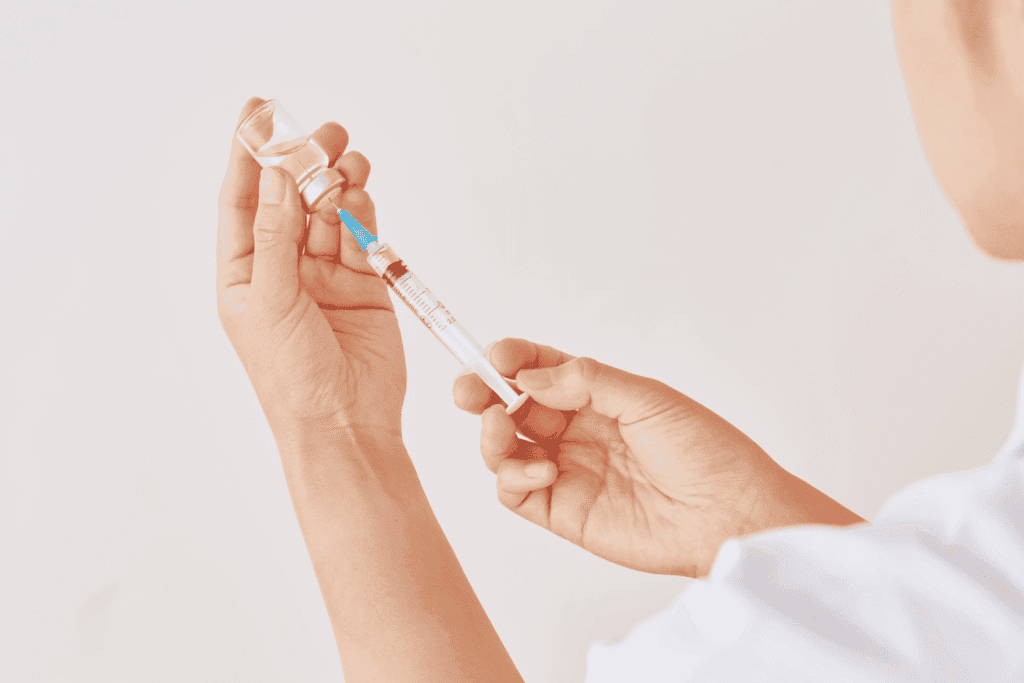
A U-100 insulin syringe, the standard syringe used for subcutaneous GLP-1 injections, measures volume in units where 100 units equals 1 milliliter (mL). Each small line on the syringe represents 1 unit, and each larger line represents 5 units. Drawing 25 units from a 10 mg/mL vial delivers exactly 2.5 mg of tirzepatide. Drawing 25 units from a 5 mg/mL vial delivers only 1.25 mg, which is half the intended dose. This is why the concentration printed on your vial label is the most critical piece of information for safe dosing.
The FDA documented multiple cases in 2024 where patients were hospitalized after receiving 5 to 20 times their intended dose of compounded GLP-1 medications. The cause in every documented case was confusion between milligrams, milliliters, and units on compounded vials. Confirming your vial concentration before every injection prevents this type of error.
What Is the Difference Between mg and Units for GLP-1 Injections?
The difference between mg and units for GLP-1 injections is that milligrams (mg) measure the actual amount of medication, while units measure the volume of liquid drawn into the syringe. Milligrams are a weight measurement. Units are a volume measurement. The bridge between them is concentration, expressed as mg/mL.
A provider prescribes your dose in milligrams because the therapeutic effect depends on how much active weight loss injection medication enters your body. The syringe measures in units because syringes are designed to measure liquid volume, not drug weight. Converting from one to the other requires knowing the concentration of the specific vial in front of you.
Brand-name prefilled pens like Zepbound and Mounjaro eliminate this confusion entirely. The pen is pre-loaded with a specific milligram dose, and the patient simply clicks the pen to inject. No conversion is needed. Compounded tirzepatide, which comes in multi-dose vials, requires manual conversion because the patient draws the dose into a separate syringe. Compounded vials vary in concentration between pharmacies, which means the same milligram dose can require a different number of units depending on which pharmacy filled the prescription.
How Do You Convert Tirzepatide mg to Units?
You convert tirzepatide mg to units by dividing the prescribed dose in milligrams by the vial concentration in mg/mL, then multiplying the result by 100. The formula works for every concentration and every dose:
Units = (Dose in mg / Concentration in mg/mL) x 100
- Find the concentration on your vial label. It will say something like “10 mg/mL” or “20 mg/mL.”
- Divide your prescribed dose (in mg) by the concentration (in mg/mL). This gives you the volume in milliliters.
- Multiply the volume by 100 to convert milliliters to units on a U-100 syringe.
For example, a 2.5 mg dose from a 10 mg/mL vial: 2.5 divided by 10 equals 0.25 mL. Multiply 0.25 by 100 to get 25 units. A 5 mg dose from a 20 mg/mL vial: 5 divided by 20 equals 0.25 mL, which is also 25 units. Two different milligram doses produce the same number of units because the concentrations are different. The formula accounts for this automatically.
Is 2.5 mg Equal to 25 Units?
Yes, 2.5 mg is equal to 25 units, but only when the vial concentration is 10 mg/mL. At a 5 mg/mL concentration, 2.5 mg equals 50 units. At a 20 mg/mL concentration, 2.5 mg equals 12.5 units. The milligram dose stays the same. The number of units changes based on how concentrated the solution is.
This is the single most common source of dosing confusion with compounded GLP-1 medications. A patient who previously used a 10 mg/mL vial and drew 25 units for their 2.5 mg dose might switch pharmacies and receive a 5 mg/mL vial. Drawing the same 25 units from the new vial would deliver only 1.25 mg, half the intended dose. Drawing 50 units from the new vial delivers the correct 2.5 mg. The number on the syringe changed, but the medication dose remained identical.
Is 50 Units the Same as 2.5 mL?
No, 50 units is not the same as 2.5 mL. On a U-100 insulin syringe, 50 units equals 0.5 mL. The U-100 standard means the syringe holds 100 units per 1 milliliter. Half the syringe (50 units) equals half a milliliter (0.5 mL). The full syringe (100 units) equals 1 full milliliter (1.0 mL).
This confusion arises because some patients see “50” on the syringe and assume it means 5.0 mL or 2.5 mL. It does not. The markings on a U-100 insulin syringe go from 0 to 100, and 100 units equals exactly 1.0 mL. Patients who use non-insulin syringes marked in milliliters instead of units should work with their provider to confirm the correct draw volume before injecting. A medical weight loss program includes dose verification at every step to prevent volume miscalculation.
What Concentrations Does Compounded Tirzepatide Come In?
Compounded tirzepatide commonly comes in four concentrations: 5 mg/mL, 10 mg/mL, 15 mg/mL, and 20 mg/mL. The concentration a pharmacy dispenses depends on the patient’s prescribed dose and the pharmacy’s formulation standards.
Lower concentrations like 5 mg/mL work well for starting doses (2.5 mg and 5 mg) because the liquid volume is large enough to measure accurately on a standard syringe. Higher concentrations like 15 mg/mL and 20 mg/mL are typically used for larger doses (10 mg, 12.5 mg, 15 mg) because they keep the injection volume below 1 mL, which is the maximum capacity of a standard U-100 insulin syringe. A 15 mg dose from a 10 mg/mL vial would require 150 units (1.5 mL), which exceeds the syringe capacity. The same 15 mg dose from a 20 mg/mL vial requires only 75 units (0.75 mL), which fits comfortably.
Approximately 40% of U.S. adults have obesity, according to the CDC, and growing demand for compounded GLP-1 medications has led to wide variation in vial concentrations across pharmacies. Always verify the concentration printed on your label before using the conversion formula.
Tirzepatide mg-to-Units Conversion Chart for All Doses
The chart below covers every standard tirzepatide dose from 2.5 mg through 15 mg across the four most common compounded concentrations. Find your vial concentration in the top row and your prescribed dose in the left column.
| Dose (mg) | 5 mg/mL | 10 mg/mL | 15 mg/mL | 20 mg/mL |
|---|---|---|---|---|
| 2.5 mg | 50 units | 25 units | ~17 units | 12.5 units |
| 5 mg | 100 units | 50 units | ~33 units | 25 units |
| 7.5 mg | Exceeds 1 mL | 75 units | 50 units | 37.5 units |
| 10 mg | Exceeds 1 mL | 100 units | ~67 units | 50 units |
| 12.5 mg | Exceeds 1 mL | Exceeds 1 mL | ~83 units | 62.5 units |
| 15 mg | Exceeds 1 mL | Exceeds 1 mL | 100 units | 75 units |
Sources: Universal conversion formula Units = (Dose / Concentration) x 100; U-100 insulin syringe standard (100 units = 1 mL); FDA-approved tirzepatide prescribing information (Eli Lilly).
“Exceeds 1 mL” means the dose requires more liquid than a standard U-100 syringe can hold. Pharmacies typically dispense a higher concentration vial for these doses. If your label does not match the concentration needed for your prescribed dose, contact your provider before injecting.
How Many Units Is 5 mg, 7.5 mg, and 10 mg of Tirzepatide?
5 mg of tirzepatide equals 50 units at 10 mg/mL, 7.5 mg equals 75 units at 10 mg/mL, and 10 mg equals 50 units at 20 mg/mL (or 100 units at 10 mg/mL). Each dose tier corresponds to a specific stage in the tirzepatide titration schedule, and each tier delivers progressively stronger weight loss effects.
The SURMOUNT-1 clinical trial, published in the New England Journal of Medicine in 2022, enrolled 2,539 participants and found that tirzepatide produced average weight reductions of 16.0% at 5 mg (approximately 35 pounds), 21.4% at 10 mg (approximately 49 pounds), and 22.5% at 15 mg (approximately 52 pounds) over 72 weeks. Participants taking tirzepatide achieved roughly three times greater fat mass reduction compared to lean mass reduction (33.9% fat vs. 10.9% lean), according to Eli Lilly. These results demonstrate why tirzepatide treatment doses are titrated upward gradually to reach the dose that produces the strongest individual response.
What Is the Tirzepatide Dosing Schedule for Weight Loss?
The tirzepatide dosing schedule for weight loss starts at 2.5 mg once weekly and increases by one dose tier every four weeks until the patient reaches their target maintenance dose, which can range from 5 mg to 15 mg.
- Weeks 1-4: 2.5 mg once weekly (adjustment dose to reduce gastrointestinal side effects)
- Weeks 5-8: 5 mg once weekly (first therapeutic dose for weight loss)
- Weeks 9-12: 7.5 mg once weekly
- Weeks 13-16: 10 mg once weekly
- Weeks 17-20: 12.5 mg once weekly
- Week 21 and beyond: 15 mg once weekly (maximum dose)
The full titration from 2.5 mg to 15 mg takes a minimum of 20 weeks when following the standard four-week interval between dose increases. Providers may extend the time at any dose tier if a patient experiences significant nausea, vomiting, or other gastrointestinal side effects. In the three-year SURMOUNT-1 extension, participants maintained an average weight loss of 22.9% at the 15 mg dose over 176 weeks, and tirzepatide reduced the risk of progressing to type 2 diabetes by 94% compared to placebo, according to Eli Lilly (2024). A weight loss candidate who begins treatment should expect the titration process to take several months before reaching the dose that produces maximum results.
Is 2.5 mg of Tirzepatide Enough to Lose Weight?
2.5 mg of tirzepatide is not a therapeutic weight loss dose; it is an introductory adjustment dose designed to give your digestive system time to adapt to the medication before moving to higher, more effective doses. The FDA-approved prescribing information for tirzepatide (marketed as Mounjaro and Zepbound) specifies that 2.5 mg is the starting dose and should be taken for four weeks before increasing to 5 mg.
Some patients do experience modest appetite reduction and early weight loss at 2.5 mg, but the clinical trial data shows that meaningful, sustained weight loss begins at 5 mg and increases with each dose tier. The SURMOUNT-1 trial reported that 89% of participants on 5 mg achieved at least 5% body weight reduction, compared to 28% on placebo. Here in the Kansas City area, we start every patient at 2.5 mg and monitor their response before adjusting upward, which helps minimize nausea, diarrhea, and other common side effects that can occur during dose escalation.
How Long Does It Take for 2.5 mg of Tirzepatide to Kick In?
2.5 mg of tirzepatide begins affecting appetite and digestion within the first few days of injection, though visible weight loss typically takes 4-8 weeks to become noticeable. Tirzepatide is a dual glucose-dependent insulinotropic polypeptide (GIP) and glucagon-like peptide-1 (GLP-1) receptor agonist. This dual action slows gastric emptying, reduces appetite signals in the brain, and improves insulin sensitivity.
Most patients report feeling less hungry and fuller after smaller meals within the first week at 2.5 mg. Gastrointestinal side effects like mild nausea, decreased appetite, and occasional diarrhea are also common during this initial period as the body adjusts. These side effects typically diminish over the first 2-3 weeks. Tirzepatide weight loss results vary by individual, but most patients see measurable scale changes after advancing to the 5 mg dose at week five.
How Does Semaglutide Dosing in Units Compare to Tirzepatide?
Semaglutide dosing in units follows the same conversion formula as tirzepatide, but semaglutide uses different dose ranges (0.25 mg to 2.4 mg for weight loss) and is commonly compounded at different concentrations (typically 1 mg/mL, 2.5 mg/mL, or 5 mg/mL). The formula remains: Units = (Dose in mg / Concentration in mg/mL) x 100.
The SURMOUNT-5 trial, published in the New England Journal of Medicine in 2025, directly compared tirzepatide to semaglutide in 751 adults with obesity and found tirzepatide to be superior in both percentage weight reduction and waist circumference reduction at 72 weeks. The table below provides common semaglutide conversions across the three most frequently used compounded concentrations.
| Semaglutide Dose | 1 mg/mL | 2.5 mg/mL | 5 mg/mL |
|---|---|---|---|
| 0.25 mg | 25 units | 10 units | 5 units |
| 0.5 mg | 50 units | 20 units | 10 units |
| 1.0 mg | 100 units | 40 units | 20 units |
| 1.7 mg | Exceeds 1 mL | 68 units | 34 units |
| 2.4 mg | Exceeds 1 mL | 96 units | 48 units |
Sources: Universal conversion formula Units = (Dose / Concentration) x 100; U-100 insulin syringe standard; FDA prescribing information for semaglutide (Novo Nordisk). Semaglutide clinical trials (Wegovy, STEP program) showed approximately 15% average weight loss over 68 weeks (NEJM).
The critical safety point is the same for both medications: 40 units of semaglutide from a 1 mg/mL vial delivers 0.4 mg, while 40 units from a 2.5 mg/mL vial delivers 1.0 mg. The same syringe marking delivers a 2.5x difference in actual medication. Semaglutide weight loss results depend on reaching the therapeutic dose range, which makes accurate conversion essential for both safety and effectiveness.
How to Make Tirzepatide Work Faster
You can make tirzepatide work faster by combining the medication with a high-protein diet, adequate hydration, regular physical activity, consistent sleep habits, and strict adherence to your weekly injection schedule. Tirzepatide reduces appetite and slows digestion, but the weight loss it produces depends heavily on the food choices and activity levels you maintain alongside the medication.
Protein is especially important during GLP-1 treatment because the medication reduces overall food intake, and insufficient protein accelerates lean muscle loss. Consuming at least 0.7-1.0 grams of protein per pound of body weight daily supports muscle preservation during weight loss. Weight loss nutrition during GLP-1 treatment should prioritize lean proteins, vegetables, and whole grains while limiting fried foods, high-sugar foods, and carbonated beverages that can worsen nausea and bloating.
Slimming shots containing lipotropic compounds and B12 can provide additional metabolic support alongside GLP-1 treatment, helping the body mobilize stored fat more efficiently during the active weight loss phase.
What Should I Avoid While Using Tirzepatide?
While using tirzepatide, you should avoid high-fat meals, excessive alcohol, carbonated beverages, overeating, skipping meals entirely, and adjusting your dose without provider guidance.
- High-fat and greasy foods worsen nausea and slow digestion even further, compounding the gastric effects of tirzepatide.
- Alcohol irritates the stomach lining and increases the risk of nausea, vomiting, and dehydration. Alcohol also provides empty calories that counteract the medication’s appetite-reducing benefits.
- Carbonated beverages increase bloating and gas, which are already common during the adjustment period.
- Eating too quickly or eating past the point of fullness is a common trigger for nausea and vomiting during GLP-1 treatment. Smaller, slower meals reduce this risk significantly.
- Skipping meals entirely can cause blood sugar drops, especially in patients taking tirzepatide for type 2 diabetes alongside other glucose-lowering medications.
- Changing your dose without consulting your provider risks underdosing (no results) or overdosing (severe gastrointestinal side effects or, in rare cases, hypoglycemia).
Hormone therapy patients who are also taking tirzepatide should coordinate their treatment schedules with their provider, since hormonal fluctuations can influence appetite, weight distribution, and medication response.
Frequently Asked Questions
What Happens if You Don’t Eat Enough on Tirzepatide?
Not eating enough on tirzepatide can lead to fatigue, muscle loss, nutrient deficiencies, dizziness, and stalled weight loss over time. Tirzepatide suppresses appetite significantly, and some patients eat far less than their body needs to maintain lean muscle mass and basic metabolic function. A minimum of 1,200 calories per day for women and 1,500 calories per day for men is a general guideline, though individual needs vary based on body size and activity level.
How Much Is 2.5 of Tirzepatide in Units?
2.5 mg of tirzepatide in units depends on the vial concentration: 25 units at 10 mg/mL, 50 units at 5 mg/mL, approximately 17 units at 15 mg/mL, and 12.5 units at 20 mg/mL. Use the formula Units = (2.5 / Concentration) x 100 with your specific vial concentration to calculate the exact number.
Can You Switch Tirzepatide Pharmacies Without Changing Your Dose?
You can switch pharmacies without changing your milligram dose, but the number of units you draw may change if the new pharmacy compounds tirzepatide at a different concentration. Always check the concentration on your new vial label and recalculate using the formula before injecting. Contact your provider if the concentration is different from what you previously used.
What Is the Maximum Dose of Tirzepatide for Weight Loss?
The maximum approved dose of tirzepatide for weight loss is 15 mg once weekly. In the SURMOUNT-1 trial, participants taking 15 mg achieved an average weight reduction of 22.5% over 72 weeks, and 96% achieved at least 5% body weight reduction. Not every patient needs to reach the maximum dose; some achieve their goals at 10 mg or 12.5 mg.
Do Zepbound Pens Require Unit Conversion?
No, Zepbound prefilled pens do not require unit conversion. Each pen is pre-loaded with a specific milligram dose, and the patient simply clicks the pen to inject. Brand-name single-dose Zepbound vials are formulated so every dose strength equals 0.5 mL (50 units), regardless of the milligram amount. Unit conversion is only necessary for compounded tirzepatide drawn from multi-dose vials.
How Many Units Is 15 mg of Tirzepatide?
15 mg of tirzepatide equals 75 units at a 20 mg/mL concentration, 100 units at a 15 mg/mL concentration, and would exceed a standard 1 mL syringe at 10 mg/mL. At the 15 mg dose, most pharmacies dispense vials at 15 mg/mL or 20 mg/mL to keep the injection volume within syringe capacity.
Putting It All Together
The number of units for any tirzepatide dose depends on one thing: the concentration of your vial. The formula, Units = (Dose in mg / Concentration in mg/mL) x 100, works for every dose and every concentration. At 10 mg/mL, the most common compounded strength, 2.5 mg equals 25 units. Knowing your concentration, using the formula, and verifying your calculation before every injection are the three steps that keep dosing accurate and safe throughout your treatment.
At Slimming Solutions Med Spa, we walk every patient through their exact dosing instructions, syringe markings, and injection technique as part of our GLP-1 treatment program. No guesswork, no internet math, just clear guidance from real medical professionals.
Call us at (816) 524-3438 to schedule a free consultation.
![[thumb]](https://slimmingsolutionsspa.com/wp-content/uploads/2023/12/botox1-150x150.png)
![[thumb]](https://slimmingsolutionsspa.com/wp-content/uploads/2023/12/Before2-150x150.png)
![[thumb]](https://slimmingsolutionsspa.com/wp-content/uploads/2023/12/Before3-150x150.png)



![[thumb]](https://slimmingsolutionsspa.com/wp-content/uploads/2023/12/revanesse-versa-1-150x150.png)
![[thumb]](https://slimmingsolutionsspa.com/wp-content/uploads/2023/12/revanesse-versa-2-150x150.png)
![[thumb]](https://slimmingsolutionsspa.com/wp-content/uploads/2023/12/revanesse-versa-3-150x150.png)
![[thumb]](https://slimmingsolutionsspa.com/wp-content/uploads/2023/12/revanesse-versa-4-150x150.png)
![[thumb]](https://slimmingsolutionsspa.com/wp-content/uploads/2023/12/revanesse-versa-5-150x150.png)
![[thumb]](https://slimmingsolutionsspa.com/wp-content/uploads/2024/01/Eyebrow-treatment-1-1-150x150.png)
![[thumb]](https://slimmingsolutionsspa.com/wp-content/uploads/2023/12/Skin-Rejuvenation-1-150x150.png)
![[thumb]](https://slimmingsolutionsspa.com/wp-content/uploads/2023/12/Skin-Rejuvenation-2-150x150.png)


![[thumb]](https://slimmingsolutionsspa.com/wp-content/uploads/2024/01/Lip-Filler-1-150x150.png)
![[thumb]](https://slimmingsolutionsspa.com/wp-content/uploads/2024/01/Lip-Filler-2-150x150.png)
![[thumb]](https://slimmingsolutionsspa.com/wp-content/uploads/2025/02/Lip-Filler-1-150x150.png)
![[thumb]](https://slimmingsolutionsspa.com/wp-content/uploads/2024/01/Lip-Filler-150x150.jpg)
![[thumb]](https://slimmingsolutionsspa.com/wp-content/uploads/2024/01/Before-1-150x150.jpg)

![[thumb]](https://slimmingsolutionsspa.com/wp-content/uploads/2024/01/RHA-Treatmetn-3-150x150.png)
![[thumb]](https://slimmingsolutionsspa.com/wp-content/uploads/2024/01/RHA-Treatmetn-2-150x150.png)
![[thumb]](https://slimmingsolutionsspa.com/wp-content/uploads/2024/01/RHA-Treatmetn-1-150x150.png)
![[thumb]](https://slimmingsolutionsspa.com/wp-content/uploads/2024/01/Thread-Lifts-1-150x150.png)
![[thumb]](https://slimmingsolutionsspa.com/wp-content/uploads/2024/01/Thread-Lifts-2-150x150.png)
![[thumb]](https://slimmingsolutionsspa.com/wp-content/uploads/2025/02/Lip-Filler-2-150x150.png)

![[thumb]](https://slimmingsolutionsspa.com/wp-content/uploads/2023/12/skin-reuvulation1-150x150.png)
![[thumb]](https://slimmingsolutionsspa.com/wp-content/uploads/2023/12/skin-rejuvulation-2-150x150.png)
![[thumb]](https://slimmingsolutionsspa.com/wp-content/uploads/2023/12/Skin-Tighting-150x150.png)
![[thumb]](https://slimmingsolutionsspa.com/wp-content/uploads/2023/12/Before-150x150.jpg)
![[thumb]](https://slimmingsolutionsspa.com/wp-content/uploads/2023/12/weightloss-1-150x150.png)
![[thumb]](https://slimmingsolutionsspa.com/wp-content/uploads/2023/12/weightloss-2-150x150.png)
![[thumb]](https://slimmingsolutionsspa.com/wp-content/uploads/2023/12/2Weight-Loss-2-150x150.png)
![[thumb]](https://slimmingsolutionsspa.com/wp-content/uploads/2025/02/Weight-Loss-1-new-150x150.png)
![[thumb]](https://slimmingsolutionsspa.com/wp-content/uploads/2023/12/Weight-Loss-3-150x150.png)
![[thumb]](https://slimmingsolutionsspa.com/wp-content/uploads/2025/03/Slimming-Solutions-BA-Template-150x150.png)


![[thumb]](https://slimmingsolutionsspa.com/wp-content/uploads/2023/12/dat3-150x150.png)
![[thumb]](https://slimmingsolutionsspa.com/wp-content/uploads/2023/12/dat-0-150x150.png)
![[thumb]](https://slimmingsolutionsspa.com/wp-content/uploads/2023/12/dat-1-150x150.png)
![[thumb]](https://slimmingsolutionsspa.com/wp-content/uploads/2023/12/Before-1-150x150.png)

![[thumb]](https://slimmingsolutionsspa.com/wp-content/uploads/2024/01/EMS-Treatment-2-150x150.png)
![[thumb]](https://slimmingsolutionsspa.com/wp-content/uploads/2024/01/EMS-Treatment-1-150x150.png)
![[thumb]](https://slimmingsolutionsspa.com/wp-content/uploads/2025/02/ems-BNA-front-150x150.png)
![[thumb]](https://slimmingsolutionsspa.com/wp-content/uploads/2025/02/EMS-bna-SIDE-150x150.png)
![[thumb]](https://slimmingsolutionsspa.com/wp-content/uploads/2024/01/EMS-Treatment-6-150x150.png)