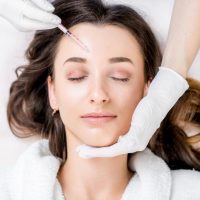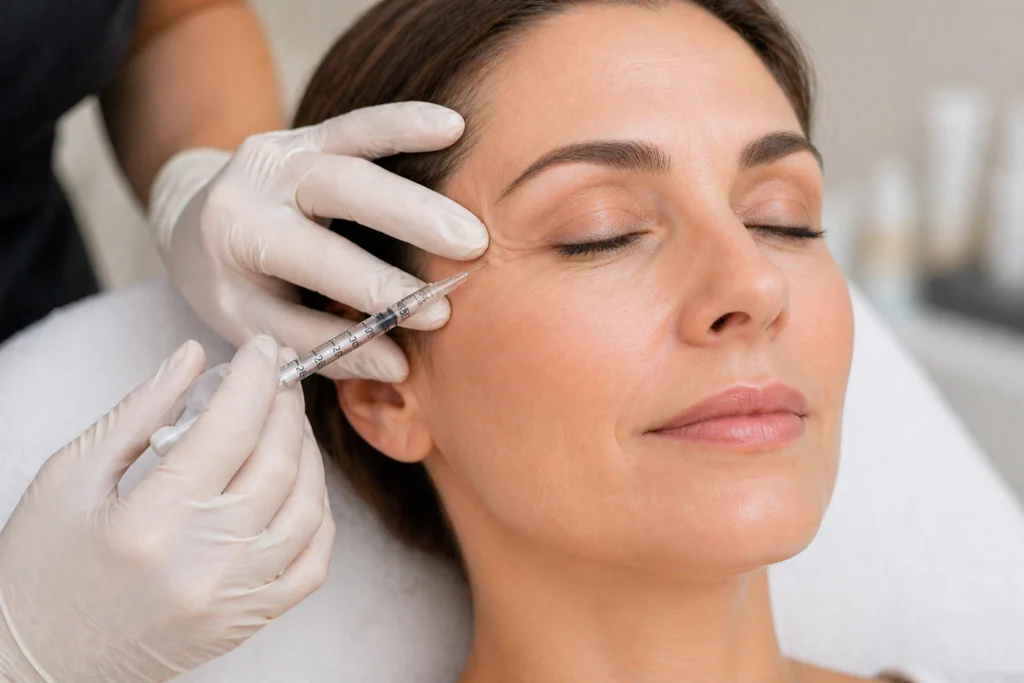
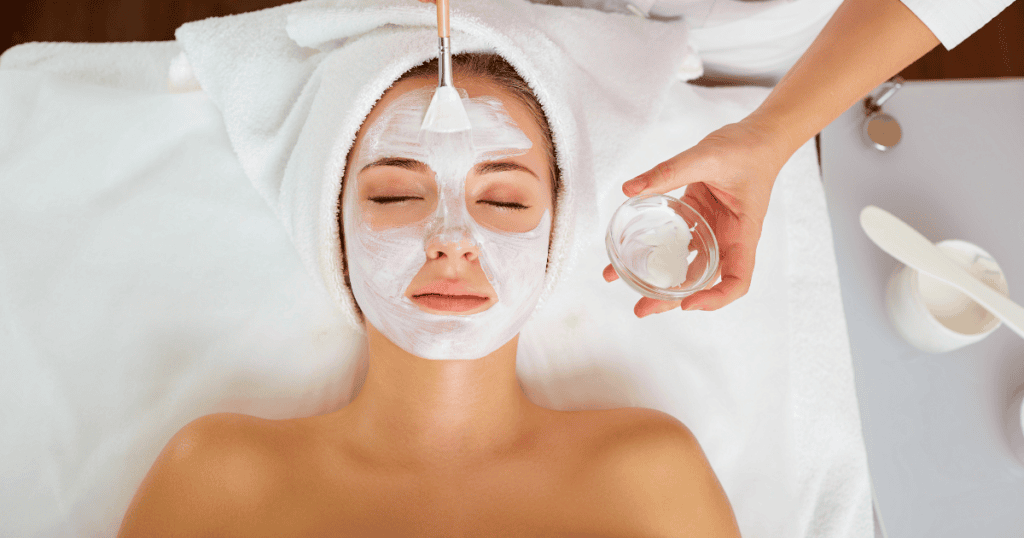
Yes, you can get a facial after Botox, but you need to wait before booking one. The recommended waiting period is 7 to 14 days for standard facials that involve massage, exfoliation, or deep pressure. Gentle hydrating facials without direct pressure on the injection sites can be safe after 24 to 48 hours. The waiting period protects the botulinum toxin from shifting away from the targeted muscles, which preserves your results and prevents complications like uneven muscle relaxation or drooping eyelids.
Botox is the most performed non-surgical cosmetic procedure in the United States, with 9.48 million neurotoxin treatments administered in the most recent reporting year, according to the American Society for Dermatologic Surgery. Many of the patients who get Botox also maintain regular facial treatments as part of their skincare routine. The key is timing. This guide covers exactly how long to wait after Botox before each type of facial, what happens if you go too soon, which treatments are safe, and how to sequence Botox and facials for the best possible results.
How Soon After Botox Can You Get a Facial?
How soon you can get a facial after Botox depends on the type of facial you want. Gentle hydrating facials that avoid direct pressure on the treated areas can be safe within 24 to 48 hours. Standard spa facials that include massage, extractions, or moderate manipulation require a wait of at least 7 days. More intensive treatments like chemical peels, microdermabrasion, and microneedling require 7 to 14 days or longer. The reason for these different timelines comes down to how much pressure, heat, and circulation each Botox treatment area experiences during the facial.
When Botox is injected into facial muscles, the botulinum toxin protein exists in a somewhat fluid state within the tissue. The toxin needs 24 to 48 hours to fully bind to the nerve endings in the targeted muscles, according to aftercare guidelines from the Mayo Clinic and the Cleveland Clinic. During this binding window, any pressure, massage, or heat applied to the face can physically displace the product before it anchors to the nerve receptors. After 48 hours, the binding process is largely complete, but the surrounding tissue may still be sensitive. Most dermatologists recommend waiting the full 7 to 14 days before any facial that involves sustained pressure on or near the injection sites.
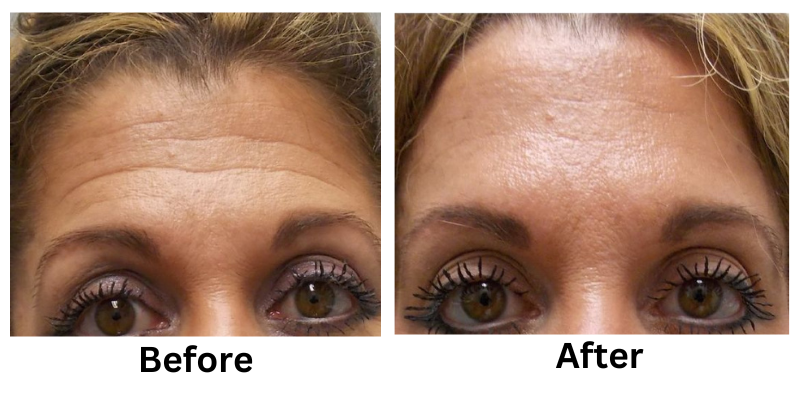
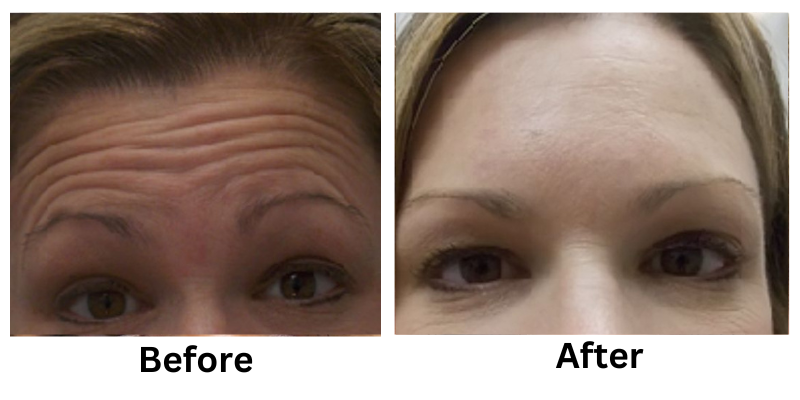
The American Society of Plastic Surgeons notes that full Botox results typically appear by day 14, with initial changes visible between days 3 and 5. Scheduling a facial after that two-week mark gives both the Botox and the skin time to settle completely, which means you get the full benefit of both treatments without interference.
What Happens If You Get a Facial Too Soon After Botox?
Getting a facial too soon after Botox can cause the product to migrate away from the targeted muscles, which weakens your results and creates unwanted side effects. Botox migration is the primary risk. When pressure from a facial massage pushes against muscles that are still absorbing the toxin, the product can shift into adjacent muscles where it was never intended to go.
Botox migration in the forehead, for example, can cause the toxin to spread toward the muscles that lift the eyebrows. The result is a drooping brow or heavy-feeling eyelid, a condition called ptosis. A 2021 review published in the Journal of Cosmetic Dermatology found that in a study of 845 patients receiving upper face botulinum toxin, the overall adverse event rate was only 2.6%, with bruising at the injection site being the most common issue. Ptosis and asymmetry are rare when proper aftercare is followed, but they become more likely when external pressure disrupts the settling process.
Beyond migration, a facial performed too early can also worsen bruising and swelling at the injection sites. Facials that use steam, hot towels, or vigorous massage increase blood flow to the face. Increased blood flow during the first 48 hours after Botox dilates the blood vessels around the needle punctures, which makes bruising more visible and can slow the healing process. Skin irritation from exfoliating acids or scrubs applied over fresh injection punctures also raises the risk of redness and discomfort. According to 2026 dermatologist practice surveys from major aesthetic hubs, up to 30% of unsatisfactory Botox outcomes result from poor post-treatment habits rather than the injection technique itself.
What Is Botox Migration and Why Does It Happen?
Botox migration is the movement of botulinum toxin away from the injection site into nearby muscles where it was not intended to act. Botox works by blocking the release of acetylcholine, the chemical signal that tells a muscle to contract. When injected into a specific facial muscle, the toxin binds to the nerve endings within that muscle and temporarily stops contraction, which smooths the overlying skin. Migration occurs when the toxin spreads to neighboring muscles before it has finished binding to the intended nerve receptors.
The risk of migration is highest during the first 24 hours after injection. During this window, the botulinum toxin has not yet fully attached to nerve endings and remains susceptible to displacement. Pressure from facial massage pushes the product laterally through the tissue. Heat from steam treatments or hot towels increases blood circulation, which can carry the toxin away from the injection site. Vigorous exercise raises heart rate and facial blood flow, producing the same dilution effect. How Botox works at the cellular level explains why these activities interfere with results: the toxin needs a stable, low-circulation environment to lock onto nerve receptors without spreading.
Once Botox has fully bound to the nerve endings, typically by 48 hours, the risk of migration drops significantly. The toxin no longer moves through tissue at that point because it is anchored to the receptor site. The muscles around the treated area continue to relax over the following days as the acetylcholine blockade takes full effect. By day 14, muscle relaxation peaks and your results are fully visible.
What Is the 4-Hour Rule for Botox?
The 4-hour rule for Botox means you should stay upright, sitting or standing, for at least 4 hours after your injection. Lying flat during this early window allows the botulinum toxin to shift downward under the influence of gravity before it has bound to the nerve endings. The 4-hour rule reduces the risk of the product settling into muscles below the targeted treatment area.
This rule applies specifically to the immediate post-injection period. Lying face-down or bending forward repeatedly during the first 4 hours puts pressure on the treated zones and compounds the gravity risk. After 4 hours, lying down is safe because the toxin has had enough time to begin its binding process. The 4-hour rule works alongside other aftercare guidelines: avoid touching or rubbing the injection sites, skip strenuous exercise for 24 hours, and stay away from heat exposure like saunas, hot tubs, or steam rooms for 48 hours.
How Long Does Botox Take to Settle?
Botox takes 24 to 48 hours to bind to the nerve endings in the targeted muscles, 3 to 5 days to produce visible changes, and up to 14 days to reach full effect. The settling process happens in stages. During the first 24 to 48 hours, the botulinum toxin protein travels through the muscle tissue and attaches to the nerve receptor sites. This is the critical binding window when the product is most vulnerable to displacement from pressure or heat.
Between days 3 and 5, most patients notice subtle changes: a slight reduction in muscle movement, a softening of lines when making expressions, and less tension in the treated areas. By days 7 to 10, the wrinkle-smoothing effect becomes clearly noticeable. Botox results reach their peak at approximately day 14, when the acetylcholine blockade is at its maximum and the treated muscles are fully relaxed. Results from a single treatment session typically last 3 to 4 months, according to FDA-approved Botox Cosmetic labeling, before the nerve endings regenerate new receptor sites and muscle movement gradually returns.
The settling timeline matters for facial scheduling because it tells you exactly when the product is locked in place and no longer at risk of displacement. A facial at day 3 carries more risk than a facial at day 14, even though the Botox has technically started binding by then. The safest approach is waiting until the neurotoxin injections have reached full effect before introducing any treatment that applies pressure, heat, or exfoliation to the face.
Which Facial Treatments Are Safe After Botox?
The safety of a facial treatment after Botox depends on how much pressure, heat, and stimulation the treatment applies to the skin. Gentle, non-contact treatments that keep hands and tools away from the injection sites become safe within the first few days. Treatments that involve massage, deep exfoliation, or controlled skin injury require the full 7-to-14-day waiting period. Patients in the Lee’s Summit and Kansas City area who schedule both Botox and facials regularly should plan their treatment calendar around these timelines.
| Facial Treatment | Recommended Wait After Botox | Why |
|---|---|---|
| Gentle Hydrating Facial (no massage) | 24 to 48 hours | No direct pressure on injection sites |
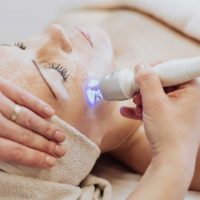
| LED Light Therapy | 24 to 48 hours | No contact, no heat, no pressure |
| Dermaplaning | 48 to 72 hours | Light surface contact, no deep pressure |
| HydraFacial / Aqua Facial | 48 to 72 hours | Gentle suction, minimal pressure |
| Standard Spa Facial (with massage) | 7 days minimum | Massage applies sustained pressure |
| Chemical Peel | 7 to 14 days | Acids increase blood flow and create controlled skin injury |
| Microdermabrasion | 7 to 14 days | Abrasive exfoliation and suction increase circulation |
| Microneedling / RF Microneedling | 14 days minimum | Micro-injuries stimulate deep healing response |
| Laser Skin Resurfacing | 14 days minimum | Thermal energy and tissue remodeling increase blood flow |
Safe facial options in the first 48 hours share a common trait: they keep physical contact, heat, and circulatory stimulation away from the treated muscles. LED light therapy promotes collagen production using light wavelengths without touching the skin or generating significant heat. Gentle hydrating facials that apply serums and masks without massage deliver moisture to the skin surface without disturbing the deeper muscle layer where Botox sits.
Treatments that cross the 7-day threshold involve either sustained manual pressure (massage-based facials), chemical agents that penetrate the skin and increase blood flow (chemical peels), or physical exfoliation that stimulates circulation (microdermabrasion). Treatments that cross the 14-day threshold, like RF microneedling and laser skin resurfacing, create controlled micro-injuries that trigger a deep healing response involving substantial blood flow changes and collagen remodeling.
Can You Get a HydraFacial After Botox?
Yes, you can get a HydraFacial after Botox, but you should wait at least 48 to 72 hours. A HydraFacial (or aqua facial) uses a patented vortex suction technology to cleanse, exfoliate, extract, and hydrate the skin without requiring manual massage or deep pressure. The suction is gentle compared to traditional extraction methods, and the treatment focuses on the skin’s surface layer rather than the muscle tissue where Botox resides.
The reason a HydraFacial requires a shorter waiting period than a standard spa facial is the absence of manual pressure. No hands push against the injection sites during the treatment. The device glides across the skin and uses hydration and mild suction to remove dead cells and deliver serums. Patients should still inform their aesthetician about the Botox injection locations and timing so the provider can avoid lingering over those areas with the suction tip during the first week.
Can You Get a Chemical Peel After Botox?
Yes, you can get a chemical peel after Botox, but you should wait 7 to 14 days. Chemical peels apply acid solutions to the skin that dissolve the outer layer of dead cells, promote cell turnover, and stimulate new collagen production beneath the surface. This process increases blood flow to the face as the skin responds to the controlled chemical exfoliation. Increased blood flow during the first week after Botox raises the risk of product displacement.
Light chemical peels that use mild acids like glycolic acid or lactic acid at low concentrations sit on the safer end of the spectrum and may be appropriate after 7 days. Medium-depth peels that penetrate further into the skin require closer to 14 days. Chemical peeling and Botox work well together over the long term because the peel addresses surface texture, tone, and pigmentation while Botox addresses dynamic wrinkles caused by muscle movement. The two treatments complement each other without overlapping in function.
Can You Get Microneedling After Botox?
Yes, you can get microneedling after Botox, but you should wait at least 14 days. Microneedling uses fine needles to create thousands of controlled micro-punctures in the skin, which triggers the body’s wound-healing response and stimulates collagen and elastin production. This healing response involves significant increases in blood flow, inflammation, and cellular activity in the treated area, all of which can interfere with Botox settling if performed too soon.
RF microneedling combines the micro-puncture technique with radiofrequency energy that heats the deeper layers of skin to stimulate additional collagen remodeling. The thermal component adds another variable that affects blood circulation and tissue response. A 14-day minimum wait gives the Botox enough time to fully bind, reach peak effect, and stabilize before the skin undergoes the intense healing process that microneedling and RF microneedling produce. Many patients who combine both treatments report excellent results in both wrinkle reduction and skin texture improvement when the treatments are properly spaced.
Should You Get Botox or a Facial First?
You should get the facial first, then Botox. Scheduling a facial before your Botox appointment is the simplest way to enjoy both treatments without any waiting-period concerns. A facial cleanses, exfoliates, and hydrates the skin, which creates a clean and healthy surface for the Botox injection. There is no risk to receiving Botox on skin that was recently treated with a facial, as long as the skin is not actively irritated, sunburned, or broken out from a deep peel.
The ideal sequence for patients who want both treatments within a short window is to schedule the facial 1 to 3 days before the Botox appointment. This gives the skin time to recover from any mild redness or sensitivity that a facial may cause, while still delivering the cleansing and hydration benefits that prepare the skin for injection. For patients planning around a special event, booking the facial about two weeks before the event and the Botox appointment about two weeks before the event as well creates a timeline where both treatments have peaked by the date that matters.
Patients who receive Botox regularly, typically every 3 to 4 months, can build a treatment calendar that alternates regular facials with their injection schedule. Getting a facial the week before each Botox appointment and another facial two weeks after creates a rhythm that maximizes skin health without interfering with the neurotoxin’s settling process.
How to Build a Skincare Routine That Works with Botox
A skincare routine that works with Botox focuses on hydration, sun protection, collagen support, and gentle exfoliation between treatment sessions. Botox addresses dynamic wrinkles, the lines that form from repeated muscle movement like squinting, frowning, and smiling. A good skincare routine addresses everything else: sun damage, dehydration, uneven texture, dullness, and static wrinkles that exist even when the face is at rest.
Hydration is the foundation. Hyaluronic acid serums and moisturizers keep the skin plump and supple, which complements the smooth surface that Botox creates by relaxing the muscles underneath. The ASPS reported 25.4 million minimally invasive cosmetic procedures in 2023, and the patients who see the best long-term results from those procedures are the ones who pair their treatments with a consistent daily skincare routine.
Sunscreen is non-negotiable. Ultraviolet exposure breaks down collagen and elastin fibers in the skin, which accelerates the formation of new wrinkles that Botox alone cannot prevent. A broad-spectrum SPF 30 or higher applied daily protects the investment you make in both Botox and facial treatments. Retinoids boost cell turnover and stimulate collagen production, but they should be introduced gradually and paused for a few days before and after both Botox and intensive facials to avoid excessive skin sensitivity.
Skin tightening procedures and collagen-stimulating treatments like RF microneedling complement Botox cosmetic results over time by addressing skin laxity and volume loss that neurotoxins do not treat. Together, these treatments create a comprehensive anti-aging approach that keeps the skin firm, smooth, and hydrated between Botox sessions. The 40-to-54 age group receives the most Botox procedures nationally, with over 2.5 million treatments performed in this demographic in a single year, according to ASPS data. This is also the age range where collagen loss accelerates most noticeably, which makes combining Botox with collagen-building treatments especially effective.
Frequently Asked Questions
Is Botox Noticeable After 3 Days?
Botox is typically noticeable after 3 days as a subtle reduction in muscle movement in the treated areas. You may notice that your forehead lines are slightly softer when you raise your eyebrows, or that your crow’s feet are less pronounced when you smile. Full results do not appear until day 14, so the changes at day 3 represent the beginning of the settling process, not the final outcome.
What Day Is Botox Strongest?
Botox is strongest at approximately day 14 after injection. The botulinum toxin reaches its peak acetylcholine-blocking effect by the two-week mark, which produces maximum muscle relaxation and the smoothest appearance. Results remain at or near this peak for approximately 4 to 6 weeks before the nerve endings gradually regenerate new receptor sites and movement slowly returns over the following months.
At What Age Is Botox Most Effective?
Botox is most effective at any age when dynamic wrinkles, the lines caused by repeated facial muscle movement, are the primary concern. The 40-to-54 age group uses Botox the most, accounting for over 2.5 million treatments per year in the United States, according to ASPS data. Younger patients in their late 20s and 30s also benefit from preventive Botox, which relaxes muscles before deep lines have formed and slows the progression of visible aging.
Will You Look Older When Botox Wears Off?
No, you will not look older when Botox wears off. Your face returns to its pre-treatment state as the neurotoxin is naturally metabolized by the body over 3 to 4 months. The wrinkles that were temporarily smoothed will gradually reappear as muscle movement returns, but they will not be deeper or more pronounced than they were before treatment. Botox does not accelerate aging or damage the skin in any way.
Will Your Skin Sag If You Stop Botox?
No, your skin will not sag if you stop Botox. Botox relaxes muscles; it does not affect the skin’s structural support, collagen levels, or elasticity. When you stop Botox, the muscles resume their normal movement patterns and the dynamic wrinkles return to their baseline appearance. Some patients who have used Botox consistently over several years actually find that their wrinkles are somewhat less pronounced when they stop, because the prolonged muscle relaxation slowed the repetitive folding that deepens lines over time.
Does Botox Ever Fully Leave Your Body?
Yes, Botox fully leaves your body. The botulinum toxin is naturally broken down and eliminated by your body’s metabolic processes. The active effects of a single Botox treatment typically last 3 to 4 months. After that period, the nerve endings regenerate new acetylcholine receptor sites, normal muscle function returns, and no trace of the toxin remains in the tissue. Botox does not accumulate in the body with repeated treatments.
The Takeaway
Getting a facial after Botox is perfectly safe when you respect the timing. Gentle hydrating treatments work within 48 hours, standard facials are safe after 7 days, and intensive treatments like chemical peels and microneedling belong at the 14-day mark or later. The single most important factor is avoiding pressure, heat, and vigorous manipulation on the treated areas during the first 24 to 48 hours while the botulinum toxin binds to the nerve endings. After that critical window, the risk drops steadily, and by day 14, your Botox has fully settled and your skin is ready for any treatment.
The best long-term results come from building a treatment calendar that sequences facials and Botox intentionally rather than randomly. We help patients plan that calendar so every treatment works together toward healthier, smoother, more youthful skin. At Slimming Solutions Med Spa, our team is here to help you build a plan that fits your goals. Call us at (816) 524-3438 to schedule a free consultation.
![[thumb]](https://slimmingsolutionsspa.com/wp-content/uploads/2023/12/botox1-150x150.png)
![[thumb]](https://slimmingsolutionsspa.com/wp-content/uploads/2023/12/Before2-150x150.png)
![[thumb]](https://slimmingsolutionsspa.com/wp-content/uploads/2023/12/Before3-150x150.png)


![[thumb]](https://slimmingsolutionsspa.com/wp-content/uploads/2023/12/revanesse-versa-1-150x150.png)
![[thumb]](https://slimmingsolutionsspa.com/wp-content/uploads/2023/12/revanesse-versa-2-150x150.png)
![[thumb]](https://slimmingsolutionsspa.com/wp-content/uploads/2023/12/revanesse-versa-3-150x150.png)
![[thumb]](https://slimmingsolutionsspa.com/wp-content/uploads/2023/12/revanesse-versa-4-150x150.png)
![[thumb]](https://slimmingsolutionsspa.com/wp-content/uploads/2023/12/revanesse-versa-5-150x150.png)
![[thumb]](https://slimmingsolutionsspa.com/wp-content/uploads/2024/01/Eyebrow-treatment-1-1-150x150.png)
![[thumb]](https://slimmingsolutionsspa.com/wp-content/uploads/2023/12/Skin-Rejuvenation-1-150x150.png)
![[thumb]](https://slimmingsolutionsspa.com/wp-content/uploads/2023/12/Skin-Rejuvenation-2-150x150.png)


![[thumb]](https://slimmingsolutionsspa.com/wp-content/uploads/2024/01/Lip-Filler-1-150x150.png)
![[thumb]](https://slimmingsolutionsspa.com/wp-content/uploads/2024/01/Lip-Filler-2-150x150.png)
![[thumb]](https://slimmingsolutionsspa.com/wp-content/uploads/2025/02/Lip-Filler-1-150x150.png)
![[thumb]](https://slimmingsolutionsspa.com/wp-content/uploads/2024/01/Lip-Filler-150x150.jpg)
![[thumb]](https://slimmingsolutionsspa.com/wp-content/uploads/2024/01/Before-1-150x150.jpg)

![[thumb]](https://slimmingsolutionsspa.com/wp-content/uploads/2024/01/RHA-Treatmetn-3-150x150.png)
![[thumb]](https://slimmingsolutionsspa.com/wp-content/uploads/2024/01/RHA-Treatmetn-2-150x150.png)
![[thumb]](https://slimmingsolutionsspa.com/wp-content/uploads/2024/01/RHA-Treatmetn-1-150x150.png)
![[thumb]](https://slimmingsolutionsspa.com/wp-content/uploads/2024/01/Thread-Lifts-1-150x150.png)
![[thumb]](https://slimmingsolutionsspa.com/wp-content/uploads/2024/01/Thread-Lifts-2-150x150.png)
![[thumb]](https://slimmingsolutionsspa.com/wp-content/uploads/2025/02/Lip-Filler-2-150x150.png)

![[thumb]](https://slimmingsolutionsspa.com/wp-content/uploads/2023/12/skin-reuvulation1-150x150.png)
![[thumb]](https://slimmingsolutionsspa.com/wp-content/uploads/2023/12/skin-rejuvulation-2-150x150.png)
![[thumb]](https://slimmingsolutionsspa.com/wp-content/uploads/2023/12/Skin-Tighting-150x150.png)
![[thumb]](https://slimmingsolutionsspa.com/wp-content/uploads/2023/12/Before-150x150.jpg)
![[thumb]](https://slimmingsolutionsspa.com/wp-content/uploads/2023/12/weightloss-1-150x150.png)
![[thumb]](https://slimmingsolutionsspa.com/wp-content/uploads/2023/12/weightloss-2-150x150.png)
![[thumb]](https://slimmingsolutionsspa.com/wp-content/uploads/2023/12/2Weight-Loss-2-150x150.png)
![[thumb]](https://slimmingsolutionsspa.com/wp-content/uploads/2025/02/Weight-Loss-1-new-150x150.png)
![[thumb]](https://slimmingsolutionsspa.com/wp-content/uploads/2023/12/Weight-Loss-3-150x150.png)
![[thumb]](https://slimmingsolutionsspa.com/wp-content/uploads/2025/03/Slimming-Solutions-BA-Template-150x150.png)


![[thumb]](https://slimmingsolutionsspa.com/wp-content/uploads/2023/12/dat3-150x150.png)
![[thumb]](https://slimmingsolutionsspa.com/wp-content/uploads/2023/12/dat-0-150x150.png)
![[thumb]](https://slimmingsolutionsspa.com/wp-content/uploads/2023/12/dat-1-150x150.png)
![[thumb]](https://slimmingsolutionsspa.com/wp-content/uploads/2023/12/Before-1-150x150.png)

![[thumb]](https://slimmingsolutionsspa.com/wp-content/uploads/2024/01/EMS-Treatment-2-150x150.png)
![[thumb]](https://slimmingsolutionsspa.com/wp-content/uploads/2024/01/EMS-Treatment-1-150x150.png)
![[thumb]](https://slimmingsolutionsspa.com/wp-content/uploads/2025/02/ems-BNA-front-150x150.png)
![[thumb]](https://slimmingsolutionsspa.com/wp-content/uploads/2025/02/EMS-bna-SIDE-150x150.png)
![[thumb]](https://slimmingsolutionsspa.com/wp-content/uploads/2024/01/EMS-Treatment-6-150x150.png)