Wharton’s Jelly is used for helping the body repair damaged tissues, particularly in joints affected by arthritis and other conditions that cause pain and inflammation. This gel-like substance from the umbilical cord contains mesenchymal stem cells, growth factors, and proteins that support natural healing processes. When injected into problem areas, it helps reduce inflammation, promote tissue repair, and improve function in people dealing with joint issues, chronic pain, and certain health conditions.
This article explains what makes Wharton’s Jelly special, how it supports healing, what conditions it may help with, and what you need to know before considering this treatment option.
Understanding What Wharton’s Jelly Really Is
Wharton’s Jelly is a soft, gel-like tissue found inside the umbilical cord. It wraps around and protects the blood vessels that connect a baby to its mother during pregnancy.
An English doctor named Thomas Wharton first described this tissue back in 1656. For centuries, it was thought of as just cushioning material. Nobody knew it had any special properties.
That changed when researchers discovered this jelly contains some very useful components. It’s packed with mesenchymal stem cells. These are special cells that can help your body repair itself.
The tissue also contains collagen, hyaluronic acid, and growth factors. These substances play important roles in tissue health and healing.
According to research published in the journal STEM CELLS Translational Medicine, Wharton’s Jelly contains 10 to 20 times more mesenchymal stem cells per unit volume than bone marrow. That’s a significant difference.
After a baby is born, the umbilical cord is usually thrown away. But now, with proper consent from mothers, this cord tissue can be collected and processed for medical use.
The collection happens after healthy, full-term births. The mother and baby are never harmed in this process. The cord would be discarded anyway.
Here in Lee’s Summit and throughout Kansas City, people are starting to learn about this approach to supporting the body’s healing.
What Is A Biostimulator Or Regenerative Treatment?
Wharton’s Jelly falls into a category called regenerative medicine. This type of treatment helps your body fix itself rather than just covering up symptoms.
Think about how most pain medications work. They block the signals that tell your brain you’re hurting. But they don’t actually fix what’s damaged.
Regenerative treatments take a different approach. They give your body the building blocks and signals it needs to make repairs.
Wharton’s Jelly works this way because of the mesenchymal stem cells it contains. These cells release substances that tell your body to start healing.
They send signals that reduce inflammation. They encourage blood vessel formation. They help create new tissue where it’s needed.
Research published in Frontiers in Cell and Developmental Biology explains that the therapeutic effects come mostly from what these cells release, not from the cells themselves becoming new tissue.
The cells create what scientists call a healing microenvironment. It’s like setting up the right conditions for your body to do its best repair work.
This is different from traditional injections that just add volume or temporarily reduce swelling.
Want to learn if regenerative treatments are right for your specific concerns? Our team in Lee’s Summit would be happy to answer your questions. Book a consultation today.
How Does Wharton’s Jelly Help Healing?
When Wharton’s Jelly gets injected into an area that needs help, several things start happening.
First, it calms down inflammation. The mesenchymal stem cells release substances that tell your immune system to dial back the attack on your own tissues.
A study in rats showed that these cells decreased inflammatory markers like interleukin-1β while increasing helpful factors like nerve growth factor. Less inflammation means less pain and damage.
Second, it supports tissue repair. The growth factors in Wharton’s Jelly encourage your body to make new collagen and other structural proteins.
The British Medical Bulletin published research showing that the extracellular matrix in Wharton’s Jelly includes collagen and hyaluronic acid. These are the same substances found in healthy cartilage and connective tissue.
Third, it helps with blood vessel formation. New blood vessels bring oxygen and nutrients to damaged areas. This speeds up healing.
Fourth, it has what doctors call immunomodulatory properties. This means it helps balance your immune response. Not too much inflammation, not too little.
The Journal of Orthopaedic Surgery and Research notes that these mesenchymal stem cells express markers like CD105, CD73, and CD90. These markers mean the cells can differentiate into bone, cartilage, and other tissues your body needs.
The healing happens gradually over weeks and months. It’s not an instant fix. Your body needs time to respond and make repairs.
Most people start noticing improvements around two to four weeks after treatment. Full results can take two to three months to develop.
What Conditions Does Wharton’s Jelly Treat?
Research shows Wharton’s Jelly may help with several different health concerns. The most studied use is for joint problems.
Knee arthritis is probably the most common condition being treated. The British Medical Bulletin published a review showing that as of November 2023, seven clinical trials were studying Wharton’s Jelly for knee osteoarthritis.
That same review noted that over 30 million people in the United States deal with knee osteoarthritis. Traditional treatments don’t actually address the underlying cartilage damage.
According to Medical Research Archives, a 2024 study compared Wharton’s Jelly to steroid injections for thumb arthritis. The Wharton’s Jelly group showed improvements in pain and function that lasted a full year. The steroid benefits wore off by 12 months.
Other joint conditions being studied include hip arthritis, shoulder problems, and issues with tendons and ligaments.
Beyond joints, research is looking at other applications. Some studies are exploring its use for spinal cord injuries, Parkinson’s disease, and metabolic syndrome.
A study published in PMC looked at Wharton’s Jelly for metabolic syndrome in rats. The treated animals showed better outcomes in their lungs, liver, and heart compared to untreated ones.
Clinical trials registered on ClinicalTrials.gov show researchers studying it for cardiovascular conditions, liver problems, and immune-related disorders.
For people dealing with chronic inflammation anywhere in the body, this approach might offer support.
Here in the Kansas City area, most people are exploring it for joint pain and arthritis symptoms.
Thinking about trying a regenerative approach? We can help you figure out if it’s right for you. Contact us to set up a time to chat.
What Are The Benefits Of Wharton’s Jelly Therapy?
People who try this treatment report several positive effects. The most common benefit is pain reduction.
Research from MDPI analyzed six clinical studies with 97 patients and 134 treated knees. The follow-up ranged from 3 to 48 months. Patients showed significant improvement in pain scores.
One source notes that some people experience up to a 50% reduction in pain. That’s meaningful when you’ve been dealing with chronic discomfort.
Another benefit is improved joint function. People report being able to move more easily. Activities that were difficult become manageable again.
The treatment may help you avoid or delay surgery. For people who aren’t ready for a joint replacement, this offers another option to try first.
Unlike steroid injections that wear off quickly, the improvements from Wharton’s Jelly tend to last longer. Many people maintain their results for a year or more.
There’s also the benefit of it being minimally invasive. You get an injection instead of going through surgery. Most people go back to normal activities within a day or two.
Side effects are typically mild. The most common issues are temporary soreness, swelling, or bruising at the injection site. These usually clear up within a few days.
According to the systematic review in MDPI, no serious adverse effects were noted across the studies analyzed. That’s encouraging for safety.
The treatment doesn’t require taking daily medications. Once you get the injection, your body does the work.
For people here in Lee’s Summit who want a natural approach that works with their body’s own healing abilities, this treatment philosophy makes sense.
How Does Wharton’s Jelly Work In The Body?
The science behind this treatment is interesting. When the material gets injected, the mesenchymal stem cells don’t actually stick around forever.
These cells release tiny packages called exosomes. Think of exosomes as messenger bags filled with healing instructions.
Research in Frontiers in Cell and Developmental Biology explains that the cells’ therapeutic effects come mainly from their secretome. That’s all the substances they release.
The secretome includes growth factors, cytokines, and proteins. Each one has a specific job in the healing process.
Some substances tell inflammation to calm down. Others signal your body to make new collagen. Some encourage blood vessels to form.
The mesenchymal stem cells also have special surface markers. These markers help them avoid being attacked by your immune system.
That’s why Wharton’s Jelly from donor cords can be used without causing rejection problems. The cells are what scientists call immunoprivileged.
The International Society for Cellular Therapy defines mesenchymal stem cells by specific criteria. They must stick to plastic in lab cultures, express certain markers, and be able to turn into bone, fat, and cartilage cells.
Wharton’s Jelly cells meet all these criteria. They’re true mesenchymal stem cells with proven abilities.
When these cells arrive at a damaged joint, they sense the environment. They detect inflammation and tissue damage. Then they respond by releasing the right healing factors for that specific situation.
It’s like having a smart repair crew that assesses the problem and brings exactly the right tools.
Over time, the cells themselves may fade away. But the healing they triggered continues. Your own tissues take over the repair process.
If you’re in the Lee’s Summit area and curious about how this healing approach works, schedule a consultation with us. We’re here to help.
Is Wharton’s Jelly Safe?
Safety is naturally a big concern when considering any treatment. The research so far shows a good safety profile.
Multiple studies have looked at adverse events. The most common issues are minor and temporary. Soreness at the injection site, mild swelling, and occasional bruising.
The systematic review published in MDPI covering nearly 100 patients found no serious adverse effects reported. That’s across follow-up periods ranging from three months to four years.
A phase 1 clinical trial published in The Journal of Clinical Neurology tested Wharton’s Jelly in children with Duchenne muscular dystrophy. The study found the treatment was well-tolerated with no dose-limiting toxicity.
The cells come from carefully screened donors. Mothers who donate their baby’s umbilical cord go through health screenings. The tissue itself gets tested multiple times for infections and diseases.
Processing facilities follow strict guidelines. The tissue is handled in controlled environments to prevent contamination.
That said, it’s important to understand the regulatory situation. The FDA has issued statements about these products.
According to FDA consumer alerts, Wharton’s Jelly products are not currently approved for treating orthopedic conditions like arthritis, joint pain, or related issues.
The FDA classifies these as biological products that generally require approval before being marketed. Currently, the only FDA-approved stem cell products are blood-forming stem cells from umbilical cord blood for specific blood disorders.
Some companies have received warning letters from the FDA about how they market and sell these products. The regulatory landscape is still developing.
This doesn’t mean the treatment is unsafe. It means it’s still being studied and the approval process is ongoing.
Clinical trials are happening. Researchers are gathering safety and effectiveness data. The science is promising but not yet complete.
If you’re considering this treatment, make sure you understand what’s known and what’s still being researched. Ask questions about where the product comes from and how it’s processed.
Look for providers who are honest about the current state of the science and the regulatory situation.
What To Expect During Treatment
The actual procedure is fairly straightforward. It usually happens in a medical office.
First, you’ll have a consultation to discuss your condition and whether this treatment makes sense for you. Not everyone is a candidate.
On treatment day, the area being injected gets cleaned thoroughly. Some providers use a topical numbing cream to keep you comfortable.
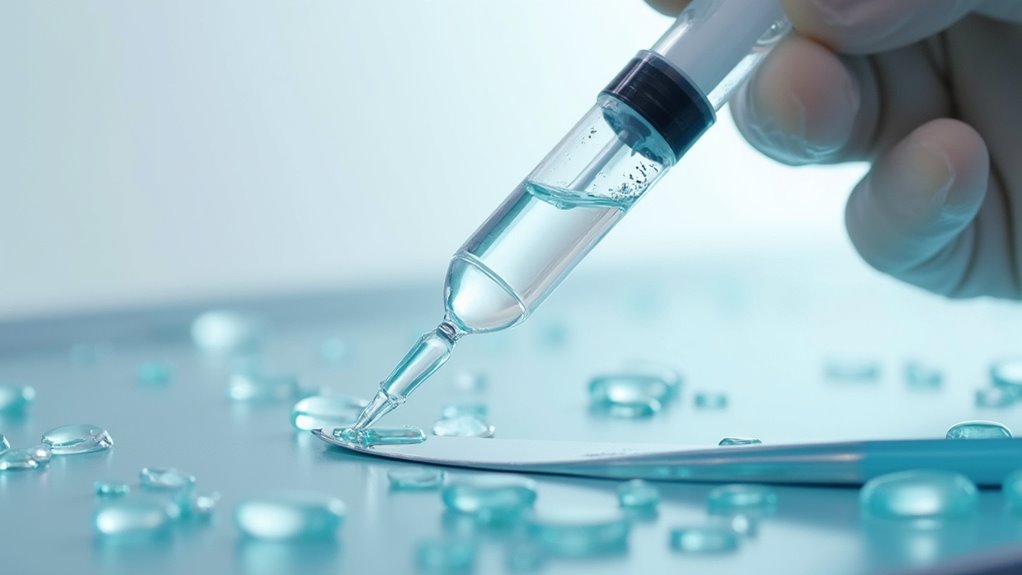
The injection itself takes just a few minutes. For joint injections, many doctors use ultrasound guidance. This helps them place the material exactly where it needs to go.
You might feel some pressure or a slight pinch. Most people say it’s not too uncomfortable.
Right after the injection, the area might feel sore or swollen. This is normal. It means your body is responding.
You’ll be able to go home the same day. Most doctors recommend resting for 24 to 48 hours. Avoid strenuous activities for a few days.
Ice can help with any swelling. Over-the-counter pain medication is usually fine if you need it. Check with your provider.
Some people notice a temporary increase in discomfort during the first week. This is your body’s healing response kicking in. It typically settles down.
Around weeks two to four, you might start noticing improvements. Less pain when you move. Better range of motion. These changes develop gradually.
Full results take time. Most people see their best improvements around the two to three month mark.
Follow-up appointments help track your progress. Your provider can assess how well you’re responding.
Depending on your condition and how you respond, you might need just one treatment. Others benefit from a series spaced several weeks apart.
Ready to take the next step? Request a consultation and let’s talk about what might work best for you.
Comparing Wharton’s Jelly To Other Treatments
How does this approach stack up against other options for joint pain and arthritis?
Traditional treatments include pain medications, physical therapy, and steroid injections. These can help but they don’t fix the underlying problem.
Pain medications just block signals. They don’t heal tissue. And long-term use of medications like NSAIDs can cause stomach problems and other side effects.
Steroid injections work well for quick relief. But studies show their benefits wear off relatively fast. The 2024 study in Medical Research Archives found steroid benefits were gone by 12 months while Wharton’s Jelly results lasted the full year.
Hyaluronic acid injections for joints provide lubrication. They help with pain and stiffness. But they’re more about symptom management than healing.
Platelet-rich plasma uses your own blood components to promote healing. It’s another regenerative option. Some people respond well to PRP.
The difference with Wharton’s Jelly is the concentration of mesenchymal stem cells and growth factors. It’s designed to trigger more extensive repair.
Physical therapy strengthens muscles around joints and improves function. It’s valuable and often works well combined with other treatments.
Surgery is the most invasive option. Joint replacement can be life-changing for people with severe arthritis. But it comes with surgical risks and a long recovery.
For people not ready for surgery, regenerative approaches offer something in between conservative care and major procedures.
Here’s a comparison of treatment characteristics:
| Treatment | Invasiveness | Recovery Time | Duration of Results |
|---|---|---|---|
| Medications | None | Immediate | Temporary |
| Steroid Injections | Minimal | 1-2 days | 3-6 months |
| Hyaluronic Acid | Minimal | 1-2 days | 6-12 months |
| Wharton’s Jelly | Minimal | 1-2 days | 12+ months |
| Surgery | High | Months | Years |
The best choice depends on your specific situation. Your age, overall health, severity of damage, and personal goals all matter.
Many people here in the Kansas City area try less invasive options first before considering surgery.
Who Might Benefit From This Treatment?
Certain people are better candidates than others. You might benefit if you have mild to moderate arthritis that hasn’t responded well to conservative treatments.
People with knee pain, hip discomfort, shoulder issues, or other joint problems may be candidates.
If you’re dealing with chronic inflammation in joints or soft tissues, this approach might help.
You’re a good candidate if you want to avoid or delay surgery. Maybe you’re not ready for a joint replacement. This gives you another option to try.
People who haven’t gotten lasting relief from steroid injections or other treatments often explore this.
You should be in generally good health. Your body needs to be able to respond to the healing signals.
Realistic expectations matter. This isn’t a miracle cure. It’s a tool to help your body heal better. Some people get great results, others see modest improvements.
You’re probably not a good candidate if you have active infections, certain blood disorders, or are pregnant or breastfeeding.
If you have cancer or a history of cancer, you’ll need to discuss this carefully with your doctor. The safety in these situations isn’t well established.
People with very severe joint damage might not respond as well. Sometimes the destruction is too advanced for repair.
Your doctor will evaluate your specific situation. They’ll look at imaging, check your medical history, and help you decide if this makes sense.
Have questions? Our team loves talking about this stuff. Reach out anytime.
Cost And Practical Considerations
Let’s talk about the practical side of this treatment. Cost is a big factor for most people.
These treatments typically aren’t covered by insurance. The FDA has stated that current Wharton’s Jelly products don’t have approval for orthopedic uses.
Without insurance coverage, you’re paying out of pocket. Costs vary widely depending on location and provider.
A single injection can range from a few hundred to several thousand dollars. More complex treatments or multiple injections cost more.
Here in Lee’s Summit and the Kansas City area, prices tend to be more reasonable than in major metropolitan centers on the coasts.
Some practices offer payment plans to make treatment more accessible. Ask about financing options if cost is a concern.
Compare the cost to other options over time. If you’re getting steroid injections every few months at several hundred dollars each, the costs add up.
Joint replacement surgery costs tens of thousands of dollars. Even with insurance, your out-of-pocket expenses can be substantial.
Time is another consideration. The injection itself is quick. But you need to factor in consultation appointments and follow-ups.
Most people can return to work within a day or two. That’s less time off than surgery would require.
Think about the long-term picture. If this treatment helps you stay active and delay or avoid surgery, the value might be worth it.
Research is ongoing. As more data comes in and if products eventually gain FDA approval, insurance coverage might change. But for now, expect to pay yourself.
Current Research And Future Outlook
The science around Wharton’s Jelly is developing rapidly. New studies come out regularly.
ClinicalTrials.gov shows numerous ongoing studies. Researchers are testing it for arthritis, cartilage damage, cardiovascular conditions, and more.
The British Medical Bulletin review from 2024 noted that while results are encouraging, more large-scale randomized controlled trials are needed.
Most published studies so far have small numbers of participants. The follow-up periods vary. More research with standardized protocols would strengthen the evidence.
Scientists are also working to understand exactly how these cells create their healing effects. What signals do they send? How can we make them work better?
Some research is looking at combining Wharton’s Jelly with other treatments. Maybe using it alongside physical therapy or other regenerative approaches.
The regulatory picture will likely evolve. As companies gather safety and effectiveness data, they may seek formal FDA approval.
This could take years. The approval process is lengthy and expensive. But it would provide clearer guidelines and potentially insurance coverage.
In the meantime, the treatment exists in a somewhat gray area. It’s being used clinically based on preliminary evidence, but without full regulatory approval.
Future developments might include improved processing methods, better quality control, and more targeted applications.
We might see products specifically designed for different conditions. One formulation for joints, another for soft tissue, and so on.
The field of regenerative medicine as a whole is growing. Wharton’s Jelly is just one piece of a larger puzzle.
For people dealing with chronic pain and limited options, any advance that brings relief is welcome.
If you’re in the Lee’s Summit area and want to stay informed about new treatment options, schedule a consultation with us. We keep up with the latest developments.
Making An Informed Decision
Deciding whether to try Wharton’s Jelly therapy requires careful thought. Don’t rush into it.
Start by learning as much as you can. Read about the current research. Understand what’s proven and what’s still being studied.
Talk to your regular doctor. They know your medical history and can offer perspective on whether this makes sense for you.
Find a qualified provider who specializes in regenerative medicine. Ask about their training and experience. How many of these treatments have they done?
Ask where the product comes from. How is it processed? What testing does it undergo?
A good provider will be honest about the current state of the science. They won’t make promises they can’t keep.
They should also be transparent about the regulatory situation. If they claim FDA approval, verify that. The FDA website lists approved products.
Understand the costs upfront. No surprises. Get everything in writing.
Think about your goals. What would success look like for you? Less pain? Better function? Avoiding surgery?
Consider the alternatives. What happens if you don’t do this treatment? Are there other options you should try first?
Some people try more conservative treatments like physical therapy, weight loss, or strengthening exercises before moving to injections.
Others have already tried everything and are ready for something different.
There’s no universal right answer. Your situation is unique.
If you decide to proceed, follow your provider’s instructions carefully. Show up for follow-up appointments. Report any concerns promptly.
Keep realistic expectations. This is a tool, not a magic solution. Give your body time to respond.
Final Thoughts
Wharton’s Jelly represents an interesting approach to helping the body heal itself. Instead of just masking symptoms, it aims to address underlying tissue damage and inflammation.
The early research is encouraging. People report less pain, better function, and improvements that last.
The safety profile looks good in the studies done so far. Serious problems have been rare.
But important questions remain. We need larger, longer studies with better controls. The regulatory picture needs to clarify.
For now, this treatment exists in a space between proven therapy and experimental procedure. It’s being used clinically based on promising early evidence.
If you’re dealing with chronic joint pain that hasn’t responded to other treatments, this might be worth exploring. Just go in with your eyes open.
Understand the science, know the limitations, and work with a qualified provider who’s honest about what to expect.
Here in Lee’s Summit and throughout the Kansas City area, more people are asking about regenerative options. The interest is understandable. People want solutions that work with their bodies.
Whether Wharton’s Jelly is right for you depends on your specific situation. Your health, your goals, and your willingness to try an approach that’s still developing.
At Slimming Solutions Med Spa, we stay current on emerging treatment options and can help you understand what might work for your needs.
Contact us today to learn more about this and other approaches to supporting your health and wellbeing. We’re here to answer your questions and help you make informed choices.
![[thumb]](https://slimmingsolutionsspa.com/wp-content/uploads/2023/12/botox1-150x150.png)
![[thumb]](https://slimmingsolutionsspa.com/wp-content/uploads/2023/12/Before2-150x150.png)
![[thumb]](https://slimmingsolutionsspa.com/wp-content/uploads/2023/12/Before3-150x150.png)


![[thumb]](https://slimmingsolutionsspa.com/wp-content/uploads/2023/12/revanesse-versa-1-150x150.png)
![[thumb]](https://slimmingsolutionsspa.com/wp-content/uploads/2023/12/revanesse-versa-2-150x150.png)
![[thumb]](https://slimmingsolutionsspa.com/wp-content/uploads/2023/12/revanesse-versa-3-150x150.png)
![[thumb]](https://slimmingsolutionsspa.com/wp-content/uploads/2023/12/revanesse-versa-4-150x150.png)
![[thumb]](https://slimmingsolutionsspa.com/wp-content/uploads/2023/12/revanesse-versa-5-150x150.png)
![[thumb]](https://slimmingsolutionsspa.com/wp-content/uploads/2024/01/Eyebrow-treatment-1-1-150x150.png)
![[thumb]](https://slimmingsolutionsspa.com/wp-content/uploads/2023/12/Skin-Rejuvenation-1-150x150.png)
![[thumb]](https://slimmingsolutionsspa.com/wp-content/uploads/2023/12/Skin-Rejuvenation-2-150x150.png)


![[thumb]](https://slimmingsolutionsspa.com/wp-content/uploads/2024/01/Lip-Filler-1-150x150.png)
![[thumb]](https://slimmingsolutionsspa.com/wp-content/uploads/2024/01/Lip-Filler-2-150x150.png)
![[thumb]](https://slimmingsolutionsspa.com/wp-content/uploads/2025/02/Lip-Filler-1-150x150.png)
![[thumb]](https://slimmingsolutionsspa.com/wp-content/uploads/2024/01/Lip-Filler-150x150.jpg)
![[thumb]](https://slimmingsolutionsspa.com/wp-content/uploads/2024/01/Before-1-150x150.jpg)

![[thumb]](https://slimmingsolutionsspa.com/wp-content/uploads/2024/01/RHA-Treatmetn-3-150x150.png)
![[thumb]](https://slimmingsolutionsspa.com/wp-content/uploads/2024/01/RHA-Treatmetn-2-150x150.png)
![[thumb]](https://slimmingsolutionsspa.com/wp-content/uploads/2024/01/RHA-Treatmetn-1-150x150.png)
![[thumb]](https://slimmingsolutionsspa.com/wp-content/uploads/2024/01/Thread-Lifts-1-150x150.png)
![[thumb]](https://slimmingsolutionsspa.com/wp-content/uploads/2024/01/Thread-Lifts-2-150x150.png)
![[thumb]](https://slimmingsolutionsspa.com/wp-content/uploads/2025/02/Lip-Filler-2-150x150.png)

![[thumb]](https://slimmingsolutionsspa.com/wp-content/uploads/2023/12/skin-reuvulation1-150x150.png)
![[thumb]](https://slimmingsolutionsspa.com/wp-content/uploads/2023/12/skin-rejuvulation-2-150x150.png)
![[thumb]](https://slimmingsolutionsspa.com/wp-content/uploads/2023/12/Skin-Tighting-150x150.png)
![[thumb]](https://slimmingsolutionsspa.com/wp-content/uploads/2023/12/Before-150x150.jpg)
![[thumb]](https://slimmingsolutionsspa.com/wp-content/uploads/2023/12/weightloss-1-150x150.png)
![[thumb]](https://slimmingsolutionsspa.com/wp-content/uploads/2023/12/weightloss-2-150x150.png)
![[thumb]](https://slimmingsolutionsspa.com/wp-content/uploads/2023/12/2Weight-Loss-2-150x150.png)
![[thumb]](https://slimmingsolutionsspa.com/wp-content/uploads/2025/02/Weight-Loss-1-new-150x150.png)
![[thumb]](https://slimmingsolutionsspa.com/wp-content/uploads/2023/12/Weight-Loss-3-150x150.png)
![[thumb]](https://slimmingsolutionsspa.com/wp-content/uploads/2025/03/Slimming-Solutions-BA-Template-150x150.png)


![[thumb]](https://slimmingsolutionsspa.com/wp-content/uploads/2023/12/dat3-150x150.png)
![[thumb]](https://slimmingsolutionsspa.com/wp-content/uploads/2023/12/dat-0-150x150.png)
![[thumb]](https://slimmingsolutionsspa.com/wp-content/uploads/2023/12/dat-1-150x150.png)
![[thumb]](https://slimmingsolutionsspa.com/wp-content/uploads/2023/12/Before-1-150x150.png)

![[thumb]](https://slimmingsolutionsspa.com/wp-content/uploads/2024/01/EMS-Treatment-2-150x150.png)
![[thumb]](https://slimmingsolutionsspa.com/wp-content/uploads/2024/01/EMS-Treatment-1-150x150.png)
![[thumb]](https://slimmingsolutionsspa.com/wp-content/uploads/2025/02/ems-BNA-front-150x150.png)
![[thumb]](https://slimmingsolutionsspa.com/wp-content/uploads/2025/02/EMS-bna-SIDE-150x150.png)
![[thumb]](https://slimmingsolutionsspa.com/wp-content/uploads/2024/01/EMS-Treatment-6-150x150.png)