
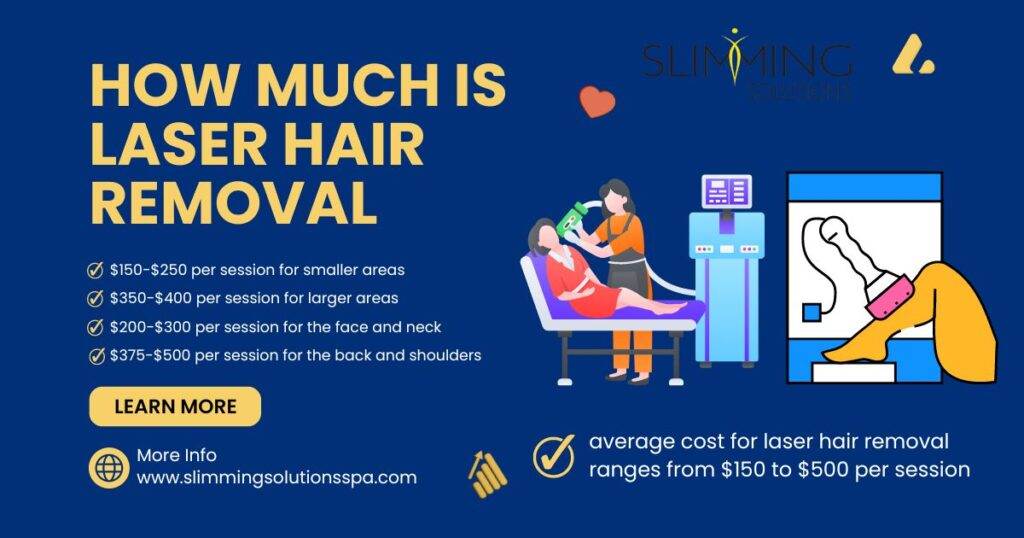
Laser hair removal costs between $100 and $800 per session on average, depending on the treatment area, the number of sessions needed, and the provider’s experience. According to the American Society of Plastic Surgeons (ASPS), the average cost of laser skin treatments including laser hair removal is $697. A CareCredit 2023 pricing study found the national average ranges from $207 to $913 based on treatment area size. Most people need six to eight sessions for the best results, which means the total investment typically falls between $1,200 and $5,000 or more for a full treatment series. This article covers how much laser hair removal costs by body area, what factors affect the price, how it compares to waxing and shaving over time, and whether it is worth the investment.
How Much Does a Full Session of Laser Hair Removal Cost?
A full session of laser hair removal costs between $100 and $800 depending on the body area being treated and the type of laser technology used. Small areas like the upper lip or chin typically cost $100 to $300 per session. Medium areas like underarms or the bikini line range from $150 to $500 per session. Large areas like full legs, back, or chest can cost $500 to $1,200 per session.
According to the ASPS, the average provider fee for laser hair removal is $697, though this figure likely combines single-session and package prices. RealSelf patient-reported data places the average total cost at $1,043, which reflects the reality that most people purchase multi-session packages. The global laser hair removal market was valued at $1.22 billion in 2024, according to Fortune Business Insights, and is projected to grow at a compound annual growth rate of 18.3% through 2032, reaching $4.60 billion. This rapid growth shows just how many people are investing in this treatment.
The total cost for a complete treatment series depends on how many sessions your provider recommends. Most people need six to eight sessions spaced four to six weeks apart. Package pricing often brings the per-session rate down significantly. At Slimming Solutions Med Spa, a free consultation can help you get a personalized estimate based on your specific treatment areas and hair type.
Is Laser Hair Removal Actually Permanent?
Laser hair removal is not 100% permanent, but it does provide permanent hair reduction. The FDA defines permanent hair reduction as a long-term, stable decrease in the number of hairs that regrow after a treatment series. Most patients experience a 70% to 90% reduction in hair growth after completing six to eight sessions.
A systematic review published in the Journal of Cosmetic and Laser Therapy analyzed randomized controlled trials involving 223 patients and found that average long-term hair reduction ranged from 30% to 84% depending on the laser type. Alexandrite lasers showed the highest reduction at 35% to 84.25%, while diode lasers achieved 32.5% to 69.2%. A separate 2023 study published in PLOS ONE found that professional laser devices achieved approximately 85% to 88% underarm hair reduction after six sessions.
The remaining hair that does grow back is typically much finer, lighter, and less noticeable. Most people need one or two maintenance sessions per year to keep results looking their best. Hormonal changes from conditions like PCOS, pregnancy, or menopause can trigger new hair growth and may require additional treatments. People often pair laser hair removal with hormone replacement therapy to address the underlying hormonal factors that contribute to excess hair growth.
How Much Should I Budget for Laser Hair Removal?
You should budget between $1,200 and $5,000 for a complete laser hair removal treatment series, depending on the body area, your hair type, and the number of sessions needed. Small areas like the upper lip may cost as little as $600 to $1,200 for a full series of six sessions. Larger areas like full legs can run $3,000 to $7,200 or more.
The best way to budget is to think about the total cost rather than the per-session price. Many providers offer package deals that bundle six to eight sessions at a lower per-session rate. Financing programs like CareCredit and Cherry allow you to split the cost into monthly payments, often with promotional low-interest or zero-interest periods.
When budgeting, also consider the long-term savings. A woman who shaves regularly spends approximately $1,800 to $2,400 over ten years on razors and shaving supplies, according to industry cost analyses. Professional waxing can cost $600 to $1,200 per year, adding up to $16,500 to $23,000 over a lifetime. Laser hair removal, by contrast, is a one-time investment with only occasional maintenance touch-ups needed afterward. Most patients break even compared to waxing within three to four years.
What Is the Downside of Laser Hair Removal?
The downside of laser hair removal is that it requires multiple sessions, works best on dark hair with lighter skin, and does not guarantee 100% permanent removal. It also has a higher upfront cost than shaving or waxing, even though it saves money over the long term.
The treatment is less effective on light blonde, red, gray, or white hair because the laser targets melanin, the pigment in the hair follicle. People with very light hair may see limited results. However, advances in laser technology, particularly Nd:YAG lasers with longer wavelengths, have made the treatment safer and more effective for a wider range of skin tones. According to a study published in the Indian Dermatology Online Journal, Nd:YAG lasers are particularly effective for darker skin types because they reduce the risk of burns and pigmentation changes.
Temporary side effects include redness, mild swelling, and slight discomfort during the session. These usually go away within hours to a few days. Rare side effects can include blistering, temporary pigmentation changes, or paradoxical hair growth (where treated hair grows thicker instead of thinner). Choosing a qualified provider who uses FDA-cleared IPL and laser technology reduces the risk of complications significantly.
What Hair Cannot Be Lasered?
Hair that cannot be lasered includes white, gray, very light blonde, and red hair. These hair colors lack enough melanin for the laser to effectively target and destroy the hair follicle. The laser works by directing concentrated light into the hair follicle, where the pigment absorbs the energy and converts it to heat. Without sufficient pigment, there is nothing for the laser to lock onto.
A non-randomized trial referenced in the Journal of Cosmetic and Laser Therapy systematic review found that participants with red or light-colored hair saw 5% to 15% less improvement in hair reduction compared to those with dark hair, regardless of the laser type used. This is a consistent finding across clinical research.
For people with light-colored hair, electrolysis is often recommended as an alternative. Electrolysis uses an electrical current to destroy each hair follicle individually and works on all hair colors. It is the only hair removal method the FDA has classified as truly permanent. However, it is more time-consuming and more painful than laser treatment, making it better suited for small areas. For other facial treatments that address skin concerns alongside hair removal, a consultation with a trained provider can help determine the right approach.
How Often Do You Need Laser Hair Removal?
You need laser hair removal sessions every four to six weeks for body areas and every two to four weeks for facial areas. Most people require six to eight sessions total to achieve optimal results. The spacing between sessions is important because the laser only targets hair in the active growth phase, called the anagen phase, which includes only about 20% to 30% of your hair at any given time.
Each session targets a different group of hair follicles that have entered the active growth phase since the last treatment. This is why multiple sessions are needed to catch all of the hair in each area. A study published in PMC involving 60 patients found that combining multiple laser types in a rotational regimen over several sessions achieved a 75% hair reduction at six months post-treatment.
After completing the initial treatment series, most patients only need one to two maintenance sessions per year to maintain results. Face and neck areas tend to need more frequent maintenance because hormonal factors can reactivate dormant follicles. Body areas like legs, underarms, and the bikini line typically hold results longer between touch-ups.
Is Laser Hair Removal Better Than Waxing?
Yes, laser hair removal is better than waxing for people who want long-term results and lower lifetime costs. Waxing provides smooth skin for about four to six weeks before the hair grows back completely, requiring ongoing appointments indefinitely. Laser hair removal reduces hair growth by 70% to 90% after a full treatment series, with results lasting months to years between maintenance sessions.
The cost comparison over time is significant. Professional waxing for areas like the bikini line or legs costs $50 to $100 per session every four to six weeks. Over a lifetime, this adds up to an estimated $16,500 to $23,000 according to industry cost analyses. Laser hair removal for the same areas costs $1,200 to $5,000 total, including the initial treatment series and occasional maintenance. Most patients break even within three to four years and then save money every year after that.
Laser hair removal also eliminates common waxing side effects like ingrown hairs, skin irritation, and the uncomfortable “regrowth phase” where you have to let hair grow out before the next wax appointment. The treatment is performed by trained aesthetic professionals using FDA-cleared devices that target the hair follicle directly, which means smoother skin with fewer side effects over time.
How Painful Is Laser Hair Removal?
Laser hair removal is mildly painful for most people, with the sensation often described as a quick rubber band snap against the skin. Each pulse lasts only a fraction of a second, and modern laser systems include built-in cooling technology that significantly reduces discomfort during the session.
A clinical study published in PMC involving 60 patients treated with a rotational laser regimen reported an average pain score of only 2 out of 4 across all laser types. Both diode and Alexandrite lasers were well tolerated, with average pain scores of 2.0 and 2.3 respectively. No permanent skin effects like scarring or pigmentation changes were observed in any patient.
Pain levels vary depending on the treatment area. More sensitive areas like the upper lip, bikini line, and underarms tend to be more uncomfortable than less sensitive areas like the legs or back. At Slimming Solutions Med Spa, the IPL/RF system used for hair removal is one of the most pain-free and highest-powered systems available in a med spa setting. Most patients say the treatment is less painful than waxing.
Who Is Not a Good Candidate for Laser Hair Removal?
People who are not good candidates for laser hair removal include those with white, gray, very light blonde, or red hair, as the laser cannot effectively target hair without sufficient melanin. People with active skin infections, open wounds, or severe sunburn in the treatment area should also wait until their skin has healed before starting treatment.
Certain medications can make laser hair removal unsafe. Drugs that increase light sensitivity, such as some antibiotics, retinoids, and photosensitizing medications, can raise the risk of burns or pigmentation changes. Patients taking these medications should inform their provider before treatment. Pregnant women are generally advised to postpone laser hair removal as a precaution, even though no specific risks have been proven.
People with very dark skin were once considered poor candidates, but advances in Nd:YAG laser technology have changed this. The ASPS notes that laser hair removal can now be performed safely on all skin types when the appropriate laser and settings are used. The key is choosing a provider who has experience treating your skin type and uses the right equipment. A free consultation is the best way to find out if you are a good candidate based on your specific hair color, skin type, and medical history.
How Long Do Laser Hair Removal Results Last?
Laser hair removal results last for months to years after completing a full treatment series. Most patients experience 70% to 90% permanent reduction in hair growth, with any remaining hair growing back finer and lighter. Annual maintenance sessions can keep results looking smooth for decades.
A JAMA Dermatology study documented a 70% to 90% reduction in underarm hair that was still present 12 months after Nd:YAG treatments in patients with darker skin tones. Another study published in the Journal of Cosmetic and Laser Therapy found that the best long-term results came from treating leg hair, where hair growth cycles are longer and the laser has more time to target each follicle during the active phase.
Results vary by body area. Underarms and bikini areas tend to respond best, achieving 75% to 90% permanent reduction after a full treatment series. Legs and arms typically see 70% to 85% reduction. Facial hair tends to have lower permanent results, at 50% to 70%, because hormonal factors can continue to stimulate new follicle growth. Combining laser treatments with hormone therapy can improve outcomes for patients whose excess hair growth is hormonally driven.
Will Hair Grow Back if I Stop Lasering?
Hair will not fully grow back if you stop lasering after completing a full treatment series. The hair follicles that were successfully destroyed during treatment are permanently disabled and cannot produce new hair. However, some hair may gradually return over time due to hormonal changes, aging, or follicles that were in a dormant phase during your original treatment series.
The FDA classifies laser hair removal as providing “permanent hair reduction,” meaning a stable, long-term decrease in the number of hairs that regrow. This is different from permanent hair removal, which implies 100% of hair is gone forever. In reality, most people retain 70% to 90% of their hair reduction for years after treatment. Any regrowth is typically much finer and lighter than the original hair.
Most providers recommend one to two maintenance sessions per year to catch any new hair that has entered the active growth phase. These touch-up sessions are quick and far less expensive than the initial treatment series. They help maintain the smooth, hair-free results that patients love about laser hair removal.
How Much Does Laser Hair Removal Cost by Body Area?
Laser hair removal cost varies significantly by body area because larger areas require more time, more laser pulses, and sometimes larger or additional applicators. Below is a detailed breakdown of what you can expect to pay per session and for a full treatment series based on current industry data.
| Treatment Area | Cost Per Session | Sessions Needed | Estimated Total Cost |
|---|---|---|---|
| Upper Lip | $100 – $300 | 6 – 8 | $600 – $2,400 |
| Chin | $100 – $300 | 6 – 8 | $600 – $2,400 |
| Full Face | $250 – $800 | 6 – 10 | $1,500 – $8,000 |
| Underarms | $150 – $500 | 6 – 8 | $900 – $4,000 |
| Bikini Line | $250 – $750 | 6 – 8 | $1,500 – $6,000 |
| Brazilian | $350 – $1,000 | 6 – 8 | $2,100 – $8,000 |
| Half Legs | $200 – $700 | 6 – 8 | $1,200 – $5,600 |
| Full Legs | $500 – $1,200 | 6 – 8 | $3,000 – $9,600 |
| Back or Chest | $300 – $1,200 | 6 – 10 | $1,800 – $12,000 |
Sources: American Society of Plastic Surgeons (ASPS) 2025 provider fee data, CareCredit 2023 Pricing Study, Kintsu MedSpa pricing guide, industry averages from RealSelf patient reports
Package deals can reduce these totals by 10% to 30%, depending on the provider. Always ask about bundled pricing during your consultation to get the most value for your investment.
What Is Not Allowed After Laser Hair Removal?
After laser hair removal, you should not expose the treated area to direct sunlight or tanning beds for at least one week. Sun exposure after treatment increases the risk of hyperpigmentation and can irritate the skin while it is healing. You should also avoid hot baths, saunas, steam rooms, and intense exercise for 24 to 48 hours after each session.
Waxing, tweezing, and plucking are not allowed between laser sessions. These methods remove the hair follicle from the root, which means the laser will have nothing to target during your next treatment. Shaving is the only acceptable hair removal method between sessions because it cuts the hair at the skin’s surface and leaves the follicle intact.
You should also avoid applying harsh skincare products like retinoids, glycolic acid, or strong exfoliants to the treated area for several days after treatment. Gentle moisturizers and sunscreen with SPF 30 or higher are recommended to protect and soothe the skin. Following these aftercare guidelines helps maximize your results and reduces the risk of side effects.
Do People Ever Regret Laser Hair Removal?
Most people do not regret laser hair removal. Patient satisfaction rates for laser hair removal are consistently high across clinical studies. Research published in Clinical, Cosmetic and Investigational Dermatology reported a patient satisfaction rate of up to 73% after a single cryolipolysis treatment, and laser hair removal satisfaction rates tend to be even higher. According to LaserAway, most patients experience up to 80% permanent hair reduction after completing a full series of six to eight treatments, and the vast majority are pleased with their results.
The small percentage of people who express regret usually fall into one of a few categories. Some had unrealistic expectations about achieving 100% permanent removal, which laser treatment does not guarantee. Others may have chosen a low-cost provider who used outdated equipment or had insufficient training, resulting in poor outcomes or skin damage. And some people with light hair or hormonal conditions may not have been ideal candidates for the treatment in the first place.
The best way to avoid regret is to choose a reputable provider, have a thorough consultation before starting treatment, and set realistic expectations about results. Trained aesthetic professionals will evaluate your hair type, skin tone, and medical history to determine if laser hair removal is right for you before any treatment begins.
Frequently Asked Questions
Can I Shave 2 Hours Before Laser?
Yes, you can shave 2 hours before laser hair removal, though most providers recommend shaving the treatment area the evening before or the morning of your appointment. Shaving before treatment is actually required because it shortens the hair above the skin, allowing the laser energy to travel more efficiently down the hair shaft to the follicle. At Slimming Solutions Med Spa, patients are advised to shave before all appointments so the light has a shorter distance to travel, allowing more heat to reach the follicle and root.
What Is the Healthiest Way to Remove Pubic Hair?
The healthiest way to remove pubic hair is laser hair removal because it targets the hair follicle directly without causing the skin trauma associated with shaving, waxing, or tweezing. Shaving can lead to razor burn, ingrown hairs, and cuts. Waxing pulls hair from the root and can cause skin irritation, folliculitis, and ingrown hairs. Laser hair removal reduces the hair at the follicle level, which means fewer ingrown hairs, less irritation, and smoother skin over time. The treatment is performed by trained professionals using FDA-cleared devices for maximum safety.
How Much Does Full Body Laser Hair Removal Cost?
Full body laser hair removal costs between $2,000 and $10,000 or more for a complete treatment series, depending on the areas included and the number of sessions needed. A single full-body session can range from $900 to $1,500. Since most people need six to eight sessions, the total adds up. However, full-body packages often come with significant discounts compared to treating each area individually. According to industry data, many clinics bundle full-body pricing at $2,000 to $5,000 for three to six sessions.
Is Laser Hair Removal Worth It for the Face?
Laser hair removal is worth it for the face if you have dark, coarse facial hair and want to reduce the need for daily shaving, tweezing, or waxing. Facial areas like the upper lip and chin are among the most commonly treated zones. However, facial hair tends to have lower permanent reduction rates, at 50% to 70%, because hormonal factors can reactivate dormant follicles. A systematic review in the Journal of Cosmetic and Laser Therapy confirmed that the lowest long-term reduction rates occurred in facial hair compared to body hair. Maintenance sessions every few months help keep results consistent.
How Many Sessions Does Laser Hair Removal Take?
Laser hair removal takes six to eight sessions for most body areas to achieve significant, lasting results. Some areas, particularly the face and back, may need eight to ten sessions because of denser hair or hormonal influences. According to the ASPS, sessions should be spaced four to six weeks apart to align with the hair growth cycle. Each session targets hair in the active growth phase, so multiple sessions are needed to catch all of the hair as it cycles through different phases over several months.
Does Laser Hair Removal Work on Dark Skin?
Yes, laser hair removal works on dark skin when the correct laser type and settings are used. Nd:YAG lasers with a 1064 nm wavelength are the safest and most effective option for darker skin tones because they penetrate deeper and are less absorbed by melanin in the skin. A study published in the Indian Dermatology Online Journal confirmed that Nd:YAG lasers are particularly effective and safe for darker skin, producing reliable hair reduction with fewer side effects. The ASPS recommends choosing a provider experienced in treating diverse skin types to reduce the risk of burns or pigmentation changes.
How Long Does Each Laser Hair Removal Session Take?
Each laser hair removal session takes anywhere from a few minutes to 30 minutes or more depending on the treatment area. Small areas like the upper lip or chin can be treated in under five minutes. Medium areas like underarms take about 10 to 15 minutes. Larger areas like full legs or the back can take 30 to 60 minutes. At Slimming Solutions Med Spa, face treatments take just a couple of minutes, while body areas take up to 30 minutes.
Final Thoughts
Laser hair removal is a proven, safe, and effective way to reduce unwanted hair for the long term. While the upfront cost is higher than shaving or waxing, the lifetime savings, time saved, and improved skin quality make it one of the smartest investments in personal care. Clinical research supports significant and lasting hair reduction across all major body areas, and patient satisfaction rates remain high across the industry.
If you are tired of the endless cycle of shaving, waxing, and dealing with ingrown hairs, Slimming Solutions Med Spa offers free consultations to help you determine the best laser hair removal plan for your skin type, hair color, and budget. The team uses advanced IPL and radiofrequency technology that is one of the most pain-free and powerful systems available. Call today or request a consultation to start your journey toward smooth, hair-free skin with the professionals at Slimming Solutions Med Spa.
![[thumb]](https://slimmingsolutionsspa.com/wp-content/uploads/2023/12/botox1-150x150.png)
![[thumb]](https://slimmingsolutionsspa.com/wp-content/uploads/2023/12/Before2-150x150.png)
![[thumb]](https://slimmingsolutionsspa.com/wp-content/uploads/2023/12/Before3-150x150.png)



![[thumb]](https://slimmingsolutionsspa.com/wp-content/uploads/2023/12/revanesse-versa-1-150x150.png)
![[thumb]](https://slimmingsolutionsspa.com/wp-content/uploads/2023/12/revanesse-versa-2-150x150.png)
![[thumb]](https://slimmingsolutionsspa.com/wp-content/uploads/2023/12/revanesse-versa-3-150x150.png)
![[thumb]](https://slimmingsolutionsspa.com/wp-content/uploads/2023/12/revanesse-versa-4-150x150.png)
![[thumb]](https://slimmingsolutionsspa.com/wp-content/uploads/2023/12/revanesse-versa-5-150x150.png)
![[thumb]](https://slimmingsolutionsspa.com/wp-content/uploads/2024/01/Eyebrow-treatment-1-1-150x150.png)
![[thumb]](https://slimmingsolutionsspa.com/wp-content/uploads/2023/12/Skin-Rejuvenation-1-150x150.png)
![[thumb]](https://slimmingsolutionsspa.com/wp-content/uploads/2023/12/Skin-Rejuvenation-2-150x150.png)


![[thumb]](https://slimmingsolutionsspa.com/wp-content/uploads/2024/01/Lip-Filler-1-150x150.png)
![[thumb]](https://slimmingsolutionsspa.com/wp-content/uploads/2024/01/Lip-Filler-2-150x150.png)
![[thumb]](https://slimmingsolutionsspa.com/wp-content/uploads/2025/02/Lip-Filler-1-150x150.png)
![[thumb]](https://slimmingsolutionsspa.com/wp-content/uploads/2024/01/Lip-Filler-150x150.jpg)
![[thumb]](https://slimmingsolutionsspa.com/wp-content/uploads/2024/01/Before-1-150x150.jpg)

![[thumb]](https://slimmingsolutionsspa.com/wp-content/uploads/2024/01/RHA-Treatmetn-3-150x150.png)
![[thumb]](https://slimmingsolutionsspa.com/wp-content/uploads/2024/01/RHA-Treatmetn-2-150x150.png)
![[thumb]](https://slimmingsolutionsspa.com/wp-content/uploads/2024/01/RHA-Treatmetn-1-150x150.png)
![[thumb]](https://slimmingsolutionsspa.com/wp-content/uploads/2024/01/Thread-Lifts-1-150x150.png)
![[thumb]](https://slimmingsolutionsspa.com/wp-content/uploads/2024/01/Thread-Lifts-2-150x150.png)
![[thumb]](https://slimmingsolutionsspa.com/wp-content/uploads/2025/02/Lip-Filler-2-150x150.png)

![[thumb]](https://slimmingsolutionsspa.com/wp-content/uploads/2023/12/skin-reuvulation1-150x150.png)
![[thumb]](https://slimmingsolutionsspa.com/wp-content/uploads/2023/12/skin-rejuvulation-2-150x150.png)
![[thumb]](https://slimmingsolutionsspa.com/wp-content/uploads/2023/12/Skin-Tighting-150x150.png)
![[thumb]](https://slimmingsolutionsspa.com/wp-content/uploads/2023/12/Before-150x150.jpg)
![[thumb]](https://slimmingsolutionsspa.com/wp-content/uploads/2023/12/weightloss-1-150x150.png)
![[thumb]](https://slimmingsolutionsspa.com/wp-content/uploads/2023/12/weightloss-2-150x150.png)
![[thumb]](https://slimmingsolutionsspa.com/wp-content/uploads/2023/12/2Weight-Loss-2-150x150.png)
![[thumb]](https://slimmingsolutionsspa.com/wp-content/uploads/2025/02/Weight-Loss-1-new-150x150.png)
![[thumb]](https://slimmingsolutionsspa.com/wp-content/uploads/2023/12/Weight-Loss-3-150x150.png)
![[thumb]](https://slimmingsolutionsspa.com/wp-content/uploads/2025/03/Slimming-Solutions-BA-Template-150x150.png)


![[thumb]](https://slimmingsolutionsspa.com/wp-content/uploads/2023/12/dat3-150x150.png)
![[thumb]](https://slimmingsolutionsspa.com/wp-content/uploads/2023/12/dat-0-150x150.png)
![[thumb]](https://slimmingsolutionsspa.com/wp-content/uploads/2023/12/dat-1-150x150.png)
![[thumb]](https://slimmingsolutionsspa.com/wp-content/uploads/2023/12/Before-1-150x150.png)

![[thumb]](https://slimmingsolutionsspa.com/wp-content/uploads/2024/01/EMS-Treatment-2-150x150.png)
![[thumb]](https://slimmingsolutionsspa.com/wp-content/uploads/2024/01/EMS-Treatment-1-150x150.png)
![[thumb]](https://slimmingsolutionsspa.com/wp-content/uploads/2025/02/ems-BNA-front-150x150.png)
![[thumb]](https://slimmingsolutionsspa.com/wp-content/uploads/2025/02/EMS-bna-SIDE-150x150.png)
![[thumb]](https://slimmingsolutionsspa.com/wp-content/uploads/2024/01/EMS-Treatment-6-150x150.png)