Facial symmetry enhancement techniques are non-surgical and surgical methods that restore balance and proportion across the facial features. Only approximately 2% of people have perfectly symmetrical faces, according to research in evolutionary biology, so some degree of asymmetry is universal. The most effective non-surgical techniques for improving facial balance include strategic dermal filler placement, Botox for muscle-related asymmetry, PDO thread lifts for targeted lifting, and energy-based skin tightening treatments. Clinical trials show that injectable treatments for facial symmetry achieve patient satisfaction rates above 85%, and modern combination protocols produce even stronger results by addressing volume, muscle activity, and skin laxity together. This article explains the science behind facial symmetry, what causes asymmetry, and how each technique works to create a more harmonious, balanced appearance.
What Is Facial Symmetry and Why Does It Matter?
Facial symmetry is the degree to which the features on the left and right sides of the face mirror each other in size, shape, and position. Research in evolutionary psychology has demonstrated that people with more symmetrical faces are consistently rated as more attractive across cultures, regardless of other facial features. A landmark study by Perrett et al. published in 1999 confirmed that symmetrized versions of faces are preferred over their original, asymmetric versions. This preference for symmetry appears to be innate rather than learned; studies show that infants demonstrate a preference for symmetrical faces within months of birth.
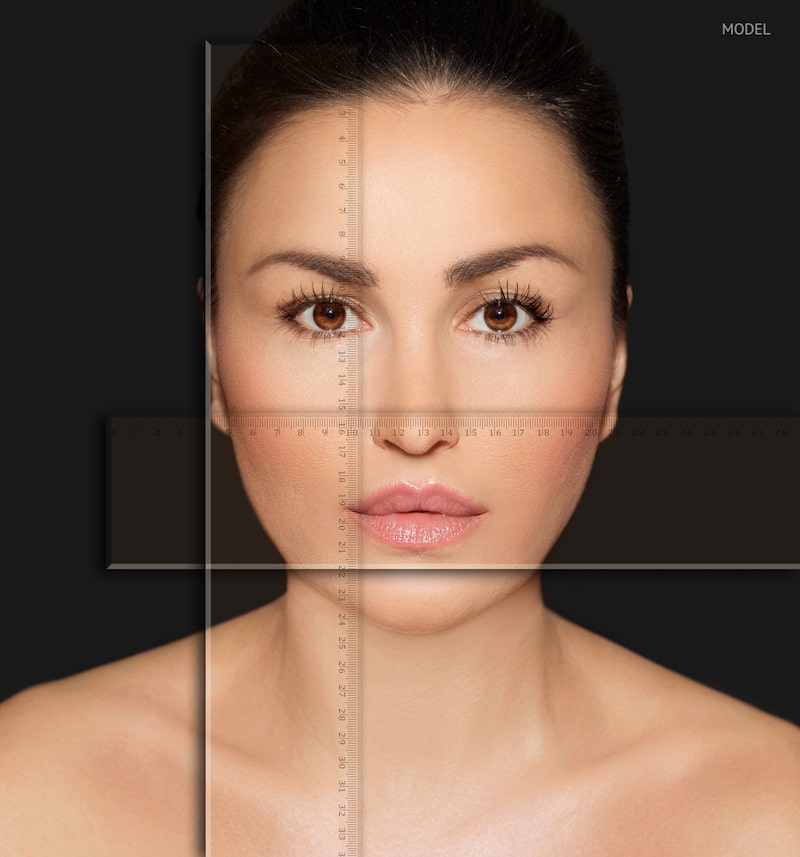
The golden ratio, a mathematical proportion of approximately 1.618 to 1, serves as one framework practitioners use when assessing facial balance. Research by Schmid, Marx, and Samal published in 2009 found a moderate correlation between facial proportions closer to the golden ratio and higher attractiveness scores. Practitioners evaluate facial proportion by dividing the face into three horizontal sections:
- The upper third, from the hairline to the brow line, which frames the forehead and sets the width of the upper face
- The middle third, from the brow line to the base of the nose, which contains the eyes, cheeks, and nasal bridge
- The lower third, from the base of the nose to the chin, which includes the lips, jawline, and chin projection
When these thirds are roughly equal in height and the features within each section sit in balanced proportion, the face reads as harmonious. When one section is disproportionate, whether from genetics, volume loss, or muscle imbalance, the eye perceives the face as uneven. Facial symmetry enhancement addresses those proportional differences to bring the thirds into closer alignment.
Is Facial Asymmetry Normal?
Yes, facial asymmetry is completely normal and affects virtually every person to some degree. Perfectly symmetrical faces are exceptionally rare, with research suggesting that only about 2% of the population falls into that category. Minor differences between the two sides of the face, like one eyebrow sitting slightly higher or one cheek appearing marginally fuller, are a natural part of human anatomy. These small variations often contribute to what makes a face distinctive and recognizable.
Asymmetry becomes a concern when the differences are pronounced enough to affect how someone feels about their appearance. A slightly uneven jawline might go unnoticed in person but become more visible in photographs, video calls, or mirror selfies. The goal of facial symmetry enhancement is not to create a perfectly identical mirror image. Research actually shows that excessive symmetry can appear unnatural and unsettling. The goal is to bring features into closer harmony so the face looks balanced and proportionate without losing its individuality.
What Causes Facial Asymmetry?
Facial asymmetry is caused by a combination of genetic, developmental, behavioral, and age-related factors that affect the bones, muscles, fat pads, and skin differently on each side of the face.
- Genetics determine the baseline structure of the skull, the positioning of the eyes, and the natural contour of the jawline and cheekbones; inherited skeletal differences are the most common cause of structural asymmetry
- Muscle imbalances develop when one side of the face is used more actively than the other, whether from habitual chewing on one side, sleeping consistently on the same side, or repetitive facial expressions
- Trauma from injuries, accidents, or previous surgeries can shift bone alignment, create scar tissue, or alter the soft tissue on one side of the face
- Dental work, including tooth extractions, dentures, and orthodontic changes, affects the jaw position and the muscle tension around the mouth
- Medical conditions like Bell’s palsy, temporomandibular joint (TMJ) disorder, and torticollis create asymmetry through nerve damage or chronic muscle tension
- Lifestyle habits including prolonged sun exposure on one side (such as driving), smoking, and poor posture gradually contribute to uneven skin quality and muscle tone
Why Does the Face Become More Asymmetrical With Age?
The face becomes more asymmetrical with age because the structural components that maintain balance, including fat, bone, collagen, and muscle tone, deteriorate at different rates on each side. According to Scientific American, the body produces approximately 1% less collagen per year after the age of 20. Collagen loss thins the skin and weakens the scaffolding that supports facial volume. Fat pads in the cheeks, temples, and around the eyes descend at uneven rates, creating hollowing on one side before the other.
Bone resorption accelerates these changes further. The maxilla (upper jaw) and mandible (lower jaw) lose density gradually, and this bone loss often progresses asymmetrically. As the skeletal foundation shifts, the soft tissue above it drapes differently on each side. Muscle tone also declines unevenly, since most people favor one side of their face for expressions and chewing. The cumulative effect of uneven collagen loss, fat descent, bone resorption, and muscle imbalance means that a face that appeared relatively balanced at 30 may show noticeably more asymmetry by 50. Facial proportion changes gradually, but the differences compound over decades.
What Is Facial Balancing?
Facial balancing is a comprehensive aesthetic approach that evaluates the entire face as a connected system and uses a combination of injectable and energy-based treatments to restore proportion, symmetry, and harmony across all three facial thirds. Instead of treating a single feature in isolation, like adding volume to the lips alone, facial balancing assesses how every feature relates to every other feature and addresses the relationships between them.
A facial balancing assessment considers cheek volume relative to jawline contour, chin projection relative to forehead height, lip proportion relative to nose size, and brow position relative to eye shape. Patients in the Kansas City metro area often come in focused on one feature, like uneven lips or a weak chin, and leave with a treatment plan that addresses the underlying proportional imbalance rather than just the symptom they noticed first. This whole-face approach produces results that look natural because the correction respects the mathematical relationships between features rather than overcorrecting a single area. According to a large clinical study, patients who received combination treatments for facial balancing had a 65.6% retention rate over five years, significantly higher than patients who received single-area treatment alone.
How Can You Make Your Face More Symmetrical Without Surgery?
You can make your face more symmetrical without surgery by using strategically placed dermal fillers to correct volume differences, neurotoxins like Botox to relax overactive muscles, PDO thread lifts to reposition descended tissue, and energy-based devices to tighten loose skin. Non-surgical facial symmetry enhancement works best for mild to moderate asymmetry caused by volume loss, muscle imbalance, or skin laxity rather than significant skeletal differences. The advantage of non-surgical techniques is that they are reversible, require minimal recovery time, and allow for gradual, controlled adjustments over multiple sessions.
Can Fillers Fix Facial Asymmetry?
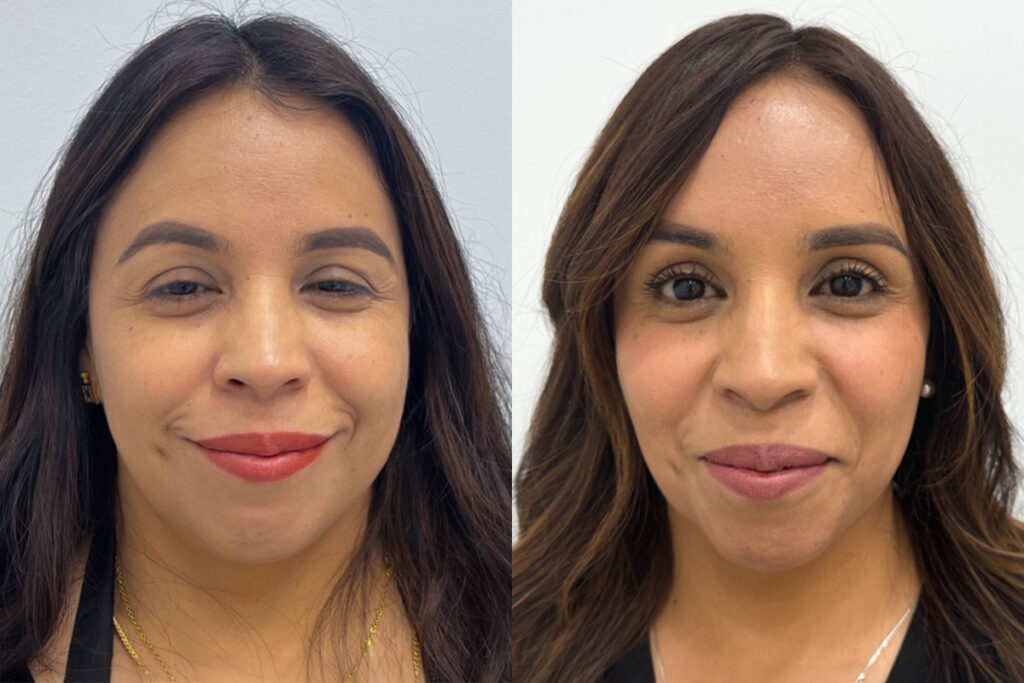
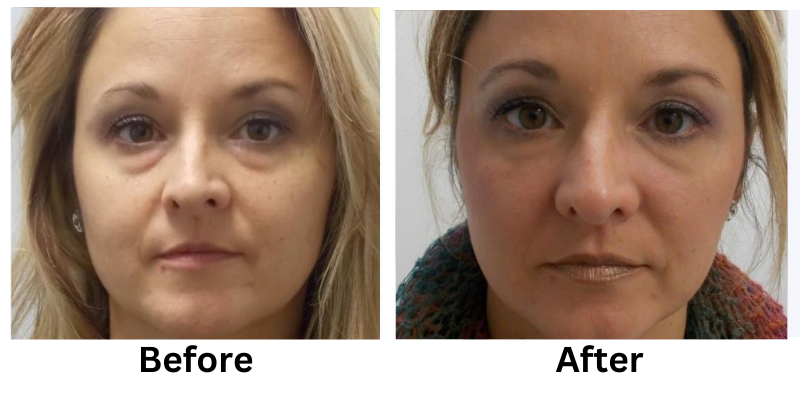
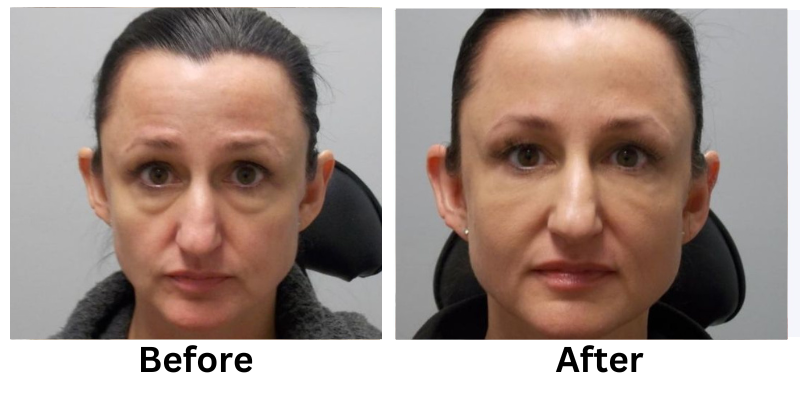
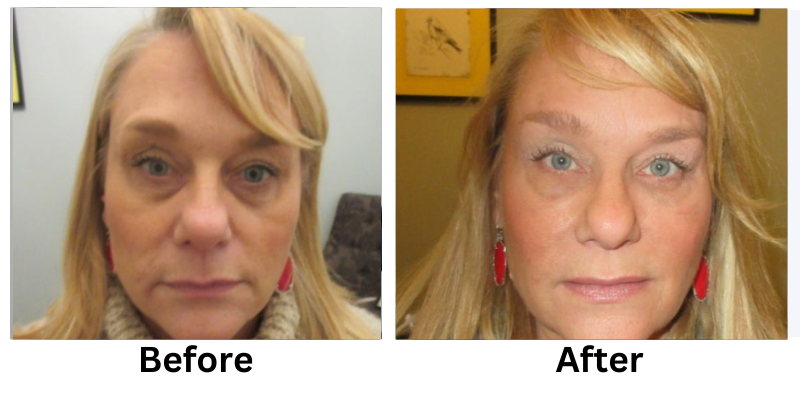
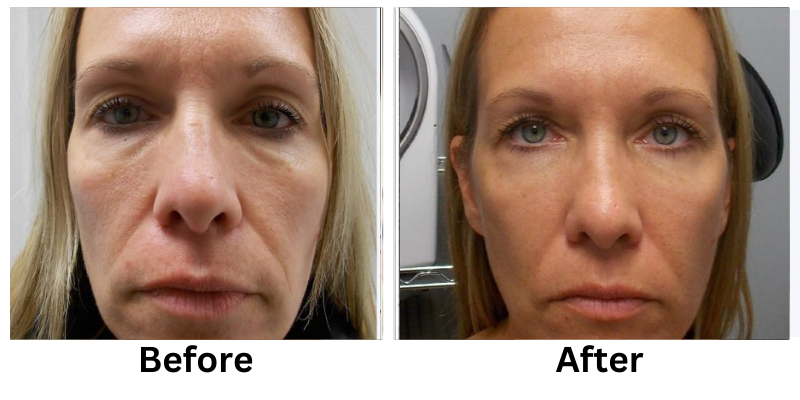
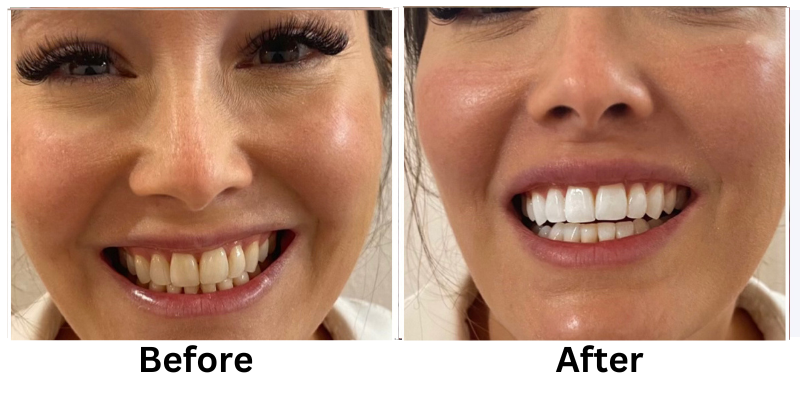
Yes, fillers can fix facial asymmetry caused by volume differences between the two sides of the face. Dermal fillers restore balance by adding volume precisely where one side is flatter, hollower, or less defined than the other. Hyaluronic acid (HA) fillers like Juvederm and Restylane provide immediate volume that can be sculpted during the injection session. Calcium hydroxylapatite fillers like Radiesse add structure and stimulate collagen production for longer-lasting support. A randomized controlled trial involving 159 participants found that filler treatment achieved a 94.3% improvement in global aesthetic appearance and 85.8% patient satisfaction at one month. A separate study of anatomically-guided HA filler for chin and jawline definition reported a 98% satisfaction rate with no major adverse events.
The key to correcting asymmetry with fillers is not simply injecting more product into the smaller or flatter side. A skilled injector evaluates the face three-dimensionally, assessing where volume needs to be added, where it needs to be redistributed, and how much product each side requires to achieve proportional balance. One cheek might need 1 mL of filler while the other needs only 0.5 mL, and the injector may also add a small amount to the chin or jawline to bring the lower third into alignment. This precision is what separates facial balancing from standard filler treatment.
What Areas of the Face Can Fillers Correct for Symmetry?
Fillers can correct symmetry in the cheeks, jawline, chin, lips, under-eye area, temples, and nose. Cheek asymmetry responds well to filler because the midface provides the structural foundation for the entire lower two-thirds of the face. When one cheek is flatter or has descended lower than the other, adding volume to the deficient side lifts the midface and improves the appearance of the nasolabial fold and jowl area on that same side. Restylane Contour is specifically designed for cheek augmentation and moves naturally with facial expressions.
Jawline asymmetry is one of the most visible imbalances because the jawline frames the entire lower face. Filler along the mandibular border can sharpen a weak side, create definition where it is missing, or balance a jaw that appears wider on one side due to muscle bulk. Chin asymmetry, where the chin point deviates to one side or lacks projection, responds to direct filler placement that centers and strengthens the chin. Lip asymmetry, one of the most commonly noticed imbalances, can be corrected by adding volume selectively to the thinner or shorter side. A non-surgical rhinoplasty using filler can smooth out a dorsal bump or correct a nasal deviation without surgery, improving the appearance of facial contouring overall.
Does Botox Help With Facial Symmetry?
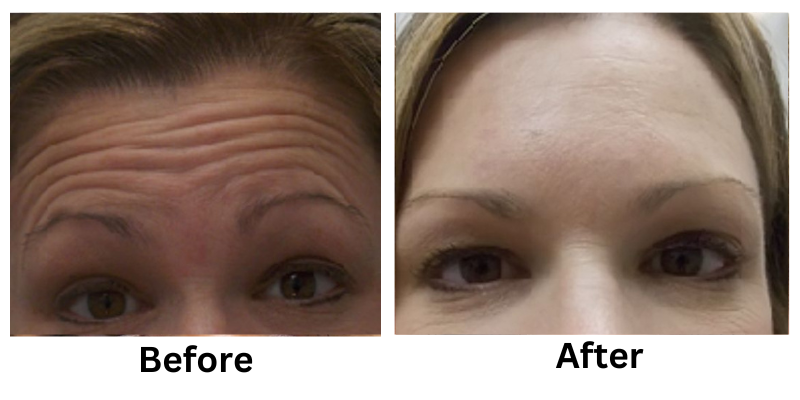
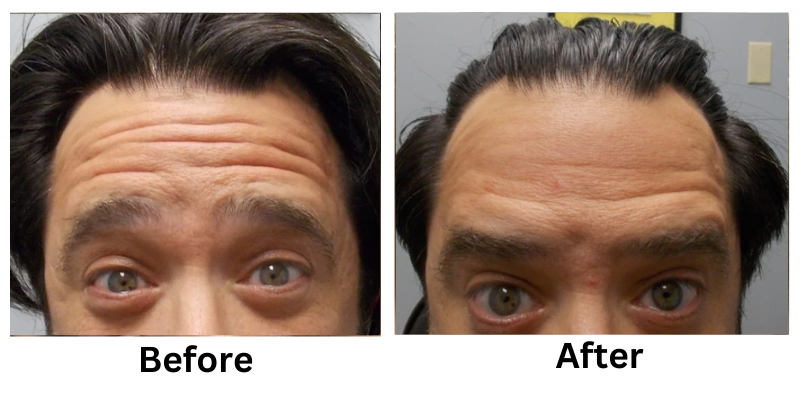
Yes, Botox helps with facial symmetry by relaxing overactive muscles that pull one side of the face differently than the other. While fillers address volume-based asymmetry, Botox addresses movement-based asymmetry. The two types of asymmetry often coexist, which is why combination treatment produces the most balanced outcomes. Botox is particularly effective for correcting uneven eyebrows, a lopsided smile, and jaw asymmetry caused by masseter muscle hypertrophy.
For jaw asymmetry specifically, Botox injected into the masseter muscle on the bulkier side reduces its size over time. Masseter reduction with Botox creates a slimmer, more symmetrical jawline without surgery. The ASPS reported 9,883,711 neurotoxin treatments performed in 2024, a 4% increase from the previous year, and an increasing proportion of those treatments target facial balancing rather than wrinkle reduction alone.
How Does Botox Correct Eyebrow Asymmetry?
Botox corrects eyebrow asymmetry by selectively relaxing the muscles that elevate or depress each brow. When one eyebrow sits higher than the other, the imbalance usually results from the frontalis muscle (the forehead muscle that lifts the brow) being more active on the higher side, or the corrugator and orbicularis oculi muscles pulling the lower brow down more forcefully. A small, precisely placed dose of Botox into the overactive muscle brings the brows into closer alignment.
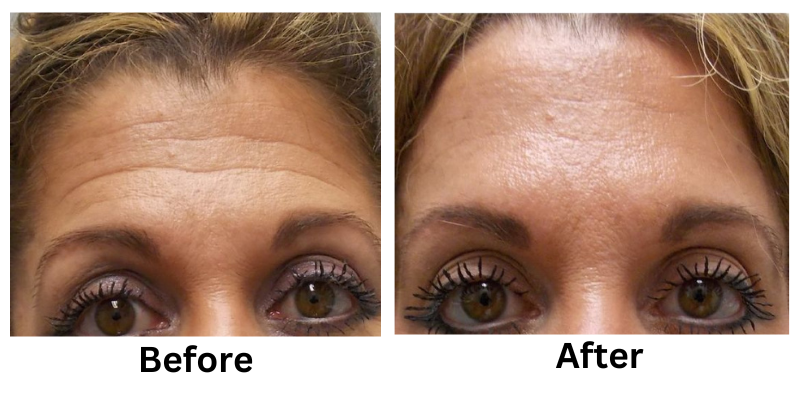
If the right brow sits noticeably higher, injecting a few units of Botox into the frontalis muscle above that brow allows it to relax slightly and drop to match the left. If the left brow is drooping because the depressor muscles are too strong, a small injection near the tail of that brow weakens the pull and allows the brow to lift. The adjustment involves fractions of a milliliter and single-digit unit differences between sides, which is why injector experience matters significantly for symmetry work. Results develop within 3 to 7 days and typically last 3 to 4 months.
Can Thread Lifts Improve Facial Symmetry?
Yes, thread lifts can improve facial symmetry by mechanically repositioning skin and soft tissue that has descended unevenly on one side of the face. PDO (polydioxanone) threads are absorbable sutures placed beneath the skin using a thin needle or cannula. Once positioned, the threads physically lift the tissue and hold it in a higher position while stimulating collagen production around the thread over the following months.
Thread lifts are especially useful for asymmetry involving the cheeks, jowls, and jawline where one side has sagged more than the other. A practitioner can place threads on the more descended side to lift it into alignment with the opposite side. The mechanical lift provides an immediate improvement, and the collagen stimulation around the threads creates a secondary tightening effect that develops over 8 to 12 weeks. Thread lifts complement fillers and Botox because they address the gravitational descent component of asymmetry that volume replacement and muscle relaxation cannot fully correct on their own.
How Do Combination Treatments Produce Better Symmetry Results?
Combination treatments produce better symmetry results because facial asymmetry rarely has a single cause, so addressing it from multiple angles simultaneously creates a more complete and natural-looking correction. A face that appears uneven may have volume loss on one side (filler territory), an overactive muscle pulling a brow down on the other side (Botox territory), and skin laxity along the jawline contributing to jowling (thread lift or skin tightening territory). Treating only one of these factors improves the picture partially but leaves the other contributors untouched.
A coordinated combination protocol might involve Radiesse filler along one side of the jawline for definition, Botox in the masseter on the opposite side to slim a bulkier jaw, and RF microneedling across both sides to improve skin firmness and texture uniformity. The filler addresses structure, the Botox addresses muscle, and the RF microneedling addresses skin quality. When all three layers are treated in a coordinated plan, the cumulative effect is a level of balance that no single treatment could achieve alone. The global dermal filler market, valued at $6.78 billion in 2024, is projected to reach $12.79 billion by 2032, reflecting growing patient demand for these multi-modality approaches.
| Technique | Best For | How It Works | Duration | Key Treatment Areas |
|---|---|---|---|---|
| HA Dermal Fillers | Volume-based asymmetry | Adds volume by binding water beneath the skin | 6-18 months | Cheeks, jawline, chin, lips, under-eyes |
| Biostimulatory Fillers (Sculptra, Radiesse) | Structural volume loss, long-term rebuilding | Stimulates collagen production for gradual volume | 1-2+ years | Cheeks, temples, jawline, chin |
| Botox / Neurotoxins | Muscle-based asymmetry | Relaxes overactive muscles pulling features unevenly | 3-4 months | Brows, jaw (masseter), smile, forehead |
| PDO Thread Lift | Gravitational descent on one side | Mechanically lifts tissue; stimulates collagen | 12-18 months | Cheeks, jowls, jawline, brows |
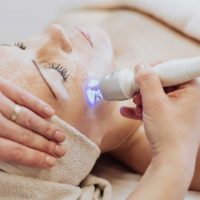
| RF Microneedling | Skin laxity contributing to asymmetry | Thermal collagen remodeling tightens loose skin | 12-18 months per series | Full face, jawline, neck |
Sources: ASPS 2024 Procedural Statistics, clinical trials (NCBI), Galderma and Allergan clinical data, Journal of Craniofacial Surgery
How Long Do Facial Balancing Results Last?
Facial balancing results last anywhere from three months to over two years, depending on the specific combination of treatments used. Botox for muscle-based asymmetry correction lasts approximately 3 to 4 months before the muscle activity gradually returns. HA fillers maintain their volume for 6 to 18 months depending on the product and the treatment area; thicker, more structured fillers like those used in the jawline and cheeks tend to last longer than thinner formulations used in the lips.
Biostimulatory fillers like Sculptra produce results that can last two years or more because the collagen the body builds in response to the PLLA microparticles remains in the tissue after the product itself is absorbed. Thread lift results typically persist for 12 to 18 months, with the collagen stimulated around the threads extending the benefit beyond the threads’ own absorption timeline. A clinical study published in the Journal of Craniofacial Surgery found that correcting three-dimensional facial imbalances improved symmetry scores from 2.1 to 4.2 on a 5-point scale, with the improvement holding through the study’s follow-up period. Maintenance sessions at regular intervals keep the corrections consistent and prevent asymmetry from re-establishing as the treatments gradually wear off.
What Should You Expect During a Facial Symmetry Consultation?
During a facial symmetry consultation, your provider evaluates your face from multiple angles, assesses the proportional relationships between your features, identifies the specific causes of your asymmetry, and builds a treatment plan that addresses each contributing factor. The assessment starts with a detailed analysis of the facial thirds, measuring the vertical proportions between your hairline, brow line, nasal base, and chin point. Horizontal fifths are also evaluated, dividing the face into five equal vertical sections from ear to ear.
Your provider then examines each feature individually, looking for differences in cheek volume, brow height, jaw width, lip fullness, and chin projection between the two sides. Muscle activity is assessed by asking you to make specific expressions, like raising your eyebrows, smiling broadly, and clenching your jaw. These movements reveal which muscles contribute to dynamic asymmetry. Skin quality and laxity are evaluated on each side to determine whether energy-based treatments or threads should be part of the plan. The consultation produces a prioritized treatment map that identifies which corrections will have the greatest visual impact and sequences them in a logical order. We recommend starting with structural corrections (jawline, cheeks, chin) before refining detail areas (lips, brows) because the structural changes affect how the detail areas appear.
Frequently Asked Questions
What Is the Golden Ratio in Facial Aesthetics?
The golden ratio in facial aesthetics is a mathematical proportion of approximately 1.618 to 1 that has been associated with perceived facial attractiveness since antiquity. Practitioners use the golden ratio as a reference framework when evaluating facial proportions, particularly the relationship between the width of the face and the distance between features. Research by Schmid, Marx, and Samal (2009) found that faces closer to golden ratio proportions received moderately higher attractiveness ratings. Modern practice treats the golden ratio as a useful guideline rather than a rigid standard, since individual anatomy, ethnicity, and personal goals all influence what balanced proportions look like for each patient.
What Is the Best Filler for Facial Balancing?
The best filler for facial balancing depends on the area being treated and the type of correction needed. HA fillers like Juvederm Voluma work well for midface volume restoration and cheek augmentation. Restylane Contour moves naturally with expressions and is effective for the cheeks. Radiesse provides structural support and collagen stimulation in the jawline and chin. Fillers and neurotoxins are often combined in a single facial balancing session to address both volume and muscle contributors simultaneously.
How Many Syringes of Filler Do You Need for Facial Balancing?
The number of syringes needed for facial balancing typically ranges from two to six, depending on how many areas need correction and how significant the asymmetry is. A patient who needs only cheek correction on one side might require one to two syringes. A comprehensive facial balancing session that addresses cheeks, jawline, chin, and lips across both sides might use four to six syringes spread across different products and treatment zones. Your provider determines the exact amount during the consultation based on your specific anatomy and goals.
Can Facial Exercises Improve Symmetry?
Facial exercises can improve minor muscle-related asymmetry by strengthening weaker muscles on the less active side of the face. Consistent practice of targeted exercises like jaw clenches, cheek puffs, and brow lifts may produce subtle improvements over several weeks. Facial exercises work best as a complement to professional treatments rather than a replacement, since they cannot add volume, reposition descended fat pads, or address skeletal differences.
Is Perfect Facial Symmetry Attractive?
Perfect facial symmetry is not necessarily more attractive than slight, natural asymmetry. Research shows that while people prefer faces that are broadly symmetrical, faces that are too perfectly mirrored can appear unnatural and unsettling. The goal of professional facial symmetry enhancement is not to create an exact mirror image but to bring the features into closer harmony while preserving the natural character that makes each face distinctive.
Wrapping It Up
Facial asymmetry is part of being human. Nearly everyone has it, and for most people, it falls well within the range of normal. When the differences become noticeable enough to affect how you feel about your appearance, the techniques available today can bring your features into closer balance with precision and subtlety that simply did not exist a decade ago. Fillers restore volume where it is missing. Botox quiets the muscles pulling things out of alignment. Thread lifts reposition what gravity has shifted. Energy-based treatments firm up skin that has loosened unevenly. Used together in a coordinated plan, these techniques create natural-looking harmony that respects your individual features.
We see patients with symmetry concerns every day at our practice in Lee’s Summit. At Slimming Solutions Med Spa, we start every facial balancing plan with a thorough assessment of how your features relate to each other, not just the one area that caught your attention in the mirror. If you are ready to explore how a personalized approach can bring your face into better balance, schedule a consultation and we will map out the best path forward together.
![[thumb]](https://slimmingsolutionsspa.com/wp-content/uploads/2023/12/botox1-150x150.png)
![[thumb]](https://slimmingsolutionsspa.com/wp-content/uploads/2023/12/Before2-150x150.png)
![[thumb]](https://slimmingsolutionsspa.com/wp-content/uploads/2023/12/Before3-150x150.png)


![[thumb]](https://slimmingsolutionsspa.com/wp-content/uploads/2023/12/revanesse-versa-1-150x150.png)
![[thumb]](https://slimmingsolutionsspa.com/wp-content/uploads/2023/12/revanesse-versa-2-150x150.png)
![[thumb]](https://slimmingsolutionsspa.com/wp-content/uploads/2023/12/revanesse-versa-3-150x150.png)
![[thumb]](https://slimmingsolutionsspa.com/wp-content/uploads/2023/12/revanesse-versa-4-150x150.png)
![[thumb]](https://slimmingsolutionsspa.com/wp-content/uploads/2023/12/revanesse-versa-5-150x150.png)
![[thumb]](https://slimmingsolutionsspa.com/wp-content/uploads/2024/01/Eyebrow-treatment-1-1-150x150.png)
![[thumb]](https://slimmingsolutionsspa.com/wp-content/uploads/2023/12/Skin-Rejuvenation-1-150x150.png)
![[thumb]](https://slimmingsolutionsspa.com/wp-content/uploads/2023/12/Skin-Rejuvenation-2-150x150.png)


![[thumb]](https://slimmingsolutionsspa.com/wp-content/uploads/2024/01/Lip-Filler-1-150x150.png)
![[thumb]](https://slimmingsolutionsspa.com/wp-content/uploads/2024/01/Lip-Filler-2-150x150.png)
![[thumb]](https://slimmingsolutionsspa.com/wp-content/uploads/2025/02/Lip-Filler-1-150x150.png)
![[thumb]](https://slimmingsolutionsspa.com/wp-content/uploads/2024/01/Lip-Filler-150x150.jpg)
![[thumb]](https://slimmingsolutionsspa.com/wp-content/uploads/2024/01/Before-1-150x150.jpg)

![[thumb]](https://slimmingsolutionsspa.com/wp-content/uploads/2024/01/RHA-Treatmetn-3-150x150.png)
![[thumb]](https://slimmingsolutionsspa.com/wp-content/uploads/2024/01/RHA-Treatmetn-2-150x150.png)
![[thumb]](https://slimmingsolutionsspa.com/wp-content/uploads/2024/01/RHA-Treatmetn-1-150x150.png)
![[thumb]](https://slimmingsolutionsspa.com/wp-content/uploads/2024/01/Thread-Lifts-1-150x150.png)
![[thumb]](https://slimmingsolutionsspa.com/wp-content/uploads/2024/01/Thread-Lifts-2-150x150.png)
![[thumb]](https://slimmingsolutionsspa.com/wp-content/uploads/2025/02/Lip-Filler-2-150x150.png)

![[thumb]](https://slimmingsolutionsspa.com/wp-content/uploads/2023/12/skin-reuvulation1-150x150.png)
![[thumb]](https://slimmingsolutionsspa.com/wp-content/uploads/2023/12/skin-rejuvulation-2-150x150.png)
![[thumb]](https://slimmingsolutionsspa.com/wp-content/uploads/2023/12/Skin-Tighting-150x150.png)
![[thumb]](https://slimmingsolutionsspa.com/wp-content/uploads/2023/12/Before-150x150.jpg)
![[thumb]](https://slimmingsolutionsspa.com/wp-content/uploads/2023/12/weightloss-1-150x150.png)
![[thumb]](https://slimmingsolutionsspa.com/wp-content/uploads/2023/12/weightloss-2-150x150.png)
![[thumb]](https://slimmingsolutionsspa.com/wp-content/uploads/2023/12/2Weight-Loss-2-150x150.png)
![[thumb]](https://slimmingsolutionsspa.com/wp-content/uploads/2025/02/Weight-Loss-1-new-150x150.png)
![[thumb]](https://slimmingsolutionsspa.com/wp-content/uploads/2023/12/Weight-Loss-3-150x150.png)
![[thumb]](https://slimmingsolutionsspa.com/wp-content/uploads/2025/03/Slimming-Solutions-BA-Template-150x150.png)


![[thumb]](https://slimmingsolutionsspa.com/wp-content/uploads/2023/12/dat3-150x150.png)
![[thumb]](https://slimmingsolutionsspa.com/wp-content/uploads/2023/12/dat-0-150x150.png)
![[thumb]](https://slimmingsolutionsspa.com/wp-content/uploads/2023/12/dat-1-150x150.png)
![[thumb]](https://slimmingsolutionsspa.com/wp-content/uploads/2023/12/Before-1-150x150.png)

![[thumb]](https://slimmingsolutionsspa.com/wp-content/uploads/2024/01/EMS-Treatment-2-150x150.png)
![[thumb]](https://slimmingsolutionsspa.com/wp-content/uploads/2024/01/EMS-Treatment-1-150x150.png)
![[thumb]](https://slimmingsolutionsspa.com/wp-content/uploads/2025/02/ems-BNA-front-150x150.png)
![[thumb]](https://slimmingsolutionsspa.com/wp-content/uploads/2025/02/EMS-bna-SIDE-150x150.png)
![[thumb]](https://slimmingsolutionsspa.com/wp-content/uploads/2024/01/EMS-Treatment-6-150x150.png)