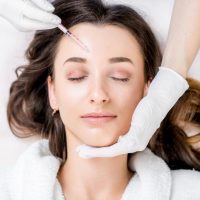
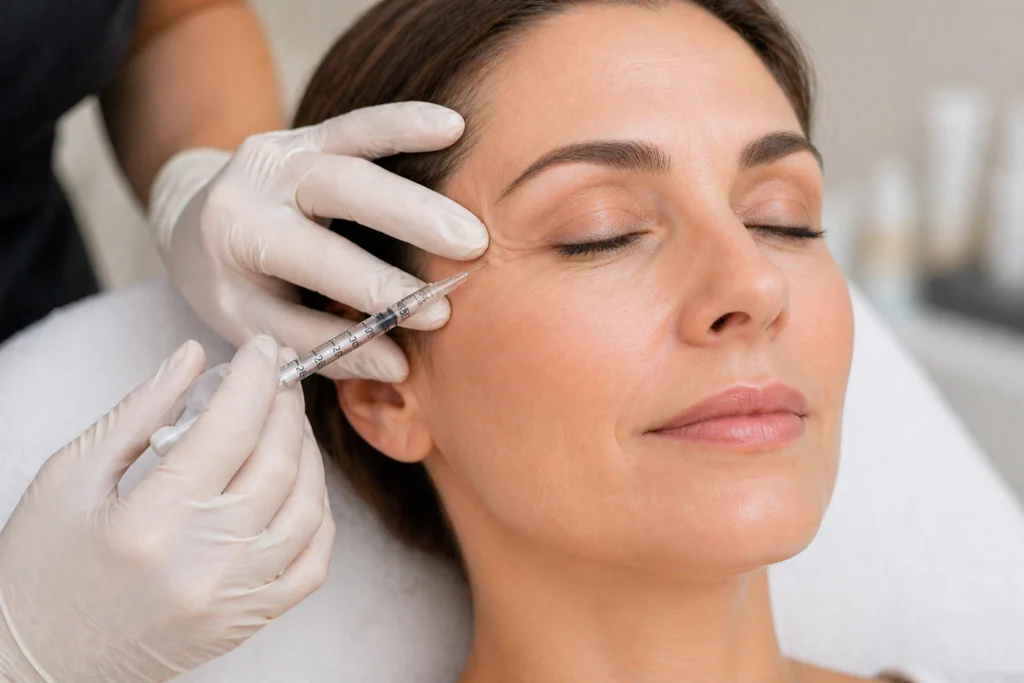
Yes, you can get Botox under your eyes, but it is an advanced and delicate treatment used for two specific problems: the fine horizontal lines that appear when you smile or squint, and the small muscle bulge under the lower lash line that injectors call a jelly roll. It does not treat eye bags, dark circles, or hollows. Those come from fat, pigment, and lost volume rather than from muscle movement.
Below we cover what under-eye Botox actually relaxes, where its limits sit, how it compares with filler for each separate concern, how many units a treatment uses, what the safety research shows, and how long results hold.
Can You Get Botox Under Your Eyes?
You can get Botox under your eyes when a trained injector judges that muscle movement is causing the problem you want solved. The muscle responsible is the orbicularis oculi, a thin ring of muscle that circles the eye and sits directly beneath skin barely a fraction of a millimeter thick. Relaxing a small portion of that ring softens the crinkles it creates.
Creating those crinkles is the only job Botox interrupts, which is why injectors treat the lower eyelid conservatively and selectively. The U.S. Food and Drug Administration has approved Botox treatments for three cosmetic areas: glabellar frown lines, crow’s feet, and forehead lines. Lower eyelid treatment falls outside that list, which makes it an off-label use that experienced providers perform with lower doses than any other facial area.
Lower doses and selective treatment are the entire reason this works safely. Botulinum toxin was the most common non-surgical cosmetic procedure worldwide in 2024, with 7.8 million treatments performed by plastic surgeons according to the ISAPS Global Survey, and the under-eye area represents a small, carefully handled fraction of that volume.
What Does Botox Under the Eyes Do?
Botox under the eyes relaxes the lower portion of the orbicularis oculi so the skin above it creases less when you smile or squint. The result is a smoother lower eyelid surface and a softer muscle bulge, not a change in volume, color, or skin quality.
Volume, color, and skin quality each have their own causes, so each needs its own treatment. Botox addresses movement. Three things change with treatment and three things do not, and knowing which is which prevents the most common disappointment with this procedure.
Movement-driven fine lines soften first. The jelly roll flattens next. The eye aperture sometimes opens slightly, an effect we cover further down. Bags, dark circles, and loose skin stay exactly as they were.
What Is the Under-Eye Jelly Roll?
The under-eye jelly roll is the rounded ridge of muscle that pushes forward just below the lower lash line when you smile. That ridge is the pretarsal portion of the orbicularis oculi contracting, not fat and not swelling, which is why relaxing it with a very small dose can flatten it.
Flattening it changes the shape of the smile rather than the shape of the eye at rest. A prominent jelly roll is often a feature of a strong, expressive smile, so some patients like it and leave it alone. Treatment is a preference, not a correction, and it sits alongside the other areas Botox treats as an optional refinement.
Why Do Wrinkles Appear Under Your Eyes When You Smile?
Wrinkles appear under your eyes when you smile because the orbicularis oculi contracts and folds the thin skin lying over it. Skin in this zone is the thinnest on the body, it carries very little fat padding, and it moves every time you blink, squint, or laugh.
Blinking alone happens thousands of times a day, which is why lines show up earlier here than anywhere else on the face. Early lines that only appear during expression are called dynamic lines, and dynamic lines are the specific target Botox was built for.
Does Botox Help With Bags Under the Eyes?
No, Botox does not help with bags under the eyes. Eye bags are pockets of fat that have pushed forward through a weakening membrane, along with fluid that collects overnight. Neither one responds to muscle relaxation, because neither one is caused by muscle.
Muscle has no role in how those fat pads sit, so relaxing it changes nothing about them. In some cases a relaxed lower eyelid muscle makes a fat pad look slightly more visible, since the muscle was providing a small amount of support. This is one reason conservative dosing matters so much in this zone.
Supporting the area properly calls for a different tool. Fat pads and the under-eye hollows that often sit right beneath them respond to volume replacement or to treatments that firm the overlying skin, which is a separate conversation from wrinkle relaxers.
Can Botox Get Rid of Dark Circles Under Your Eyes?
No, Botox cannot get rid of dark circles under your eyes. Dark circles come from three sources: pigment in the skin, blood vessels showing through thin skin, and shadows cast by a hollow at the tear trough. Botox affects none of the three.
Shadows cast by hollowing are the one source that responds well to another injectable, since filling the hollow removes the shadow. Pigment responds to resurfacing and brightening treatments. Visible vessels respond to light-based treatments. Matching the cause to the right tool is the whole exercise.
Can Botox Cause Bags Under Your Eyes?
Botox does not create bags, though too much product in the lower eyelid can make the area look slightly puffier for a few weeks. The orbicularis oculi helps pump fluid away from the lower lid, so over-relaxing it can let fluid linger temporarily.
Temporary fluid retention is dose-dependent and avoidable, which is why injectors use a fraction of the dose here that they use anywhere else on the face. A published full-face protocol from the Hexsel Dermatology Clinic illustrates the gap clearly: 5 units for the lower eyelid against 70 units for the crow’s feet area in the same treatment plan. Patients with existing lower eyelid puffiness or weak eyelid tone are usually steered toward a different treatment entirely.
Is Botox or Filler Better for Under-Eye Concerns?
Botox is better for under-eye lines caused by movement, and filler is better for hollowing, shadowing, and lost volume. Neither is better overall, because they solve different problems, and many patients get the best outcome from a combination.
Combining them works because each one covers the other’s blind spot. The grid below maps each common under-eye complaint to the treatment that addresses its actual cause, with durations drawn from the clinical literature and manufacturer labeling for each product class.
| What You See | What Causes It | What Treats It | Typical Duration |
|---|---|---|---|
| Fine lines only when you smile | Orbicularis oculi contraction | Botox, very low dose | 3 to 4 months |
| Muscle ridge or jelly roll | Pretarsal muscle bulging | Botox, very low dose | 3 to 4 months |
| Lines visible at rest | Collagen loss and thin skin | Resurfacing or RF microneedling | Builds over months |
| Hollow or sunken tear trough | Volume loss and fat descent | Hyaluronic acid filler | 9 to 12 months |
| Dark shadowed circles | Hollowing casting a shadow | Hyaluronic acid filler | 9 to 12 months |
| Brown or pigmented circles | Melanin in the skin | Resurfacing or light therapy | Varies by protocol |
| Puffy bags | Fat pads pushing forward | Surgical referral | Long term |
| Crepey, loose texture | Skin laxity | Skin tightening or resurfacing | Builds over months |
Reading across that grid, most people arrive wanting one thing and find that two of the eight rows apply to them. We see this constantly at consultations, and it is why we assess the area at rest and in motion before recommending dermal fillers, a wrinkle relaxer, or both.
What Is the Best Treatment for Under-Eye Wrinkles?
The best treatment for under-eye wrinkles depends on whether the wrinkles disappear when your face is still. Lines that vanish at rest are dynamic and respond to Botox. Lines that stay visible when your face is relaxed are static, and static lines need collagen stimulation rather than muscle relaxation.
Collagen stimulation comes from treatments that work on the skin itself. RF microneedling builds collagen through controlled micro-injury combined with radiofrequency energy, and laser resurfacing improves texture and tone across the whole eye zone. Many patients run both tracks, relaxing movement with one treatment while rebuilding skin quality with another.
How Many Units of Botox Are Used Under the Eyes?
Under-eye Botox typically uses 2 to 4 units per eye, which is the smallest dose used anywhere on the face. That amount is a fraction of what the same muscle receives at its outer corner. The landmark dose-response trial led by Lowe and the Botox Facial Aesthetics Study Team tested 3, 6, 12, and 18 units per side on crow’s feet and concluded that 12 units per side was the most appropriate dose, roughly four times what the lower eyelid receives.
Receiving four times less product is deliberate rather than cautious guesswork. Research by Flynn and colleagues published in Dermatologic Surgery tested just 2 units in the lower eyelid and recorded measurable improvement, and a follow-up dose-finding study compared 4 units against 8 units in the same location. The research consistently shows that this area responds to very little.
Very little product also means the dose is set per patient rather than by a chart. Your injector evaluates eyelid tone, muscle strength, and how the area behaves when you smile before deciding. The same individualized approach applies to the units of Botox used in every other facial zone.
Where Is Botox Placed for Under-Eye Treatment?
Botox for under-eye treatment is placed in the lower portion of the orbicularis oculi, just beneath the lower lash line, and it is always administered by a trained medical provider. This is not a treatment anyone should attempt to map out or perform themselves, because the muscles that open the eye and move the eyeball sit millimeters away.
Millimeters of separation are exactly why placement depth and spacing are decisions made by a provider who has studied periocular anatomy. During your consultation we assess the area while you smile and squint so the plan reflects how your muscles actually move, then explain what we are treating and what we are deliberately leaving alone.
Is Botox Under the Eyes Safe?
Botox under the eyes is safe in experienced hands, and the research shows that injector experience is the single largest variable in outcomes. A multicenter study conducted by Allergan and reported in the Journal of Cosmetic Dermatology found that botulinum-induced eyelid droop occurred in 5.4 percent of cases handled by inexperienced injectors, compared with under 1 percent among experienced injectors.
Experienced injectors reduce that risk by more than fivefold, which reframes the entire safety question. The same review put the overall rate of eyelid ptosis at roughly 2.5 percent across botulinum toxin patients and noted that eyelid droop appeared in no placebo group in any reviewed trial, confirming the effect is tied to product placement rather than to the injection itself. A separate review by Cavallini and colleagues examined 35 studies covering more than 8,000 patients and reached similar conclusions.
Similar conclusions come from the broader trial data as well. In an Allergan trial treating crow’s feet and frown lines, serious adverse events occurred in 1.64 percent of patients receiving 44 units, slightly below the 1.96 percent recorded in the placebo group. Dose and location drive risk far more than the product does, which is visible in the Botox prescribing information: at an average of 33 units per eye for a medical eyelid-spasm condition, ptosis was reported in 21 percent of patients, a dose roughly ten times what cosmetic under-eye treatment uses.
Ten times less product in the hands of a dedicated injector is the practical safety margin. Nurse Joi has been a certified Master Injector since 2014 and injects five days a week in Lee’s Summit, and that volume of practice is the reason we are comfortable offering neurotoxin treatment in a zone many providers decline to treat at all.
Can Botox Affect Your Eyes or Vision?
Botox can temporarily affect the eyelid rather than vision itself when product spreads beyond the intended muscle. The reported effects are a drooping upper eyelid, a dry or gritty sensation on the eye surface, and in rare cases brief double vision. Each one resolves on its own as the product wears off.
Wearing off is the reassuring part of every side effect in this area, since nothing about botulinum toxin is permanent. The Botox prescribing information shows how strongly placement governs outcomes, reporting ptosis rates ranging from 1 percent to 38 percent depending purely on which muscle was injected during medical eye-muscle treatment.
Can Botox Cause Bruising Under the Eyes?
Botox can cause bruising under the eyes because the skin there is thin and carries a dense network of small blood vessels. Bruising in this zone is more visible than elsewhere on the face for the same reason that dark circles are: there is very little tissue hiding what sits beneath.
Hiding a bruise is easier to avoid than to manage, so preparation does most of the work. Avoiding alcohol for 24 hours beforehand and pausing blood-thinning supplements such as fish oil, garlic, and over-the-counter anti-inflammatories for about a week, where your physician agrees it is appropriate, meaningfully lowers the chance. Any bruising that does appear typically clears within several days.
Does Botox on Your Forehead Affect Your Eyes?
Botox on your forehead affects your eyes indirectly by changing how your brows sit. The frontalis muscle across the forehead is the only muscle that lifts the brows, so relaxing it too heavily or too low can let the brows settle, which makes the upper lids feel heavier and the eyes look smaller.
Looking smaller is a placement issue rather than a product issue, and it is why skilled injectors treat the forehead and the frown lines as a balanced pair rather than separately. Treating the glabellar frown muscles actually releases downward pull on the inner brow, which is the mechanism behind an intentional brow lift.
Can Botox Lift Your Eyes?
Botox can lift your eyes in two ways: by raising the brow when the muscles that pull it downward are relaxed, and by slightly widening the eye opening when the lower eyelid muscle is relaxed. The second effect is measurable. Flynn and colleagues found that 40 percent of subjects treated in the lower eyelid alone showed an increased palpebral aperture, meaning a wider eye opening, and that figure rose to 86 percent when the lateral orbital area was treated at the same time.
Treating both areas together also produced the better subjective result, with patients rating their improvement 0.73 for the lower eyelid alone against 1.9 for the combined approach. The measured widening averaged 0.5 millimeters at rest and 1.3 millimeters at full smile, which is subtle by design rather than dramatic.
Subtle widening is the realistic expectation, and it pairs naturally with the eyebrow lift effect that comes from treating the muscles above the eye. Neither replaces surgery for significant eyelid hooding.
How Long Does Botox Under the Eyes Last?
Botox under the eyes lasts 3 to 4 months, the same duration as Botox anywhere else on the face. Results do not appear immediately, and they do not disappear suddenly either. The effect builds over about two weeks and then fades gradually as muscle movement returns.
Returning movement follows a predictable sequence that is worth knowing before your first treatment:
- Days 1 to 2. No visible change. Any redness or small bumps from the injections settle within hours.
- Days 3 to 7. Early smoothing becomes noticeable as the muscle begins to relax.
- Days 10 to 14. Full effect. This is the point to assess your result and the point at which any adjustment would be discussed.
- Weeks 3 to 10. The result holds steady. This is the stretch most patients think of as their result.
- Weeks 11 to 16. Movement gradually returns and lines begin to reappear during expression.
- Month 4 onward. Most patients schedule their next treatment here to keep the area consistently smooth.
Scheduling consistently tends to produce better results over time, since lines have less opportunity to etch into the skin between sessions. This timeline holds across treatment areas, which is covered in more detail in our post on how long Botox lasts.
Who Is a Good Candidate for Under-Eye Botox?
A good candidate for under-eye Botox has fine lines or a muscle bulge that appears with expression, healthy lower eyelid tone, and realistic expectations about what muscle relaxation can change. Candidacy here is narrower than for any other facial area, which is a feature of the treatment rather than a limitation.
Signs that point toward a good outcome include the following:
- Lines under the eyes that appear when you smile and vanish when your face is relaxed
- A visible jelly roll ridge below the lash line during a full smile
- Good lower eyelid snap and tone, which your injector checks during assessment
- No active eye surface conditions such as significant dry eye
- Prior comfortable experience with Botox in other facial areas
- Goals focused on softening movement rather than removing bags or dark circles
- Willingness to combine treatments if more than one cause is present
Combining treatments comes up often because most under-eye complaints have more than one cause. Patients worried about looking expressionless are usually reassured once they see how little product this area takes, a concern we address more fully in our post on whether Botox gives you a frozen look.
At What Age Is Botox Most Effective?
Botox is most effective during the years when lines appear with movement but have not yet set into the skin at rest, which for most people falls between the mid-thirties and early fifties. The ISAPS Global Survey reports that patients aged 35 to 50 account for 47.0 percent of all botulinum toxin treatments worldwide, and the American Society of Plastic Surgeons has tracked 4.7 million botulinum toxin type A procedures in a single year, a 6 percent annual increase.
Increases at both ends of that range are common now. Younger patients treat early to keep dynamic lines from etching in, and older patients get real softening of movement lines while pairing treatment with resurfacing for the static lines that remain. Age matters far less than whether your lines move.
How Do You Get the Best Results From Under-Eye Botox?
You get the best results from under-eye Botox by choosing an injector with deep periocular experience, preparing properly, and following aftercare for the first day. The first of those three carries the most weight, given the fivefold difference in complication rates between experienced and inexperienced injectors documented in the research.
Documented differences in outcome also come down to small, practical habits in the hours around treatment. Skip alcohol the day before, pause blood-thinning supplements for about a week where your physician agrees, and arrive without eye makeup. Afterward, stay upright for four hours, avoid rubbing the area, skip strenuous exercise until the next day, and use a cool compress if there is any swelling.
Swelling and small bumps settle quickly, and the real result arrives around the two-week mark. Booking your assessment at that point lets your injector see the finished effect and plan any refinement for next time, which is how we approach Botox Cosmetic in every delicate treatment zone.
Frequently Asked Questions
Does Botox Work Under the Eyes?
Botox works under the eyes for lines and muscle bulging caused by movement, and it does not work for bags, dark circles, or hollows. Research by Flynn and colleagues in Dermatologic Surgery recorded measurable improvement in lower eyelid wrinkles using doses as small as 2 units per side, with better results when the outer eye area was treated at the same time.
Is Under-Eye Botox FDA Approved?
Under-eye Botox is not FDA approved, making it an off-label use. The FDA has approved Botox Cosmetic for glabellar frown lines, crow’s feet, and forehead lines. Off-label does not mean unstudied or prohibited; it means a provider is applying an approved medication to an area outside the labeled indications, which is legal and common throughout medicine.
How Much Does Botox Under the Eyes Cost?
Botox under the eyes is priced by the number of units used, so the small doses this area requires make it one of the less expensive treatment zones. Because the dose depends on your muscle strength and the result you want, an accurate figure comes from an in-person assessment rather than from a published list.
Does Botox Under the Eyes Hurt?
Botox under the eyes involves minimal discomfort, usually described as a quick pinch lasting a second or two per injection point. Providers often apply a topical numbing cream first because the skin in this zone is thin and sensitive. The whole treatment takes roughly 10 to 15 minutes.
Can Botox and Filler Be Done Under the Eyes at the Same Time?
Botox and filler can be done under the eyes at the same time, and combining them is often the approach that produces the most complete result. Botox handles the movement lines while filler replaces the volume creating hollows and shadows. Your injector decides the sequence and whether to stage them across two visits based on your anatomy.
Can You Reverse Under-Eye Botox?
Under-eye Botox cannot be reversed with a dissolving agent the way hyaluronic acid filler can, but it does wear off completely on its own within 3 to 4 months. Because the doses used in this area are so small, any result a patient dislikes is typically subtle and short-lived.
How Soon Can You Repeat Under-Eye Botox?
Under-eye Botox is typically repeated every 3 to 4 months, once movement begins returning to the treated muscle. Treating sooner than three months is generally avoided, since spacing treatments appropriately keeps results consistent over the long run.
The Bottom Line
Under-eye Botox is a real option with a narrow and well-defined job: softening the fine lines that appear when you smile and flattening the muscle ridge below the lash line. It uses a fraction of the dose any other facial area receives, it lasts 3 to 4 months, and the research is clear that the person holding the syringe matters more here than anywhere else on the face. What it will not do is remove bags, erase dark circles, or fill hollows, and any provider who promises otherwise is describing a different treatment.
If the lines you want gone disappear when your face is still, this is likely the right tool, and if they do not, there is a better one waiting. Our team in Lee’s Summit is happy to look at the area with you and say plainly which category you fall into. Reach out to Slimming Solutions Med Spa at (816) 524-3438 whenever you would like to talk it through.
![[thumb]](https://slimmingsolutionsspa.com/wp-content/uploads/2023/12/botox1-150x150.png)
![[thumb]](https://slimmingsolutionsspa.com/wp-content/uploads/2023/12/Before2-150x150.png)
![[thumb]](https://slimmingsolutionsspa.com/wp-content/uploads/2023/12/Before3-150x150.png)
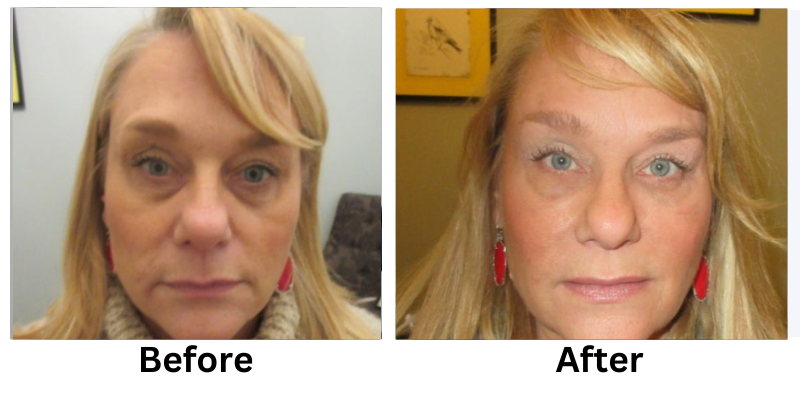


![[thumb]](https://slimmingsolutionsspa.com/wp-content/uploads/2023/12/revanesse-versa-1-150x150.png)
![[thumb]](https://slimmingsolutionsspa.com/wp-content/uploads/2023/12/revanesse-versa-2-150x150.png)
![[thumb]](https://slimmingsolutionsspa.com/wp-content/uploads/2023/12/revanesse-versa-3-150x150.png)
![[thumb]](https://slimmingsolutionsspa.com/wp-content/uploads/2023/12/revanesse-versa-4-150x150.png)
![[thumb]](https://slimmingsolutionsspa.com/wp-content/uploads/2023/12/revanesse-versa-5-150x150.png)
![[thumb]](https://slimmingsolutionsspa.com/wp-content/uploads/2024/01/Eyebrow-treatment-1-1-150x150.png)
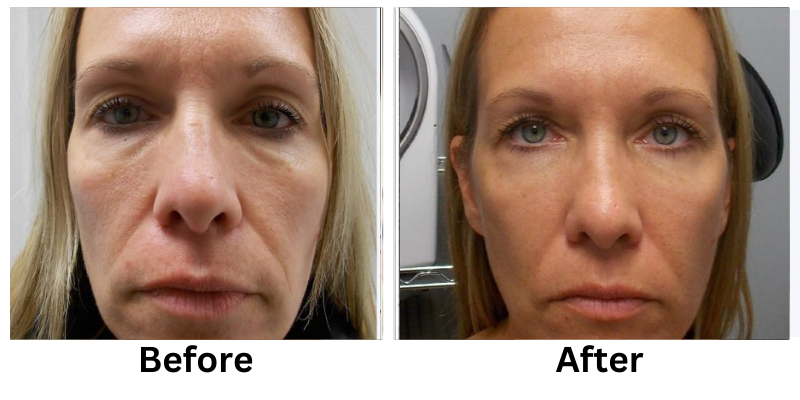
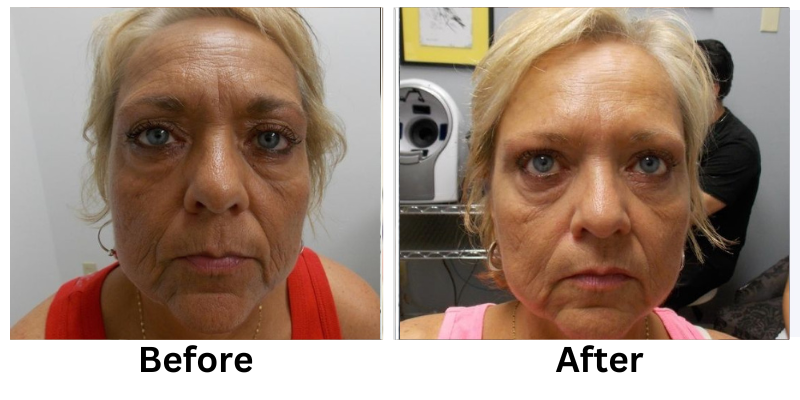
![[thumb]](https://slimmingsolutionsspa.com/wp-content/uploads/2023/12/Skin-Rejuvenation-1-150x150.png)
![[thumb]](https://slimmingsolutionsspa.com/wp-content/uploads/2023/12/Skin-Rejuvenation-2-150x150.png)


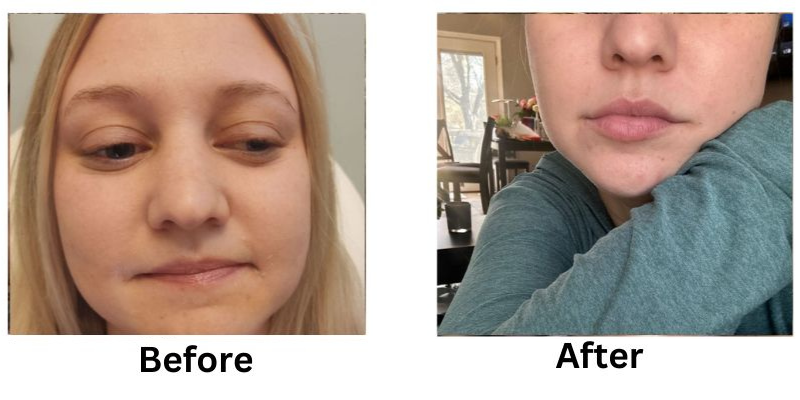
![[thumb]](https://slimmingsolutionsspa.com/wp-content/uploads/2024/01/Lip-Filler-1-150x150.png)
![[thumb]](https://slimmingsolutionsspa.com/wp-content/uploads/2024/01/Lip-Filler-2-150x150.png)
![[thumb]](https://slimmingsolutionsspa.com/wp-content/uploads/2025/02/Lip-Filler-1-150x150.png)
![[thumb]](https://slimmingsolutionsspa.com/wp-content/uploads/2024/01/Lip-Filler-150x150.jpg)
![[thumb]](https://slimmingsolutionsspa.com/wp-content/uploads/2024/01/Before-1-150x150.jpg)

![[thumb]](https://slimmingsolutionsspa.com/wp-content/uploads/2024/01/RHA-Treatmetn-3-150x150.png)
![[thumb]](https://slimmingsolutionsspa.com/wp-content/uploads/2024/01/RHA-Treatmetn-2-150x150.png)
![[thumb]](https://slimmingsolutionsspa.com/wp-content/uploads/2024/01/RHA-Treatmetn-1-150x150.png)
![[thumb]](https://slimmingsolutionsspa.com/wp-content/uploads/2024/01/Thread-Lifts-1-150x150.png)
![[thumb]](https://slimmingsolutionsspa.com/wp-content/uploads/2024/01/Thread-Lifts-2-150x150.png)
![[thumb]](https://slimmingsolutionsspa.com/wp-content/uploads/2025/02/Lip-Filler-2-150x150.png)

![[thumb]](https://slimmingsolutionsspa.com/wp-content/uploads/2023/12/skin-reuvulation1-150x150.png)
![[thumb]](https://slimmingsolutionsspa.com/wp-content/uploads/2023/12/skin-rejuvulation-2-150x150.png)
![[thumb]](https://slimmingsolutionsspa.com/wp-content/uploads/2023/12/Skin-Tighting-150x150.png)
![[thumb]](https://slimmingsolutionsspa.com/wp-content/uploads/2023/12/Before-150x150.jpg)
![[thumb]](https://slimmingsolutionsspa.com/wp-content/uploads/2023/12/weightloss-1-150x150.png)
![[thumb]](https://slimmingsolutionsspa.com/wp-content/uploads/2023/12/weightloss-2-150x150.png)
![[thumb]](https://slimmingsolutionsspa.com/wp-content/uploads/2023/12/2Weight-Loss-2-150x150.png)
![[thumb]](https://slimmingsolutionsspa.com/wp-content/uploads/2025/02/Weight-Loss-1-new-150x150.png)
![[thumb]](https://slimmingsolutionsspa.com/wp-content/uploads/2023/12/Weight-Loss-3-150x150.png)
![[thumb]](https://slimmingsolutionsspa.com/wp-content/uploads/2025/03/Slimming-Solutions-BA-Template-150x150.png)


![[thumb]](https://slimmingsolutionsspa.com/wp-content/uploads/2023/12/dat3-150x150.png)
![[thumb]](https://slimmingsolutionsspa.com/wp-content/uploads/2023/12/dat-0-150x150.png)
![[thumb]](https://slimmingsolutionsspa.com/wp-content/uploads/2023/12/dat-1-150x150.png)
![[thumb]](https://slimmingsolutionsspa.com/wp-content/uploads/2023/12/Before-1-150x150.png)

![[thumb]](https://slimmingsolutionsspa.com/wp-content/uploads/2024/01/EMS-Treatment-2-150x150.png)
![[thumb]](https://slimmingsolutionsspa.com/wp-content/uploads/2024/01/EMS-Treatment-1-150x150.png)
![[thumb]](https://slimmingsolutionsspa.com/wp-content/uploads/2025/02/ems-BNA-front-150x150.png)
![[thumb]](https://slimmingsolutionsspa.com/wp-content/uploads/2025/02/EMS-bna-SIDE-150x150.png)
![[thumb]](https://slimmingsolutionsspa.com/wp-content/uploads/2024/01/EMS-Treatment-6-150x150.png)