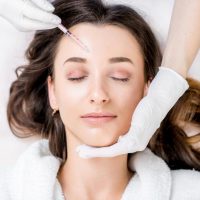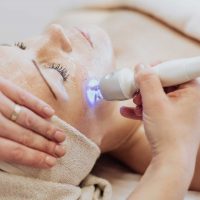
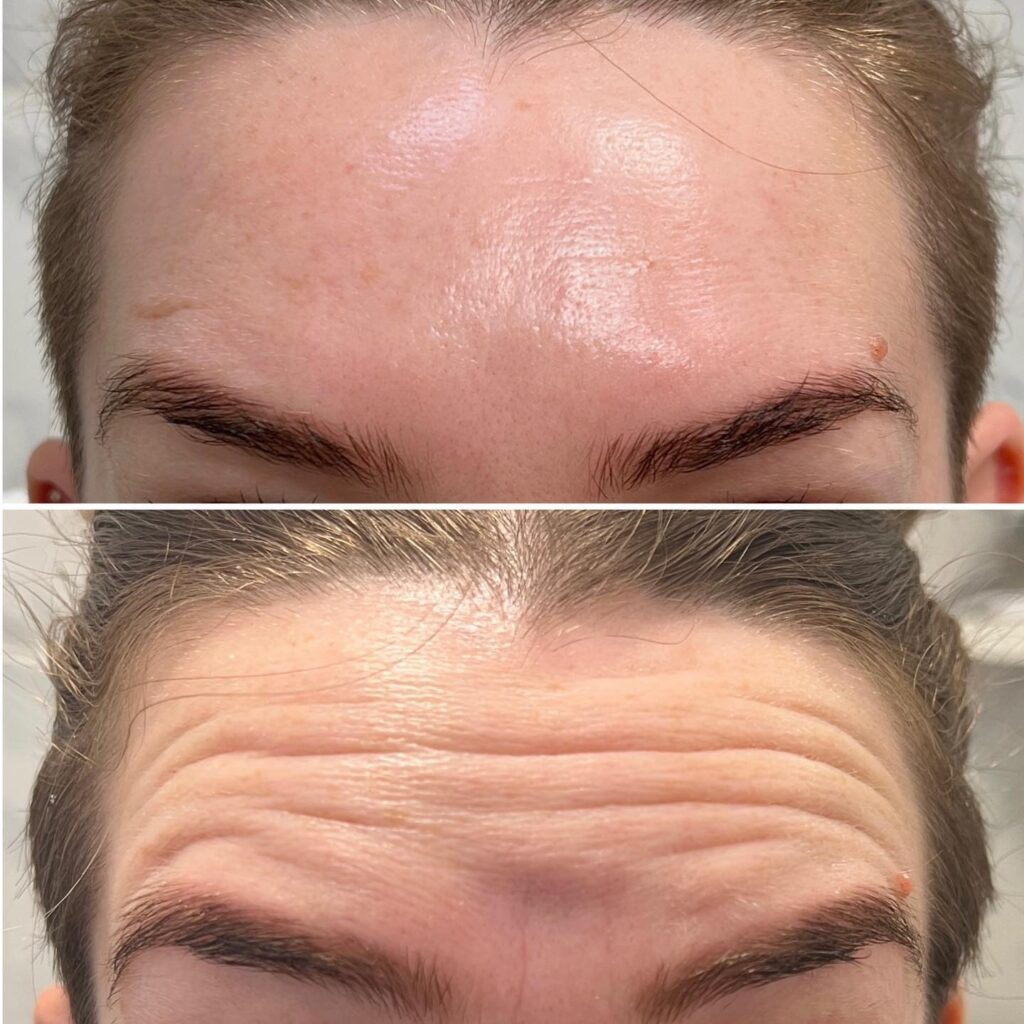
The best treatment for deep forehead lines typically combines Botox to relax the muscles causing wrinkles with dermal fillers to fill in the creases that have already formed. For very deep lines, adding radiofrequency microneedling or laser skin resurfacing improves skin quality and texture. According to the American Society of Plastic Surgeons, over 7.4 million Botox treatments were performed in 2022, with forehead lines being one of the most common treatment areas. The right combination depends on how deep your lines are and what’s causing them.
This article covers everything you need to know about treating deep forehead lines. We’ll walk through what causes them, which treatments work best, and whether Botox alone is enough or if you need additional options.
What Causes Deep Lines On Forehead?
Deep forehead lines develop from a combination of muscle movement, collagen loss, and environmental damage over time. Understanding what causes them helps you choose the right treatment.
Repetitive facial expressions are the primary cause. Every time you raise your eyebrows, frown, or squint, the muscles in your forehead contract. These contractions create temporary creases in your skin. The American Academy of Dermatology reports that we make thousands of facial expressions daily, and over years, these temporary lines become permanent.
As we age, our skin produces less collagen and elastin. These proteins give skin its bounce-back ability. According to research published in the Journal of Clinical and Aesthetic Dermatology, we lose about 1% of our collagen each year after age 30. Without enough collagen, your skin can’t bounce back after being creased, so lines become etched in.
Sun damage plays a huge role. UV exposure breaks down collagen and elastin in your skin. The Skin Cancer Foundation reports that up to 90% of visible aging comes from sun exposure. If you’ve spent years in the sun without protection, your forehead probably shows it.
Genetics influence when and how severely you develop forehead wrinkles. Some people have naturally more expressive foreheads or thinner skin that shows lines earlier. If your parents developed forehead wrinkles young, you’re more likely to as well.
Smoking accelerates wrinkle formation. Research in the Journal of Dermatological Science found that smokers develop forehead wrinkles about 5 to 10 years earlier than non-smokers. Smoking reduces blood flow to your skin and breaks down collagen.
Sleeping position matters more than you might think. Sleeping on your stomach or side puts pressure on your forehead for hours every night. Over years, this can contribute to wrinkle formation. The American Academy of Dermatology recommends sleeping on your back to reduce facial wrinkles.
Dehydration makes wrinkles more noticeable. When your skin lacks moisture, lines appear deeper. While hydration alone won’t eliminate deep wrinkles, chronic dehydration can worsen their appearance.
Poor skincare habits don’t help. Not using sunscreen, skipping moisturizer, and not using products that support collagen production allow wrinkles to develop faster and deeper.
The good news? Several treatments can significantly improve even deep forehead lines.
Want to learn more about treating fine lines and wrinkles? Our team in Lee’s Summit would be happy to answer your questions. Book a consultation today.
Can Botox Fix Deep Forehead Wrinkles?
Botox can improve deep forehead wrinkles, but it works best when the lines are primarily caused by muscle movement rather than skin damage. For very deep, etched-in wrinkles, Botox alone might not be enough.
Botox works by temporarily relaxing the muscles that create forehead lines. When these muscles can’t contract as strongly, they stop creasing your skin. This prevents existing lines from getting deeper and allows your skin time to recover.
According to Allergan, the makers of Botox, the treatment reduces forehead line severity by an average of 60% to 70% in clinical trials. Most people see significant smoothing after their first treatment.
For lines that only show up when you raise your eyebrows (dynamic wrinkles), Botox works great. The Journal of Cosmetic Dermatology reports that 89% of patients with dynamic forehead lines were satisfied with Botox results.
The challenge comes with static wrinkles. These are lines that remain visible even when your face is relaxed. They’ve been etched into your skin from years of repetitive movement and collagen loss. Botox will prevent them from getting worse, but it won’t completely fill them in.
A study in Dermatologic Surgery found that Botox alone improved static forehead wrinkles by about 40% to 50%. That’s noticeable improvement, but many people want more dramatic results for very deep lines.
The good news is that Botox can soften even deep wrinkles over time. When the muscles stay relaxed for months, your skin has a chance to smooth out somewhat. Some people notice their deep lines getting shallower after several rounds of Botox treatments.
According to research published in the Journal of Drugs in Dermatology, people who maintain consistent Botox treatments for two years show 25% more improvement in static wrinkles compared to their first treatment. The long-term muscle relaxation allows some natural skin recovery.
Botox treatments take about 10 to 15 minutes. You’ll feel small pinches as the injections go in. Results show up in 3 to 7 days and last 3 to 4 months.
For deep forehead lines, your provider might use slightly more Botox than they would for mild lines. The American Society of Plastic Surgeons notes that typical forehead treatments use 10 to 30 units, but deeper wrinkles might need the higher end of that range.
Most people here in the Kansas City area start with Botox because it’s the least aggressive option. If you get good results, great. If you need more improvement, you can add other treatments like fillers or skin resurfacing.
Thinking about trying Botox for wrinkles? We can help you figure out if it’s right for you. Contact us to set up a time to chat.
How Do You Smooth Forehead Lines?
Smoothing forehead lines requires a multi-angle approach that addresses both the muscle movement causing new lines and the existing damage to your skin.
Botox or Xeomin should be your first step. These neurotoxins relax the muscles that create forehead lines, preventing them from getting deeper and allowing existing lines to soften somewhat.
For lines that remain visible after Botox, dermal fillers can fill in the creases. Fillers work by literally plumping up the depressed areas where wrinkles have formed. This creates a smoother surface.
Hyaluronic acid fillers like Restylane or Juvederm are commonly used for forehead lines. They’re safe, reversible, and create natural-looking results. The American Society of Plastic Surgeons reports that over 3.4 million dermal filler procedures were performed in 2022.
Radiofrequency microneedling improves skin quality from the inside out. The treatment stimulates collagen production, which thickens your skin and makes wrinkles less noticeable over time.
A study in the Journal of Cosmetic Dermatology found that RF microneedling reduced wrinkle depth by 35% to 45% after a series of treatments. It works particularly well when combined with Botox and fillers.
Laser skin resurfacing removes damaged outer layers of skin while stimulating collagen production in deeper layers. This can significantly improve the appearance of deep forehead lines.
According to research in Dermatologic Surgery, ablative laser treatments improved deep forehead wrinkles by 50% to 70% in clinical trials. The results are dramatic but require more downtime than other options.
Chemical peels provide milder resurfacing. Medium to deep peels can improve forehead texture and reduce the appearance of fine to moderate lines. They work by removing damaged skin and triggering new skin growth.
Prescription retinoids build collagen over time. Products like tretinoin or tazarotene can improve skin thickness and reduce wrinkle depth with consistent use. The Journal of Cosmetic Dermatology reports that prescription retinoids can reduce wrinkle depth by 15% to 25% over 6 to 12 months.
Using quality skincare products at home supports your treatment results. Products with peptides, growth factors, and antioxidants help maintain skin health between professional treatments.
Protecting your skin from further damage is critical. Daily sunscreen prevents additional collagen breakdown. The American Academy of Dermatology recommends SPF 30 or higher applied every morning, even on cloudy days.
Many people get the best results by combining treatments. For example, Botox to relax muscles, filler to fill remaining creases, and RF microneedling to improve overall skin quality. That comprehensive approach addresses forehead lines from multiple angles.
Here’s a comparison of treatment options:
| Treatment | How It Works | Downtime | Results Last |
|---|---|---|---|
| Botox | Relaxes muscles | None | 3-4 months |
| Fillers | Fills creases | None to 1 day | 6-18 months |
| RF Microneedling | Builds collagen | 1-2 days | 12-18 months |
| Laser Resurfacing | Resurfaces skin | 7-14 days | 1-3 years |
| Chemical Peels | Exfoliates skin | 3-7 days | 6-12 months |
If you’re in the Kansas City area and curious about your options, schedule a consultation with us. We’re here to help.
What Filler Works For Forehead?
Several fillers work well for forehead lines, but not all fillers are appropriate for this area. The forehead requires specific filler types and careful injection technique.
Hyaluronic acid fillers are the most common choice for forehead wrinkles. These fillers are reversible, which provides an extra safety margin in the forehead area. If something doesn’t look right, it can be dissolved with hyaluronidase.
Restylane is frequently used for forehead lines. It comes in different formulations with varying consistencies. Restylane Refyne and Defyne are specifically designed for areas with movement, making them good choices for the forehead.
Juvederm products work well too. Juvederm Volbella or Vollure are often used because they’re softer and create natural-looking results. The American Society of Plastic Surgeons notes that softer fillers integrate better into forehead tissue.
Belotero Balance is another good option. It’s designed to integrate smoothly into skin, making it particularly good for fine to moderate forehead lines. A study in the Journal of Drugs in Dermatology found that Belotero effectively treated forehead wrinkles with high patient satisfaction.
Revanesse Versa is a newer hyaluronic acid filler that some providers prefer for the forehead. It has a smooth consistency that creates even results.
The forehead requires careful filler placement. The blood vessels in this area are delicate, and improper injection technique can lead to serious complications. That’s why it’s critical to see an experienced provider who understands forehead anatomy.
Most providers use very small amounts of filler in the forehead. You might only need 0.5 to 1 syringe for forehead lines, compared to 1 to 2 syringes for deeper facial wrinkles. The Journal of Cosmetic Dermatology reports that less is more when filling forehead wrinkles.
Filler should be injected superficially in the forehead, not too deep. Deep injection increases the risk of complications and doesn’t provide the best results for wrinkles. Your provider will likely use a cannula rather than a needle for added safety.
Results from forehead filler last 6 to 18 months depending on the product used and how quickly your body metabolizes it. Hyaluronic acid fillers in the forehead tend to last toward the shorter end of that range because this area has a lot of movement.
Most people combine filler with Botox for forehead lines. The Botox relaxes the muscles while the filler fills in the creases. According to research in Aesthetic Surgery Journal, combination treatments provide 40% better results than either treatment alone.
Some fillers aren’t appropriate for the forehead. Thicker fillers designed for cheeks or jawline contouring shouldn’t be used for forehead lines. They’re too thick and can create lumps or unnatural appearance.
Sculptra is occasionally used off-label for forehead rejuvenation, but it requires expert technique. Sculptra stimulates collagen production rather than just filling space, so results develop gradually over months.
Check out our article about combining Botox and fillers for more information on how these treatments work together.
Ready to take the next step? Request a consultation and let’s talk about what might work best for you.
Can Forehead Wrinkles Be Reversed?
Forehead wrinkles can be significantly improved and in some cases nearly reversed, but complete reversal of very deep, long-standing wrinkles is difficult without surgery.
For mild to moderate forehead lines, non surgical treatments can create dramatic improvement. The combination of Botox, fillers, and skin resurfacing can reduce wrinkle depth by 70% to 80% according to studies in the Journal of Cosmetic Dermatology.
Botox treatments prevent lines from getting deeper and allow some natural softening over time. When muscles stay relaxed for months, the skin has a chance to recover somewhat. People who maintain regular Botox treatments often see gradual improvement in their static lines.
Dermal fillers directly fill in wrinkle creases, creating immediate smoothing. While this isn’t technically reversing the wrinkle, it creates the appearance of smoother skin. Results look very natural when done by an experienced provider.
Radiofrequency microneedling stimulates your body to produce new collagen. This actually changes your skin structure over time, making it thicker and more resilient. A study in Dermatologic Surgery showed that RF microneedling improved forehead wrinkles by 40% after a series of four treatments.
The new collagen helps fill in wrinkles from the inside out. This is closer to true reversal than just covering up wrinkles with filler. The improvements can last 12 to 18 months as long as the new collagen remains in place.
Laser resurfacing provides more aggressive improvement. Ablative lasers remove damaged skin layers and trigger significant collagen production. According to the American Society for Laser Medicine and Surgery, laser resurfacing can improve deep wrinkles by 60% to 80%.
The results from laser resurfacing can last several years, especially if you protect your skin from sun damage and maintain good skincare habits. Some people consider this the closest thing to reversing wrinkles without surgery.
Prescription retinoids like tretinoin can improve skin thickness and reduce wrinkle depth over time. Research in the Journal of the American Academy of Dermatology found that consistent tretinoin use for 12 months reduced wrinkle depth by 20% to 30%.
The key word is “consistent.” You have to use retinoids regularly for months to see results. But the improvements continue as long as you keep using them.
Lifestyle changes support wrinkle improvement. Quitting smoking allows your skin to heal better. Protecting your skin from sun damage prevents further collagen breakdown. Staying hydrated and eating a healthy diet supports skin health.
The International Society of Aesthetic Plastic Surgery notes that the best results come from combining multiple approaches. Using Botox to prevent muscle movement, fillers to smooth remaining lines, RF microneedling to build collagen, and good skincare to maintain results creates the most comprehensive improvement.
Age affects how much reversal is possible. Younger people with newer wrinkles typically see more dramatic improvement than older people with deep, long-standing wrinkles. The American Academy of Dermatology reports that people in their 40s and early 50s get better wrinkle reversal than those in their 60s and 70s.
For very deep forehead wrinkles that don’t respond well to non surgical treatments, a brow lift might be necessary. This surgical procedure removes excess skin and lifts the forehead, creating dramatic smoothing of even severe wrinkles.
Many people here in Lee’s Summit start with non surgical options and only consider surgery if they’re not satisfied with the results. That approach makes sense because non surgical treatments keep improving and can achieve really nice results for most people.
Have questions? Our team loves talking about this stuff. Reach out anytime.
Is Botox Or Filler Better For Forehead?
Botox and filler serve different purposes for forehead wrinkles. Most people need both for optimal results, but if you can only choose one, Botox is usually the better starting point.
Botox prevents forehead wrinkles from getting worse by relaxing the muscles that create them. It’s the foundation of any forehead wrinkle treatment plan. Without Botox, the muscles continue creating new lines and making existing ones deeper.
Botox works for both dynamic wrinkles (lines that appear with movement) and can partially improve static wrinkles (lines visible at rest). For many people with mild to moderate forehead lines, Botox alone provides satisfactory results.
The American Society of Plastic Surgeons reports that Botox costs less per treatment than filler, typically $300 to $600 for the forehead area. Filler costs $800 to $1,500 per syringe, and you might need one to two syringes for forehead lines.
Botox results last 3 to 4 months. You’ll need regular treatments to maintain results. Dermal fillers last 6 to 18 months depending on the product, so you need them less frequently.
Filler is better for deep, etched-in lines that remain visible even after Botox relaxes the muscles. It directly fills the creases, creating immediate smoothing that Botox alone can’t achieve.
A study in the Journal of Cosmetic Dermatology compared treatments for forehead wrinkles. Patients who received only Botox showed 60% improvement. Those who received only filler showed 45% improvement. But patients who received both Botox and filler showed 85% improvement.
The combination works because Botox prevents the muscle from making the wrinkle worse, while filler fills in the damage that’s already there. You’re addressing the cause and the symptom at the same time.
For people with lines that only show up when raising their eyebrows, Botox alone is usually enough. For people with lines visible at rest, especially deep horizontal grooves, adding filler creates much better results.
Timing matters when combining treatments. Most providers do Botox first, then wait one to two weeks before adding filler. This allows the Botox to take full effect so your provider can see exactly which lines still need filler.
Some providers prefer doing both on the same day, which is also fine. The American Academy of Dermatology notes that there’s no medical reason to separate the treatments unless you want to assess Botox results before committing to filler.
Safety considerations favor Botox. The forehead has important blood vessels, and filler injection carries small risks of vascular complications. Botox has virtually no risk of vascular issues. That’s another reason why starting with Botox makes sense.
Budget plays a role too. If money is tight, start with Botox. You’ll get significant improvement and prevent your wrinkles from getting worse. You can always add filler later if you want more smoothing.
Here’s a quick comparison:
| Factor | Botox | Filler |
|---|---|---|
| Best for | Preventing wrinkles | Filling existing wrinkles |
| Results timeline | 3-7 days | Immediate |
| Duration | 3-4 months | 6-18 months |
| Cost | $300-$600 | $800-$1,500 |
| Risks | Very low | Low but higher than Botox |
Check out our article comparing Botox and fillers for more detailed information.
Combining Treatments For Deep Forehead Lines
Combining treatments often gives you the best results for deep forehead lines. Different treatments address different aspects of the problem, so a multi-treatment approach makes sense.
The most common combination is Botox plus filler. The Botox relaxes the muscles while the filler fills in deep creases. This one-two approach addresses both the cause and the visible result of forehead wrinkles.
Adding RF microneedling to Botox and filler creates even better results. The RF treatment improves overall skin quality and thickness, making wrinkles less noticeable even between filler treatments.
A study in the Journal of Cosmetic Dermatology found that patients who combined Botox, filler, and RF microneedling reported 45% higher satisfaction than those who used Botox and filler alone. The comprehensive approach provided better overall forehead rejuvenation.
Some people add laser resurfacing to their treatment plan. Laser works well for treating sun damage and skin texture while the other treatments handle wrinkles. The combination creates smoother, more youthful-looking skin.
Chemical peels can complement injectable treatments. A medium-depth peel improves skin texture and tone while Botox and filler address wrinkle depth. Many people alternate between peels and RF treatments for ongoing skin maintenance.
Prescription skincare enhances treatment results. Using tretinoin between professional treatments helps maintain collagen production. Adding antioxidant serums and peptide creams supports skin health.
The American Academy of Dermatology recommends a comprehensive approach that includes professional treatments plus excellent at-home skincare. This strategy provides the best long-term results.
Timing considerations matter when combining treatments. Botox can be done anytime. Filler should be placed at least two weeks after Botox or on the same day. RF microneedling should be spaced at least two weeks from injectables. Laser treatments need the most separation, typically four to six weeks from other procedures.
Not everyone needs every treatment. Your provider will assess your forehead lines and recommend which combination makes sense for your specific situation. Someone with moderately deep lines might only need Botox and filler. Someone with very deep lines plus sun damage might benefit from adding RF microneedling or laser.
Budget affects treatment planning. Combining multiple treatments costs more upfront but often provides better value by creating more dramatic and longer-lasting results. You might need fewer total sessions over time.
Many of our clients start with the basics (Botox and maybe filler) then add other treatments over time as they see how their skin responds. This approach lets you control costs while gradually building up to more comprehensive rejuvenation.
At Slimming Solutions Med Spa, we customize treatment plans based on your concerns, your budget, and your goals. We focus on giving you the best results possible with the treatments that make sense for your situation.
What To Expect During Treatment
Most treatments for forehead lines are quick and comfortable. Here’s what typically happens for the most common options.
Botox injections take about 10 to 15 minutes. Your provider will clean your forehead and mark injection points. You’ll feel small pinches as the Botox goes in. Most people find this totally tolerable without numbing.
Your provider typically injects five to seven points across your forehead in a horizontal pattern. The exact placement depends on your muscle structure and where your lines are deepest.
After Botox, you can return to normal activities immediately. Avoid lying flat for four hours and don’t massage the treated area. Results show up in three to seven days and last three to four months.
Filler treatments take 15 to 30 minutes. Your forehead gets cleaned, then your provider might apply numbing cream or use filler that contains lidocaine (a numbing agent).
The filler gets injected directly into the wrinkle creases using a very fine needle or a blunt-tip cannula. You’ll feel pressure and maybe some pinching. Most people say it’s manageable discomfort.
You’ll see results immediately, though there might be some swelling for a day or two. You can return to most activities right away, but avoid intense exercise for 24 hours.
RF microneedling sessions take 30 to 45 minutes. Numbing cream gets applied for 30 minutes first. Once you’re numb, the device stamps across your forehead creating tiny needles that deliver radiofrequency energy.
You’ll feel warmth and prickling during treatment. Most people find it tolerable with numbing. Your forehead will be red afterward, like a sunburn. That fades within 24 to 48 hours.
You’ll need three to five sessions spaced about a month apart. Results develop gradually over two to three months as new collagen forms.
Laser resurfacing requires more downtime. After numbing, the laser removes outer skin layers while heating deeper layers. The treatment takes 30 to 60 minutes.
You’ll have significant redness, swelling, and peeling for 7 to 14 days. The treated skin needs to heal and regenerate. Results are dramatic but require recovery time.
Chemical peels take 15 to 30 minutes. The chemical solution gets applied to your forehead and left on for several minutes before being neutralized.
You’ll feel tingling or mild burning during the peel. Afterward, your skin will be red and will peel over the next few days. Deeper peels require more recovery time.
The American Society of Plastic Surgeons reports that 91% of people who get Botox for forehead lines return to normal activities immediately. Injectable treatments offer the most convenience with the least downtime.
If you’re curious about what to expect, schedule a consultation. We can walk you through the entire process and answer all your questions.
Maintaining Your Results
Getting rid of forehead lines is just the beginning. Maintaining results requires ongoing care and regular touch-up treatments.
Botox maintenance is straightforward. Come back every three to four months for touch-ups. Some people can stretch it to four to five months, while others need treatments closer to three months. Regular maintenance prevents lines from coming back.
The Journal of Cosmetic Dermatology found that people who maintain consistent Botox treatments for two years show progressively better results over time. The muscles stay relaxed longer, and static lines continue improving.
Filler maintenance depends on which product was used. Hyaluronic acid fillers in the forehead typically last 6 to 12 months. You’ll notice gradual fading as the filler breaks down. Most people schedule touch-up appointments when they start seeing their lines reappear.
RF microneedling maintenance involves one to two sessions per year after your initial series. This keeps collagen production active and maintains the skin quality improvements you achieved.
Daily skincare is critical. Use a broad-spectrum sunscreen every morning. The American Academy of Dermatology recommends SPF 30 or higher applied daily, even when staying indoors. UV exposure breaks down collagen and makes wrinkles worse.
Use a retinoid at night. Prescription tretinoin or over-the-counter retinol helps maintain collagen production between professional treatments. Start slowly if you’re new to retinoids, as they can cause irritation initially.
Apply a good moisturizer morning and night. Hydrated skin looks plumper and makes wrinkles less noticeable. Look for products with hyaluronic acid, ceramides, or peptides.
Consider adding vitamin C serum in the morning. Vitamin C protects against environmental damage and supports collagen production. The Journal of Clinical and Aesthetic Dermatology reports that vitamin C can improve wrinkle depth by 10% to 15% over six months.
Don’t forget the basics. Get enough sleep. Manage stress. Eat a diet rich in antioxidants and healthy fats. Stay hydrated. All of these lifestyle factors affect how well your skin maintains treatment results.
Avoid smoking. If you smoke, quit. Smoking breaks down collagen faster than almost anything else. Research shows that quitting smoking can improve skin quality within just a few months.
Consider facial treatments between your injectable appointments. Regular facials keep your skin healthy and can extend how long your other treatments last.
Sleep on your back if possible. Sleeping on your side or stomach puts pressure on your forehead for hours every night. Over time, this can contribute to wrinkle formation.
The Skin Cancer Foundation reports that people who follow comprehensive skincare routines maintain their treatment results 40% longer than those who only rely on professional treatments without good at-home care.
Cost Of Forehead Line Treatments
Treatment costs for forehead lines vary based on which options you choose and how many treatments you need.
Botox for the forehead typically costs $300 to $600 per treatment. You’ll need 10 to 30 units depending on how strong your muscles are and how deep your lines are. Treatments need to be repeated every three to four months.
Over a year, expect to spend $1,200 to $2,400 on Botox maintenance for your forehead. That works out to about $100 to $200 per month, which many people find manageable.
Dermal fillers cost $800 to $1,500 per syringe. Most people need 0.5 to 1.5 syringes for forehead lines, so expect to pay $800 to $2,000 per treatment. Fillers last 6 to 18 months, so you’ll need them less frequently than Botox.
RF microneedling costs $500 to $1,000 per session for the forehead area. You’ll need three to five sessions initially, then one to two maintenance treatments per year. Initial series costs $1,500 to $5,000.
Laser resurfacing ranges from $1,500 to $3,500 for the forehead. Results can last several years, so you won’t need frequent treatments. The higher upfront cost is offset by longer-lasting results.
Chemical peels cost $150 to $600 depending on the depth. Superficial peels run $150 to $300, while medium peels cost $300 to $600. You might need several treatments spaced a few weeks apart.
Combining treatments costs more initially but can provide better value. For example, spending $2,000 on Botox plus filler might give you better, longer-lasting results than spending $1,200 on multiple rounds of Botox alone.
The American Society of Plastic Surgeons reports that the average person spends $1,500 to $3,000 annually maintaining their forehead wrinkle treatments. This includes a combination of Botox, occasional filler, and regular skincare.
Compare these costs to surgical options. A brow lift costs $5,000 to $8,000 on average. While surgery lasts longer, it requires significant recovery time and carries surgical risks. Many people prefer the lower cost and no downtime of non surgical options.
Some practices offer package deals or membership programs that reduce per-treatment costs. At Slimming Solutions Med Spa, we work with clients to create treatment plans that fit their budget while achieving their goals.
Insurance never covers treatments for forehead wrinkles since they’re considered cosmetic. All costs are out-of-pocket. However, some practices offer financing options that let you spread payments over several months.
When considering cost, think about the confidence and satisfaction you’ll get from smoother forehead skin. Many people feel it’s worth the investment to look and feel their best.
If you’re curious about pricing for your specific situation, schedule a consultation. We can give you accurate pricing based on how deep your lines are and which treatments will work best for you.
Final Thoughts
Treating deep forehead lines is absolutely possible without surgery. Modern treatments like Botox, dermal fillers, RF microneedling, and laser resurfacing can significantly improve even severe forehead wrinkles.
The best approach usually combines Botox to prevent muscle movement with fillers to smooth existing creases. Adding skin resurfacing treatments improves overall skin quality and provides longer-lasting results.
Starting treatment earlier gives you better results than waiting until lines are extremely deep. But even long-standing, severe forehead wrinkles can be dramatically improved with the right combination of treatments.
Results require maintenance, but many people find that regular touch-ups fit easily into their routine. The investment in time and money is worth it for most people who want to look and feel their best.
Here in Lee’s Summit, we help people tackle forehead wrinkles every day. We’ve seen what works and what doesn’t. The right treatment plan makes all the difference.
If forehead lines are bothering you, don’t wait for them to get worse. The sooner you address them, the easier they are to treat and the better your results will be.
Contact us to discuss your options. We’ll examine your forehead, discuss your concerns and goals, and create a customized treatment plan that makes sense for you. You deserve to feel confident when you look in the mirror.
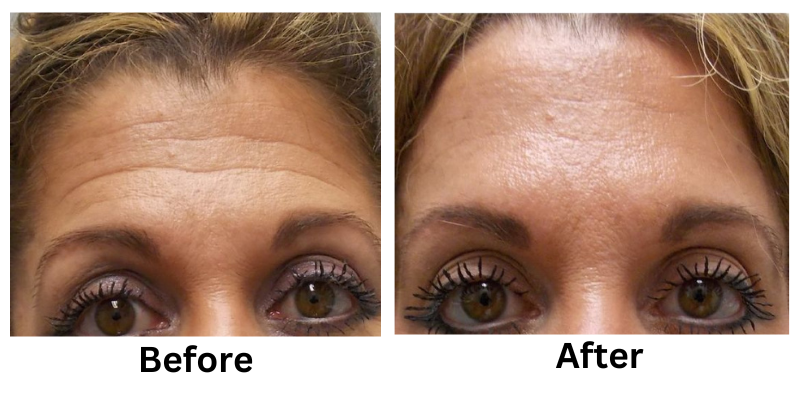
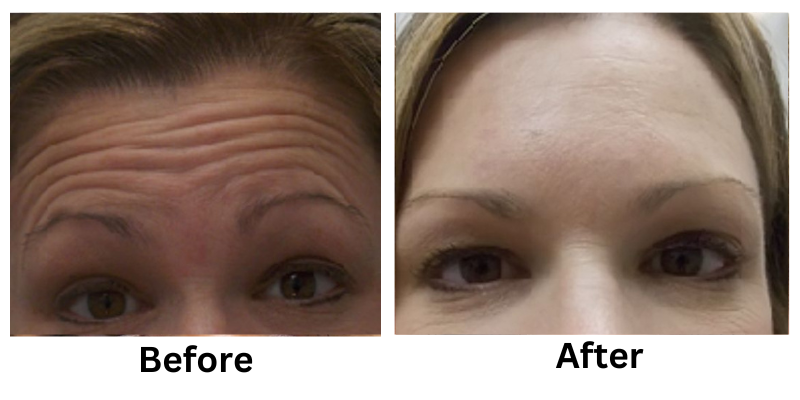
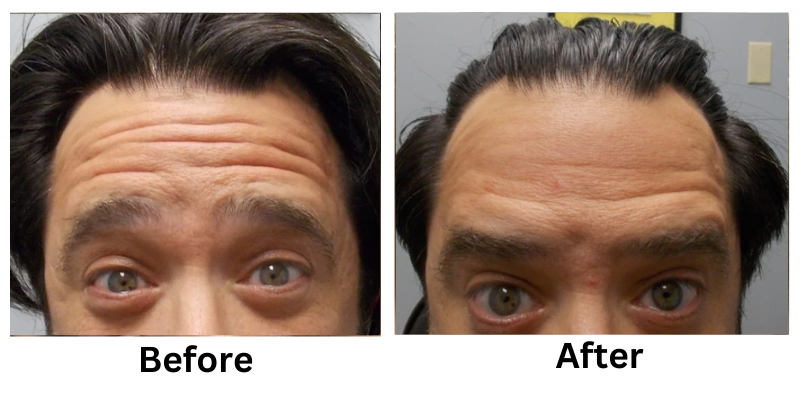
![[thumb]](https://slimmingsolutionsspa.com/wp-content/uploads/2023/12/botox1-150x150.png)
![[thumb]](https://slimmingsolutionsspa.com/wp-content/uploads/2023/12/Before2-150x150.png)
![[thumb]](https://slimmingsolutionsspa.com/wp-content/uploads/2023/12/Before3-150x150.png)


![[thumb]](https://slimmingsolutionsspa.com/wp-content/uploads/2023/12/revanesse-versa-1-150x150.png)
![[thumb]](https://slimmingsolutionsspa.com/wp-content/uploads/2023/12/revanesse-versa-2-150x150.png)
![[thumb]](https://slimmingsolutionsspa.com/wp-content/uploads/2023/12/revanesse-versa-3-150x150.png)
![[thumb]](https://slimmingsolutionsspa.com/wp-content/uploads/2023/12/revanesse-versa-4-150x150.png)
![[thumb]](https://slimmingsolutionsspa.com/wp-content/uploads/2023/12/revanesse-versa-5-150x150.png)
![[thumb]](https://slimmingsolutionsspa.com/wp-content/uploads/2024/01/Eyebrow-treatment-1-1-150x150.png)
![[thumb]](https://slimmingsolutionsspa.com/wp-content/uploads/2023/12/Skin-Rejuvenation-1-150x150.png)
![[thumb]](https://slimmingsolutionsspa.com/wp-content/uploads/2023/12/Skin-Rejuvenation-2-150x150.png)


![[thumb]](https://slimmingsolutionsspa.com/wp-content/uploads/2024/01/Lip-Filler-1-150x150.png)
![[thumb]](https://slimmingsolutionsspa.com/wp-content/uploads/2024/01/Lip-Filler-2-150x150.png)
![[thumb]](https://slimmingsolutionsspa.com/wp-content/uploads/2025/02/Lip-Filler-1-150x150.png)
![[thumb]](https://slimmingsolutionsspa.com/wp-content/uploads/2024/01/Lip-Filler-150x150.jpg)
![[thumb]](https://slimmingsolutionsspa.com/wp-content/uploads/2024/01/Before-1-150x150.jpg)

![[thumb]](https://slimmingsolutionsspa.com/wp-content/uploads/2024/01/RHA-Treatmetn-3-150x150.png)
![[thumb]](https://slimmingsolutionsspa.com/wp-content/uploads/2024/01/RHA-Treatmetn-2-150x150.png)
![[thumb]](https://slimmingsolutionsspa.com/wp-content/uploads/2024/01/RHA-Treatmetn-1-150x150.png)
![[thumb]](https://slimmingsolutionsspa.com/wp-content/uploads/2024/01/Thread-Lifts-1-150x150.png)
![[thumb]](https://slimmingsolutionsspa.com/wp-content/uploads/2024/01/Thread-Lifts-2-150x150.png)
![[thumb]](https://slimmingsolutionsspa.com/wp-content/uploads/2025/02/Lip-Filler-2-150x150.png)

![[thumb]](https://slimmingsolutionsspa.com/wp-content/uploads/2023/12/skin-reuvulation1-150x150.png)
![[thumb]](https://slimmingsolutionsspa.com/wp-content/uploads/2023/12/skin-rejuvulation-2-150x150.png)
![[thumb]](https://slimmingsolutionsspa.com/wp-content/uploads/2023/12/Skin-Tighting-150x150.png)
![[thumb]](https://slimmingsolutionsspa.com/wp-content/uploads/2023/12/Before-150x150.jpg)
![[thumb]](https://slimmingsolutionsspa.com/wp-content/uploads/2023/12/weightloss-1-150x150.png)
![[thumb]](https://slimmingsolutionsspa.com/wp-content/uploads/2023/12/weightloss-2-150x150.png)
![[thumb]](https://slimmingsolutionsspa.com/wp-content/uploads/2023/12/2Weight-Loss-2-150x150.png)
![[thumb]](https://slimmingsolutionsspa.com/wp-content/uploads/2025/02/Weight-Loss-1-new-150x150.png)
![[thumb]](https://slimmingsolutionsspa.com/wp-content/uploads/2023/12/Weight-Loss-3-150x150.png)
![[thumb]](https://slimmingsolutionsspa.com/wp-content/uploads/2025/03/Slimming-Solutions-BA-Template-150x150.png)


![[thumb]](https://slimmingsolutionsspa.com/wp-content/uploads/2023/12/dat3-150x150.png)
![[thumb]](https://slimmingsolutionsspa.com/wp-content/uploads/2023/12/dat-0-150x150.png)
![[thumb]](https://slimmingsolutionsspa.com/wp-content/uploads/2023/12/dat-1-150x150.png)
![[thumb]](https://slimmingsolutionsspa.com/wp-content/uploads/2023/12/Before-1-150x150.png)

![[thumb]](https://slimmingsolutionsspa.com/wp-content/uploads/2024/01/EMS-Treatment-2-150x150.png)
![[thumb]](https://slimmingsolutionsspa.com/wp-content/uploads/2024/01/EMS-Treatment-1-150x150.png)
![[thumb]](https://slimmingsolutionsspa.com/wp-content/uploads/2025/02/ems-BNA-front-150x150.png)
![[thumb]](https://slimmingsolutionsspa.com/wp-content/uploads/2025/02/EMS-bna-SIDE-150x150.png)
![[thumb]](https://slimmingsolutionsspa.com/wp-content/uploads/2024/01/EMS-Treatment-6-150x150.png)