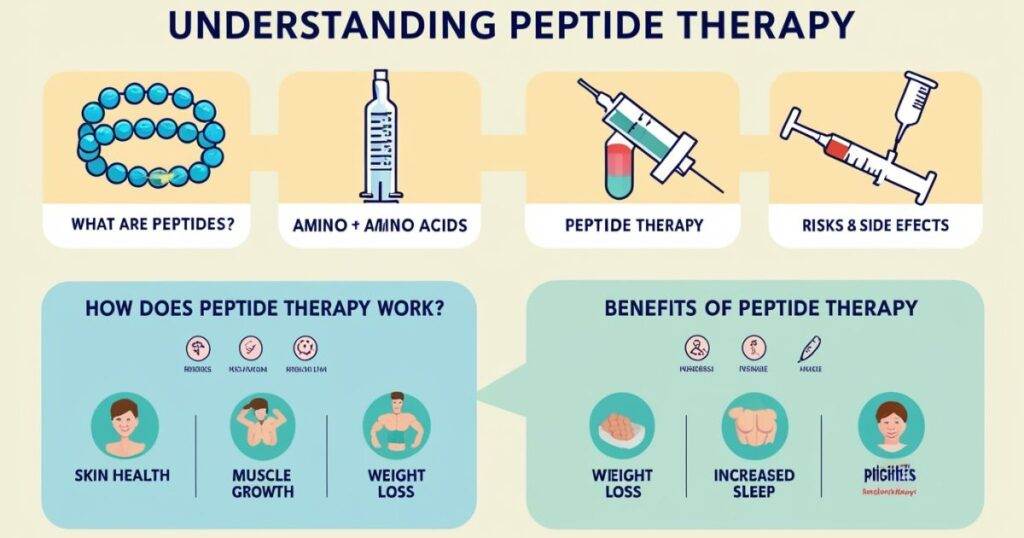
Peptide therapy is a medical treatment that uses short chains of amino acids, called peptides, to signal the body to perform specific physiological functions like tissue repair, hormone production, fat metabolism, and immune regulation. Peptides act as messengers in the body, stimulating natural processes rather than introducing synthetic hormones or drugs. The global peptide therapeutics market was valued at approximately $46.17 billion in 2024 and is projected to reach $91.87 billion by 2033, according to IMARC Group. More than 100 peptide-based therapeutics have received FDA approval across different countries, according to Roots Analysis. From growth hormone support and anti-aging to gut healing and injury recovery, peptide therapy offers a wide range of applications that are transforming how patients approach their health. This article explains what peptide therapy is, how it works, which peptides are most commonly used, who it can help, and what the research says about its effectiveness.
What Is Peptide Therapy and How Does It Work?
Peptide therapy works by introducing specific amino acid sequences into the body that trigger targeted biological responses. Unlike synthetic hormones that replace what the body produces, peptides stimulate the body’s own natural processes. For example, growth hormone-releasing peptides signal the pituitary gland to produce more growth hormone on its own, rather than injecting synthetic growth hormone directly. This approach is often considered safer because the body maintains its natural feedback loops.
Peptides are naturally present throughout the body. They function as hormones, neurotransmitters, growth factors, and signaling molecules. As we age, the production of many key peptides declines. After the age of 20, the body produces about 1% less collagen per year, according to Scientific American. Growth hormone levels also drop, contributing to loss of muscle mass, increased body fat, slower recovery, and reduced energy. Peptide therapy aims to restore these declining signals, helping the body function more like it did at a younger age.
Most peptide therapies are administered through subcutaneous injection (just under the skin), though some are available as oral capsules, nasal sprays, or topical creams. Treatments are typically prescribed by a licensed healthcare provider who evaluates the patient’s bloodwork, health history, and goals before creating a customized protocol. Peptide therapy is becoming an increasingly important part of integrative and functional medicine approaches to aging, recovery, and overall wellness.
What Are the Top 5 Peptides Used in Therapy?
The top 5 peptides used in therapy are CJC-1295/Ipamorelin (for growth hormone support), BPC-157 (for tissue healing), Sermorelin (for anti-aging and hormone optimization), GLP-1 receptor agonists like semaglutide (for weight loss), and thymosin beta-4 (TB-500, for systemic recovery and inflammation). Each peptide targets a different biological pathway and serves a different therapeutic purpose.
CJC-1295 combined with Ipamorelin is one of the most popular growth hormone-releasing peptide protocols. CJC-1295 extends the half-life of growth hormone-releasing hormone (GHRH), while Ipamorelin stimulates the pituitary gland to release growth hormone without increasing cortisol levels. Together, they support muscle growth, fat loss, improved sleep, and faster recovery. A 2022 meta-review published in Peptides and Aging highlighted Sermorelin’s role in enhancing deep sleep, improving lean body mass, and slowing cellular aging in older adults.
BPC-157 (Body Protection Compound-157) is a synthetic peptide derived from a protein found in human gastric juice. Preclinical research has shown it may accelerate healing in tendons, ligaments, muscles, and the gastrointestinal tract. A systematic review published in PMC noted that BPC-157 demonstrates significant cytoprotective effects across multiple organs and tissues. A pilot study in 12 patients with interstitial cystitis found that 10 of 12 reported complete symptom resolution, with the remaining 2 experiencing an 80% reduction, according to Rupa Health.
GLP-1 receptor agonists like semaglutide represent a separate category of peptide therapy that has revolutionized weight management. These peptides mimic the hormone glucagon-like peptide-1 to regulate blood sugar and suppress appetite. GLP-1 weight loss treatments have shown dramatic results in clinical trials and have become one of the fastest-growing segments of the peptide therapeutics market.
Does Peptide Therapy Actually Work?
Yes, peptide therapy does actually work for its intended applications, though the level of clinical evidence varies by specific peptide. FDA-approved peptide therapies like semaglutide (Wegovy/Ozempic) for weight loss and insulin analogs for diabetes have extensive clinical trial data proving their effectiveness. Sermorelin was previously FDA-approved for treating growth hormone deficiency in children before being voluntarily withdrawn from the market for commercial reasons, not safety concerns.
For investigational peptides like BPC-157, the evidence is strong in preclinical (animal) studies but limited in human clinical trials. A systematic review published in PMC analyzed the BPC-157 literature from an orthopedic sports medicine perspective and found promising results for promoting recovery from musculoskeletal injuries, with a retrospective study showing 7 of 12 patients reporting pain relief lasting more than 6 months after intraarticular injection. A 2025 pilot study evaluated intravenous BPC-157 infusions of up to 20 mg in two adults and found no adverse effects on cardiac, hepatic, renal, thyroid, or glucose biomarkers, according to Wikipedia’s citation of the study.
The Centers for Disease Control and Prevention reports that over 129 million Americans suffer from at least one chronic illness, according to Precedence Research. Many of these patients are seeking alternatives to traditional pharmaceuticals. Peptide therapy fills this gap by offering targeted, biologically compatible treatments that work with the body’s natural systems rather than against them. Results typically appear within 3 to 8 weeks depending on the peptide and the condition being treated.
Is Peptide Therapy Like Ozempic?
Peptide therapy is not exactly like Ozempic, but Ozempic is a specific type of peptide therapy. Ozempic (semaglutide) is a GLP-1 receptor agonist peptide that mimics a naturally occurring hormone to regulate blood sugar and reduce appetite. It represents just one category within the broader field of peptide therapeutics. Other peptide therapies target completely different systems, including growth hormone production, tissue repair, immune function, and anti-aging.
The key distinction is specificity. Ozempic targets the GLP-1 pathway for metabolic regulation and weight loss. Growth hormone-releasing peptides like Sermorelin and CJC-1295/Ipamorelin target the pituitary gland for hormone optimization. Healing peptides like BPC-157 target inflammatory and tissue repair pathways. Each peptide has a unique mechanism of action, and lumping them all together under “peptide therapy” oversimplifies a diverse and growing field.
According to Grand View Research, the metabolic disorders segment dominated the peptide therapeutics market in 2024 with a 24.4% share, driven largely by the sales of GLP-1 receptor agonists for diabetes and obesity. The global peptide therapeutics market’s explosive growth, from approximately $46 billion in 2024 to a projected $91 billion by 2033, is partly fueled by the success of weight loss peptides. For patients exploring weight management, combining GLP-1 treatments with other supportive therapies like slimming shots and medical weight loss programs creates a comprehensive approach.
What Are the Negative Side Effects of Peptide Therapy?
The negative side effects of peptide therapy depend on the specific peptide being used. Common side effects across most injectable peptide therapies include injection site reactions (redness, swelling, minor pain), headaches, flushing, lightheadedness, and nausea. GLP-1 peptides like semaglutide can cause gastrointestinal side effects including nausea, diarrhea, and constipation. Growth hormone-releasing peptides may cause water retention, joint stiffness, or tingling in the hands.
For FDA-approved peptide therapies, the side effect profiles are well-documented through clinical trials. For investigational peptides like BPC-157, the preclinical safety data is encouraging but limited. According to a systematic review published in PMC, preclinical safety studies of BPC-157 showed no adverse effects across several organ systems, and the 2025 human pilot study found no adverse events at doses up to 20 mg intravenously. However, the FDA has cautioned against the use of BPC-157 in compounded medications due to insufficient clinical evidence and potential contamination from unregulated manufacturing.
The most important safety consideration is where you get your peptides and who prescribes them. Working with a licensed healthcare provider who sources pharmaceutical-grade peptides from reputable compounding pharmacies significantly reduces the risk of contamination, incorrect dosing, and adverse effects. Self-administration of peptides purchased online from unregulated sources carries real risks and is strongly discouraged.
Who Should Avoid Peptides?
People who should avoid peptides include those who are pregnant or breastfeeding, individuals with active cancer (due to theoretical concerns about angiogenesis-promoting peptides encouraging tumor growth), patients with a history of severe allergic reactions to peptide compounds, and people taking medications that could interact with specific peptides. Anyone with an active malignancy should consult their oncologist before starting any peptide therapy, especially those involving growth hormone-releasing peptides or BPC-157.
The World Anti-Doping Agency (WADA) classified BPC-157 as a prohibited substance under the S0 category (non-approved substances) in 2022. Professional and amateur athletes subject to anti-doping testing should avoid BPC-157 and other non-approved peptides. The FDA has also stated that BPC-157 is not approved for human clinical use by any global regulatory authority, and that there is no legal basis for selling it as a drug, food, or dietary supplement.
Patients with pituitary disorders should use growth hormone-releasing peptides like Sermorelin with caution, as these peptides require intact pituitary function to work. If the pituitary gland is damaged or non-functional, the peptide will not produce the desired growth hormone response. A thorough medical evaluation, including bloodwork and a review of health history, should always precede any peptide therapy protocol.
How Long Does It Take for Peptide Therapy to Start Working?
Peptide therapy takes anywhere from a few days to 8 weeks to start working, depending on the specific peptide and the condition being treated. Growth hormone-releasing peptides like CJC-1295/Ipamorelin typically show initial improvements in sleep quality and energy within 1 to 2 weeks, with more significant changes in body composition appearing at 3 to 6 months. Sermorelin follows a similar timeline, with noticeable effects on sleep and energy at 4 to 8 weeks.
Healing peptides like BPC-157 may produce faster results in some cases. According to Health Express Clinics, BPC-157 healing protocols have helped patients return to movement without surgical intervention, with effects on pain and inflammation often noticeable within days to weeks. However, full tissue repair takes longer and continues over several weeks to months as the peptide supports the body’s regenerative processes.
GLP-1 peptide therapies for weight loss typically show appetite suppression effects within the first week, with measurable weight loss beginning within 2 to 4 weeks. Most clinical trials show the greatest weight loss results at 12 to 16 weeks of treatment. For patients exploring peptide therapy as part of a broader wellness plan, combining it with supportive treatments like hormone replacement therapy or vitamin shots can help optimize results across multiple health goals simultaneously.
Is GLP-1 a Peptide Therapy?
Yes, GLP-1 is a peptide therapy. Glucagon-like peptide-1 (GLP-1) receptor agonists, including semaglutide (Ozempic/Wegovy) and tirzepatide (Mounjaro/Zepbound), are peptide-based drugs that mimic the naturally occurring GLP-1 hormone. They represent one of the most commercially successful categories of peptide therapeutics. According to Mordor Intelligence, GLP-1 agonists have demonstrated disease-modifying potential in metabolic disorders, and dual agonists like tirzepatide reduced HbA1c by up to 2.59% in Phase 3 trials while producing weight loss in 88% of patients.
The success of GLP-1 peptide therapies has been a major driver of the broader peptide therapeutics market growth. Novo Nordisk, the maker of Ozempic and Wegovy, led the global peptide therapeutics market with over 17% share in 2024, according to Global Market Insights. The commercial success of these peptides has validated peptide-based approaches and accelerated research and investment across the entire peptide therapy landscape.
For patients interested in GLP-1 therapy for weight management, GLP-1 weight loss treatments offer a medically supervised option that addresses appetite control, blood sugar regulation, and overall metabolic health. These treatments can be combined with other peptide therapies and lifestyle modifications for comprehensive results.
What Peptide Gets Rid of Belly Fat?
The peptide that gets rid of belly fat most effectively is semaglutide (a GLP-1 receptor agonist), which has been shown in clinical trials to produce significant reductions in body weight and visceral fat when combined with diet and exercise. For subcutaneous fat specifically, growth hormone-releasing peptides like CJC-1295/Ipamorelin and Sermorelin can support fat metabolism by increasing growth hormone levels, which in turn promotes lipolysis (the breakdown of stored fat for energy).
Growth hormone plays a direct role in fat metabolism. As growth hormone levels decline with age, the body tends to store more fat, particularly around the midsection. By restoring growth hormone levels through peptide therapy, patients often experience a gradual reduction in body fat alongside improvements in lean muscle mass, energy, and recovery. These changes develop over 3 to 6 months of consistent treatment.
It is important to set realistic expectations. No single peptide will eliminate belly fat on its own without dietary and exercise changes. Peptide therapy supports and enhances the body’s fat-burning processes, but it works best as part of a comprehensive plan. Combining peptide therapy with fat reduction and body sculpting treatments for targeted fat elimination and medical weight loss for overall caloric management creates the most effective multi-pronged approach.
How Often Should You Do Peptide Therapy?
How often you should do peptide therapy depends on the specific peptide, the condition being treated, and your provider’s protocol. Growth hormone-releasing peptides like CJC-1295/Ipamorelin are typically administered daily through subcutaneous injection, often before bedtime to align with the body’s natural growth hormone release cycle. Sermorelin is also usually given as a daily injection. Most growth hormone peptide protocols run for 3 to 6 months, followed by a reassessment.
BPC-157 protocols vary based on the injury or condition being treated. Daily subcutaneous injections near the site of injury are common, with treatment courses typically lasting 4 to 12 weeks. GLP-1 peptides like semaglutide are injected once per week, with treatment continuing as long as the patient and provider agree it is beneficial.
The frequency and duration of peptide therapy should always be determined by a qualified healthcare provider based on your individual bloodwork, health status, and therapeutic goals. Self-dosing without medical supervision increases the risk of side effects and suboptimal results. Regular follow-up appointments with lab work help ensure the therapy is producing the desired effects and that no adverse changes are occurring.
| Peptide | Primary Use | Typical Administration | When Results Appear | FDA Status |
|---|---|---|---|---|
| CJC-1295 / Ipamorelin | Growth hormone support, anti-aging, fat loss | Daily subcutaneous injection | 1 to 2 weeks (sleep/energy); 3 to 6 months (body composition) | Not FDA-approved for anti-aging |
| Sermorelin | Growth hormone optimization, sleep, anti-aging | Daily subcutaneous injection | 4 to 8 weeks | Previously FDA-approved (withdrawn commercially, not for safety) |
| BPC-157 | Tissue healing, gut repair, anti-inflammatory | Daily subcutaneous injection near injury | Days to weeks (pain/inflammation); weeks to months (full healing) | Not FDA-approved; Category 2 bulk drug (2023) |
| Semaglutide (GLP-1) | Weight loss, blood sugar regulation | Weekly subcutaneous injection | 1 to 4 weeks (appetite); 12 to 16 weeks (significant weight loss) | FDA-approved (as Wegovy for weight loss) |
| TB-500 (Thymosin Beta-4) | Systemic recovery, inflammation, wound healing | Subcutaneous injection, 2x/week | 2 to 4 weeks | Not FDA-approved; WADA prohibited |
Sources: IMARC Group; PMC systematic reviews; FDA; Rupa Health; Health Express Clinics; Roots Analysis; Global Market Insights.
Does BPC-157 Actually Work?
BPC-157 does show strong evidence of working in preclinical (animal) studies, with early human data that is promising but limited. A systematic review published in PMC analyzed the orthopedic sports medicine literature and concluded that BPC-157 shows promise for promoting recovery from musculoskeletal injuries based on Level IV and Level V studies. In animal models, BPC-157 has demonstrated accelerated healing of tendons, ligaments, muscles, bones, and the gastrointestinal tract.
The most compelling human evidence comes from a study of 12 patients with interstitial cystitis who had not responded to conventional therapies. After receiving BPC-157, 10 of 12 patients reported complete symptom resolution and the remaining 2 experienced an 80% reduction, according to Rupa Health. A separate retrospective study found that 7 of 12 patients with chronic knee pain reported pain relief lasting more than 6 months after intraarticular BPC-157 injection.
However, BPC-157 is not FDA-approved for any human use. In 2023, the FDA classified it as a Category 2 bulk drug substance, meaning it cannot be compounded by commercial pharmaceutical companies. The main concern is not that BPC-157 does not work, but that there are insufficient human clinical trials to establish standardized dosing, long-term safety, and manufacturing quality standards. Patients who choose to use BPC-157 should only do so under the supervision of a licensed physician who sources it from a reputable compounding pharmacy.
Is Sermorelin FDA Approved?
Sermorelin was previously FDA-approved for the treatment of growth hormone deficiency in children, but it was voluntarily withdrawn from the market for commercial reasons, not because of safety concerns. According to Spartan Peptides, Sermorelin has the most robust clinical safety record of the three most popular recovery peptides (BPC-157, TB-500, and Sermorelin), with documented clinical history during its period of approved pediatric use.
Today, Sermorelin is available through compounding pharmacies and is prescribed off-label by licensed healthcare providers for adult growth hormone optimization, anti-aging, sleep improvement, and body composition enhancement. Because Sermorelin stimulates the pituitary gland to produce growth hormone naturally rather than injecting synthetic growth hormone directly, it cannot produce supraphysiological (dangerously high) GH levels. This built-in safety mechanism distinguishes it from direct growth hormone administration.
Common side effects of Sermorelin include injection site reactions and occasional flushing. It is generally well-tolerated, and its mechanism of action through the pituitary gland means it maintains the body’s natural regulatory feedback loops. For patients interested in growth hormone optimization, peptide therapy that includes Sermorelin can support improved sleep quality, increased lean muscle mass, reduced body fat, and enhanced recovery from exercise and injury.
Can I Stack Sermorelin and BPC-157 Together?
Yes, you can stack Sermorelin and BPC-157 together under the guidance of a licensed healthcare provider. Many practitioners combine these two peptides because they target different biological pathways that can complement each other. Sermorelin works at the pituitary level to increase growth hormone production, which supports muscle growth, fat metabolism, and overall recovery. BPC-157 works locally at the tissue level to accelerate healing, reduce inflammation, and improve gut health.
According to Atlas Men’s Health, combining the two peptides may help muscles grow faster and heal from injuries in a shorter period. The growth hormone boost from Sermorelin provides the systemic anabolic support (protein synthesis, fat burning, tissue repair), while BPC-157 provides targeted local healing at specific injury sites. Together, they address both the systemic and local aspects of recovery and wellness.
When stacking peptides, dosing, timing, and monitoring become even more important. Most providers recommend blood work before starting, at 4 to 6 weeks, and periodically throughout the treatment course to monitor IGF-1 levels, liver function, kidney function, and other relevant markers. Working with a provider who specializes in peptide therapy, like those who offer hormone replacement therapy and integrative medicine, helps keep the protocol safe and effective.
Frequently Asked Questions
What Shouldn’t You Mix With Peptides?
You should not mix peptides with substances that may interfere with their absorption or mechanism. This includes mixing certain peptides with food (some should be taken on an empty stomach), combining growth hormone-releasing peptides with exogenous growth hormone (which can suppress natural production), or stacking multiple peptides that act on the same pathway without medical guidance. Always consult your prescribing provider before adding any supplement, medication, or additional peptide to your regimen.
Which Peptide Works Like Botox?
The peptide that works like Botox is Argireline (acetyl hexapeptide-3), a topical peptide found in many anti-aging skincare products. Argireline works by inhibiting the SNARE complex that triggers muscle contraction, similar in principle to how Botox blocks acetylcholine release. However, Argireline is applied topically as a cream, not injected, and its effects are much milder than injectable Botox. It is best suited for fine lines rather than deep wrinkles.
Can I Take BPC-157 Every Day?
Yes, BPC-157 is typically taken every day during an active treatment course. Most protocols involve daily subcutaneous injections of 200 to 500 mcg for 4 to 12 weeks, depending on the condition being treated. Some patients cycle on and off BPC-157 (for example, 4 weeks on, 2 weeks off), while others use it continuously under provider supervision. The optimal frequency and duration should be determined by your healthcare provider based on your individual needs and response.
Does BPC-157 Raise Blood Pressure?
No, BPC-157 does not raise blood pressure based on the available preclinical evidence. Research published in PMC suggests that BPC-157 interacts with the nitric oxide system in a way that can counteract both hypertension (L-NAME-induced) and hypotension (L-arginine-induced), suggesting a blood pressure-regulating rather than blood pressure-raising effect. However, human clinical data is limited, so patients with blood pressure concerns should discuss BPC-157 with their physician before starting treatment.
Is Peptide Better Than Ozempic?
“Peptide therapy” is a broad category, and Ozempic itself is a peptide. The question is really which peptide is best for your specific goal. For weight loss, semaglutide (Ozempic/Wegovy) has the strongest clinical evidence and FDA approval. For growth hormone optimization and anti-aging, Sermorelin or CJC-1295/Ipamorelin may be more appropriate. For injury healing, BPC-157 targets a different need entirely. No single peptide is universally “better.” The right choice depends on your health goals, medical history, and provider recommendation.
What Organs Does BPC-157 Heal?
BPC-157 has demonstrated healing effects in preclinical studies on multiple organs and tissues, including the gastrointestinal tract (stomach, intestines), liver, pancreas, heart, tendons, ligaments, muscles, bones, and the nervous system. According to a systematic review published in PMC, BPC-157 shows significant cytoprotective effects across a range of organs and tissues, including the alimentary canal, liver, pancreas, heart, and nerves. Its effects on gut healing are among the most studied, as it was originally derived from a protein found in human gastric juice.
How Long Do Peptide Therapy Results Last?
Peptide therapy results last as long as the underlying improvements are maintained. Growth hormone benefits like improved body composition and energy typically persist as long as treatment continues and may gradually fade over months after stopping. BPC-157 healing benefits can be long-lasting once the tissue has fully repaired, though chronic conditions may require periodic retreatment. GLP-1 weight loss results last as long as the medication is taken and the patient maintains healthy habits; weight can return if treatment is stopped without lifestyle changes in place.
Final Thoughts
Peptide therapy represents one of the most exciting frontiers in integrative and functional medicine. From FDA-approved GLP-1 agonists that have transformed weight management to growth hormone-releasing peptides that support anti-aging and recovery, these amino acid-based treatments offer targeted, biologically compatible solutions for a wide range of health concerns. The global peptide therapeutics market’s growth from $46 billion in 2024 to a projected $91 billion by 2033 reflects both the expanding science behind peptide therapy and the growing number of patients who are benefiting from it. While some peptides like semaglutide have robust FDA approval and extensive clinical data, others like BPC-157 remain investigational but show tremendous promise. In all cases, working with a qualified healthcare provider is essential for safe and effective treatment.
If you are interested in exploring how peptide therapy can help you reach your health and wellness goals, the team at Slimming Solutions Med Spa offers personalized peptide therapy protocols alongside a full range of wellness services. Every treatment plan begins with a thorough consultation and bloodwork to determine the right approach for your unique needs. Call today or request a consultation to learn how peptide therapy can support your journey to better health.
![[thumb]](https://slimmingsolutionsspa.com/wp-content/uploads/2023/12/botox1-150x150.png)
![[thumb]](https://slimmingsolutionsspa.com/wp-content/uploads/2023/12/Before2-150x150.png)
![[thumb]](https://slimmingsolutionsspa.com/wp-content/uploads/2023/12/Before3-150x150.png)


![[thumb]](https://slimmingsolutionsspa.com/wp-content/uploads/2023/12/revanesse-versa-1-150x150.png)
![[thumb]](https://slimmingsolutionsspa.com/wp-content/uploads/2023/12/revanesse-versa-2-150x150.png)
![[thumb]](https://slimmingsolutionsspa.com/wp-content/uploads/2023/12/revanesse-versa-3-150x150.png)
![[thumb]](https://slimmingsolutionsspa.com/wp-content/uploads/2023/12/revanesse-versa-4-150x150.png)
![[thumb]](https://slimmingsolutionsspa.com/wp-content/uploads/2023/12/revanesse-versa-5-150x150.png)
![[thumb]](https://slimmingsolutionsspa.com/wp-content/uploads/2024/01/Eyebrow-treatment-1-1-150x150.png)
![[thumb]](https://slimmingsolutionsspa.com/wp-content/uploads/2023/12/Skin-Rejuvenation-1-150x150.png)
![[thumb]](https://slimmingsolutionsspa.com/wp-content/uploads/2023/12/Skin-Rejuvenation-2-150x150.png)


![[thumb]](https://slimmingsolutionsspa.com/wp-content/uploads/2024/01/Lip-Filler-1-150x150.png)
![[thumb]](https://slimmingsolutionsspa.com/wp-content/uploads/2024/01/Lip-Filler-2-150x150.png)
![[thumb]](https://slimmingsolutionsspa.com/wp-content/uploads/2025/02/Lip-Filler-1-150x150.png)
![[thumb]](https://slimmingsolutionsspa.com/wp-content/uploads/2024/01/Lip-Filler-150x150.jpg)
![[thumb]](https://slimmingsolutionsspa.com/wp-content/uploads/2024/01/Before-1-150x150.jpg)

![[thumb]](https://slimmingsolutionsspa.com/wp-content/uploads/2024/01/RHA-Treatmetn-3-150x150.png)
![[thumb]](https://slimmingsolutionsspa.com/wp-content/uploads/2024/01/RHA-Treatmetn-2-150x150.png)
![[thumb]](https://slimmingsolutionsspa.com/wp-content/uploads/2024/01/RHA-Treatmetn-1-150x150.png)
![[thumb]](https://slimmingsolutionsspa.com/wp-content/uploads/2024/01/Thread-Lifts-1-150x150.png)
![[thumb]](https://slimmingsolutionsspa.com/wp-content/uploads/2024/01/Thread-Lifts-2-150x150.png)
![[thumb]](https://slimmingsolutionsspa.com/wp-content/uploads/2025/02/Lip-Filler-2-150x150.png)

![[thumb]](https://slimmingsolutionsspa.com/wp-content/uploads/2023/12/skin-reuvulation1-150x150.png)
![[thumb]](https://slimmingsolutionsspa.com/wp-content/uploads/2023/12/skin-rejuvulation-2-150x150.png)
![[thumb]](https://slimmingsolutionsspa.com/wp-content/uploads/2023/12/Skin-Tighting-150x150.png)
![[thumb]](https://slimmingsolutionsspa.com/wp-content/uploads/2023/12/Before-150x150.jpg)
![[thumb]](https://slimmingsolutionsspa.com/wp-content/uploads/2023/12/weightloss-1-150x150.png)
![[thumb]](https://slimmingsolutionsspa.com/wp-content/uploads/2023/12/weightloss-2-150x150.png)
![[thumb]](https://slimmingsolutionsspa.com/wp-content/uploads/2023/12/2Weight-Loss-2-150x150.png)
![[thumb]](https://slimmingsolutionsspa.com/wp-content/uploads/2025/02/Weight-Loss-1-new-150x150.png)
![[thumb]](https://slimmingsolutionsspa.com/wp-content/uploads/2023/12/Weight-Loss-3-150x150.png)
![[thumb]](https://slimmingsolutionsspa.com/wp-content/uploads/2025/03/Slimming-Solutions-BA-Template-150x150.png)


![[thumb]](https://slimmingsolutionsspa.com/wp-content/uploads/2023/12/dat3-150x150.png)
![[thumb]](https://slimmingsolutionsspa.com/wp-content/uploads/2023/12/dat-0-150x150.png)
![[thumb]](https://slimmingsolutionsspa.com/wp-content/uploads/2023/12/dat-1-150x150.png)
![[thumb]](https://slimmingsolutionsspa.com/wp-content/uploads/2023/12/Before-1-150x150.png)

![[thumb]](https://slimmingsolutionsspa.com/wp-content/uploads/2024/01/EMS-Treatment-2-150x150.png)
![[thumb]](https://slimmingsolutionsspa.com/wp-content/uploads/2024/01/EMS-Treatment-1-150x150.png)
![[thumb]](https://slimmingsolutionsspa.com/wp-content/uploads/2025/02/ems-BNA-front-150x150.png)
![[thumb]](https://slimmingsolutionsspa.com/wp-content/uploads/2025/02/EMS-bna-SIDE-150x150.png)
![[thumb]](https://slimmingsolutionsspa.com/wp-content/uploads/2024/01/EMS-Treatment-6-150x150.png)