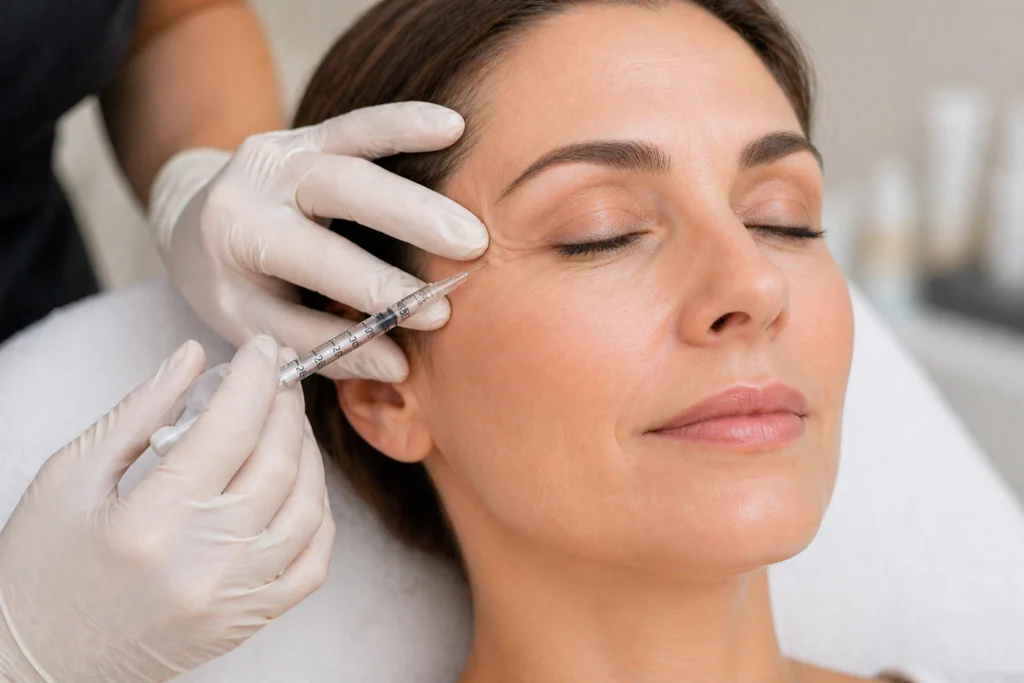
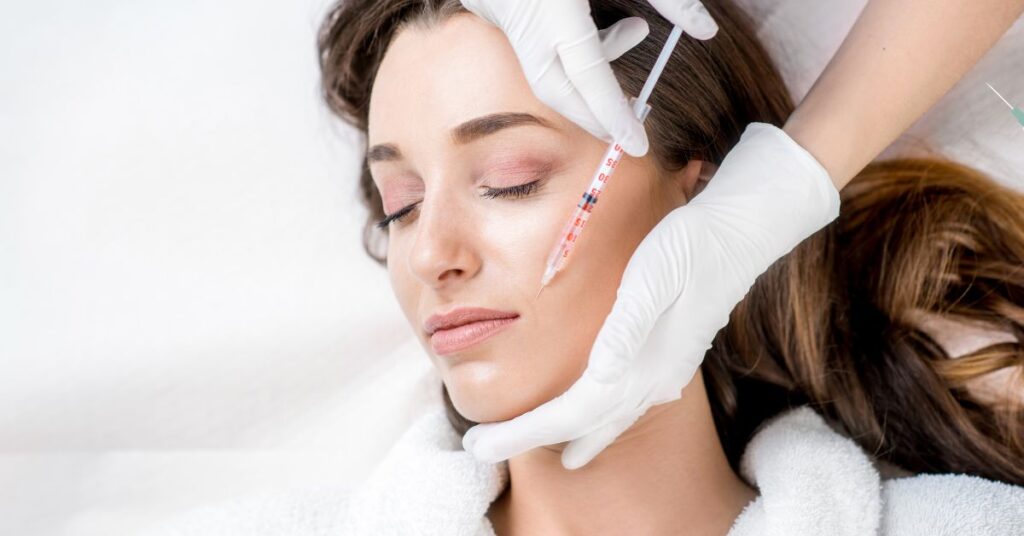
No, estheticians do not do Botox in the vast majority of states. Botox is a prescription medication classified as a drug by the FDA, and injecting it constitutes the practice of medicine. According to the International Association for Physicians in Aesthetic Medicine (IAPAM), estheticians and medical assistants cannot legally inject Botox in any U.S. state on their own. Only licensed medical professionals, such as physicians (MDs and DOs), nurse practitioners (NPs), physician assistants (PAs), and registered nurses (RNs) under physician supervision, are authorized to administer Botox injections. According to the American Society of Plastic Surgeons, over 7.5 million botulinum toxin procedures were performed in the United States in 2023, and every one of them was required to be administered by a licensed medical provider. This guide covers who can legally inject Botox, what estheticians can and cannot do, state-by-state regulations, and how to choose a safe, qualified provider.
What Qualifications Do You Need to Inject Botox?
The qualifications you need to inject Botox include an active medical license (MD, DO, NP, PA, or RN), specialized training in injection techniques and facial anatomy, and compliance with your state’s scope of practice regulations. There is no single federally mandated “Botox certification” in the United States. According to the IAPAM, your authority to inject comes from your state license and scope of practice, not from a separate Botox-specific credential.
Physicians (MDs and DOs) can inject Botox independently in all 50 states. Nurse practitioners can inject independently in states with full practice authority and under physician supervision in others. According to the IAPAM, five states expanded NP practice authority in 2025 alone: Michigan, Alabama, Louisiana, South Carolina, and Wisconsin. Physician assistants can inject in all 50 states but universally require a supervising physician relationship. Registered nurses can administer Botox in most states under physician delegation and supervision.
At Slimming Solutions Med Spa, Botox is administered by Nurse Joi, a Master Injector who has been certified at Level 5 since 2014 and injects five days a week. She has trained with top physicians in the country, including Dr. Stephan Mullholland, Dr. Rajani, Dr. Ordan, and Dr. Emerson.
Can I Do Botox as an Esthetician?
No, you cannot do Botox as an esthetician in any U.S. state on your own. An esthetician license is issued by a state cosmetology board and covers non-invasive skincare treatments like facials, chemical peels, microdermabrasion, and waxing. Botox injections are classified as invasive medical procedures that involve penetrating the skin and administering a prescription drug, which places them outside the scope of an esthetician’s license.
According to the American Academy of Procedural Medicine (AAOPM), in nearly all U.S. states, estheticians are not permitted to administer Botox injections because they lack the medical licensure required to perform invasive procedures or handle prescription medications. The Florida Board of Cosmetology, for example, explicitly excludes Botox from an esthetician’s scope of practice. Even earning a “Botox certification” does not change this legal reality. Certification represents educational achievement, not legal permission to inject.
Estheticians who want to work in the aesthetics injection field have several paths forward: pursuing a nursing degree (RN or NP), becoming a physician assistant, or working alongside a licensed medical professional as a support team member who handles consultations, pre-treatment care, and post-treatment follow-up.
Can I Inject Botox if I’m Not a Nurse?
Yes, you can inject Botox if you are not a nurse, but you must hold a different qualifying medical license. Physicians (MDs and DOs) can inject Botox in all states. Physician assistants can inject under physician supervision in all states. Dentists can inject Botox in some states, though typically limited to dental or oral-facial treatments. According to the AAOPM, Botox is classified as a drug, and its injection constitutes the practice of medicine, so any provider who injects must hold a license that authorizes the practice of medicine or nursing.
Non-medical professionals, such as estheticians, cosmetologists, and medical assistants, cannot legally inject Botox regardless of their training or certifications. According to the IAPAM, violations carry serious penalties including criminal charges for practicing medicine without a license, civil lawsuits, loss of malpractice insurance, fines from state regulatory boards, and potential imprisonment in extreme cases. Texas enacted “Jennifer’s Law” (HB 3749) specifically to address dangers from unqualified injectors.
What States Allow Estheticians to Inject Botox?
No state allows estheticians to inject Botox independently. A small number of states, including Nevada, Illinois, and Ohio, allow properly trained medical estheticians to assist with or participate in cosmetic injection procedures, but only under the direct supervision of a licensed physician. Even in these states, the esthetician is not the primary injector. The physician must evaluate the patient, prescribe the treatment, and oversee the procedure.
According to the American Academy of Cosmetic Medicine (AACM), Nevada allows properly trained medical estheticians to perform neuromodulators like Botox under physician supervision. Illinois accepts estheticians for cosmetic injections like Botox but prohibits them from applying dermal fillers, and they must have advanced certification. Ohio requires a special permit from the Ohio State Medical Board after completing board-approved advanced training. In all cases, a licensed medical doctor must be present and actively supervising.
According to World Population Review, laws regarding Botox on a federal level limit administration to medical professionals, and estheticians usually cannot perform Botox injections even if the purpose is purely cosmetic. The trend in 2025 is toward tighter controls on med spas and increased enforcement against unqualified injectors.
How Long Does It Take to Be Botox Certified?
Botox certification training programs typically take 1 to 4 days for the core injection training component, but the underlying medical education required to be eligible for certification takes years. Physicians complete 4 years of medical school plus 3 to 7 years of residency. Nurse practitioners complete a master’s or doctoral nursing program (2 to 4 years beyond a bachelor’s degree). Physician assistants complete a 2 to 3 year master’s program.
According to the IAPAM, there is no single federally mandated Botox certification in the United States. The FDA approves Botox as a drug but does not certify individual injectors. Specialized Botox training programs teach injection sites, techniques, dosing, facial anatomy, contraindications, and complication management, often awarding continuing medical education (CME) credits. However, these programs are only available to licensed medical professionals. An esthetician can complete a Botox training course, but the certificate does not grant legal authority to inject.
Can Botox Trigger Autoimmune Disease?
There is no strong clinical evidence that Botox triggers autoimmune disease in healthy individuals. Botox (botulinum toxin type A) is a purified protein that works locally at the injection site to temporarily block nerve signals to muscles. According to the FDA, Botox has been safely used for over 20 years with millions of treatments performed annually. However, patients with pre-existing autoimmune conditions that affect the neuromuscular system, such as myasthenia gravis or Lambert-Eaton syndrome, should not receive Botox because it can worsen muscle weakness.
There have been rare case reports in the medical literature of autoimmune-like reactions after Botox, but these are extremely uncommon and have not been established as a direct cause-and-effect relationship. Patients with any autoimmune condition should disclose their full medical history during the consultation so their provider can assess safety. Clients who have questions about whether Botox is safe for their specific health situation should request a consultation with a qualified medical provider.
What Health Conditions Should Not Get Botox?
Health conditions that should not get Botox include myasthenia gravis, Lambert-Eaton syndrome, amyotrophic lateral sclerosis (ALS), any neuromuscular disorder that causes muscle weakness, active infection at the injection site, allergy to any ingredient in Botox, and pregnancy or breastfeeding. According to Allergan (the manufacturer of Botox), patients with a known hypersensitivity to botulinum toxin or any of its components should not receive the treatment.
Patients taking blood thinners, aminoglycoside antibiotics, or muscle relaxants should inform their provider because these medications can interact with Botox and increase the risk of side effects. People with bleeding disorders should also use caution. A thorough medical history review is required before every Botox treatment, which is one of the key reasons the procedure must be performed by a licensed medical professional who can evaluate patient safety.
Understanding the full picture of benefits and risks is important before any injectable treatment. Clients interested in learning more can read about the pros and cons of Botox to make an informed decision.
Who Cannot Get Lip Fillers?
People who cannot get lip fillers include those who are pregnant or breastfeeding, those with active cold sores or oral herpes (the procedure can trigger an outbreak), people with autoimmune conditions that affect healing, those allergic to any filler ingredient (such as lidocaine or hyaluronic acid), and patients with bleeding disorders or those taking blood-thinning medications. According to the FDA, dermal fillers carry risks including infection, lumps, asymmetry, and in rare cases vascular occlusion (blocked blood vessels).
Patients under 21 are generally not candidates for lip fillers, as the FDA-approved age for most hyaluronic acid fillers is 21 and older. A qualified medical provider will conduct a thorough consultation, including medical history and allergy review, before administering any filler. Clients interested in lip enhancement can explore options like Juvederm or Restylane, both of which are FDA-approved hyaluronic acid fillers performed by licensed medical professionals.
Can I Get Botox if I Have Lupus?
Whether you can get Botox if you have lupus depends on the severity and activity of your lupus and should be decided with your rheumatologist and your injector together. Lupus is an autoimmune condition, and while there is no blanket rule that prohibits all lupus patients from getting Botox, extra caution is needed. Patients with active lupus flares, especially those involving the skin, should wait until the flare is under control before receiving any injectable treatment.
Botox acts locally on the muscles at the injection site and does not broadly suppress the immune system. However, some lupus patients are on immunosuppressive medications that can affect healing or increase infection risk. A qualified medical provider will evaluate your specific situation, current medications, and disease activity before approving treatment. This is another important reason why Botox must be administered by a licensed medical professional who can make informed medical judgments, not by an esthetician.
Is It Rude Not to Tip for Botox?
No, it is not rude not to tip for Botox. Botox is a medical procedure performed by a licensed medical professional, and tipping is not expected or required. The standard in the medical aesthetics industry is that you do not tip physicians, nurse practitioners, or physician assistants for medical procedures. This is different from tipping for spa services like facials, massages, or manicures, where gratuities are customary.
Some med spas have support staff such as medical assistants, estheticians, or patient coordinators who help with your visit. If someone in a non-medical support role provides exceptional service, a tip is a kind gesture but never required. When in doubt, ask the front desk about the facility’s tipping policy. The focus should always be on the quality of the medical care you receive.
What Does 40 Units of Botox Cover?
40 units of Botox typically covers one to two treatment areas. The most common use for 40 units is treating the forehead lines (10 to 30 units) and the glabellar lines (frown lines between the eyebrows, approximately 20 units). According to the American Society of Plastic Surgeons, the average Botox treatment for frown lines uses about 20 units, and the forehead typically requires an additional 10 to 30 units depending on muscle size and strength.
The exact areas that 40 units covers vary from patient to patient based on muscle mass, wrinkle severity, and treatment goals. Men often need more units than women because they tend to have larger, stronger facial muscles. A skilled injector like Nurse Joi at Slimming Solutions Med Spa assesses each patient individually to determine the right dosage for natural-looking results. Clients who want to learn more about dosing and costs can review the detailed guide on how much Botox costs.
Who Makes More Money, an Aesthetician or an Esthetician?
An aesthetician and an esthetician are the same profession. The terms are used interchangeably, with “esthetician” being more common in the United States and “aesthetician” being an alternative spelling. Their earning potential is the same and depends on factors like experience, specialization, the services they offer, and whether they work at a med spa, day spa, or independently.
According to the Bureau of Labor Statistics, skincare specialists (which includes estheticians) earned a median annual wage that varies by region and experience level. Estheticians who work in medical spa settings alongside physicians and nurses typically earn more than those in traditional day spas because medical spa services like chemical peels, microneedling, and laser treatments command higher fees. Estheticians who add advanced certifications in treatments like chemical peels, microdermabrasion, and dermaplaning increase their value and earning potential.
Can You Become a Botox Injector Without Being a Nurse?
Yes, you can become a Botox injector without being a nurse, but you must hold a different qualifying medical license. Physicians (MDs and DOs) and physician assistants (PAs) can all inject Botox without a nursing degree. Dentists can also inject Botox in many states for oral-facial treatments. The common requirement across all of these paths is a medical license that authorizes the practice of medicine.
According to the AAOPM, non-medical professionals such as estheticians, cosmetologists, and medical assistants cannot become Botox injectors regardless of the training they complete. The path to becoming a Botox injector always starts with a qualifying medical or nursing degree, followed by specialized aesthetic injection training. Clients should always verify their injector’s credentials before receiving treatment.
How Much Does an Injector Make on Botox?
How much an injector makes on Botox depends on their license type, experience, employment structure, and patient volume. Nurse injectors at med spas typically earn a base salary plus a percentage of the revenue they generate from injectable treatments. According to industry salary data, experienced nurse injectors in busy practices can earn significantly more than nurses in traditional clinical settings, with total compensation varying widely based on the volume of procedures performed.
Physicians who own their own practices or med spas retain the full revenue minus product costs and overhead. Physician assistants and nurse practitioners who inject as employees typically earn a base salary plus productivity bonuses. The Botox market is growing rapidly. According to Coherent Market Insights, the global Botox market was valued at $6.21 billion in 2025 and is expected to reach $12.57 billion by 2032, growing at 10.6% annually. This growth is creating strong demand for qualified injectors across the country.
Who Can Legally Inject Botox: Provider Comparison
| Provider Type | Can Inject Botox? | Supervision Required? | Key Details |
|---|---|---|---|
| Physicians (MD/DO) | Yes, all 50 states | No, fully independent | Can prescribe, inject, and delegate to others |
| Nurse Practitioners (NP) | Yes, all 50 states | Varies: independent in full practice authority states, supervised in others | 5 states expanded NP practice authority in 2025 (IAPAM) |
| Physician Assistants (PA) | Yes, all 50 states | Yes, always requires supervising physician | Supervision level varies from on-site to general oversight |
| Registered Nurses (RN) | Yes, most states | Yes, under physician delegation | Cannot prescribe independently; physician must evaluate patient |
| Dentists | Some states | Varies | Usually limited to oral-facial or dental-related treatments |
| LPNs/LVNs | Limited states | Yes, strict supervision | Many states prohibit; available only under physician delegation in some |
| Estheticians | No | N/A | Cannot inject in any state independently; limited assist role in a few states |
| Medical Assistants | No | N/A | Prohibited from injecting in all states (IAPAM) |
Sources: IAPAM (2025), AAOPM (2025), World Population Review, American Society of Plastic Surgeons, Dermatology Times
Frequently Asked Questions
Can an Esthetician Inject Botox Under Supervision?
In the vast majority of states, an esthetician cannot inject Botox even under supervision. A small number of states, including Nevada, Illinois, and Ohio, allow specially trained medical estheticians to participate in cosmetic injection procedures under the direct supervision of a licensed physician. However, even in these states, the esthetician’s role is limited, and the physician retains primary responsibility for patient evaluation, treatment planning, and procedure oversight. According to the IAPAM, estheticians who inject Botox outside their legal scope face criminal charges for practicing medicine without a license.
What Can Estheticians Do at a Med Spa?
Estheticians at a med spa can perform a wide range of non-invasive skincare treatments, including facials, chemical peels, microdermabrasion, dermaplaning, LED light therapy, body wraps, waxing, and some laser treatments (depending on the state). They can also conduct skin consultations, prepare treatment rooms, assist licensed injectors during procedures, provide pre-treatment and post-treatment care, and educate clients on skincare products. What they cannot do is inject Botox, dermal fillers, or any prescription medication.
Is Botox Certification Enough to Legally Inject?
No, Botox certification alone is not enough to legally inject. Certification demonstrates that you have completed training in injection techniques, but it does not override state licensing requirements. According to emilyEMR, many estheticians pursue Botox certification believing it will grant them legal authority to perform injections, only to discover that their legal scope of practice remains unchanged. You must hold a qualifying medical license (MD, DO, NP, PA, or RN) in addition to any aesthetic injection training to legally administer Botox.
How Do I Know if My Botox Injector Is Qualified?
You can verify your Botox injector is qualified by asking about their medical license type (MD, DO, NP, PA, or RN), their years of injection experience, their specialized aesthetic training, and whether they work under a medical director’s supervision. You can also check their license status through your state’s medical or nursing board website. At Slimming Solutions Med Spa, all injectable treatments are performed by licensed medical professionals with extensive training and experience.
What Happens if an Esthetician Injects Botox Illegally?
If an esthetician injects Botox illegally, both the esthetician and the supervising provider (if any) face serious consequences. According to the IAPAM, penalties include loss of professional license, criminal charges for practicing medicine without authorization, civil lawsuits from patients, loss of malpractice insurance coverage, fines from state regulatory boards, and potential imprisonment. States have been increasing enforcement against unqualified injectors, particularly in med spa settings. Texas enacted “Jennifer’s Law” specifically to address the dangers posed by unqualified individuals performing injectable procedures.
Can Estheticians Administer Dermal Fillers?
No, estheticians cannot administer dermal fillers in any U.S. state on their own. Dermal fillers, like Botox, are prescription medications that constitute a medical procedure when injected. The same licensing requirements that apply to Botox apply to dermal fillers. Only physicians, nurse practitioners, physician assistants, and registered nurses (under physician supervision) can administer fillers. Clients interested in fillers can explore options like Radiesse, Sculptra, or Revanesse Versa, all administered by licensed medical professionals.
What Is the Difference Between an Esthetician and a Nurse Injector?
The difference between an esthetician and a nurse injector is their education, license type, and scope of practice. An esthetician completes a cosmetology or esthetics program (typically 600 to 1,500 hours) focused on non-invasive skincare. A nurse injector is a registered nurse (RN) or nurse practitioner (NP) who has completed a nursing degree (2 to 4+ years), passed the NCLEX licensing exam, and then pursued specialized training in aesthetic injections. The nurse injector holds a medical license that authorizes them to administer Botox and fillers; the esthetician does not. Both professionals play important roles in a med spa, but their scopes are fundamentally different.
Final Thoughts
Estheticians are skilled skincare professionals who provide valuable non-invasive treatments like facials, chemical peels, and dermaplaning. However, Botox is a medical procedure that requires a medical license to perform legally and safely. In the vast majority of U.S. states, estheticians cannot inject Botox under any circumstances. A small number of states allow limited participation under strict physician supervision, but no state allows estheticians to inject independently.
When choosing a Botox provider, always verify that they hold a qualifying medical license and have specialized injection training. Your safety depends on it. Slimming Solutions Med Spa offers Botox treatments performed by Nurse Joi, a Master Injector with over a decade of experience and Level 5 certification. The team also offers a full range of injectables and fillers customized to your goals. Call today or request a consultation to experience safe, expert-level results from a qualified medical professional.
![[thumb]](https://slimmingsolutionsspa.com/wp-content/uploads/2023/12/botox1-150x150.png)
![[thumb]](https://slimmingsolutionsspa.com/wp-content/uploads/2023/12/Before2-150x150.png)
![[thumb]](https://slimmingsolutionsspa.com/wp-content/uploads/2023/12/Before3-150x150.png)


![[thumb]](https://slimmingsolutionsspa.com/wp-content/uploads/2023/12/revanesse-versa-1-150x150.png)
![[thumb]](https://slimmingsolutionsspa.com/wp-content/uploads/2023/12/revanesse-versa-2-150x150.png)
![[thumb]](https://slimmingsolutionsspa.com/wp-content/uploads/2023/12/revanesse-versa-3-150x150.png)
![[thumb]](https://slimmingsolutionsspa.com/wp-content/uploads/2023/12/revanesse-versa-4-150x150.png)
![[thumb]](https://slimmingsolutionsspa.com/wp-content/uploads/2023/12/revanesse-versa-5-150x150.png)
![[thumb]](https://slimmingsolutionsspa.com/wp-content/uploads/2024/01/Eyebrow-treatment-1-1-150x150.png)
![[thumb]](https://slimmingsolutionsspa.com/wp-content/uploads/2023/12/Skin-Rejuvenation-1-150x150.png)
![[thumb]](https://slimmingsolutionsspa.com/wp-content/uploads/2023/12/Skin-Rejuvenation-2-150x150.png)


![[thumb]](https://slimmingsolutionsspa.com/wp-content/uploads/2024/01/Lip-Filler-1-150x150.png)
![[thumb]](https://slimmingsolutionsspa.com/wp-content/uploads/2024/01/Lip-Filler-2-150x150.png)
![[thumb]](https://slimmingsolutionsspa.com/wp-content/uploads/2025/02/Lip-Filler-1-150x150.png)
![[thumb]](https://slimmingsolutionsspa.com/wp-content/uploads/2024/01/Lip-Filler-150x150.jpg)
![[thumb]](https://slimmingsolutionsspa.com/wp-content/uploads/2024/01/Before-1-150x150.jpg)

![[thumb]](https://slimmingsolutionsspa.com/wp-content/uploads/2024/01/RHA-Treatmetn-3-150x150.png)
![[thumb]](https://slimmingsolutionsspa.com/wp-content/uploads/2024/01/RHA-Treatmetn-2-150x150.png)
![[thumb]](https://slimmingsolutionsspa.com/wp-content/uploads/2024/01/RHA-Treatmetn-1-150x150.png)
![[thumb]](https://slimmingsolutionsspa.com/wp-content/uploads/2024/01/Thread-Lifts-1-150x150.png)
![[thumb]](https://slimmingsolutionsspa.com/wp-content/uploads/2024/01/Thread-Lifts-2-150x150.png)
![[thumb]](https://slimmingsolutionsspa.com/wp-content/uploads/2025/02/Lip-Filler-2-150x150.png)

![[thumb]](https://slimmingsolutionsspa.com/wp-content/uploads/2023/12/skin-reuvulation1-150x150.png)
![[thumb]](https://slimmingsolutionsspa.com/wp-content/uploads/2023/12/skin-rejuvulation-2-150x150.png)
![[thumb]](https://slimmingsolutionsspa.com/wp-content/uploads/2023/12/Skin-Tighting-150x150.png)
![[thumb]](https://slimmingsolutionsspa.com/wp-content/uploads/2023/12/Before-150x150.jpg)
![[thumb]](https://slimmingsolutionsspa.com/wp-content/uploads/2023/12/weightloss-1-150x150.png)
![[thumb]](https://slimmingsolutionsspa.com/wp-content/uploads/2023/12/weightloss-2-150x150.png)
![[thumb]](https://slimmingsolutionsspa.com/wp-content/uploads/2023/12/2Weight-Loss-2-150x150.png)
![[thumb]](https://slimmingsolutionsspa.com/wp-content/uploads/2025/02/Weight-Loss-1-new-150x150.png)
![[thumb]](https://slimmingsolutionsspa.com/wp-content/uploads/2023/12/Weight-Loss-3-150x150.png)
![[thumb]](https://slimmingsolutionsspa.com/wp-content/uploads/2025/03/Slimming-Solutions-BA-Template-150x150.png)


![[thumb]](https://slimmingsolutionsspa.com/wp-content/uploads/2023/12/dat3-150x150.png)
![[thumb]](https://slimmingsolutionsspa.com/wp-content/uploads/2023/12/dat-0-150x150.png)
![[thumb]](https://slimmingsolutionsspa.com/wp-content/uploads/2023/12/dat-1-150x150.png)
![[thumb]](https://slimmingsolutionsspa.com/wp-content/uploads/2023/12/Before-1-150x150.png)

![[thumb]](https://slimmingsolutionsspa.com/wp-content/uploads/2024/01/EMS-Treatment-2-150x150.png)
![[thumb]](https://slimmingsolutionsspa.com/wp-content/uploads/2024/01/EMS-Treatment-1-150x150.png)
![[thumb]](https://slimmingsolutionsspa.com/wp-content/uploads/2025/02/ems-BNA-front-150x150.png)
![[thumb]](https://slimmingsolutionsspa.com/wp-content/uploads/2025/02/EMS-bna-SIDE-150x150.png)
![[thumb]](https://slimmingsolutionsspa.com/wp-content/uploads/2024/01/EMS-Treatment-6-150x150.png)