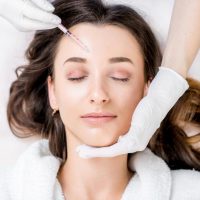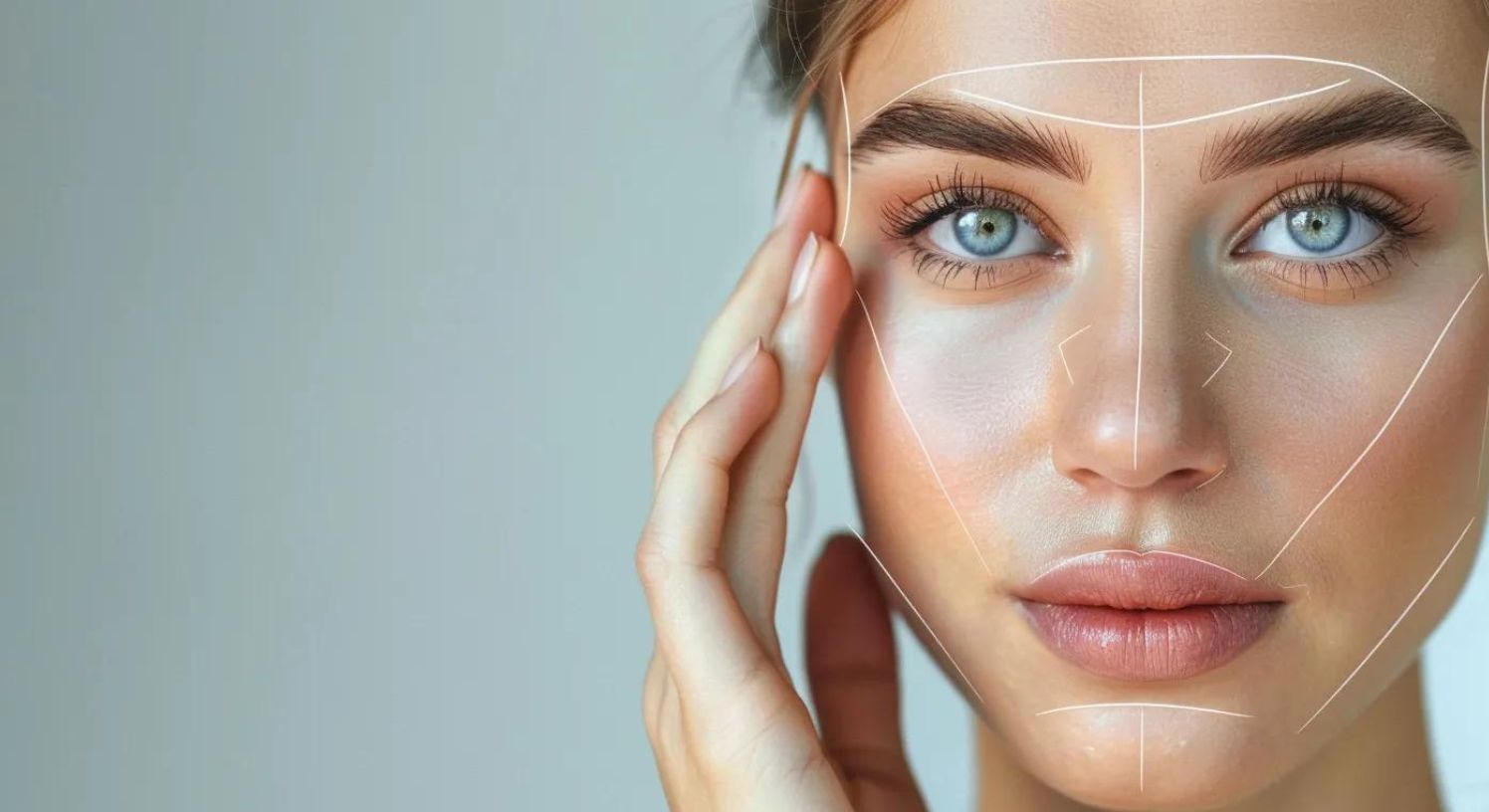
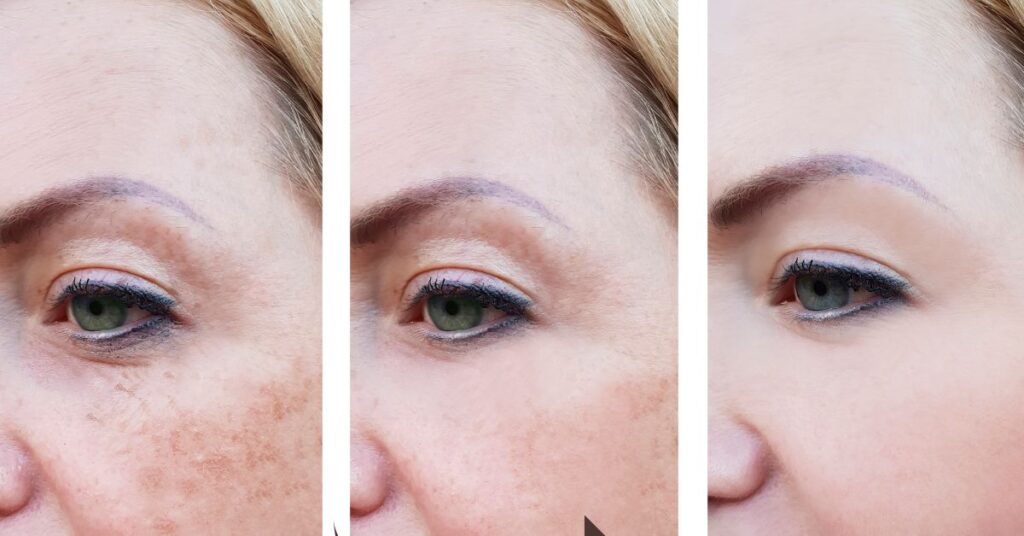
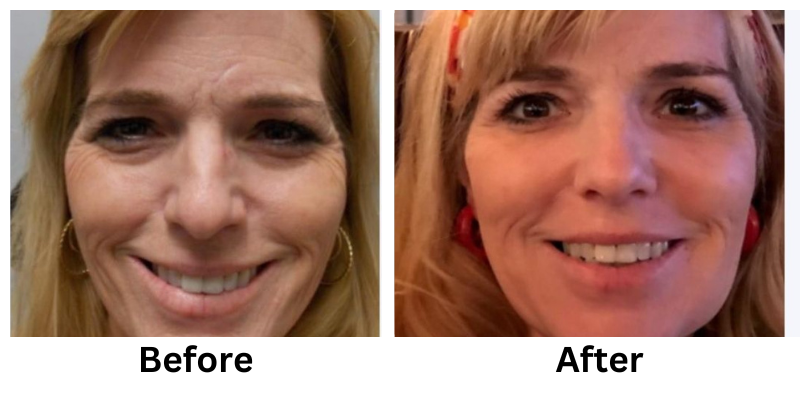
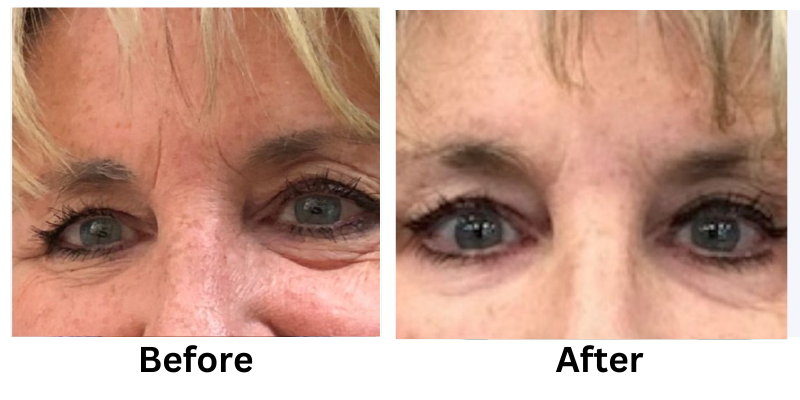
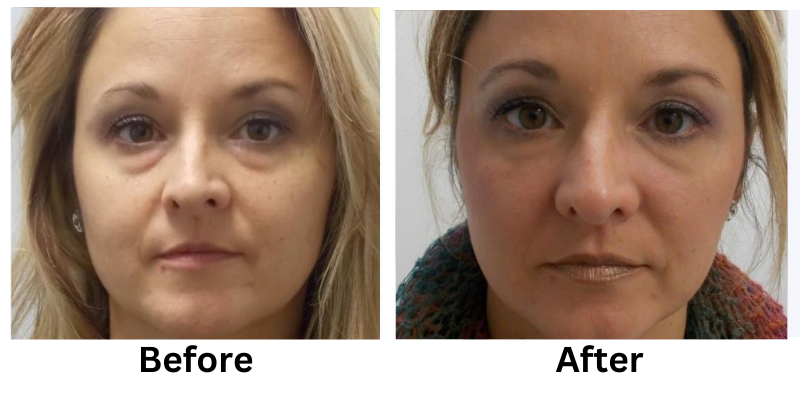
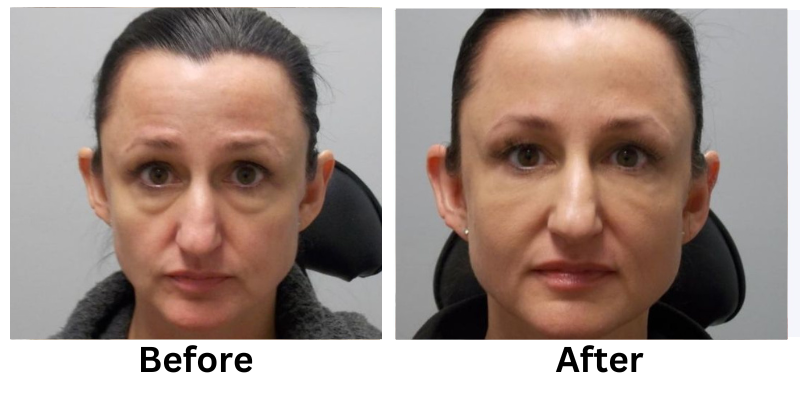
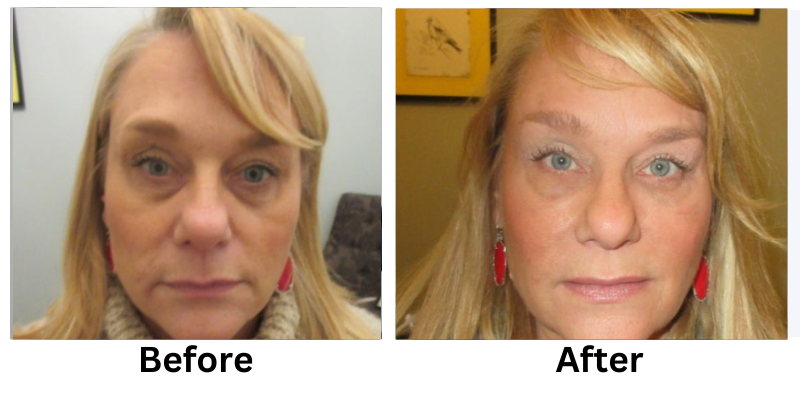
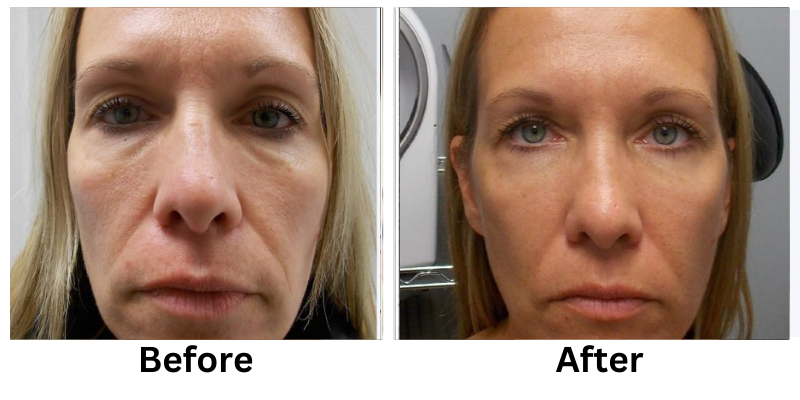
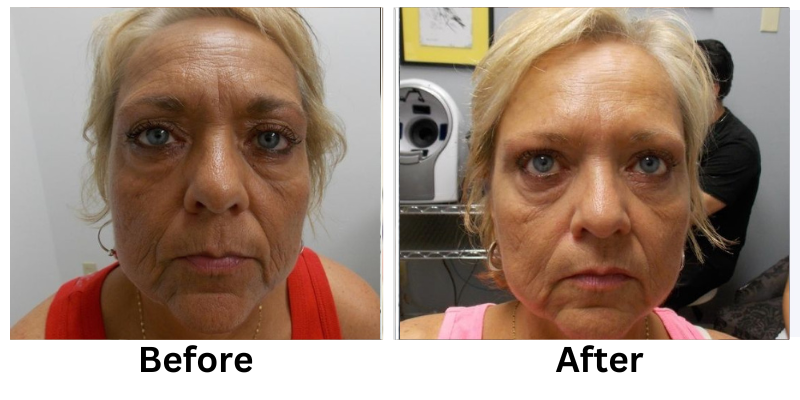
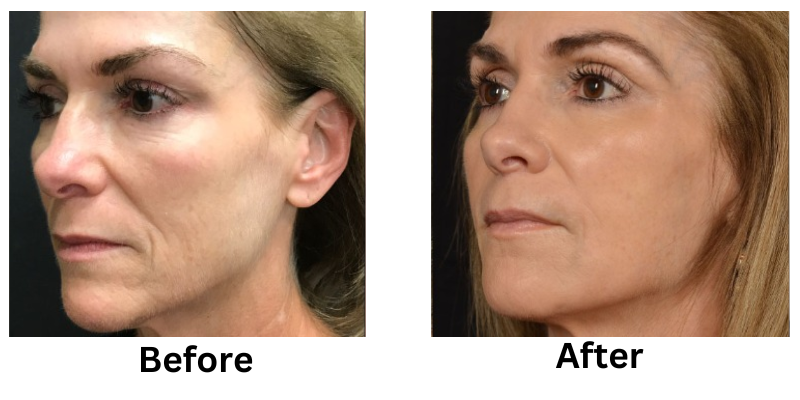
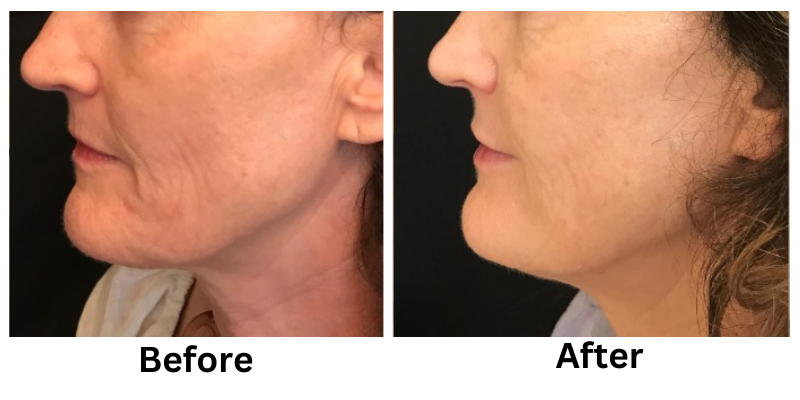
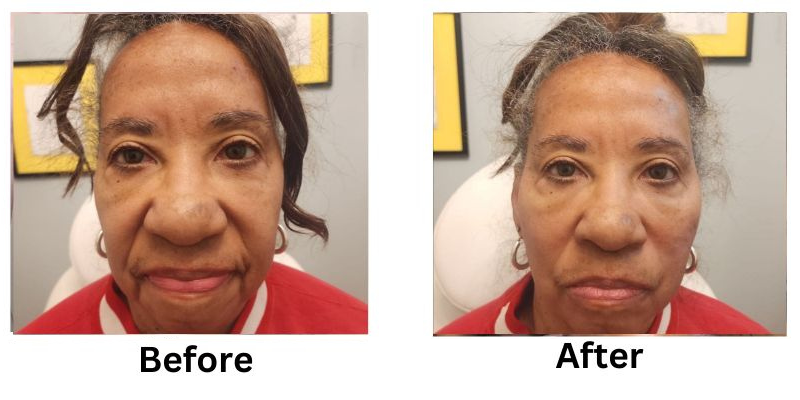
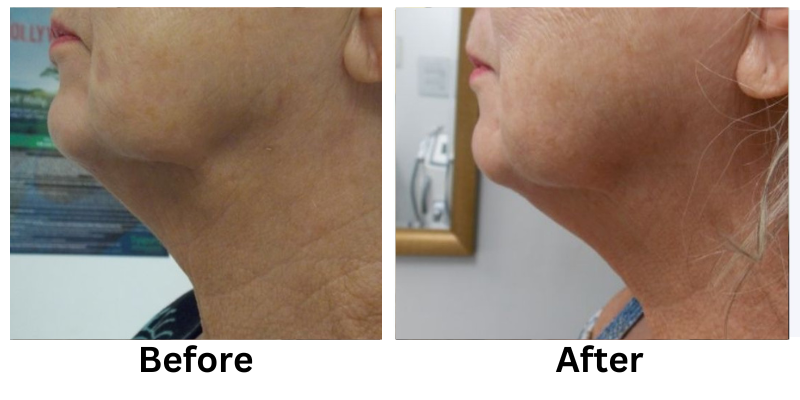
40 units of Botox before and after results show a clear difference in how the face looks, with smoother skin, softer lines, and a more refreshed appearance overall. This amount is one of the most common doses used to treat multiple areas of the face at once, including forehead lines, frown lines, and crow’s feet. According to the American Society of Plastic Surgeons, more than 4.7 million Botox procedures were performed in 2023 alone, making it the number one nonsurgical cosmetic treatment. In this article, you will learn what 40 units of Botox can do, what areas it treats, how long the results last, and what real before and after changes look like.
What Will 40 Units of Botox Get Me?
40 units of Botox will get you a smoother, more refreshed face by treating several key areas at the same time. Most providers split this amount across the forehead, the glabella (the area between your eyebrows), and the crow’s feet around your eyes. According to data from the American Academy of Dermatology, treating multiple zones in one session creates a more balanced, natural result than focusing on just one area.
For example, a common split looks like this: 10 units for the forehead, 20 units for the frown lines between the brows, and 10 units split between both sides for crow’s feet. Your provider will adjust this plan based on your unique muscle strength and facial structure. Patients who receive Botox cosmetic neurotoxin treatments from a skilled injector often say they look rested and younger without looking “done.”
A study published in the Journal of Cosmetic Dermatology found that 90.5% of patients reported being mostly or very satisfied with their natural-looking results 30 days after treatment. That satisfaction stayed above 80% for the entire 12-month study period, according to data from Allergan Aesthetics.
Is 40 Units of Botox a Lot?
No, 40 units of Botox is not a lot. It is actually a very standard amount for adults who want to treat two or three areas of the upper face. According to U.S. Dermatology Partners, a typical Botox procedure uses anywhere from 10 to 50 units depending on the treatment areas and muscle strength. Forty units falls right in the middle of that range.
Someone treating only their forehead might use 10 to 20 units. Someone treating the forehead, the frown lines, and crow’s feet will usually need 30 to 50 units. So 40 units is a moderate, balanced dose that covers multiple concerns without overdoing it. The goal is always to relax the muscles just enough to smooth wrinkles while keeping natural facial expressions.
How Many Syringes Is 40 Units of Botox?
40 units of Botox is less than one full syringe. A standard Botox vial contains 100 units, so 40 units is less than half of one vial. The amount of liquid varies depending on how the provider dilutes the product, but it is a very small volume. According to Allergan, the manufacturer of Botox, one unit is a precise, controlled dose of botulinum toxin type A. Your injector draws only the exact amount needed from the vial for your treatment plan.
How Many mL Is 40 Units of Botox?
40 units of Botox is typically about 1 mL of liquid after dilution. The exact volume depends on how the provider mixes the product with saline. According to Allergan’s prescribing guidelines, one vial of 100 units is usually reconstituted with 2.5 mL of saline, which means each 0.1 mL contains about 4 units. At that ratio, 40 units equals roughly 1 mL. This is a very small amount of liquid, which is why the injections are so quick and precise.
Where Do You Inject 40 Units of Botox?
You inject 40 units of Botox into the upper face, most commonly targeting the forehead lines, the glabellar lines (frown lines or “11s”), and the crow’s feet around the eyes. These are the three most popular Botox treatment areas, according to the American Society of Plastic Surgeons. Your provider chooses exact injection points based on how your muscles move and where your lines are deepest.
Patients who are interested in reducing both wrinkles and facial width sometimes also use Botox on the masseter muscles along the jawline. However, the masseter area usually needs 25 to 30 units per side on its own, so a 40-unit plan focused on the jaw would cover only one side or be combined with fewer units in other areas.
The precision of injection placement matters just as much as the number of units. Experienced providers at a trusted med spa use facial analysis to map out the best injection sites for each person. This is one of the biggest reasons to choose a qualified professional for your injectable and filler treatments.
Can 40 Units of Botox Treat the Forehead and Frown Lines Together?
Yes, 40 units of Botox can treat the forehead and frown lines together. In fact, many providers recommend treating these two areas at the same time. According to Dermatology Associates of Rochester, treating the forehead alone without the glabella can sometimes cause the brow to drop. By treating both areas together with roughly 20 units on the glabella and 10 to 20 units on the forehead, the results look even and natural.
The total can range from 30 to 40 units for these two zones combined. This is one of the most popular Botox treatment plans and is a great starting point for people who are new to Botox.
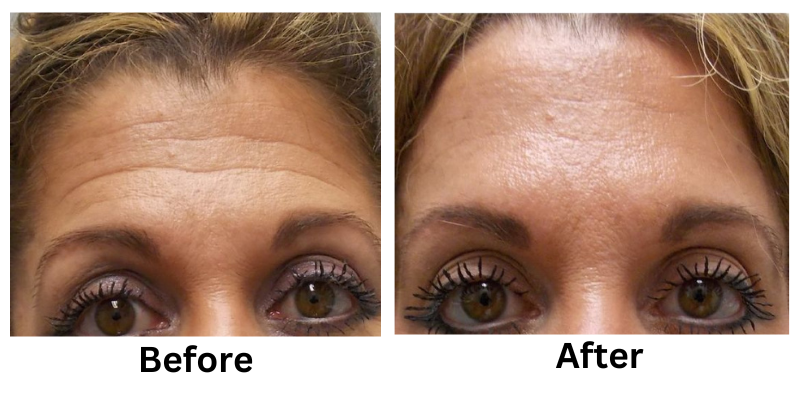
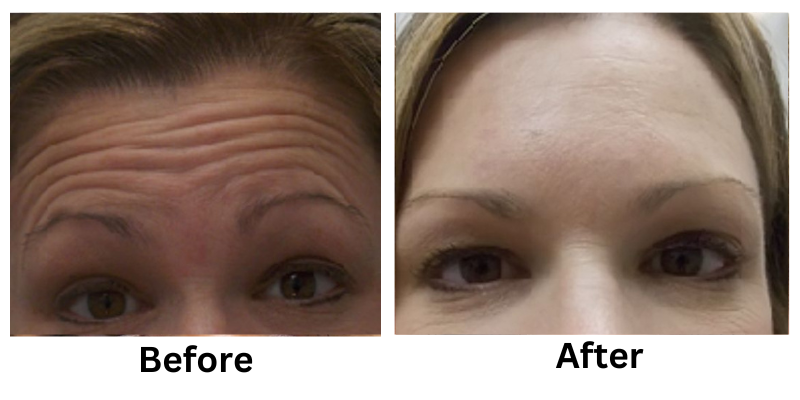
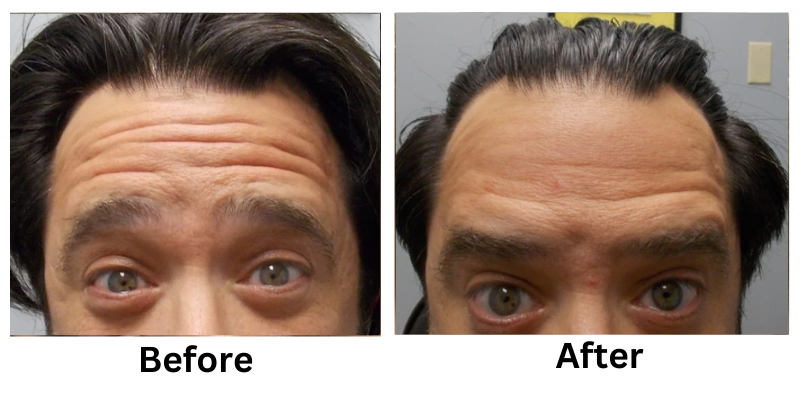
What Does 40 Units of Botox Before and After Look Like?
40 units of Botox before and after looks like a noticeable but natural change. Before treatment, patients often have visible horizontal lines across the forehead, deep vertical lines between the eyebrows, and fine wrinkles fanning out from the corners of the eyes. After treatment, those lines soften or disappear, giving the face a smoother, more rested look.
Most patients start seeing changes within 3 to 5 days after their injections. Full results appear around the 10 to 14 day mark. According to a review published in Dermatologic Surgery, more than 97% of patients showed at least a one-grade improvement in wrinkle severity at the 30-day mark. The face still moves naturally, but the lines look much softer.
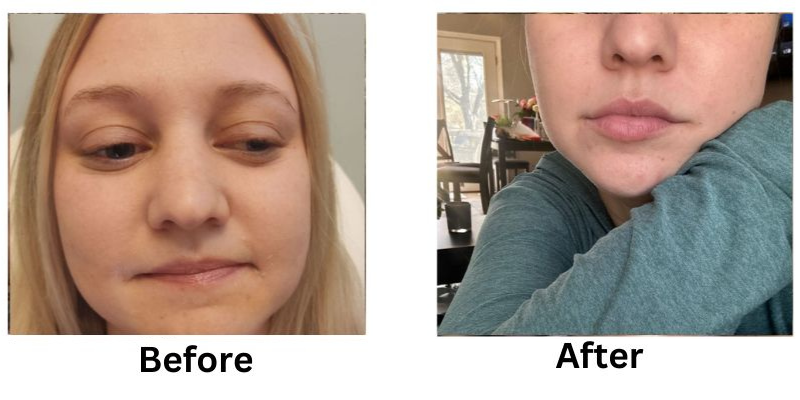
If you want to see real transformation photos, many med spas share patient results. Looking at Botox before and after pictures can help you set clear, realistic expectations for your own results.
How Long Does It Take To See Results From 40 Units of Botox?
It takes about 3 to 5 days to see initial results from 40 units of Botox, and full results develop within 10 to 14 days. Botox does not work instantly. After the injection, the botulinum toxin gradually blocks the nerve signals to the treated muscles. As the muscles relax over the first week or two, the skin above them smooths out. According to Healthline, some patients notice the first subtle changes within 24 to 48 hours, but the majority see the biggest difference after one full week.
How Long Does Forehead Botox Last?
Forehead Botox lasts about 3 to 4 months for most patients. After that time, the nerve signals slowly start reaching the muscles again, and the wrinkles begin to reappear. According to the American Academy of Dermatology, the average duration is 3 to 4 months, but some patients find their results last up to 6 months, especially after multiple treatment sessions.
Several factors affect how long Botox lasts, including your metabolism, muscle strength, the number of units used, and how often you get treated. People with faster metabolisms may notice the effects wearing off sooner. Regular Botox patients often report that their results last longer over time because the treated muscles become conditioned to being relaxed.
If you are curious about what to expect over time, patients who learn about how long Botox lasts tend to plan their touch-up sessions more effectively.
Why Is My Botox Only Lasting 2 Months?
Your Botox is only lasting 2 months because of factors like a fast metabolism, strong facial muscles, or not enough units being used. According to research published in the journal Dermatologic Surgery, individual variation in Botox duration is common. First-time patients sometimes metabolize the product faster, and people who exercise intensely may also break it down more quickly.
If your results are consistently fading after just two months, talk to your provider. They may recommend slightly increasing the number of units or adjusting your injection points. In some cases, switching to a different neurotoxin like Xeomin can also help patients who feel their Botox is wearing off too fast.
What Happens After 20 Years of Botox?
After 20 years of Botox, the treated muscles become significantly weaker and thinner over time, which can lead to longer-lasting smoothness and a reduced need for frequent treatments. A review published in Dermatologic Surgery found that persistent changes in muscle composition and function were observed in patients who received repeated injections over several years, with some effects lasting up to 4 years after the last injection.
Long-term Botox use does not cause permanent damage when performed correctly. According to a review in Postepy Dermatologii i Alergologii, there are no long-term or life-threatening adverse effects related to botulinum toxin treatment for cosmetic indications when used properly. The FDA first approved Botox for cosmetic use in 2002, so there is now over two decades of clinical data supporting its safety record.
Is Botox Safe Long-Term?
Yes, Botox is safe long-term when administered by a qualified professional at the correct doses. According to a meta-analysis published in the journal Pharmacology, researchers reviewed 36 randomized controlled trials involving over 2,300 patients and found that Botox had a favorable safety profile across all uses. No severe adverse events were reported in any of the studies reviewed.
The key to safe, long-term Botox use is choosing a provider who follows proper dosing guidelines and has advanced training in facial anatomy. A thorough look at the pros and cons of Botox can help you make a confident, informed decision.
Does Your Face Ever Go Back to Normal After Botox?
Yes, your face does go back to normal after Botox. The effects of Botox are completely temporary and reversible. Once the product wears off, usually within 3 to 4 months, your muscles gradually regain their full movement, and your face returns to its pre-treatment state. According to the American Society of Plastic Surgeons, stopping Botox does not make wrinkles worse than they were before. Your face simply returns to its natural aging pattern.
Will My Skin Sag if I Stop Botox?
No, your skin will not sag if you stop Botox. This is a very common myth. Botox works on the muscles underneath the skin, not on the skin itself. When you stop treatment, the muscles start moving again, and the wrinkles come back to where they were before. According to the Cleveland Clinic, Botox does not stretch or damage the skin, so stopping it will not cause extra sagging. Your skin will simply resume its normal aging process from where it left off.
What Is the Best Age To Get Botox?
The best age to get Botox depends on your individual skin concerns, but most people start between the ages of 25 and 35. According to data from the American Society of Plastic Surgeons, about 24% of Botox patients are between 19 and 34 years old. This group is using Botox as a preventive measure to slow down the formation of wrinkles before they become deep and permanent.
There is no single “right” age. Some people develop forehead lines or frown lines in their late 20s, while others may not see them until their 40s. A consultation with an experienced provider is the best way to figure out the right time and the right plan for you. Patients who explore the full range of treatment options for fine lines and wrinkles often find the ideal combination for their age and skin type.
At What Age Is Botox No Longer Effective?
Botox is no longer as effective when wrinkles have become very deep, static lines that are visible even when the face is completely at rest. This often happens in the late 60s or 70s, depending on the person. According to the Global Aesthetics Consensus Group, Botox works best on dynamic wrinkles caused by muscle movement. Once lines have been etched deeply into the skin from years of repetitive motion and collagen loss, Botox alone may not fully smooth them out.
However, Botox can still provide some improvement at any age. Many older patients combine Botox with dermal fillers like Juvederm or Sculptra to address both the muscle movement and the volume loss that come with aging.
What Is the Rule of 3 in Botox?
The rule of 3 in Botox refers to the three main treatment areas of the upper face: the forehead lines, the glabellar lines (frown lines between the brows), and the crow’s feet around the eyes. Many providers call this the “Botox trifecta” because treating all three areas together gives the most balanced and natural result. According to clinical study data from Allergan Aesthetics, patients who treated all three areas reported higher satisfaction rates compared to those who only treated one or two areas.
The rule of 3 also reminds providers to consider the balance between these three zones. Over-treating one area while ignoring the others can lead to an unnatural look. When all three areas are treated together, the entire upper face looks smoother and more harmonious.
What Is the 4 Hour Rule for Botox?
The 4 hour rule for Botox means you should stay upright and avoid lying down for at least 4 hours after your injections. This reduces the risk of the Botox migrating away from the injection site and affecting nearby muscles. According to many board-certified dermatologists and aesthetic providers, this simple aftercare step helps the product stay exactly where it was placed for the best possible results.
What Should I Avoid After Botox Injections?
You should avoid several things after Botox injections to get the best results and reduce the chance of side effects. For the first 24 hours, avoid strenuous exercise, alcohol, lying flat, touching or rubbing the treated area, and extreme heat like saunas or hot tubs. According to the American Academy of Dermatology, these activities can increase blood flow or pressure to the face, which could cause the Botox to shift or increase bruising.
It is also best to avoid blood-thinning medications and supplements like aspirin, ibuprofen, and fish oil for a few days before and after treatment, as these can make bruising worse. Most providers will give you a detailed aftercare list at the time of your treatment. Patients who want to learn more can read about how Botox works to better prepare for their appointment.
Can Botox Change Your Face Shape?
Yes, Botox can change your face shape when it is injected into the masseter muscles along the jawline. This treatment relaxes and shrinks the masseter muscles over time, making the lower face look slimmer and more contoured. According to the International Society of Aesthetic Plastic Surgery, masseter Botox has become a popular treatment for patients who want a more V-shaped or tapered jawline without surgery.
However, when Botox is used in the standard upper face areas like the forehead, frown lines, and crow’s feet, it does not change the overall shape of the face. It only smooths the skin and softens lines in those areas. The change in shape only happens when Botox is specifically targeted at the large chewing muscles in the jaw.
Is Botox Cheaper Than Fillers?
Yes, Botox is generally cheaper than fillers on a per-treatment basis. According to the American Society of Plastic Surgeons, the average Botox treatment ranges from about 30 to 40 units, while dermal fillers often require one or more full syringes that tend to have a higher per-unit cost. Fillers also address different concerns, like volume loss, hollow cheeks, and thin lips, while Botox targets wrinkles caused by muscle movement.
Many patients benefit from combining both Botox and fillers for a complete facial rejuvenation. For those weighing options, a detailed comparison of using Botox and fillers together can provide helpful insights.
Is Having Botox Once a Year Enough?
Having Botox once a year is not enough to maintain consistent results. Botox typically lasts 3 to 4 months, according to the American Academy of Dermatology. After that, the muscles gradually return to their full movement and wrinkles reappear. Most providers recommend getting Botox treatments every 3 to 4 months, which works out to about 3 to 4 sessions per year, for ongoing wrinkle prevention.
Getting Botox just once a year will give you a temporary improvement for a few months, but you will spend the majority of the year without its effects. If cost is a concern, talk to your provider about a maintenance plan that fits your budget and goals.
40 Units of Botox: Before and After Comparison Table
| Treatment Area | Typical Units Used | Before Treatment | After Treatment (Day 14) | Duration of Results |
| Forehead Lines | 10-20 units | Visible horizontal creases across the forehead | Smooth or nearly smooth forehead with natural movement | 3-4 months (up to 6 months for forehead lines) |
| Glabellar Lines (11s) | 20-40 units | Deep vertical lines between eyebrows, angry or tired look | Softened or eliminated frown lines, relaxed expression | 3-4 months |
| Crow’s Feet | 5-15 units per side | Fan-shaped wrinkles around the outer corners of the eyes | Smoother eye area with reduced fine lines while smiling | 3-4 months |
| Combined (All 3 Areas) | 40 units total | Multiple visible wrinkles across the upper face | Refreshed, balanced, youthful appearance across entire upper face | 3-4 months average |
Sources: American Society of Plastic Surgeons, American Academy of Dermatology, Allergan Aesthetics clinical study data, U.S. Dermatology Partners, Dermatologic Surgery journal.
How Often Should You Get Botox Injections?
You should get Botox injections every 3 to 4 months to maintain results, according to the American Academy of Dermatology. This timing lines up with how long the effects of Botox typically last. When you keep a regular schedule, the treated muscles stay relaxed and the wrinkles stay smooth. Over time, some patients are able to stretch their appointments to every 4 to 6 months as the muscles become conditioned.
Waiting too long between sessions means the muscles fully regain their strength, and the wrinkles come back to their original depth. Staying on a consistent schedule helps you get the most out of every treatment.
Is 50 Units of Botox a Lot for the Forehead?
Yes, 50 units of Botox is a lot for the forehead alone. According to U.S. Dermatology Partners, the forehead typically requires only 10 to 20 units. If a provider recommends 50 units, it is likely that the treatment plan includes the forehead along with the glabellar lines and possibly crow’s feet as well. The combined treatment of the forehead and glabella together usually totals 30 to 40 units, so 50 units would be on the higher end and may include three full zones.
Always ask your provider to explain the treatment plan so you know exactly where each unit will be placed. The right number of units depends on your specific muscle strength, facial anatomy, and desired outcome.
Can Botox Prevent Wrinkles if You Start Early?
Yes, Botox can prevent wrinkles if you start early because it stops the repetitive muscle movements that cause lines to form over time. This is commonly called “preventive Botox” or “Baby Botox.” According to data from the American Society of Plastic Surgeons, about 24% of all Botox patients are between 19 and 34 years old, and this number continues to grow as younger adults discover the benefits of early treatment.
By relaxing the muscles before deep lines develop, Botox slows down the aging process in those areas. Patients who start in their late 20s or early 30s often need fewer units and less frequent treatments compared to those who wait until wrinkles are deeply set. It is one of the most effective anti-aging strategies available today.
Frequently Asked Questions
How Much Should 40 Units of Botox Cost?
40 units of Botox should cost between $400 and $600 on average, based on data from the American Society of Plastic Surgeons. The exact amount depends on the provider, their experience, and your specific treatment plan. Botox is priced per unit, and the per-unit rate typically falls between $10 and $15. A consultation is the best way to get an exact estimate for your treatment.
How Long Do 40 Units of Botox Last?
40 units of Botox last about 3 to 4 months for most patients. According to the American Academy of Dermatology, results begin to fade after 3 months as the nerve signals gradually reconnect with the treated muscles. Some patients experience results lasting up to 6 months, especially with repeated treatments over time.
Can Botox and Fillers Be Done at the Same Time?
Yes, Botox and fillers can be done at the same time. Many providers recommend combining both treatments in one session for a more complete result. Botox relaxes the muscles that cause wrinkles, while fillers restore volume in areas like the cheeks, lips, and nasolabial folds. According to the Global Aesthetics Consensus Group, combining neurotoxins and fillers is a widely accepted approach to full-face rejuvenation.
Does Insurance Cover Botox for Cosmetic Purposes?
No, insurance does not cover Botox for cosmetic purposes. When Botox is used to reduce wrinkles and improve appearance, it is considered an elective procedure. However, the FDA has approved Botox for several medical conditions, including chronic migraines, excessive sweating, and muscle spasticity, and insurance may cover it for those specific uses.
What Happens if You Get Too Much Botox?
If you get too much Botox, the treated area may look overly frozen or expressionless. In some cases, too many units can cause the brow to drop or create an unnatural, heavy feeling above the eyes. According to a systematic review published in Plastic and Reconstructive Surgery, the most common treatment-related side effects include brow ptosis at a rate of 3.1% and lip asymmetries at 6.9%. These effects are temporary and resolve as the Botox wears off, usually within a few weeks to a few months.
Is Botox Worth It for the First Time?
Yes, Botox is worth it for the first time for most patients who want to reduce visible wrinkles or prevent new ones from forming. According to data from RealSelf, 96% of patients who received Botox reported that the treatment was “worth it,” making it the highest-rated nonsurgical cosmetic procedure by patient satisfaction. Most first-time patients are pleasantly surprised by how quick, simple, and effective the treatment is.
How Do I Know How Many Units of Botox I Need?
You know how many units of Botox you need by having a personal consultation with a qualified injector. They will study your facial muscles, look at your wrinkle patterns, and ask about your goals. According to the American Society of Plastic Surgeons, the number of units varies based on muscle strength, facial anatomy, age, and the treatment areas you choose. There is no one-size-fits-all answer, which is why a professional evaluation is so important.
Final Thoughts
40 units of Botox before and after results speak for themselves. This standard dose treats the most common areas of the upper face, delivering smoother skin, softer lines, and a refreshed look that still feels like you. With more than 9 million Botox treatments performed nationwide each year, according to research from Dr. Syra Aesthetics and the American Society for Dermatologic Surgery, this procedure continues to be the gold standard for nonsurgical facial rejuvenation. Whether you are a first-time patient or you have been getting Botox for years, the right provider makes all the difference.
If you are ready to see what 40 units of Botox can do for you, schedule a consultation with the experienced team at Slimming Solutions Med Spa. Their skilled professionals will create a personalized treatment plan that matches your goals and delivers natural-looking results you will love. Contact them today by calling (816) 524-3438 or visiting their consultation request page to take the first step toward a more confident, refreshed you.
![[thumb]](https://slimmingsolutionsspa.com/wp-content/uploads/2023/12/botox1-150x150.png)
![[thumb]](https://slimmingsolutionsspa.com/wp-content/uploads/2023/12/Before2-150x150.png)
![[thumb]](https://slimmingsolutionsspa.com/wp-content/uploads/2023/12/Before3-150x150.png)


![[thumb]](https://slimmingsolutionsspa.com/wp-content/uploads/2023/12/revanesse-versa-1-150x150.png)
![[thumb]](https://slimmingsolutionsspa.com/wp-content/uploads/2023/12/revanesse-versa-2-150x150.png)
![[thumb]](https://slimmingsolutionsspa.com/wp-content/uploads/2023/12/revanesse-versa-3-150x150.png)
![[thumb]](https://slimmingsolutionsspa.com/wp-content/uploads/2023/12/revanesse-versa-4-150x150.png)
![[thumb]](https://slimmingsolutionsspa.com/wp-content/uploads/2023/12/revanesse-versa-5-150x150.png)
![[thumb]](https://slimmingsolutionsspa.com/wp-content/uploads/2024/01/Eyebrow-treatment-1-1-150x150.png)
![[thumb]](https://slimmingsolutionsspa.com/wp-content/uploads/2023/12/Skin-Rejuvenation-1-150x150.png)
![[thumb]](https://slimmingsolutionsspa.com/wp-content/uploads/2023/12/Skin-Rejuvenation-2-150x150.png)


![[thumb]](https://slimmingsolutionsspa.com/wp-content/uploads/2024/01/Lip-Filler-1-150x150.png)
![[thumb]](https://slimmingsolutionsspa.com/wp-content/uploads/2024/01/Lip-Filler-2-150x150.png)
![[thumb]](https://slimmingsolutionsspa.com/wp-content/uploads/2025/02/Lip-Filler-1-150x150.png)
![[thumb]](https://slimmingsolutionsspa.com/wp-content/uploads/2024/01/Lip-Filler-150x150.jpg)
![[thumb]](https://slimmingsolutionsspa.com/wp-content/uploads/2024/01/Before-1-150x150.jpg)

![[thumb]](https://slimmingsolutionsspa.com/wp-content/uploads/2024/01/RHA-Treatmetn-3-150x150.png)
![[thumb]](https://slimmingsolutionsspa.com/wp-content/uploads/2024/01/RHA-Treatmetn-2-150x150.png)
![[thumb]](https://slimmingsolutionsspa.com/wp-content/uploads/2024/01/RHA-Treatmetn-1-150x150.png)
![[thumb]](https://slimmingsolutionsspa.com/wp-content/uploads/2024/01/Thread-Lifts-1-150x150.png)
![[thumb]](https://slimmingsolutionsspa.com/wp-content/uploads/2024/01/Thread-Lifts-2-150x150.png)
![[thumb]](https://slimmingsolutionsspa.com/wp-content/uploads/2025/02/Lip-Filler-2-150x150.png)

![[thumb]](https://slimmingsolutionsspa.com/wp-content/uploads/2023/12/skin-reuvulation1-150x150.png)
![[thumb]](https://slimmingsolutionsspa.com/wp-content/uploads/2023/12/skin-rejuvulation-2-150x150.png)
![[thumb]](https://slimmingsolutionsspa.com/wp-content/uploads/2023/12/Skin-Tighting-150x150.png)
![[thumb]](https://slimmingsolutionsspa.com/wp-content/uploads/2023/12/Before-150x150.jpg)
![[thumb]](https://slimmingsolutionsspa.com/wp-content/uploads/2023/12/weightloss-1-150x150.png)
![[thumb]](https://slimmingsolutionsspa.com/wp-content/uploads/2023/12/weightloss-2-150x150.png)
![[thumb]](https://slimmingsolutionsspa.com/wp-content/uploads/2023/12/2Weight-Loss-2-150x150.png)
![[thumb]](https://slimmingsolutionsspa.com/wp-content/uploads/2025/02/Weight-Loss-1-new-150x150.png)
![[thumb]](https://slimmingsolutionsspa.com/wp-content/uploads/2023/12/Weight-Loss-3-150x150.png)
![[thumb]](https://slimmingsolutionsspa.com/wp-content/uploads/2025/03/Slimming-Solutions-BA-Template-150x150.png)


![[thumb]](https://slimmingsolutionsspa.com/wp-content/uploads/2023/12/dat3-150x150.png)
![[thumb]](https://slimmingsolutionsspa.com/wp-content/uploads/2023/12/dat-0-150x150.png)
![[thumb]](https://slimmingsolutionsspa.com/wp-content/uploads/2023/12/dat-1-150x150.png)
![[thumb]](https://slimmingsolutionsspa.com/wp-content/uploads/2023/12/Before-1-150x150.png)

![[thumb]](https://slimmingsolutionsspa.com/wp-content/uploads/2024/01/EMS-Treatment-2-150x150.png)
![[thumb]](https://slimmingsolutionsspa.com/wp-content/uploads/2024/01/EMS-Treatment-1-150x150.png)
![[thumb]](https://slimmingsolutionsspa.com/wp-content/uploads/2025/02/ems-BNA-front-150x150.png)
![[thumb]](https://slimmingsolutionsspa.com/wp-content/uploads/2025/02/EMS-bna-SIDE-150x150.png)
![[thumb]](https://slimmingsolutionsspa.com/wp-content/uploads/2024/01/EMS-Treatment-6-150x150.png)